

The monitor on the shelf reads 1,400 ppm. It is cold out, or the sash is painted half shut, and all you have is the doors, the fans and the switches already in the house, which is enough. Carbon dioxide leaves a home by one route only, outdoor air replacing stale indoor air, so every way to lower carbon dioxide levels in a home is either more replacement or less CO2 made in the first place.
How a stuffy room feels to you is a question for a doctor, and a monitor cannot answer it; this page stays with the number on the screen and the house behind it. The fixes run in order, the free ones first, with one reading between each so you can tell which change did the work.
Quick Answer
The line depends on whose standard you read: Health Canada says 1,000 ppm as a 24-hour average, ASHRAE’s text says about 700 ppm above the air outside, and the EPA names no number. Whichever you pick, the order stays the same.
- Open the window farthest from the high reading and the doors between.
- Wait until the number stops falling, then read the monitor again.
- Run a bath fan and a range hood that vent outside; switch off unvented heaters.
- Change one thing at a time, with a reading between each.
- Add a fresh-air device only if the number climbs back once the window closes.
Why Two Standards Draw the Line in Different Places
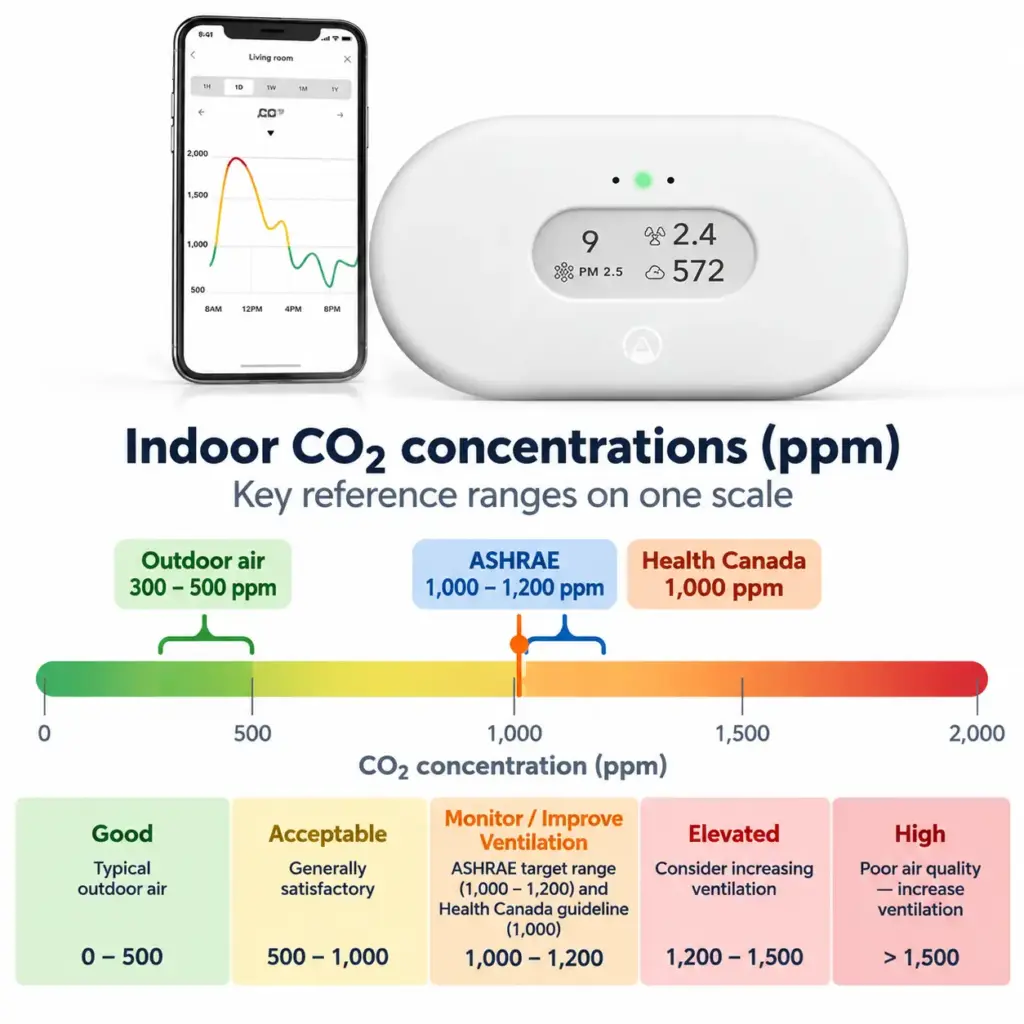
Before any window opens, decide which line the monitor is being held against. “Below 1,000 ppm” is a round number that two standards reach by different roads, and the road decides how to read a screen at any given minute. This page leaves the bands and the order summary to the main CO2 guide and takes only the numbers needed to judge a fix.

Health Canada’s 1,000 ppm is an average, not a moment
According to Health Canada’s residential guideline for indoor carbon dioxide, “The recommended long-term exposure limit for CO 2 is 1,000 ppm (based on a 24-hour average).” The words that matter are the last four. A reading of 1,300 at three in the afternoon, with four people home and the door shut, can sit inside a day that averages under the line, and a quiet 900 overnight can belong to a day that does not. One number on one screen is a snapshot; the guideline is about the whole day.
Leave the monitor in one spot for a full day before you decide anything. The lowest reading shows what the house settles to when nobody is cooking or sitting there; the highest shows what the day’s activity adds on top. The gap between the two is the number you are working on.
ASHRAE’s 700 ppm is relative to the air outside, and it is about odor
ASHRAE’s addendum to Standard 62.1 works the other way round. ASHRAE 62.1 is the ventilation standard, and the addendum starts from 15 cubic feet per minute of outdoor air per person (7.5 L/s), works out that the steady-state CO2 then sits “no greater than about 700 ppm above outdoor air levels”, and says what that figure stands for: most visitors will be satisfied with the odor of the people in the room. It is a comfort criterion for a ventilated space, not a health limit.
Because it is relative, the answer moves with the air outside. The same text puts acceptable outdoor air at 300 to 500 ppm, so 300 + 700 = 1,000 and 500 + 700 = 1,200. The two standards meet at 1,000 ppm only when the air outside sits at the bottom of that range, and how big the gap to outdoor air is is a question of its own.
ASHRAE has since deleted the appendix that explained all this arithmetic, because the committee was “aware of misuse and confusion” in the way it was read. Health Canada makes the same point from its side: many building standards for CO2 were set as a stand-in for ventilation and odor, and “they are not based on the intrinsic health effects of CO 2”.
The EPA gives no number, and says to read the monitor carefully
The EPA’s archived FAQ on measuring CO2 for ventilation names no ppm target at all (it is a copy from January 2025; the live address no longer serves the page). Its one sentence on the subject says indoor CO2 can give information about ventilation but needs “to be interpreted carefully.” That is a fair description of what the screen is: a stand-in for how much outdoor air the room gets, not a verdict. The same goes for the green, yellow and red bands some monitors print on their display; they are the maker’s choice of colors, not a standard, and are useful only for reading the screen at a glance.
A monitor first, then everything else
Nothing here can be checked without an air quality monitor, though the free fixes do not need one to start: if the room is stuffy now, open a window now and come back. The reading is what tells you the change worked. The Airthings 2960 View Plus (see it on Amazon) reads CO2 next to humidity, PM2.5 particles and VOCs on one battery-powered eInk screen, which shows you which way the room is off, and it sends data to the cloud every 10 minutes by default. Its CO2 sensor needs about its first week to adjust, so a day-one reading is one to hold loosely, and how accurate a home monitor really is is worth a look before you act on a single digit.
Placement matters as much as the model, and where a monitor belongs in a room has its own page. The Temtop CO2 Monitor (see it on Amazon) is the portable one that goes room to room. In the r/homeowners thread this article draws on, the original poster ran an Airthings and a Temtop side by side and got similar readings, yet a commenter there said a Temtop of theirs read high until it was calibrated. No accuracy claim is made here for it beyond that: if a new one will not fall below the outdoor range even after the windows have been wide open for an afternoon, a second monitor settles the question.
Replace the Air First, Then Stop Making the CO2
Health Canada’s guidance on carbon dioxide in your home boils the job down to two levers: “You can lower levels of CO 2 indoors by increasing ventilation and controlling the sources of CO 2.” Replacing the air changes the reading in minutes, while removing a source changes every hour after. Run them in that order, and put a reading between each change.
A window on the far side, then the doors between
Air needs a way in and a way out. One window in a shut room trades air slowly, because the room has nowhere to push the old air; the window farthest from the high reading, plus the interior doors open, gives it a path through the house. Engineers count this as air changes per hour: how many times the room’s air is replaced in sixty minutes.
Then comes the hard part, which is waiting. The number falls quickly and then flattens, and the flat part is your answer, so read again only when two readings a few minutes apart match. How long a room stays high after a change depends on the room, and why the bedroom climbs overnight is a separate pattern with its own fix.
The catch is that a window fix lasts as long as the window is open. In that same thread, the poster’s house dropped to about 600 to 700 ppm with the windows open and, with them shut, “quickly climbs back up”. If the number returns within the hour of closing, the window was never the cause; it was only the cure for the day.
A reading taken the instant after you open a window tells you nothing, because the number is still on its way down. Write down the value only once two readings a few minutes apart match, and use that one as the comparison for the next change.
The bathroom fan and the range hood that vent outside
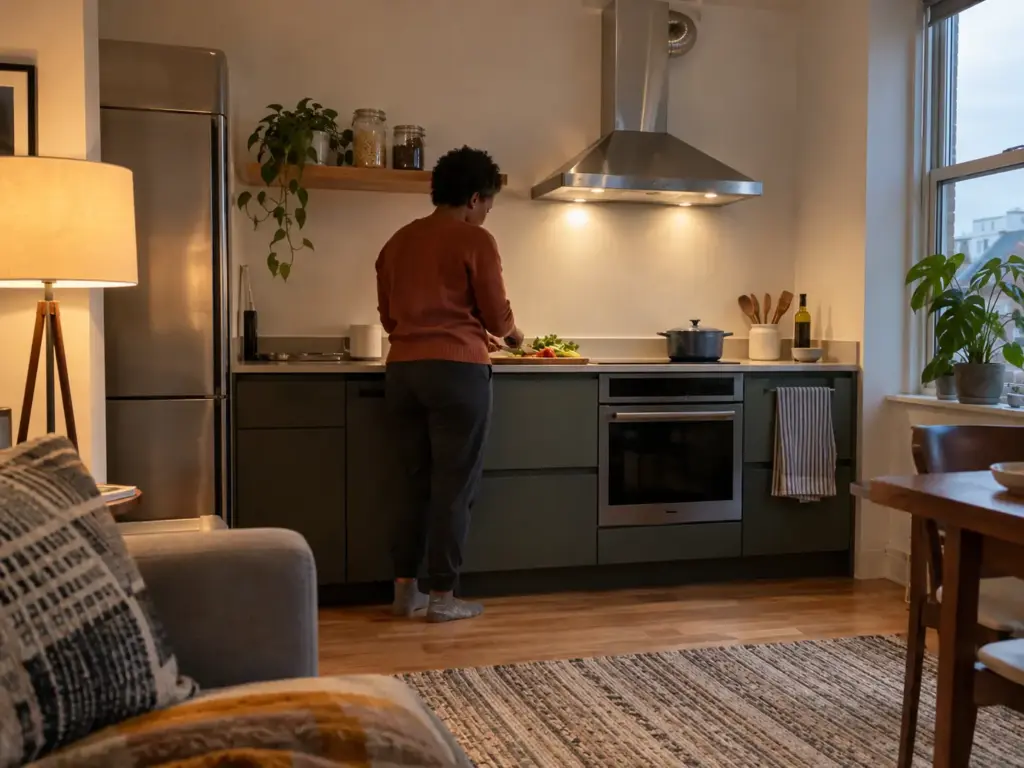
The bathroom exhaust fan and the kitchen exhaust hood work on both levers at once, which is why they are worth the next test. A fan that sends air outdoors also pulls replacement air into the house through every gap it can find, and a hood over a gas stove removes the CO2 where it is made (an induction cooktop makes none of its own). The condition is that the duct ends outside.
A commenter in the thread put the logic plainly, saying the stove’s fan “will negatively pressurize the house forcing more infiltration of outside air”, provided it “isn’t a crappy recirculating type of hood”. Health Canada’s list says the same in fewer words: a range hood exhaust fan with outside venting when cooking.
A recirculating hood filters grease and hands the air back to the room, so it does nothing for CO2. The usual reason a hood “does nothing” is the wrong switch or a timer that shuts it off; the reading says whether the duct really goes out, and so does the outside cap, which should lift when the fan runs. Run the fan for ten minutes with the monitor in the same room and the kitchen door open to a window somewhere, and compare the two readings.
The sources you can switch off
Health Canada’s list of sources to control is short and specific: no smoking indoors, a range hood that vents outside, fuel-burning appliances in good working order and properly vented, and no unvented fuel-burning appliance such as a space heater. The last one is the big one. The same guideline reports CO2 up to 4,500 ppm in homes using kerosene space heaters. Properly vented water heaters and furnaces, on the other hand, “are not expected to release significant amounts of CO 2”, so a working furnace is rarely the story.
Candles and a wood fireplace belong on the list as well, though far smaller sources than an unvented heater. Switch one off, wait for the reading to flatten, and the number should settle lower than before. If it settles at the same level, that source was not the problem, and nothing is lost: it is one fewer suspect.
Do not expect the house to read under 1,000 ppm with a gas stove running and two or three people home and every window shut. The thread’s poster reported exactly that, even after the main problem was fixed. Occupancy alone moves the number.
When an Exhaust Fan or a Window Fan Backfires
Every fix above moves air, and moving air has a price in a tight house. Each rung gets what is wrong with it written down here, starting with the one that is a home-safety matter, not a comfort one.
The exhaust fan in an airtight house
Run every exhaust fan you own, goes the usual advice. In a tightly sealed house with a gas water heater or furnace (a combustion appliance in the trade’s words), the better call is to give the fan a path for replacement air first. Health Canada’s guideline on carbon dioxide says fuel-burning appliances “may vent gases directly into the house if the air pressure indoors is less than that outdoors”, and names tightly sealed buildings and exhaust fans from other appliances, a dryer among them, as the way that happens. A fan with no air coming in lowers the pressure of the house, and the house takes replacement air from wherever it is easiest, including down a flue.
What to do stays inside the house. Keep working carbon monoxide alarms in the home, have a qualified technician check the venting of any gas appliance, and crack a window or a door to a window whenever a fan runs long. If an alarm sounds, leave the house and call the emergency number; that is the rule, and no fan or monitor reading changes it.
A tight house also tells you it is tight. If the gaps around a door whistle while the fan runs and go silent when it stops, the house was pulling hard for that air.
The window fan: cold air, pollen and a filter that loads
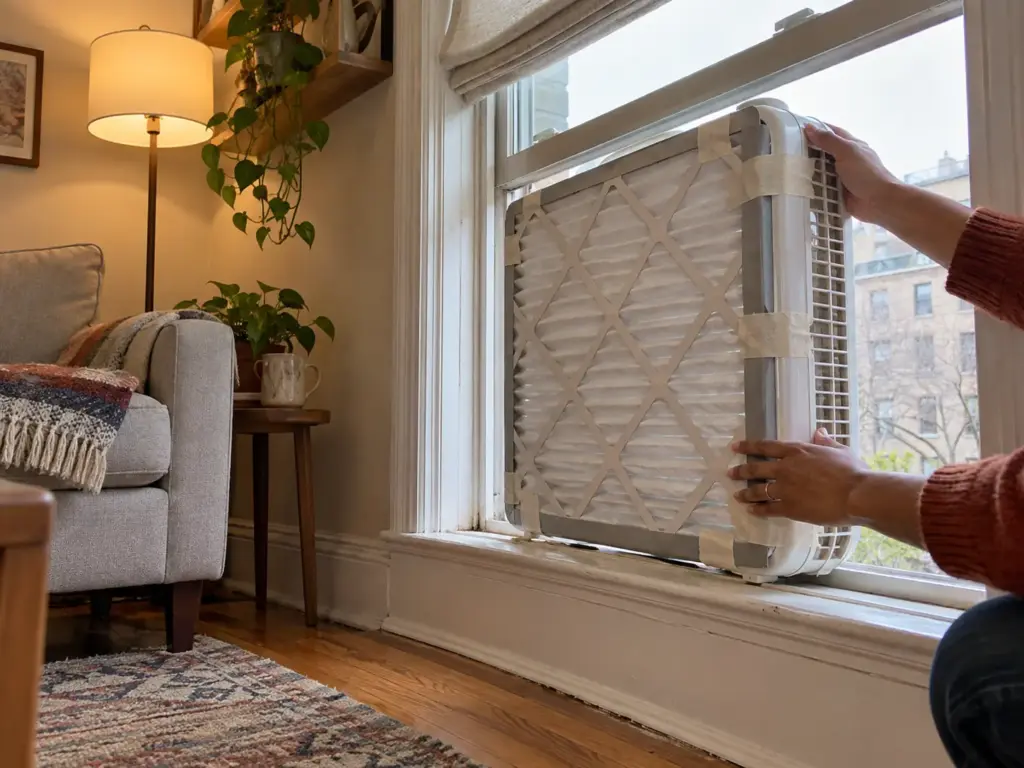
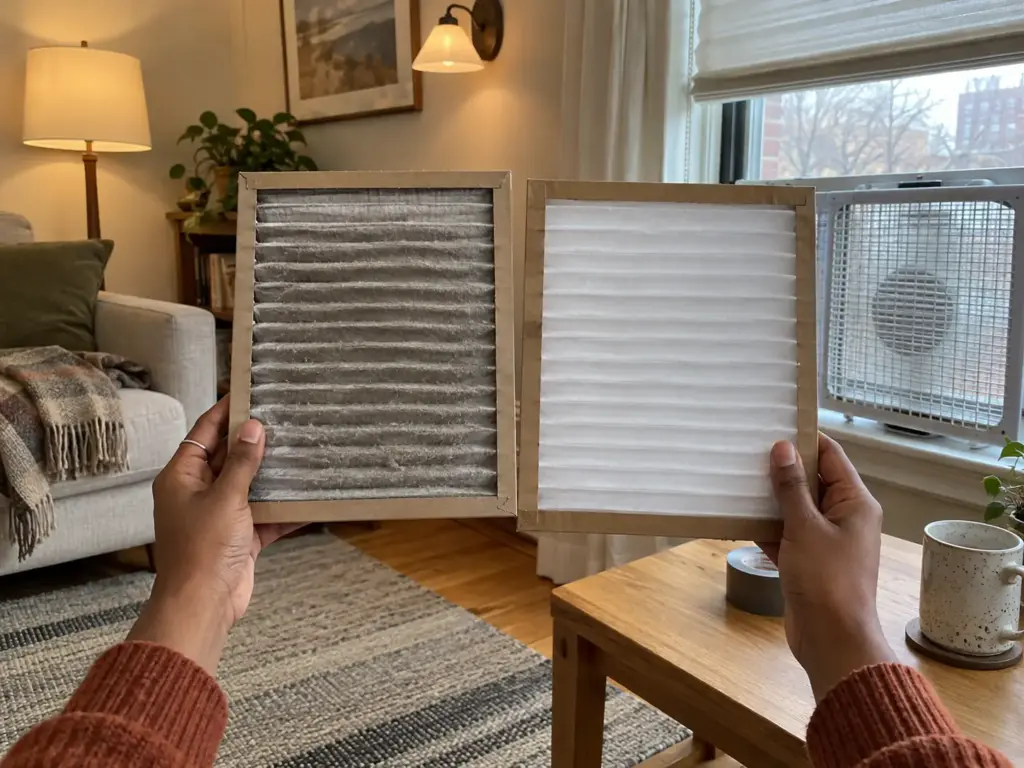
A window fan moves a lot of air, and brings its own costs along. In winter that air is cold; in any season it carries outdoor particles. A window fan filter, taped over the intake, helps with particles, and it loads like any filter: the fan was not built to push through resistance, so as the filter fills it moves less air, and the monitor shows it when the number stops falling as fast as it did in the first week.
A fan in a room with no second opening is the other trap. A fan that pushes air out needs air coming in somewhere else, or it is working against a closed room. Open the window at the other end of the house a few inches before blaming the fan.
Smoky or polluted outdoor air
The free fix has a day when it is the wrong fix. Health Canada says to open windows “taking into consideration ambient air quality”, meaning the outdoor air quality of the day, and in its own example, forest fire smoke, reducing outdoor air intake can be the better choice than driving the room under the CO2 line. Check the Air Quality Index (AQI) at AirNow before opening anything on a hazy day. If it is poor, keep the windows shut, accept a higher CO2 reading for those days and leave the number for when the outdoor air improves.
Shut Windows for Months: Cold Weeks, Smoky Days, Summer Heat
Some readers cannot use the free rung above for weeks at a stretch: the cold season keeps the sash shut, the heat season keeps the air conditioner on, the air outside is smoky, or the building decides, as it does in many an apartment. What is left is smaller, and a small step has limits that are better stated now than discovered on the monitor.

A crack, a short burst and a door instead
A crack held for a long time and a short full opening are two different trades, and the monitor and the thermostat are the judges. Try the short burst first, with the interior doors open, and read afterward; then try the crack for a few hours and read again. Keep whichever routine moves the number furthest for the least heat lost. The exhaust fans and range hood still work with the windows shut, as long as a path for air exists, such as an interior door cracked toward a window somewhere, and the backdraft caution from the section above applies in one clause: replacement air first.
The month-two shape is easy to predict. The first cold week, the window gets cracked; the third week it is shut again, and the monitor is the only thing in the house that notices.
If the window can open only a few minutes a day, make them count. A short, wide opening with the interior doors open too usually exchanges more air in ten minutes than the same window cracked an inch with every door shut. Read the monitor before and after, and keep whichever routine moves the number.
The window air conditioner does not bring in outdoor air by itself
An air conditioner moves heat, not CO2. In cooling mode a window unit pulls room air across its coil and returns it, so the number does not fall. Whether a given unit has a vent for outdoor air depends on the unit, and the manual says which; without one it recirculates the room’s air all summer, and the monitor will say so.
When the building will not allow a hole in the wall
A condo commenter in the thread described two occupants and indoor CO2 above 2,000 ppm, windows as the only fix, and a building that would not allow a hole in the wall for an ERV. Another reply described a condo whose roof fans ran on belts that wore out and stayed broken until someone complained, which is the kind of problem maintenance owns. In a rental, a number that climbs in an empty room is a message for the building manager, and the monitor’s graph is the proof to hand over.
For the reader who cannot cut a hole, the only fresh-air device that fits is one that sits in a window sash or asks for no new opening; that is the last rung, and it comes in the next section. Health Canada’s point about ambient air holds here as well: a closed window is sometimes the right call, and the plan is to open it when the outdoor air is better.
When the Number Follows the Building, Not the People
If every free rung has been tried and the reading goes back up the minute the window closes, the source is not the people in the room. It is the building: a house with no path for outdoor air, a blocked intake, a pit under the slab. The last rung is a fresh-air device, and it gets checked rather than trusted.
A sealed house with no way for outdoor air to come in
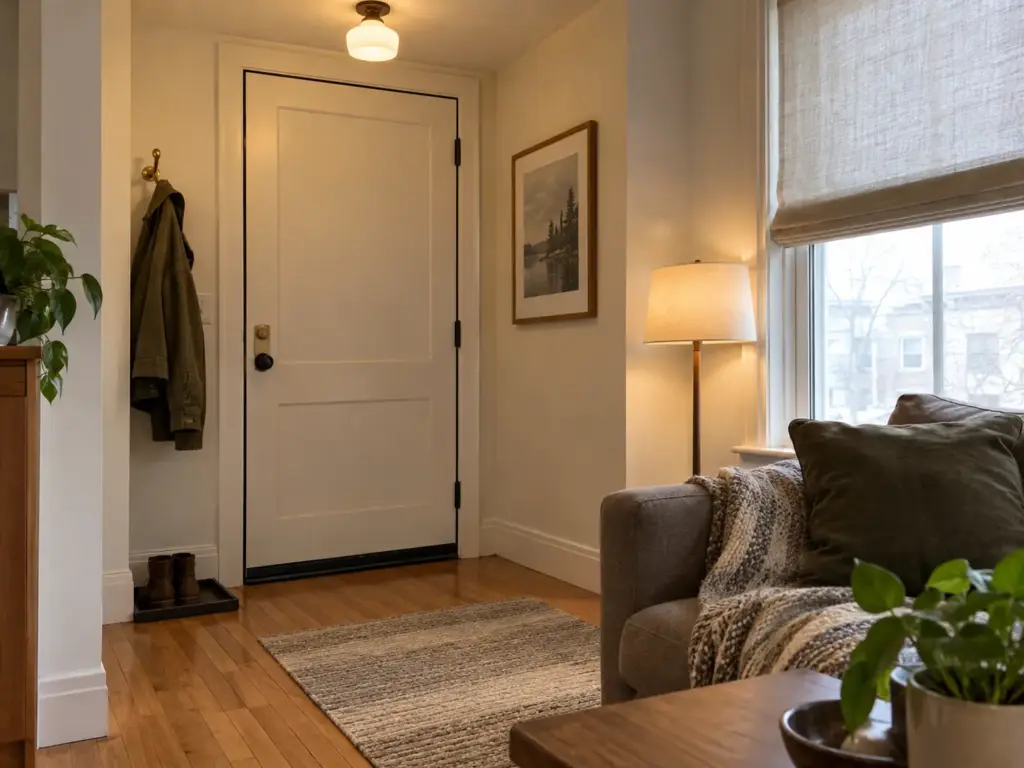
Health Canada notes that buildings in Canada have generally become more airtight, and that this has lowered the rate at which the air in homes is replaced.
A tight house keeps stale air in the same way it keeps heat in: whatever the people in it breathe out stays until some outdoor air arrives, and a house with no fresh air intake of its own depends on window opening and air leaking in around doors. Air sealing the house makes that worse unless something else brings outdoor air in. When the appliances are properly vented and maintained, and Health Canada does not expect them to release significant CO2, suspect the building. What makes a house read high in the first place covers the sources inside the walls; this section is about the ones under them.
A sump pit and a blocked intake: two building causes in one thread
One homeowner’s thread on Reddit shows both causes. The original poster’s house read 1,300 to 1,500 ppm in every room, fell to about 600 to 700 with the windows open, and went back up when they closed. Beside the sump pit, in a house built next to a wetland, the poster’s meter passed 5,000 ppm, the most it could show.
The poster then sealed the pit and vented it outdoors with a duct fan (135 CFM, per the poster), and the reading fell to the mid 400s overnight.
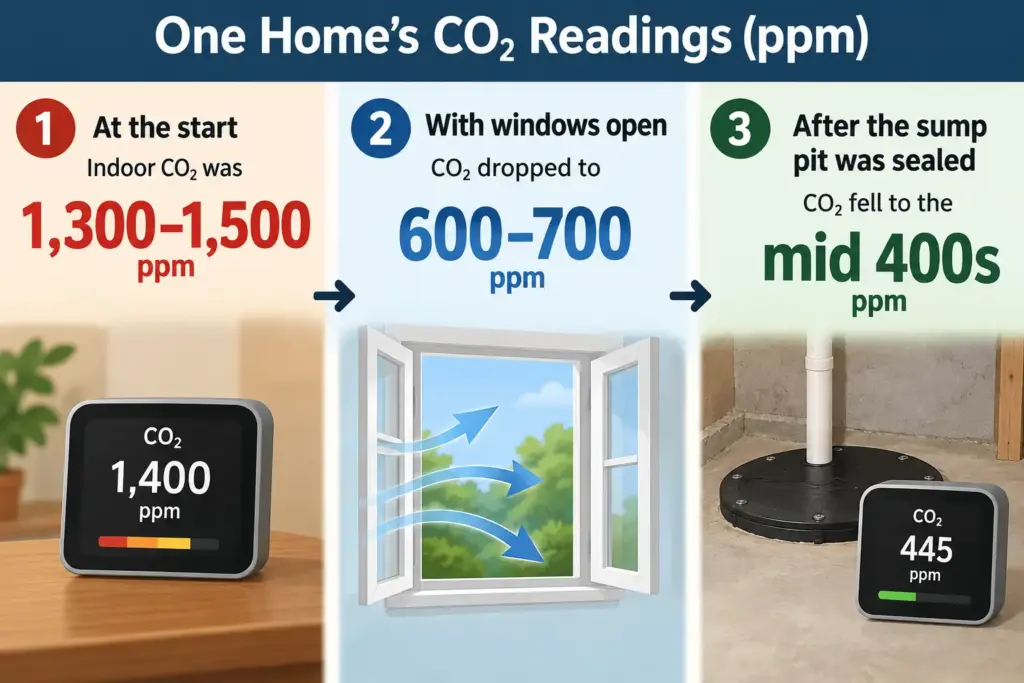
A different household in the same thread found that the intake of its HRV, a heat recovery ventilator, “was blocked with debris and not taking in any fresh air”. Clearing it took that house from 1,500 to 1,100 ppm, and sealing its own pit brought it to 950 a day later. Two houses, two building causes, and neither one was fixed by anyone’s habits.
A pit open to the ground is not a job for a weekend fix. It is a job for someone who can look at it, and the thread’s own owner had an air quality inspector say the house was probably connected to the soil through the pit. The takeaway for your house is narrower and cheaper than the repair: when the number follows the windows, the cause is air exchange; when it ignores them, look at what the building is connected to.
The fresh-air device, last, and what it costs to keep
A fresh-air device is a through-wall fan or a window ERV (an energy recovery ventilator) that brings outdoor air in on purpose. No model is named here, because none was verified, and the category has drawbacks of its own. A through-wall fan without heat recovery pulls cold air in during winter. An ERV costs money to run, so multiply its rated watts by the hours it runs and divide by 1,000 for kilowatt-hours, and the ERV core needs cleaning on a schedule.
The intake is the part that clogs, as the thread’s HRV showed. One commenter’s rule of thumb was an ERV “with proper CFM”, which means the airflow rating matched to the size of the house, not just a unit that runs. A device does not replace the checks above; it is what is left when they come back clean.
The intake of a fresh-air device is outside and out of sight, so the monitor is the only inspector it gets. If a pit, a blocked or missing intake, or an appliance that is not venting is behind the number, that is a job for a qualified professional, and the carbon monoxide alarm is the detector for the venting question.
Write down the reading in the room the first week a fresh-air device runs, then check the same room at the same hour each month. A number that creeps back up while the unit is still humming points to the intake or the core before it points to the house.
What Does Not Move CO2, and What Month Two Looks Like
The last rung is not another device. It is the two things people reach for that do not touch the number, and the check that keeps a fix from quietly undoing itself.
A purifier and a plant: why neither shows up on the monitor
An air purifier filters particles from the air that passes through it, and CO2 is a gas that passes straight through a particle filter, even a HEPA filter. Put the purifier on the floor and the monitor on the shelf above it, and the monitor reads the same as yesterday. A houseplant’s effect on the CO2 in a room is too small to read on a monitor.
Both have jobs: the purifier takes particles out of the air, the plant is something to look at. This is the one number they do not touch, and the window air conditioner from the section above is in the same category, because it moves heat and not CO2.
The checks for week six
A fix is a number checked over time, not a day-one result. One commenter in the thread asked whether a fix had been tried, “Did you? It’s been 6 months”, and the original poster later reported the issue “mostly resolved” while occupancy still pushed the reading above 1,000 ppm with the windows closed and the gas stove on. By week six, these are the places to look:
- The outdoor intake of a fresh-air device or HRV, where debris collects out of sight.
- The exhaust fan grille and duct, where lint builds up and cleaning the exhaust duct is the fix; a clogged duct moves less air without making less noise, so the reading is the only sign.
- The taped filter on a window fan, which loads like any filter and is due for a filter change.
- The monitor itself, which needs about a week to settle after it is set up.
- The window that was open on Monday and quietly went back to shut.
The First Change for Tomorrow, and the Reading After It
Three things carry this page. Replace the air first: the far window, the doors between, and a second reading once the number stops falling. Then stop the CO2 you make, with a hood and a bath fan that vent outside and no unvented heater, and know the flaw of each fix before you lean on it. And pick the line that fits your reading: 1,000 ppm on a 24-hour average if you want Health Canada’s limit, about 700 ppm above the air outside if you want ASHRAE’s odor criterion, and a trend over a day in either case.
A month from now, read the same room at the same hour and compare it with today’s number, then look at the intake and the fan duct before blaming the house. Tomorrow, open the window on the far side and the doors between, wait for the number to flatten, and write that value down. If it does not move, where a monitor belongs in a room is the next thing to check.
Frequently Asked Questions
01How do I lower carbon dioxide in a house quickly?
Open the window farthest from the room that reads high and the doors between, then read the monitor again once the number stops falling. Outdoor air is the only thing that replaces indoor CO2, so the reading flattens near the level of the air outside.
02How can I lower carbon dioxide in a house naturally?
Outdoor air does the natural work: a window, or a bath fan and range hood that vent outside, plus switching off sources like unvented heaters. A houseplant’s effect is too small to read on a monitor.
03Does an air conditioner remove carbon dioxide from a room?
An air conditioner changes the temperature of a room’s air, not its carbon dioxide, so the reading stays where it was unless outdoor air also comes in. Some window units have an outdoor-air vent and some do not; the manual says which.
04Do air purifiers or houseplants lower CO2?
A purifier removes particles, and CO2 is a gas that passes straight through a particle filter, so the monitor does not move. A plant’s effect on a room’s CO2 is too small to read on a monitor.
05What CO2 level should I aim for at home?
Health Canada’s long-term limit is 1,000 ppm on a 24-hour average, while ASHRAE’s text uses about 700 ppm above outdoor air, an odor criterion. The EPA gives no ppm target.