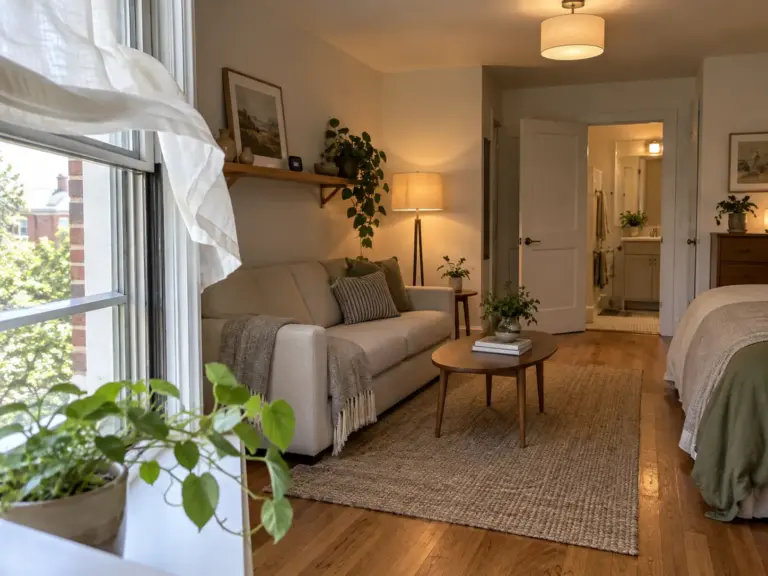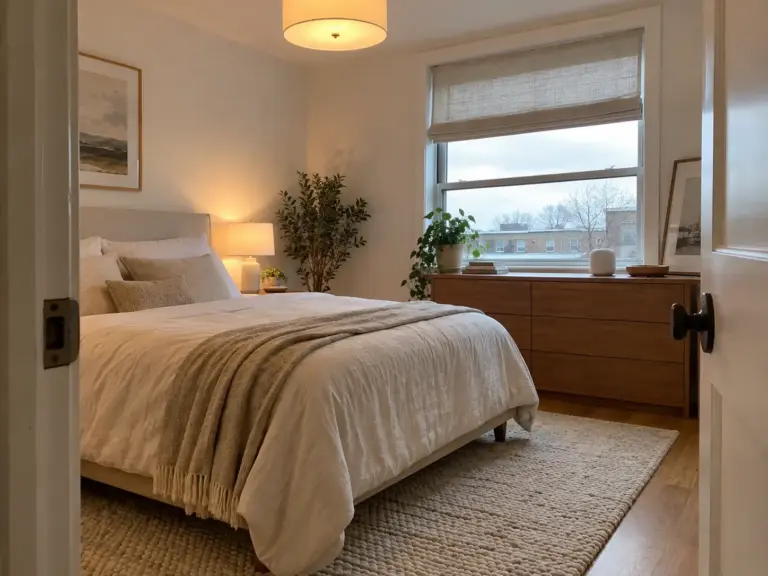

Your meter on the bedroom shelf reads 1,400 ppm at two in the morning, and the same meter in the hallway reads 700. That gap is the first clue to why carbon dioxide is high in your house, because the number is not a dust or odor reading: it measures how fast outside air is replacing the stale air inside. The people in a room set how quickly the gas builds, and the house sets how quickly it leaves.
What carbon dioxide does inside a person is a question for a doctor, and this page reads the house instead. If you want the normal range first, start with what indoor carbon dioxide levels actually mean in a house, then come back here to find which part of the house is producing your number.
Quick Answer
A high carbon dioxide reading means outside air is not replacing the air inside fast enough. Where the number stays high and when it climbs tells you the cause: the people and a shut door, the stove, a blocked intake, or the building itself.
Where the carbon dioxide comes from and why it stays
Before any pattern means anything, the plain mechanism has to be on the table: people put the gas into a room, the house decides how long it stays, and the air outside is the line the reading is measured from. Everything later in this article is a variation on those three facts.
People set how fast it builds
Indoors, carbon dioxide comes mainly from the breathing of the people in the room, and also from smoking and from unvented or poorly vented fuel-burning appliances, according to Health Canada’s guidance on carbon dioxide in the home. The level in any room then depends on three things: ventilation, those indoor sources, and the concentration outside. That is why the reading works as a ventilation gauge: Health Canada notes that indoor CO2 is often used to represent the ventilation rate, the air changes per hour, which is a different question from how many particles are floating around. Two people in a shut bedroom add gas at the same pace all night; what changes from house to house is how much air exchange carries it out.
The outdoor air sets the floor. A monitor maker’s guide puts today’s outdoor baseline near 420 ppm, and Health Canada assumes outdoor levels between 300 and 500 ppm. It reports ASHRAE’s rule that indoor CO2 should be no greater than 700 ppm above ambient levels, which puts the indoor line near 1,000 to 1,200 ppm.
Health Canada’s own long-term figure for Canadian homes is 1,000 ppm as a 24-hour average. Read both as house numbers about outside air, so one evening above 1,000 is a prompt to look, not a verdict. The size of the gap itself is covered in the piece on how large the gap between indoor and outdoor CO2 is.
The house sets how fast it leaves
A house holds carbon dioxide when nothing carries it out: closed interior doors, an airtight house, HVAC recirculation of the same indoor air, bath and kitchen exhaust fans that stay off, or no mechanical ventilation at all. None of these is a fault on its own. Together they make a closed box with people breathing in it, and the stale air stays. One homeowner in a forum thread described the result in a line: with the windows open the reading falls to about 600 to 700 ppm, but “closing them off it quickly climbs back up.”
A reading logged for a full day shows this clearly: the climb when a door closes, the drop when it opens. The shape of that curve is what the next section sorts.
Read the shape of the reading before you change anything
The same 1,400 ppm means different things depending on where it sits and when it climbs. A number that is high in every room at every hour points away from the people and toward the building, while a number that is high only in a closed room, behind a shut door, points at the door. Sort the shape first, and the first thing to check picks itself.
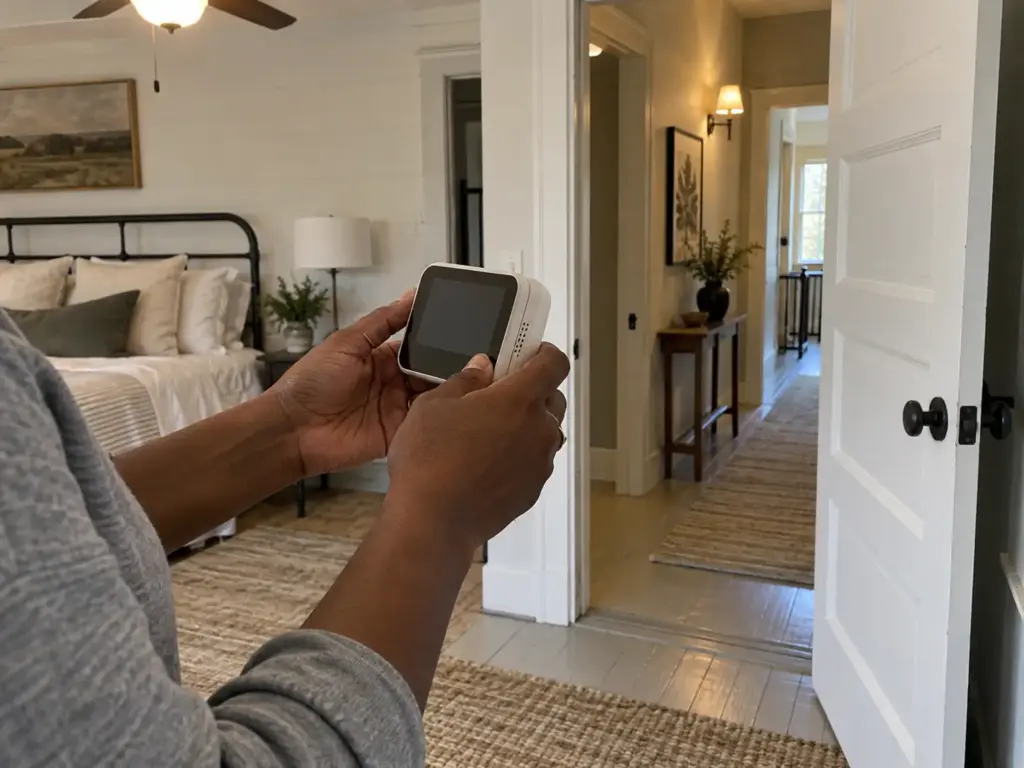
All of it needs one meter and one day. Carry the meter from the bedroom to the hall to the kitchen, write down where the number differs, and match what you see against the table. Skipping that step is how people end up changing the one thing that was never the cause.
| Shape of the reading | What it points at | The first thing to check |
|---|---|---|
| High in every room, at all hours | The building or the ventilator intake | The intake, any opening to the soil, any appliance that burns fuel |
| High in one room, door shut | The people in it and the door | The hallway reading, then the door opened |
| High only while someone cooks | The stove and the range hood | A hood vented outside, running while you cook |
| Climbing in an empty room (unconfirmed) | Air arriving from outside the room | The room and the hall logged together, plus a second meter |
High in every room, at every hour
When every room reads high and the number barely moves between morning and night, stop blaming the people. A single-story house in a homeowners thread read 1,300 to 1,500 ppm all over, with the basement at 1,400 to 1,500 and the upstairs at 1,300 to 1,400, and only one to three people living in it. The cause turned out to be a pit in the floor, not the occupants. That is the plainest case of the ventilation gauge: if the whole house reads high, the whole house is short of outside air.
The first checks are the intake of any ventilator, any opening between the house and the soil, and any appliance that burns fuel indoors. The next section takes them one by one.
High in one room with the door shut
This is the shape most readers have. A bedroom with the door shut turns into its own small house with one or two people in it, and the gap under the door lets the gas out more slowly than breathing puts it in.
The check is the comparison you already made: the hallway reading against the bedroom’s. Then open the door and watch the bedroom number; if it starts falling toward the hallway’s, the door was the story. How steeply the number climbs through a closed night, and when it peaks, belongs to the piece on why the reading climbs overnight in a closed bedroom.
Give the meter a few minutes in each room before you write the number down. A sensor that has just been carried in still holds some of the last room’s air, so a reading taken at the doorway describes the place you came from.
High only while someone cooks
A gas stove or oven adds carbon dioxide on top of the breathing, and Health Canada lists an unvented appliance, or a poorly vented fuel-burning one, among the sources. Posters in a 2014 building-science forum thread give the scale: one reading “Rose to 1900ppm with the oven on & one window open,” and another poster ran a gas oven for an hour with the kitchen fan on, saw the reading go from 500 to 2,000 ppm, and found it “would not get back down below 1,000 until the following afternoon.”
Health Canada’s source-side advice is a range hood exhaust fan with outside venting when cooking. (A hood that filters the air and sends it back into the kitchen moves air that is already in the room, so it does nothing to the gas.) Read the kitchen before, during and after a meal, and the shape names itself.
High in an apartment room nobody is using
This one is a hypothesis, and it is labelled as one: no source reports the exact case. An apartment resident in the homeowners thread wrote that in just the bedroom, with the living room near 700, “no one in the room, the co2 keeps climbing,” and nobody answered. A room with nobody in it that keeps climbing points at air arriving from outside the room: the rest of the unit through the door, a shared supply or exhaust in the building, or a combustion appliance next door.
A poster in the 2014 thread saw something close, with rooms they used less often reading higher than the bedroom, so an empty room is not automatically a clean one. The check costs nothing: log the bedroom and the hallway with the door shut, and read a second meter before the bedroom gets blamed.
When the house itself is the source
When the number stays high with the people gone, the question moves from the occupants to what the house is doing. Three cases come up in the threads, each with real readings: a ventilator intake that stopped bringing anything in, an open pit in the floor, and a fuel-burning appliance.
The fresh-air intake that keeps running and brings in nothing
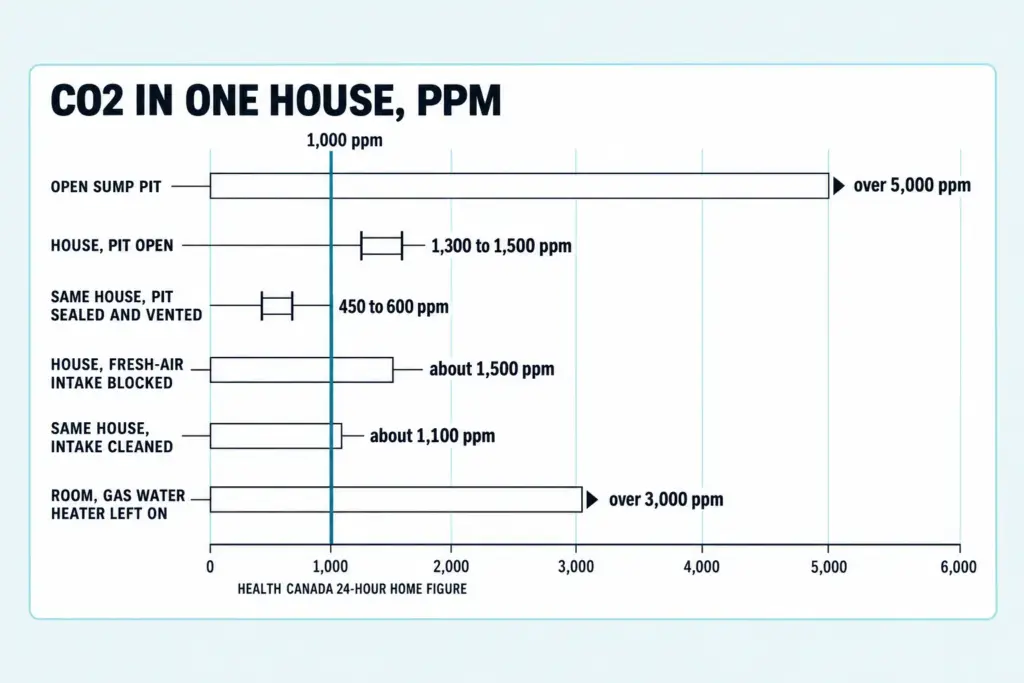
A heat recovery ventilator (HRV) is meant to bring outside air in. In the homeowners thread the fresh-air intake “was blocked with debris and not taking in any fresh air,” and cleaning it took the house from about 1,500 ppm to about 1,100. The unit ran the whole time.
That is why this one fails silently: the sound of the fan is the same, and the number is the only sign. If your house has a ventilator and every room reads high, the intake is where to look first, and the ventilator’s filter second.
Once the intake is clear, the reading falls, and the next question is timing, which how long a high reading lasts indoors works through.
The sump pit that connects the house to the soil
The same thread’s poster had a rural single-story house next to a wetland and an open sump pit, which a commenter called a “house communicating with the soil.” The poster’s working explanation was organic processes in the wetland soil releasing CO2 into the sub-slab, the soil gas the pit then let into the house. The pit read over 5,000 ppm, and a later reading put it at 10,000, while the rest of the house sat at 1,300 to 1,500. After the pit was sealed and vented to the outside, the house settled between 450 and 600 ppm.
The poster’s own fix was a homemade lid with openings for the pump and a 4-inch duct fan rated at 135 CFM pulling air out of the pit and outdoors. That is reported, not recommended. A pit or a crack that opens the floor to the soil is a job for a professional who can size the venting properly, and the reading is how you learn that you need one.
A fuel-burning appliance, and why CO2 is not carbon monoxide
In that 2014 forum thread, a poster went away for three days and “forgot to turn off the 40gal gas water heater.” Back home, “the CO2 levels were higher than 3000ppm.” The pilot was the source and the shut house was what held the gas. Health Canada’s controls for this source are appliances in good working order and properly vented, and no unvented fuel-burning space heaters indoors.
Keep the two gases apart. A CO2 meter does not detect carbon monoxide, and the carbon monoxide alarm on your wall is the safety device for that one. As the EPA’s page on carbon monoxide in homes puts it, “It is most important to be sure combustion equipment is maintained and properly adjusted.”
If a CO alarm sounds, leave the house and call the emergency number. If you smell gas, leave and call the gas utility.
And when the pattern points at the building, the call is to an HVAC technician, the gas utility or a building inspector, not to a bigger fan.
Check the meter before you blame the house
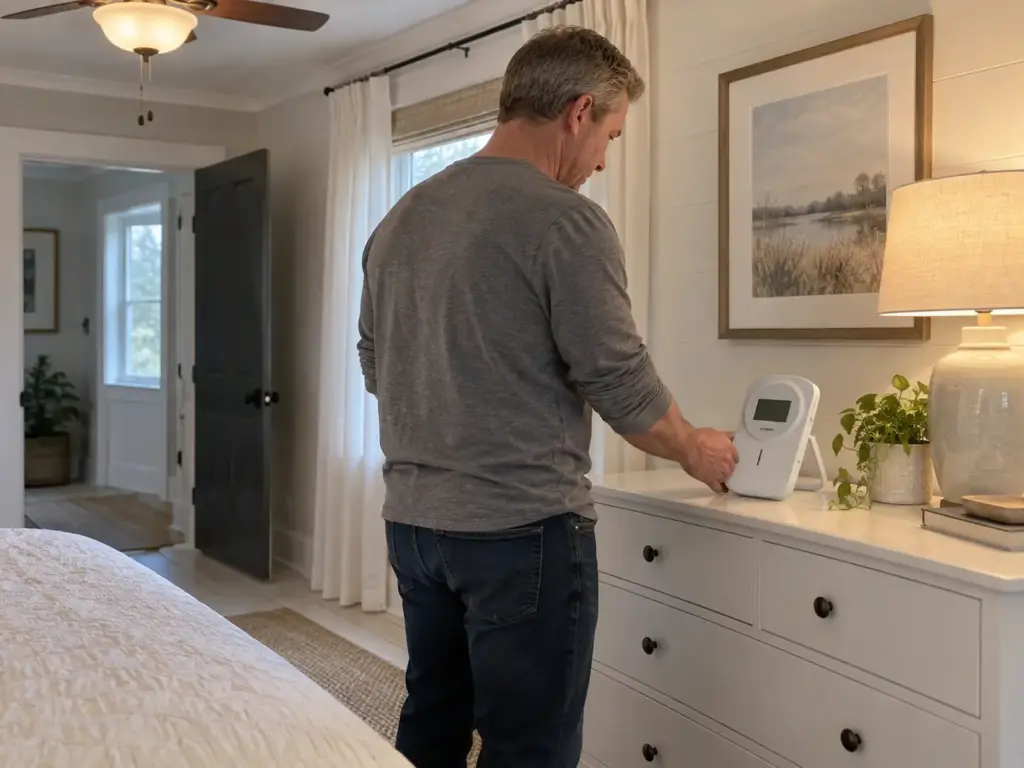
Everything above assumes the number is right, so the CO2 monitor goes on the list before the house does. A cheap sensor can be off by itself, and two meters on the same shelf can disagree by a few hundred ppm.
A reading that is off by itself
A reader in the homeowners thread wrote, “I know my temtop read high before i calibrated it,” which is one meter’s story and not a rule for every unit, but sensor calibration is the first thing to rule out. Humidity can fool a sensor too. An apartment resident in another thread traced odd readings to a source nobody suspected, writing in an update, “Apparently it was our humidifiers causing the readings.”
A reply had already suggested the cheapest test: “Put the meter outside the window and see if your meter is right.” Leaving it outdoors for a while shows whether it lands anywhere near the 300 to 500 ppm range Health Canada assumes for outside air. How much drift to expect from home monitors in general is taken up in how accurate home air quality monitors are.
A new meter also needs time. One maker’s listing says its CO2 sensor adjusts to the environment during the first week (a vendor’s statement, but a good reason not to judge the house on day one).
If a humidifier is running in the room, switch it off and give the room an hour before you compare two meters. Moisture near a sensor is a cause to rule out before the air is blamed, and it costs one hour to rule out.
A second device settles it
Put a second meter beside the first, in the same room at the same height. If they agree, the meter question is closed, and if they are a few hundred ppm apart, one of them is wrong and the outdoor test says which. The limit is honest and worth knowing: in the homeowners thread a homeowner’s several devices agreed with each other and the sump was still the cause. A second meter settles the meter, not the house.
If you want that second instrument, the INKBIRD Indoor Air Quality Monitor NDIR CO2 Detector (IAM-O2) uses an NDIR sensor, which reads CO2 by how much infrared light the gas absorbs, and covers 0 to 9,999 ppm, wide enough for the pit-level numbers above. It recharges by USB-C, and the listing gives three to six months per charge. Treat it as a second opinion, not a referee: the listing prints no CO2 accuracy figure, one review says “Initially they were over 100 ppm off,” another says “Internal battery took a month to reach 50%,” and the battery is the weak point in 3 of 8 battery mentions in its reviews.
Last, a meter reads only where it sits, so sensor placement matters: not beside a door, a vent or a window. Where to put the meter in each room is its own short guide.
The reading that climbs back later
A reading that dropped after a fix can drift up again, and the community follows it house by house over months. The honest summary is that the pattern changes with the house, and nothing here is written as a rule.

Debris, filters and intakes load over the months
An intake and a ventilator filter collect what the air carries, and a clog builds over months, not days, with no change in how the house looks or sounds. Six months after the sump work, a later reply in the homeowners thread said “Sealed and vented sump pit and dehumidifiers in the summer seem to have resolved everything.” The thread’s own fix for the ventilator was to clean the intake first, and repeating that at each change of season is cheaper than rediscovering the problem with the meter.
A 2014 thread followed one house from March to August and showed how much the shape can move: the gas oven, the furnace fan, the bathroom fan and a sealed attic each changed it. The reading is not a single fact about a house, it is a habit of the house.
Winter reads differently in different houses
The usual assumption is that winter ventilation suffers because the windows stay shut. It did in one house and the opposite happened in another.
The poster with the sealed pit wrote, “I noticed during winter, CO2 levels were coming down (600-800).” A second homeowner in the same thread reads about 1,200 to 1,500 with two people and the windows never opened. Same season, opposite result, which is why the winter number is per house.
The reason the same fix reads differently by season is plain: the open window of summer is shut by winter.
Pick one room and one hour of the day, and read the same shelf at that hour a month from now. A different room or a different hour is a different measurement, and the comparison falls apart.
What opening a window costs, and what does not help
The free fix has a price on some days, and it is better to know it before you open the window. After that comes the short list of things that do not move the number at all.
The window trades one problem for another
Health Canada’s advice is to “check the outdoor air quality conditions in your region before opening windows,” and it points to the Air Quality Health Index for that check, in its guidance on carbon dioxide in the home. The reason shows up in a condo owner’s report from the homeowners thread: above 2,000 ppm indoors with two people, the window the only fix, and outside PM2.5 at “double WHO annual mean target.” The building would not allow a ventilator. In a room like that, “open a window” is advice that solves one reading by worsening another.
My judgment is to check the outdoor air quality index first on a hazy morning, and if outside is the worse air, keep the window time short and read the meter again before opening it further. The window is still the first free fix on most days; it just has an opposite side.
What does not lower carbon dioxide
A HEPA air purifier filters particles, and carbon dioxide is a gas that passes through. Houseplants add little against the breathing of the people in the room. Air conditioner recirculation cools air that is already in the room. None of the three brings outside air in, which is the only thing the number answers to.
An exhaust fan helps only when air can come in somewhere else. The 2014 thread’s poster found that running the bathroom exhaust fan raised CO2 at first, because it pulled the house’s air out and the house drew replacement air from the basement. A window cracked in a room away from the meter lowered the reading at the meter in another poster’s test, which says something about how far one house shares its air.
The ordered list of what to change, free fixes first and one change at a time, is in how to lower CO2 in your home, one change at a time.
Take One More Reading, Behind a Shut Door
Three things carry the article. A carbon dioxide reading is a gauge of outside air, not of anything you can see or smell. The shape of the reading, where it sits and when it climbs, says which part of the house to check first. And the meter goes on the list before the house does.
For later, read the same room at the same hour a month from now and compare, because a number that drifts back up is the building changing its habits.
The one change to make tomorrow is a second reading: put the meter in another room with the door shut, and write the two numbers side by side. The gap between them is your first piece of evidence, and the hand-off to what to change comes from there. If a CO alarm ever sounds in the meantime, leave the house and call the emergency number.
Frequently Asked Questions
01How do I reduce CO2 levels in a house?
Bring in more outside air: open a door or a window, or run an exhaust fan while air can enter somewhere else. Read the meter again after each change. The full ordered list, free fixes first, has its own guide.
02Does an air conditioner remove carbon dioxide from a room?
No. An air conditioner on recirculation cools air that is already in the room and brings no outside air in, so the gas stays. Only a unit set to draw outside air in changes the number.
03How do you know if there is a carbon dioxide leak in your house?
Carbon dioxide does not leak like a gas line; it builds when outside air is not replacing the room’s air. A reading that stays high with everyone out points at an appliance or the building. The CO alarm is the safety device: if it sounds, leave and call the emergency number. For a gas smell, leave and call the gas utility.
04Why is carbon dioxide high in a house when nobody is home?
A reading that stays high with nobody home points at a source or at air that is not moving: a fuel-burning appliance, a blocked ventilator intake, or a pit open to the soil. In an apartment the cause is unconfirmed; log the room and the hallway and compare with a second meter.