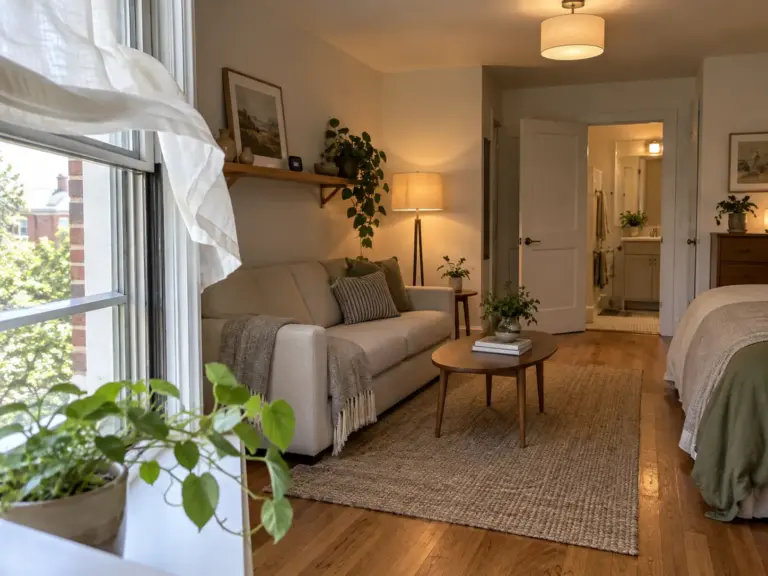

You shut the bedroom door with the meter on the nightstand reading one number, and by morning it reads a much higher one, with nothing cooked, lit or opened in between. Why carbon dioxide levels rise at night in that room has a plain answer: each sleeper adds about 10 liters of CO2 an hour, and the shut door and latched window decide how fast outdoor air carries it away.
Plants and the shallow layer of air near the ground, the boundary layer, have a night rise of their own, but it sits on a different scale from the room’s, and telling the two apart comes first. After that come the division that predicts your room’s steady state, the shapes a night curve takes, and the changes to try in order, one a night. One more thing before the numbers: a roomy bedroom with its doors open may not climb at all.
Quick Answer
A closed bedroom climbs overnight because the people in it keep breathing out CO2 while a shut door and windows slow the outdoor air that would dilute it. The outdoor night rise from plants and a shallow air layer is a different process on a different scale. A roomy bedroom with open doors can flatten or even fall.
The Outdoor Night Rise Is Not Your Bedroom’s
Two different night rises in carbon dioxide exist, and only one of them is on your nightstand. This section names the outdoor one once and sets it aside, so that nothing later in the article gets mistaken for it.
What the outdoor night rise is
Outdoors, plants keep up their respiration after dark and stop taking CO2 in, because photosynthesis needs light. At the same time the nighttime surface layer, the lowest slice of air, is shallower, so what is released near the ground mixes into less of it. Both effects play out over fields, forests and whole regions. Neither says anything about a door that has been shut all night.
What your meter actually reads
A bedroom meter reads one closed room, and outdoor air is only the floor that room climbs from. That outdoor baseline is a band rather than a single number: ASHRAE puts acceptable outdoor air at 300 to 500 ppm, and the bedroom study cited in the next section measured 443 ppm outside across its nights. The pillar article on what indoor carbon dioxide levels actually mean in a house lays out the bands in full. For a night curve, what matters is simpler: outdoor air explains where the line starts, and the room explains how far it climbs.
The plainest version of the mechanism comes from a poster in a home forum thread, who put it as “if the room is basically filled with still air your breathing will raise CO2 levels.” A meter that sits near 450 ppm with the windows open all day and near 1,500 after a night behind a shut door has told you which scale it is reading. The size of the gap between indoor and outdoor air has its own article on how big the gap between indoor and outdoor air is.
The “heavy gas settles” explanation
CO2 is heavier than air, and from that comes the story that it sinks and pools in the bedroom after dark. Nothing in the measurements used here shows that in a room where someone is breathing and air slips through door gaps. What the measurements do show is a balance: how much the people make, against how much outdoor air arrives. The one place where uneven air really matters is the spot where the meter sits, and section six deals with that.
What One Sleeper Adds, and Why a Shut Room Keeps It
A person makes CO2 whether the room is asleep or not, and that is the one figure not in dispute. This section gives the size of the source during sleep, then the three things that decide where the line goes: the door, the window, and how much air the breath is shared with.
How much a sleeper breathes out
A sleeper makes about 10 liters of CO2 an hour, a bit over a third of a cubic foot. That is the average, 10.1 ± 2.4 L/h, from a 2026 sleep study that measured how much CO2 a sleeper makes, in which young adults slept in identical test bedrooms. Sleeping output ran roughly 20 to 50 percent below awake rates, and the men in the study made about 15 percent more than the women.
A second paper gives the same size in other units: 0.002 to 0.003 liters a second asleep against 0.005 for everyday activity. The authors of the sleep study note that the figure belongs to their group of young adults, so read it as typical rather than exact. Two sleepers double it.
What a shut door and a shut window do
The room fills only when the exchange is slower than the breathing. With the door shut, the window latched and no return vent for the bedroom’s air to leave through, the only exits are the leaks. A poster in the same forum thread, describing a bedroom of that kind, wrote that “If there is no cold air return accessible to room, this can increase CO2.” The room has turned into a dead end for the air, and the sleeper keeps filling it.
Why some bedrooms climb and others flatten
The picture changes with the size of the air the breath is shared with. A monitoring study in a 1970s apartment of about 115 m³ (roughly 4,060 ft³) tracked one occupant for a year with the internal doors left open, and it found that CO2 “often plateaued or even declined overnight” with every window closed. A year of monitoring in a 1970s apartment also measured how little air that apartment exchanged with the outdoors when sealed: 0.16 air changes per hour, one full change about every six hours.
The decline follows from the same division used in section four. Treating the apartment as one well-mixed volume (which the paper says is least true at night), 0.16 changes an hour on 115 m³ is 18.4 m³ of outdoor air an hour.
An occupant making 0.005 liters a second awake, which is 18 liters an hour, heads for about 980 ppm above outdoor air. Add roughly 400 ppm of outdoor air and that matches the paper’s own steady-state estimate of about 1,400 ppm. The same occupant asleep, at 0.002 to 0.003 liters a second, heads for roughly 400 to 600 ppm above outdoor.
The afternoon built a level above the sleeping target, so the line bends down toward it. How a night in that air sits with a person is a doctor’s question, and nothing here answers it; what the room can give is the curve.
So the rise in the title belongs to the closed small room. A bedroom of 39 m³ (about 1,380 ft³, close to 11 by 13 feet with a 9-foot ceiling) with its door shut shares its air with nobody, and it behaves differently from a bedroom open to a 115 m³ apartment. Even the sealed apartment moved between roughly 0.1 and 0.3 changes an hour depending on wind and the indoor-outdoor temperature gap, so one bedroom can draw a different curve on a calm night than on a windy one. A number that is high in every room at every hour is no longer a night question: when the whole house reads high, the building is the question.
How to Read the Night Curve Your Meter Draws
Three different rooms can post the same peak at breakfast, and the shape of the line is what tells them apart. A single reading at bedtime or on waking cannot draw it. This section teaches the three shapes and what each one says to change.
A climb that starts at bedtime
A line that starts rising when the door shuts and eases off when it opens is the room itself. One home in the forum thread described exactly that: “We discovered at night the bedroom gets up above 1650ppm of CO2 (with the door closed),” after starting near 500 when going to sleep. The lesson for your own meter is not that number but the timing, a climb that begins at the door and not at some hour on the clock.
One reading cannot show it. The UK Health and Safety Executive’s guidance on CO2 monitors warns that single “snapshot” readings can mislead, and a reading at breakfast is a point on a line, not the line. The free way to draw one is a note on paper at bedtime and another on waking.
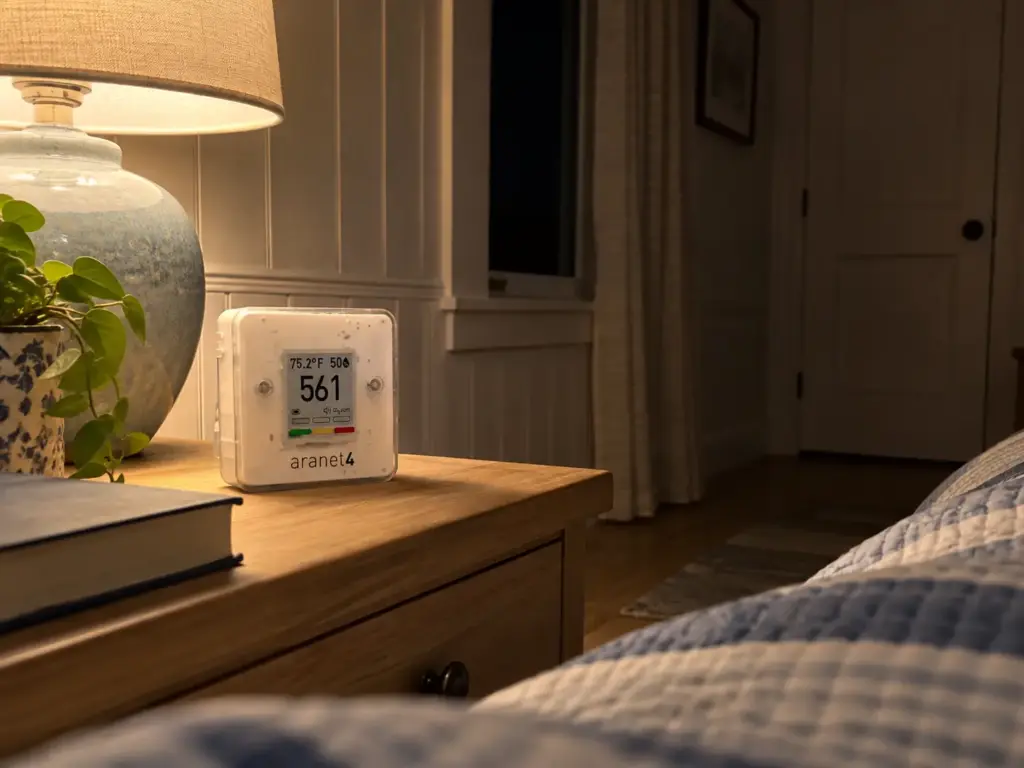
A meter with a stored history draws it for you: the Aranet4 Indoor Air Quality Monitor has a nondispersive infrared (NDIR) CO2 sensor and an e-ink screen, and its phone app keeps up to 90 days of readings with graphs, so a night becomes a line you can lay beside the next one. Its catch comes in two parts. One customer review reports it read about 75 ppm above the surroundings out of the box, and each screen refresh blanks the display for a moment, with no backlight to read it by in a dark room. An offset of 75 ppm still draws the same shape, which is why the shape is the thing to trust.
A line that goes flat
A line that climbs for a few hours and then flattens means the exchange has caught up with the breathing, a plateau. Where it flattens is breath divided by airflow, the arithmetic in the next section. A flat line at a level you can live with needs nothing changed. A flat line that sits high will not drop with time, only with more air moving through, which is what the changes in section five do.
Change the furnace filter and look at the next night’s curve against the night before. A poster in the forum thread reported about 250 points lower right after a filter change, then a steady climb back up. It is one house, so treat it as a check to make, not a result to expect; if your curve starts lower and drifts back, the filter has told you something about how air moves through the house.
A number that stays high all day
A reading that stays high at noon, with nobody in the room and the door open, is not a night effect. It points past the bedroom to the house, which is the building question from the last section. Compare the bedroom’s morning-after reading with the living room’s at the same hour; if they match and neither falls with the windows open, the night is not the cause.
The Arithmetic Behind the Plateau, Checked Against ASHRAE
The level a room settles at is a division. The number most often printed for it describes a person awake, so this section runs the division with a sleeper’s own figure and checks it against a measured bedroom.
The division: breath over airflow
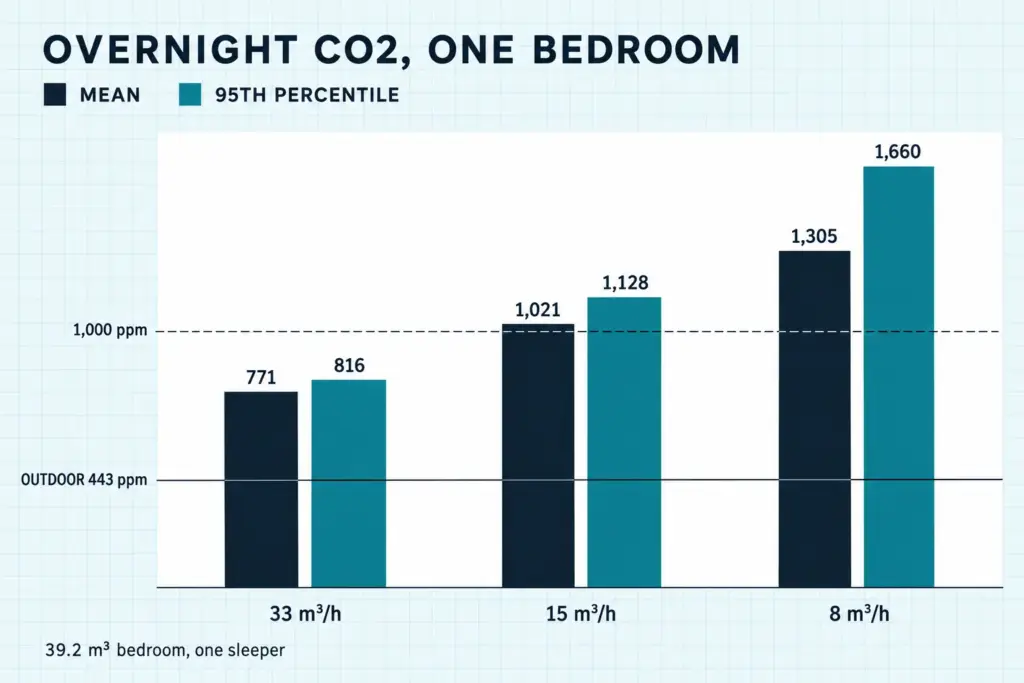
The division in words: liters of CO2 a person makes in an hour, divided by the cubic meters of outdoor air reaching the room in that hour, times 1,000, gives the ppm above outdoor air. The 2026 sleep study used a 39.2 m³ test bedroom (3.5 × 4.0 × 2.8 m) with one sleeper and three set airflows, so the division can be run on each one:
- At 33 m³/h (about 19 cfm), the sleeper made 11.4 L/h: 11.4 ÷ 33 × 1,000 is about 345 ppm above outdoor. The night’s mean was 771 ppm against 443 outside, which is 328 above.
- At 15 m³/h (about 9 cfm), the sleeper made 8.8 L/h: 8.8 ÷ 15 × 1,000 is roughly 590 ppm above outdoor. The mean was 1,021 ppm, which is 578 above.
- At 8 m³/h (about 5 cfm), the sleeper made 10.2 L/h: 10.2 ÷ 8 × 1,000 is 1,275 ppm above outdoor. The mean was 1,305 ppm, which is only 862 above, and the 95th percentile of its readings reached 1,660 ppm.
Two cautions go with those lines. The paper worked out its emission rates from a CO2 mass balance on this same data, so the match at 15 m³/h is a check on the arithmetic more than an independent test.
And the gap at 8 m³/h is the interesting one. The division’s steady state is 443 + 1,275, or 1,718 ppm, and the 95th percentile of the readings came within about 60 ppm of it, while the mean of the whole night sat far below. The room spends hours climbing toward the plateau and may never reach it before morning.
Run the same division on your own bedroom and the result is a prediction you can hold against the meter. When the two disagree, the meter is rarely the first thing to doubt; the estimate usually has a leak in it, such as a door gap or a return vent you did not count.
What ASHRAE’s 700 ppm is, and what it is not
ASHRAE’s Addendum d to Standard 62.1-2016 puts a sedentary person at 0.31 L/min of CO2, which is 18.6 liters an hour. At 7.5 L/s (15 cfm per person) of outdoor air, which is 27 m³ an hour, the addendum says the steady-state level stays “no greater than about 700 ppm above outdoor air levels.” The division confirms it: 18.6 ÷ 27 × 1,000 is about 689. The addendum ties that figure to the odor people give off in a room, not to a health limit.
Two things follow. The first is that the 700 is an awake figure. A sleeper’s 10.1 liters an hour at the same airflow gives 10.1 ÷ 27 × 1,000, about 375 ppm above outdoor, roughly half. Two sleepers who each get 15 cfm land on the same 375, because both terms of the division double.
The second is the status of the number: the same addendum deletes the informative appendix that held the derivation, and the committee says it “is aware of misuse and confusion caused by the information in its present form.” So the arithmetic works as a rule of thumb for a room, and it is no longer part of the standard’s text.
Run the division backward to learn how much air your bedroom really gets. Say your flat line settles near 1,000 ppm on a day when the open-window baseline was 450. That is 550 above outdoor, and 10.1 liters an hour ÷ 550 × 1,000 comes to about 18 m³ of outdoor air an hour, near 11 cfm for one sleeper. That is below the 15 cfm the standard assumes, and it tells you the room is leaking less than the rule of thumb expects.
The plateau is not the climb
The division gives the level where the line settles, not the time it takes to get there. That time is set by the room’s volume and the airflow. For the 39.2 m³ test bedroom it works out to 39.2 ÷ 33 = 1.2 hours at the highest airflow, 2.6 hours at the middle one and 4.9 hours at the lowest, and in each case the room covers about two thirds of the distance to its plateau in that time, counting from a start near outdoor levels. A small closed room takes hours; a leaky apartment takes much less.
Health Canada’s number belongs in the same frame. The department sets Health Canada’s long-term home limit of 1,000 ppm as “1000 parts per million (ppm) based on a 24-hour average.” A day-long average is not a bedtime peak, so a bedroom can run over 1,000 for hours of a night and the day’s average can still sit under it.
The figure says nothing about a given night, which is why the curve is the thing to read. Once the door opens, the decay has its own timing, covered in how long a high reading lasts once the door opens.
One Change Per Night, With a Reading Between
Fixing a night curve is a test, not a shopping trip. Change one thing, read the next morning’s line, and only then change the next. The changes below come in the order a house can try them, free and likeliest first, and nothing in this section needs a purchase.
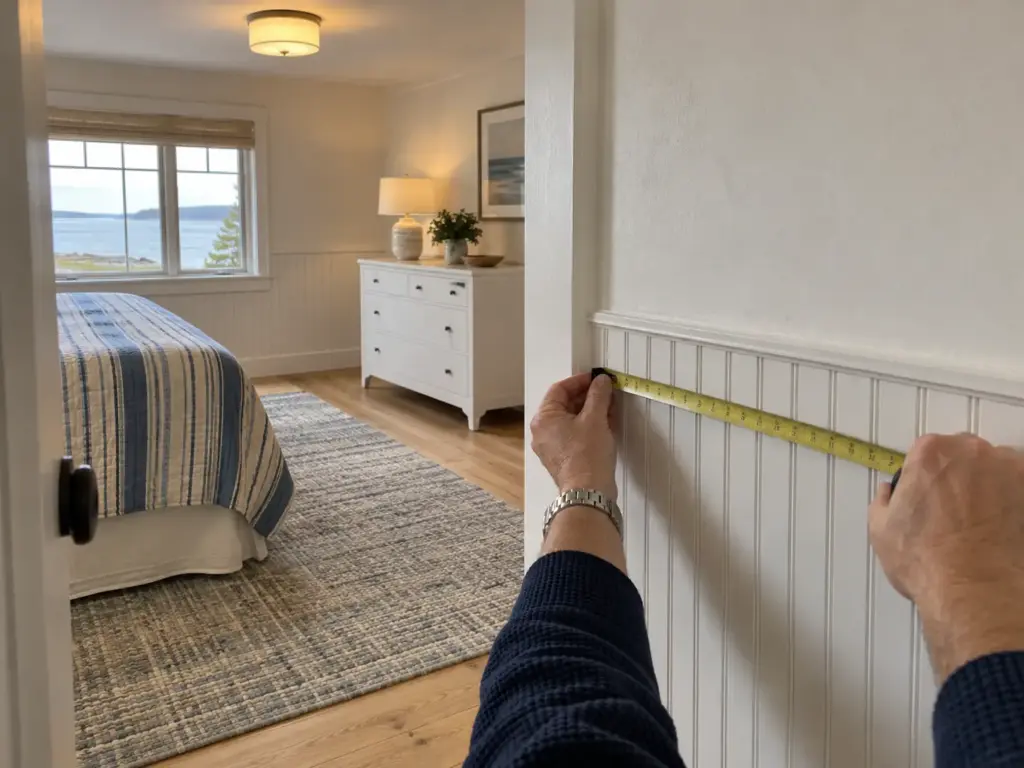
Open the door first
The air in a shut bedroom needs somewhere to go, and a shut door can turn a room with no return vent into a dead end. Leave the door open, or ajar by a few inches, for the first night and nothing else. The line should bend down or flatten earlier than the shut-door night did. If it does not move, that is a finding too: the door was not the exit that mattered, and the window is next.
Not everyone expects the door to matter much. One poster in the forum thread reasoned that the gap under a door is about an inch, with an area close to that of a supply vent, so closing it should change the exchange only a little. That is a reason to run the test rather than assume, and it is why the reading between nights carries the weight.
The cost of this change is light, sound and privacy. The same closed-room mechanism applies to moisture, and what humidity is right for a bedroom covers it.
Then the window, a few inches
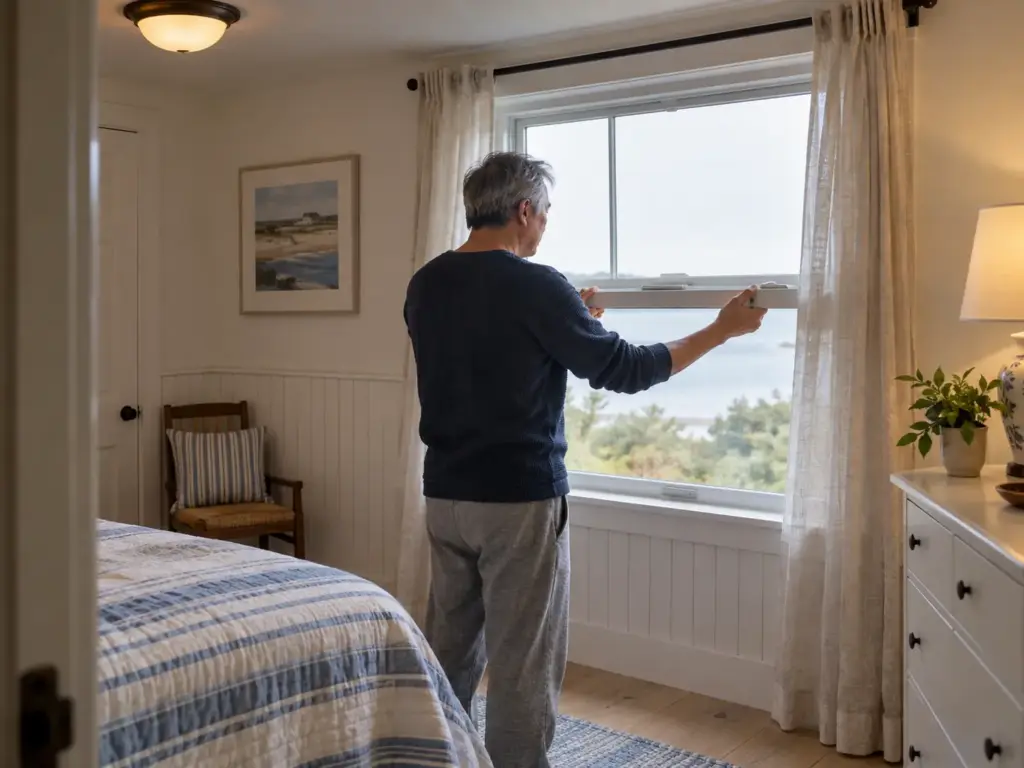
The strongest lever in the apartment study was the window. With only the small top windows open, the mean exchange measured about 2.86 air changes an hour, against 0.16 with everything shut, and with every window open it reached 19.1. Those are means for one apartment, and wind and the temperature gap moved them, so read them as an order of magnitude, not a promise for your bedroom.
Write the change on the same scrap of paper as the two readings: door open, window two inches, fan on a timer. A curve with no label of what changed cannot be compared with the one beside it, and a week later the readings will be all you have.
The overshoot is cold and noise. A window opened a few inches and a bedroom that drops several degrees by morning means the exchange has outrun what the sleeper will accept; narrow it by an inch and read again. Open the window and the door together only after each has had its own night.
Then the thermostat fan, on a timer
For a house with forced air, the community fix needs no hardware. The poster who found the bedroom above 1650 reported that “After setting the fan to run at least 5 minutes every hour, in the morning the bedroom is now 1250 instead of 1650.” A longer run is where the catch sits: the same poster wrote that a 10-minute run was an option “but it did wake me up once,” so the HVAC fan that fixes the curve is a noise the sleeper has to be willing to hear every hour. And a bedroom that has a supply vent and no return may not benefit at all, since another poster warned that “running the fan for air exchange may not help” there.
Whatever the change, give each one its own night and read the same two points. Doing everything tonight leaves no way to learn which one worked. The ordered list for the whole house is in the full order of fixes for lowering CO2 at home; this section is the night version of it.
What a Bedside Meter Gets Wrong at Night
The meter that draws the curve can also distort it. Where it sits, how often it is read and how close it is to the pillow all change the shape, and a cheap meter has limits worth knowing before the first night.
Not on the pillow
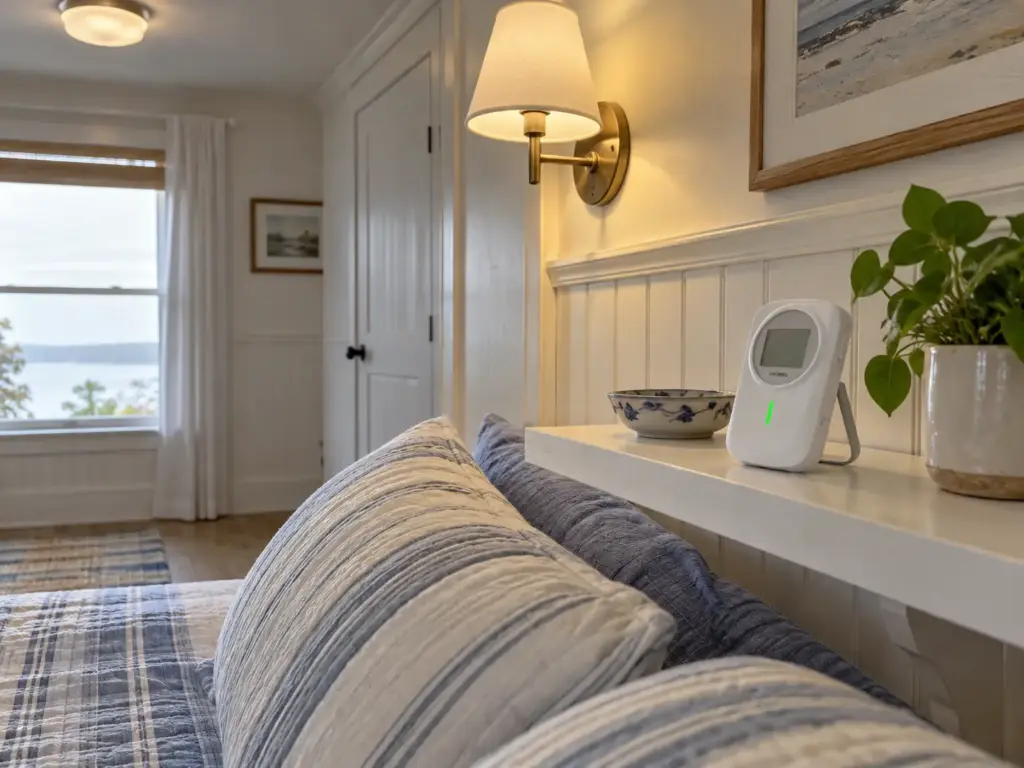
The UK Health and Safety Executive says it plainly: “Position the monitors over 50cm away from people as their exhaled breath contains CO2.” A meter on the pillow reads the sleeper’s exhaled air, not the room, and each turn of the head shows up as a spike. Put it at bed height, about an arm’s length off, out of the draft from the door.
Meter placement matters more at night than by day: the apartment paper found the air least well mixed at night, when the occupant was asleep and nothing was moving it. Full placement advice is in how to measure CO2 in any room.
Reading it once is not reading it
A reader who checks the meter once at breakfast gets the end of the curve and none of its shape. Two readings, bedtime and waking, are the minimum; a stored history is better. Meters also drift, and some read high out of the box, so the curve needs an anchor.
Open every window for an hour in the morning, or carry the meter outdoors, and read the number it settles on. Outdoor air runs 300 to 500 ppm, so a meter that sits far from that band is shifted, and the whole night’s line is shifted by the same amount. That one reading tells you whether to trust the level or only the shape.
A meter that beeps at 3 a.m.
The cheaper route is the INKBIRD Indoor Air Quality Monitor NDIR CO2 Detector (IAM-O2), which reads CO2 on an NDIR sensor from 0 to 9,999 ppm, runs 3 to 6 months on a charge and carries a sound and light alarm. The alarm is the part to weigh, because a beep in a bedroom is a trade-off you set before the first night rather than a feature to discover. Check the manual for whether the alarm can be muted or its threshold moved, and decide how loud a morning you want.
The accuracy question stays open: a poster in the forum thread, after buying a second meter from another brand to compare, wrote that “The Inkbird temperature reading is way off, so I’m suspect of its accuracy.” That is one user’s doubt about the temperature reading, not a test of the CO2 count, and the open-window check above settles it for any unit.
Open the Door Tonight, Then Read Two Numbers
Three points are worth carrying out of the room:
- The rise at night is a small closed room’s, not the atmosphere’s, and a roomy bedroom with open doors can flatten or even fall.
- The plateau is breath over airflow: for a sleeper at the standard’s airflow, about 375 ppm above outdoor air, roughly half of the 700 printed for people awake, and the climb takes hours to get there.
- One change a night, and the same two readings between, is the only way to learn which change moved the line.
The check for later: look at the curve again once the windows have stayed shut for weeks, and again when the filter has aged, and compare each against the first one you wrote down. A line that starts higher than it did in week one is the room telling you the exchange changed, not the meter.
For tomorrow, leave the bedroom door open and change nothing else. Read the meter at bedtime and again on waking, write both beside the note that the door was open, and set them next to the shut-door night. If the line moved, the next change in the ordered list is yours to choose; if it did not, the window is next.
Frequently Asked Questions
01Why do carbon dioxide levels rise at night in a bedroom?
A sleeper keeps breathing out about 10 liters of CO2 an hour, and a shut door and closed window slow the outdoor air that dilutes it. A small closed bedroom climbs until airflow catches up; a roomy one with open doors may flatten or fall.
02What is a good CO2 level while sleeping?
The home figure used here is Health Canada’s 1,000 ppm, which is a 24-hour average, so a bedroom can pass it for hours on a night without breaking it. No sleep-specific number is cited, so judge the whole curve, not one reading.
03How high can a bedroom’s CO2 get overnight?
It depends on the room and its airflow: one bedroom in a home forum went from about 500 ppm at bedtime to over 1650 with the door closed. A 39 m³ test bedroom with 8 m³/h of outdoor air hit 1,660 ppm at its 95th percentile. Both are single cases.
04Does opening the bedroom door lower CO2 at night?
Usually yes when the bedroom is the problem, because an open door gives the room’s air a way out and the overnight line flattens or bends down. If the whole house reads high at every hour, the door moves little; compare a door-open night with a door-shut night.
05What time of year is indoor CO2 highest?
The sources used here rank no months for a bedroom. In the one apartment monitored for a year, the mean was 1,278 ppm, and its closed-window exchange swung between about 0.1 and 0.3 air changes an hour with the weather, so the season matters through how long the windows stay shut.