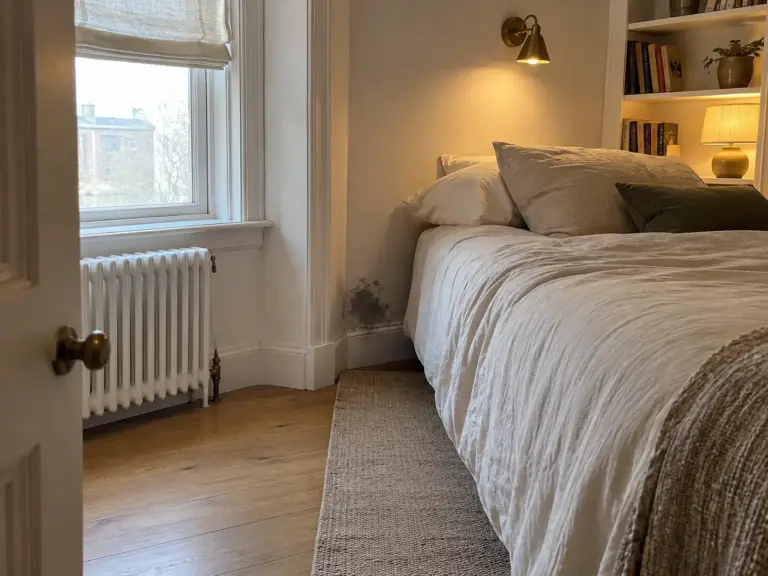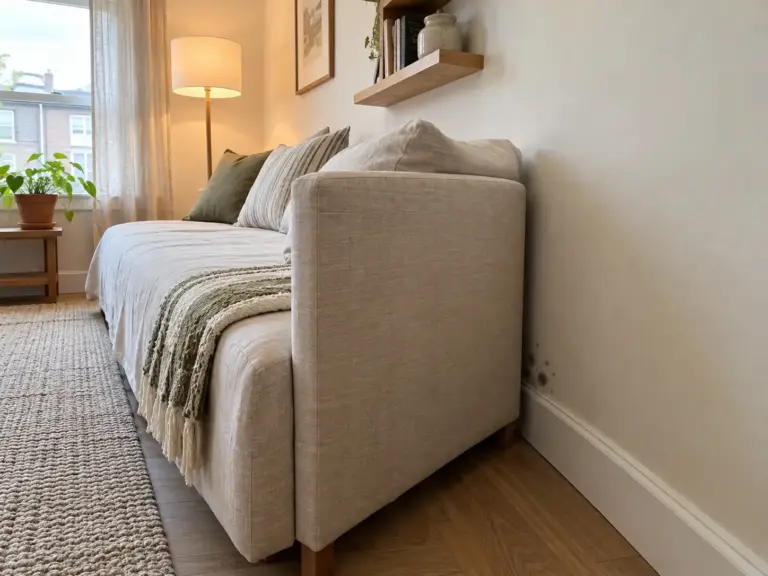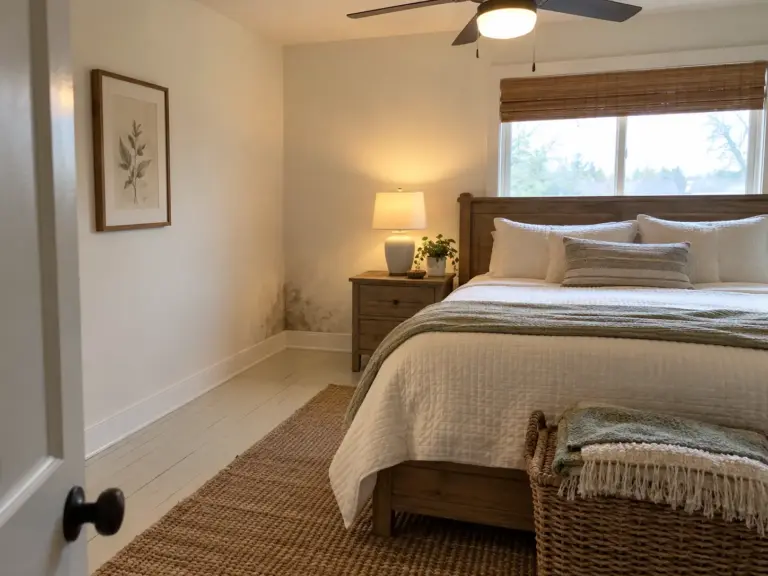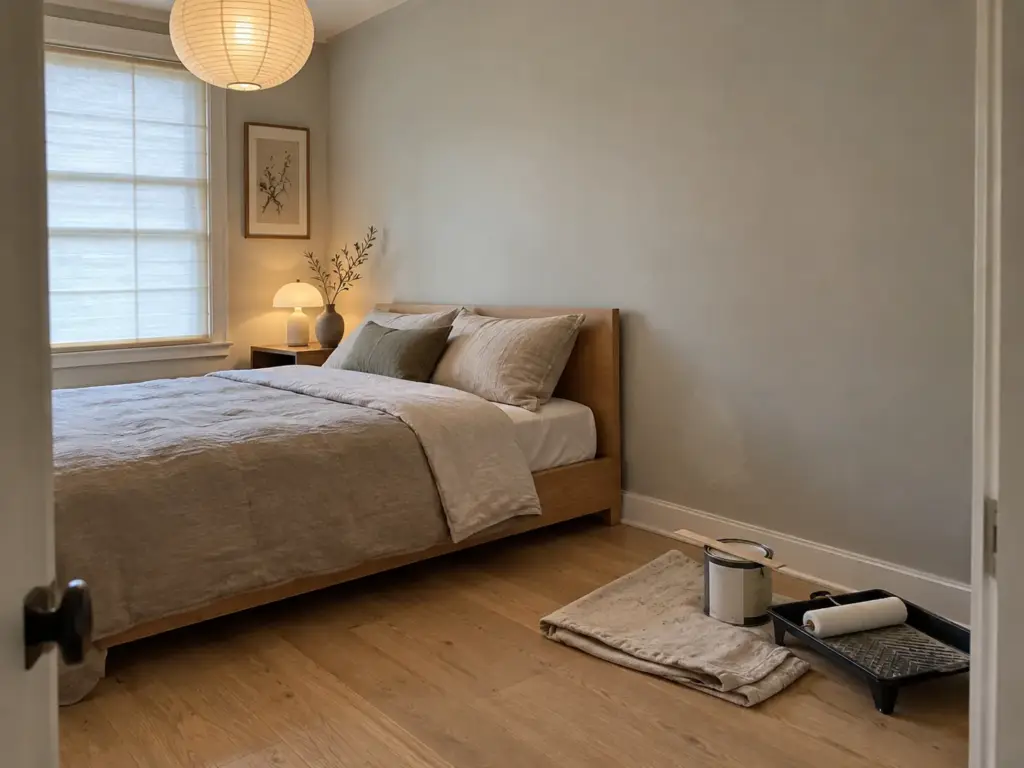
You found a gray patch low on the bedroom wall, behind the headboard or the dresser, and the can of paint is already waiting in the garage. Before Saturday’s plan hardens, one question decides how it goes: should you remove mold before painting a wall, or will one good coat cover it? A coat of paint is a film that sits on the surface, and a mold patch is a living colony that feeds on that surface and on the dampness under it, so the film hides the color without touching what feeds the growth. Below you get the answer, the three-part test that says when the wall can take a coat, what primers and mold-resistant paints can and cannot do, and the point where the wall, not the paint, is the job.
Quick Answer
Yes. Remove the mold and let the wall dry before any paint, because paint laid over live mold is likely to peel and the patch keeps growing under the coat. Paint is the last step: the spot stays gone after cleaning, the wall reads dry, and the room sits under 60 percent humidity.
A Coat of Paint Hides the Patch and Feeds the Cause
The patch is the visible end of a surface that stays damp. Paint changes how that surface looks; it does not change whether it is damp, and that gap is where the trouble starts. Picture yourself at the wall with the roller tray at your feet, reading the can for a promise it never quite makes.
What the EPA Says Paint Does Over a Moldy Surface
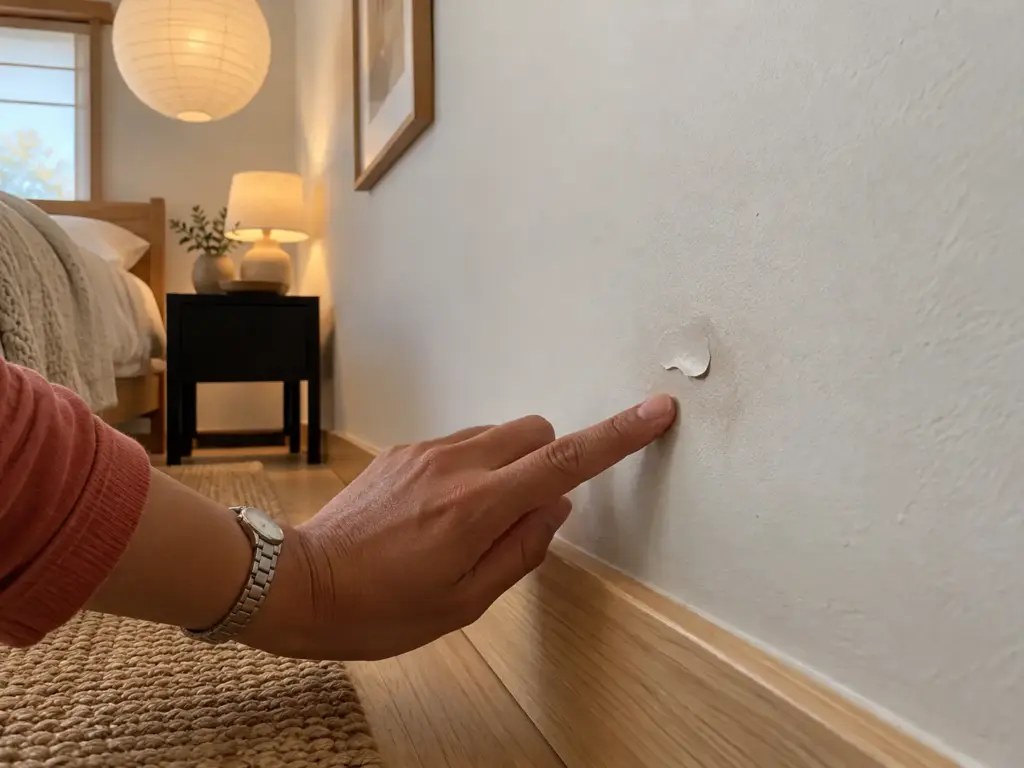
According to the EPA’s guidance on cleaning up mold in a home, “Paint applied over moldy surfaces is likely to peel.” Peeling is the early, visible version of the failure, and the same guidance tells you to clean up the mold and dry the surfaces before painting, not after. The mechanism is plain enough to predict from the couch. A coat is a thin film glued to a surface, and when that surface is a mold patch sitting in damp drywall paper, the film has nothing steady to hold, so its edge lifts first.
The direction the problem points matters more than the patch. Mold on a bedroom wall points at moisture, not at dirt, which means painting over mold treats the color of the wall and never the water behind that color.
Why the Patch Comes Back Through the Coat
A covered patch that returns usually returns in the same spot, because that spot is the coldest, stillest, dampest stretch of the wall. Why mold grows on a bedroom wall comes down to exactly that mix, and a coat of paint changes none of the three, so the regrowth shows up where it started. The film even adds a layer that holds moisture against the surface instead of letting the wall dry.
You paint on Saturday and the wall looks clean for a while. Then the first cold stretch arrives, and a faint shadow shows through the coat in the corner, with the paint lifting at one edge.
Pressure washing a moldy surface is a common mistake, because it spreads the growth. Cleaning advice often gets stuck on which cleaner to use, when the moisture is the real question. That argument belongs to the cleaner article. What belongs here is what comes after the cleaning.
Three Checks Before Any Primer Goes On
Cleaning the spot is a separate job with its own steps, so this section starts where that job ends. “Let it dry completely” is where most instructions stop, and it leaves you guessing. These three checks all have to be true on the same day, and they go in order from the one that costs nothing.
The Spot Stays Gone After You Clean It
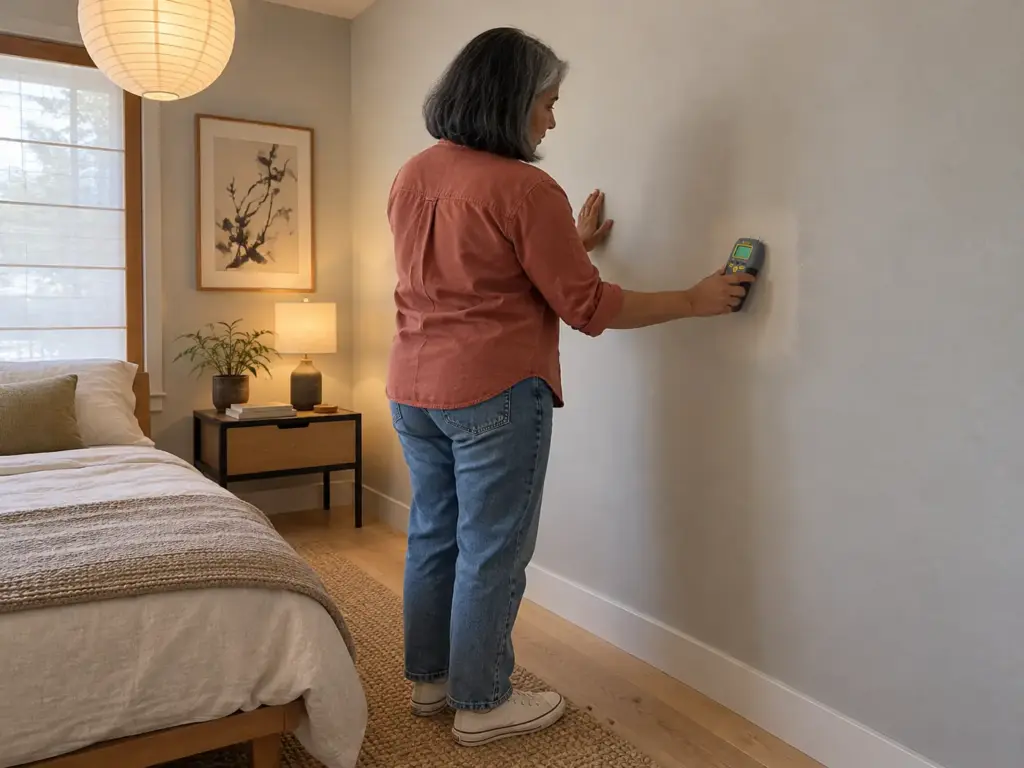
The first check is free: your eyes and the back of your hand. After you finish cleaning (the steps are in how to remove mold on a bedroom wall, and which cleaner to use on the spot settles the cleaner), does the spot stay gone as the wall dries?
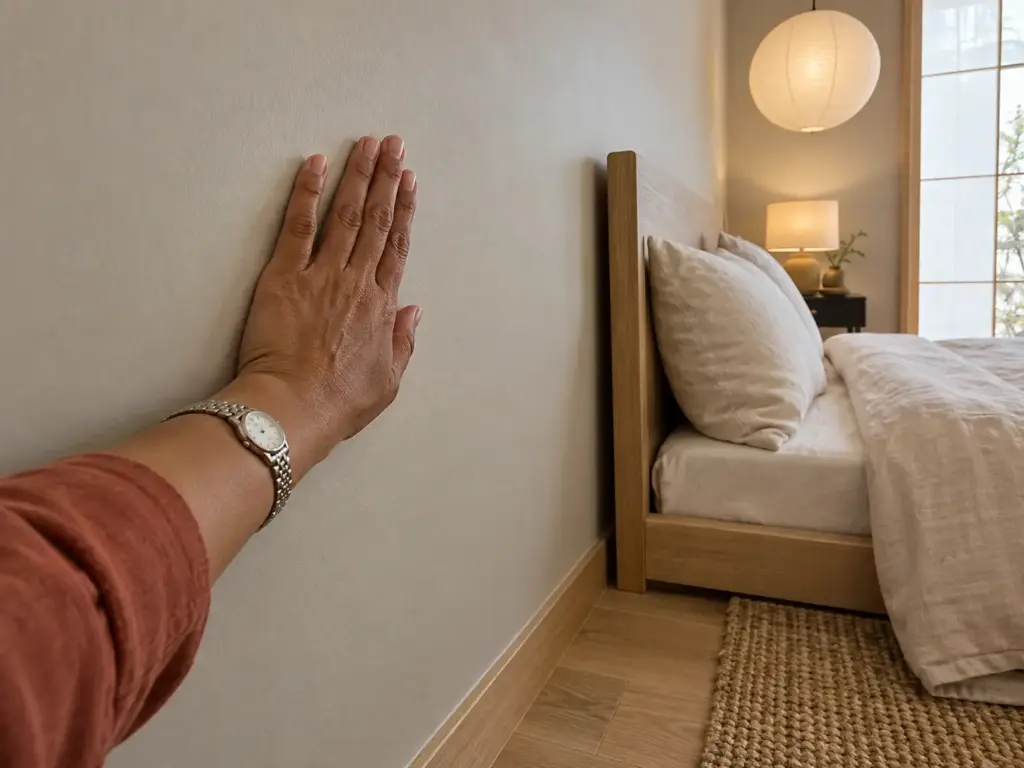
A faint shadow that fades as the surface loses its wet look was a stain. A spot that darkens again, or grows a speckled edge, is growth that did not come off. Lay the back of your hand flat on the cold part of the wall, then on the dry stretch beside it. A wall that still holds moisture tends to feel cooler and slightly clammy next to its neighbor.
One safety step belongs here, in the house’s voice. The EPA’s guide lists gloves, goggles and an N-95 respirator for cleanup, and it says that anyone with health concerns should consult a health professional before starting. That call is between you and a doctor, and the page leaves it there.
The Wall Reads Dry Next to a Dry Part of the Same Wall
Your hand only goes so far, so the second check puts a number on the wall. The General Tools MMD4E is a pin-type meter: two stainless steel pins, 8 mm long, press into the surface, and it reads moisture on a building-materials scale (1.5 to 33 for building materials such as drywall).
The reading is relative, so the number on its own settles nothing. Press it on the stained spot, then on an untouched part of the same wall at the same height, and compare the two. When they match, the spot has dried to the wall’s own baseline.
Read both again on another day, because the wall can read level with its clean neighbor on Saturday and a few points higher on Monday morning, having taken moisture back from the room. One reading is not the test.
Keep this number apart from the room’s humidity: the meter reads the wall material, and its percent is moisture content, not relative humidity. Mixing the two is the common mistake.
The listing’s review summary, which is an AI-generated summary of buyer reviews, says the pins bend after about thirty uses and that accuracy divides opinions, with some buyers reporting inconsistent readings. The pins also leave two tiny holes in the wall, and the coat of paint covers them.
Take the comparison reading at the same height as the stain, not near the ceiling. An outside wall is colder low down, so a reference taken higher up flatters the stained spot and the test passes when it should not.
The Room Sits Under 60 Percent
The third check is the air the wall lives in. According to the EPA’s brief guide to mold, moisture and your home, “If possible, keep indoor humidity below 60 percent (ideally between 30 and 50 percent) relative humidity.” What a bedroom should read sits in that same band. A wall that dried in the afternoon will take the moisture back from a room that climbs above the line overnight, which is common in a bedroom with the door shut and the bed pushed against an outside wall.
A hygrometer tells you which side of the line the room is on. The Govee H5075 Bluetooth Hygrometer Thermometer reads humidity to plus or minus 3 percent, connects over Bluetooth up to 196 feet, and its app alerts you when the reading leaves a range you set, so a 60 percent alert does the watching for you.
Its listing summary reports that some units stop working within six months and that the Bluetooth connection is hit or miss. And like any hygrometer, it reads one spot in the room, not the wall itself. If the reading stays above the line, the order that brings the room under 60 percent comes before any paint.
The test, in one sentence: the spot is gone, the wall reads level with its clean neighbor, and the room is under 60 percent, all on the same day and still true on the next. If one fails, go back one step, never forward two. No institutional source gives a waiting time after cleaning, so this test replaces the calendar.
Put the hygrometer on the wall’s side of the room, a hand’s width off the wall and at the height of the stain, not on the far nightstand. The air against a cold wall carries the reading that matters here, and it can sit several points above what the middle of the room shows.
Primer and Paint on a Wall That Passed
Once the wall has passed the three checks, the paint is the easy part, and the question changes from whether to paint to what goes on first. This is where the can labels do most of their talking, so it helps to know what each product on the shelf is actually for.
A Stain-Blocking Primer Hides the Stain
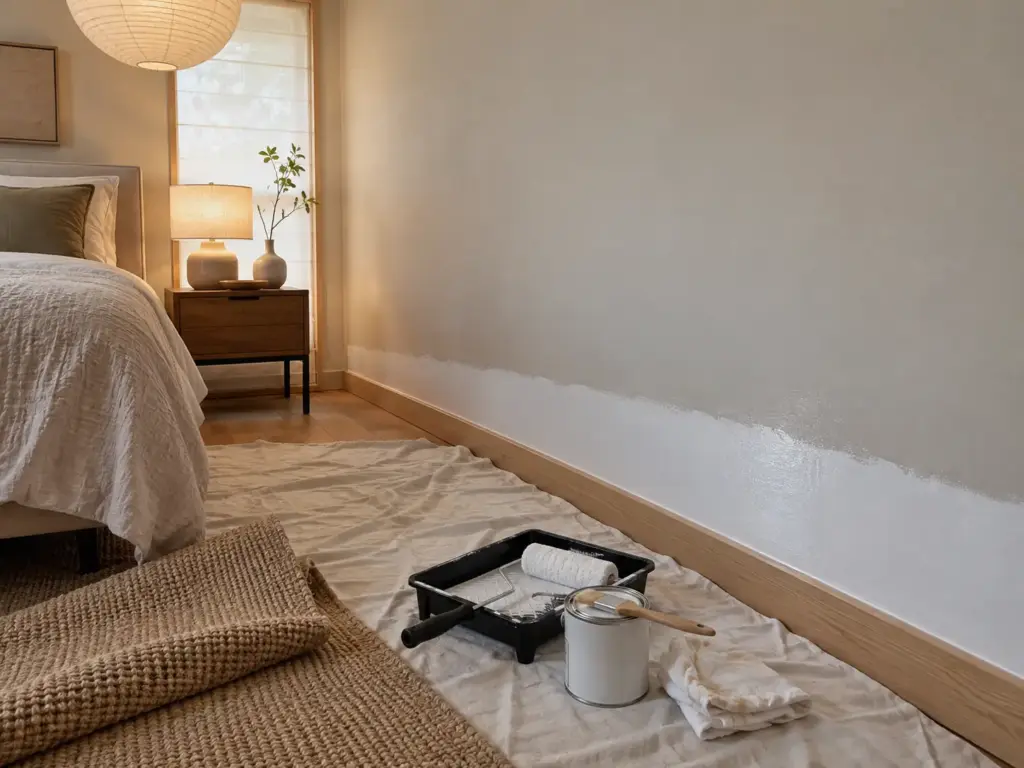
A stain-blocking primer does one job: it covers a leftover mark so the mark does not show through the finish coat. A shellac-based stain-blocking primer is a common choice for this, on the condition that the water problem is confirmed fixed first. Primer-and-paint-in-one products are often oversold for this job. That condition is the part to keep. Primer on a wall that is still giving off moisture is the same mistake as paint on live mold, only with an extra step.
The order, one change at a time: remove the spot, let the wall pass the checks, prime, and read the wall again before the second coat if the first coat took a shadow.
A Mold-Resistant Paint Goes on Last
A mold-resistant or mildew-resistant paint carries an additive meant to keep growth off the paint film. It goes on a wall that is already clean and dry, as the final coat. It is a layer for a wall that passed, not a rescue for one that has not.
Two arguments run through the paint-aisle advice, and neither has a standard behind it. One is the finish: trade pages say flat or matte paint absorbs moisture and should give way to satin or semi-gloss, and that is a rule of thumb, not a tested figure. The other is oil-based against water-based paint. Opinions differ on whether oil feeds mold, and oil-based primer is a common recommendation. Nothing settles either one, so pick on the can’s label and the wall’s condition rather than on a rule.
After the first coat of primer, look along the wall with the light coming from the side. Tiny bubbles at the edge of the old patch mean the wall is still giving off moisture, and the right move is to stop and go back to the three checks, not to roll on a second coat.
What the Paint Cannot Do
The two promises on the cans are real but narrow. The reader who paints with a mold-resistant coat and expects the wall to be protected is the one most likely to see the patch again, so it is worth reading the small line under the large one.
The Protection Sits on the Film, Not Under It
The big letters on the can say the product prevents mold and mildew growth. KILZ spells out on its own mold and mildew primer page where that protection lives: the primer “Prevents mold & mildew growth on the primer film.” The same page says “any existing mold and/or mildew on the surface should be removed before priming and painting.” The maker’s own instructions put the cleaning first, and the promise sits on the film of the primer, not on the wall under it.
The consequence follows from the mechanism. A wall that stays damp can host growth under a coat of the most resistant paint on the shelf, because the additive never reaches the surface where the moisture sits. A stain-blocking primer has the same limit: it hides a stain and does nothing to stop moisture coming through the wall. The additive is a layer for a clean, dry wall, never a cure.
Dead Mold Still Has to Come Off
The other half of the confusion is the idea that a product that stops the mold from growing has finished the job. The EPA does not see it that way.
Its brief guide says dead mold still has to be removed, that a biocide such as chlorine bleach is not recommended as a routine part of mold cleanup, and that sterilizing an area is neither possible nor desirable. A background of mold spores stays in any house, and it does not grow once the moisture problem is solved.
That is why whether bleach is the right cleaner is a question about removal, and why a coat of paint over a patch that was only disinfected leaves the same job undone.
Primers sold with a mold-fighting promise can cover a stain without stopping the moisture behind it. Treat the additive as a bonus on a wall that already passed.
When the Wall Is the Problem
A patch that comes back through a clean, dry, primed wall is no longer a paint question. This last section is about telling the two cases apart and knowing where the building takes over from the roller.
A Patch That Returns Through a Fresh Coat
The split comes down to what happens after a clean, dry wall gets its coat. If the patch stays gone, it was growth on the surface and you handled it. If it returns through a fresh coat, it points to moisture behind the surface: a leak, a cold outside wall, or a moisture source you have not found yet. The EPA’s cleanup guidance says to fix plumbing leaks and other water problems as soon as possible, and its brief guide says that cleaning up the mold without fixing the water problem brings the mold back.
Look at the same corner after the first cold week. A shadow at the same height, in the same corner of the same outside wall, says it is the wall. In an ordinary bedroom the usual suspects are close at hand: the bed pushed flush against the cold outside wall, and the dresser that blocks airflow along the baseboard. The order for keeping it off the wall starts with the free moves, and moving furniture a hand’s width off the wall is one of them.
The Size Where the Paint Is the Smaller Job
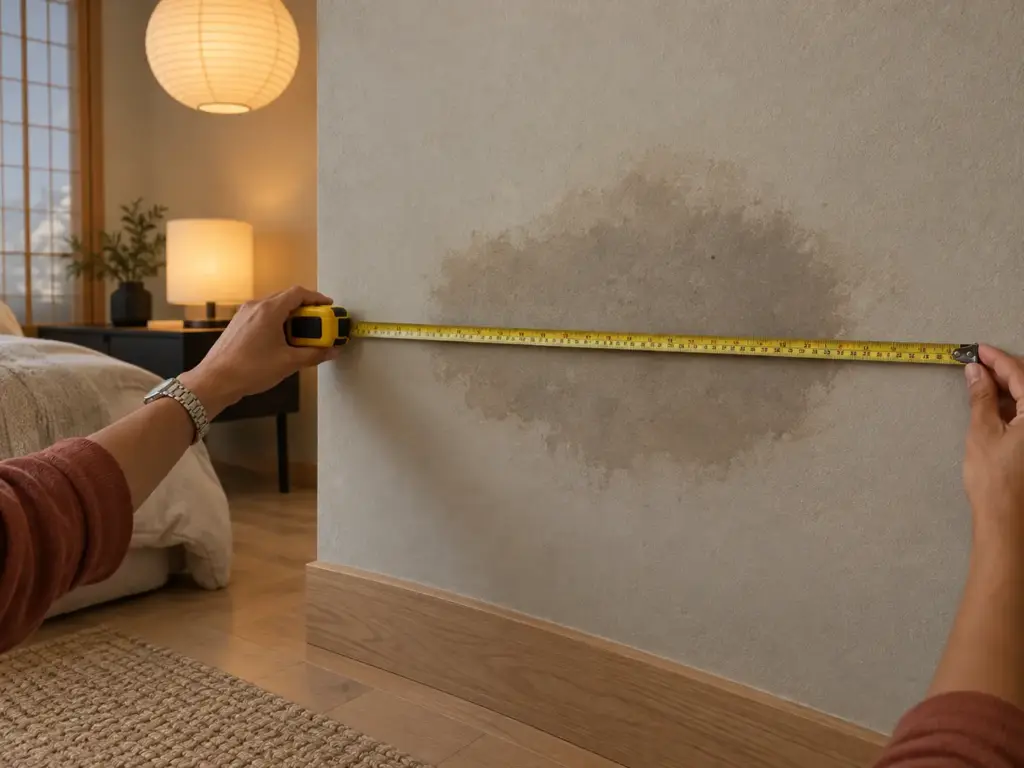
Size is the other line. The EPA says an area under about 10 square feet, roughly 3 feet by 3 feet, is a job most people can handle themselves. Above that, or when water or sewage damage is involved, the agency points to its own guidance for larger jobs, in the EPA’s cleanup guidance for moldy homes. At that size the building, not the paint, is the job, and when a mold patch is a job for a professional is where that threshold gets its full treatment.
Measure the footprint with a tape before you decide, and measure the whole area that was stained, not only what is still visible after cleaning. A faint shadow of a foot across can have been a patch of two feet before the cleaning started.
There is also an honest limit on what a page like this can tell you. Whether a wall is wet behind the surface cannot be judged from a photo or from a single reading. A source that keeps coming back is a reason to look for the water, and to bring in a professional if what you find is large. A monitor can help with part of the picture, and what an air-quality monitor can and cannot see on a wall draws the line between the two.
Remove It, Read the Wall Twice, Then Open the Can
Three things carry over to the roller. The paint is the last step: the patch comes off and the wall dries before any coat goes on. The test for that is the spot gone after cleaning, the wall reading level with its own clean part, and the room under 60 percent, with the second reading taken on another day. And a primer hides a stain while a resistant paint protects only its own film, so neither one repairs a wall.
For later, look at the same corner after the first cold week, with a room reading in hand. A shadow in the same place says to look behind the wall, not to buy another can.
Tomorrow’s change is small: remove the spot, then read the wall and the room twice before you open the can. If the room keeps drifting above the line, the next decision is how to prevent mold on bedroom walls, and the paint waits for it.
Frequently Asked Questions
01Should you remove mold before painting a wall?
Yes. Remove the mold and let the wall dry before any paint, because paint over live mold is likely to peel and the patch keeps growing under the coat. The steps are in how to remove mold on a bedroom wall.
02Is it okay to paint over a moldy wall?
No. The EPA says paint applied over moldy surfaces is likely to peel, so the patch comes off first. Then read the wall with a meter and the room with a hygrometer before the primer goes on.
03Can you paint directly over mold?
You physically can, but the patch keeps growing under the coat and shows through it. A wall is ready only when the spot stays gone, the wall reads dry against its own clean part, and the room sits under 60 percent.
04Does vinegar and dish soap remove mold before painting?
The goal is to get the mold off the wall, not to sterilize it, and no standard ranks vinegar over dish soap or the reverse. The EPA does not recommend bleach as a routine practice. Which cleaner to use on the spot compares the options.
05How long should a wall dry before you paint it?
No institutional source gives a waiting time after cleaning, so go by the wall instead of the calendar. It is ready when the spot stays gone, the wall reads level with its clean part, and the room holds under 60 percent across more than one day.