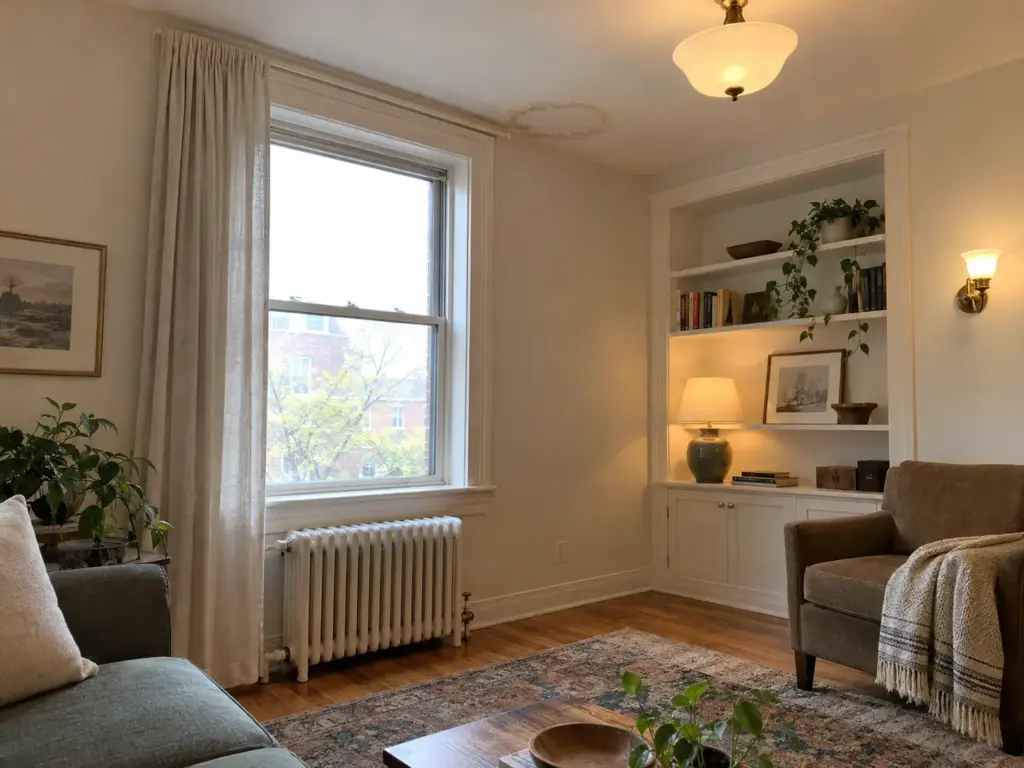
The water bill jumps with nobody home, or one corner of the ceiling turns a shade darker than the rest, and now you need to know how to detect a water leak without opening a wall. A huge water bill with no visible cause is a common starting point, and the utility may require the owner to find the leak. Start with the water meter, because it counts every drop that passes through the pipe and does not care where the water ends up; then read the room, because moisture leaves a wall as vapor long before it leaves it as a stain. The free tests come first and in order, the meter before any gadget, and the sensors that watch one spot day and night are handed to the pages that cover them.
Quick Answer
A meter that still moves with everything off means water is leaving the pipes, and a room whose humidity will not fall back once the water is off points at a wall, not at the air. Run the free tests in this order.
- Shut off every tap and appliance, then read the meter’s leak indicator dial.
- Close the main shut-off valve and read the dial again to split inside from outside.
- Dye the toilet tank and bypass the softener, reading the dial after each.
- Compare the room’s humidity with the water off; if it stays up, suspect the wall.
- Dry any damp surface and watch whether it wets itself again.
- Photograph the dial and the damp spot, then repeat the readings later.
Read the Water Meter With Every Tap Off
A bill that jumped says something is wrong without saying where. The meter is the first test because it needs no tools and counts every drop that passes, seen or unseen, so a dial that moves with the house quiet is evidence nobody can argue with.
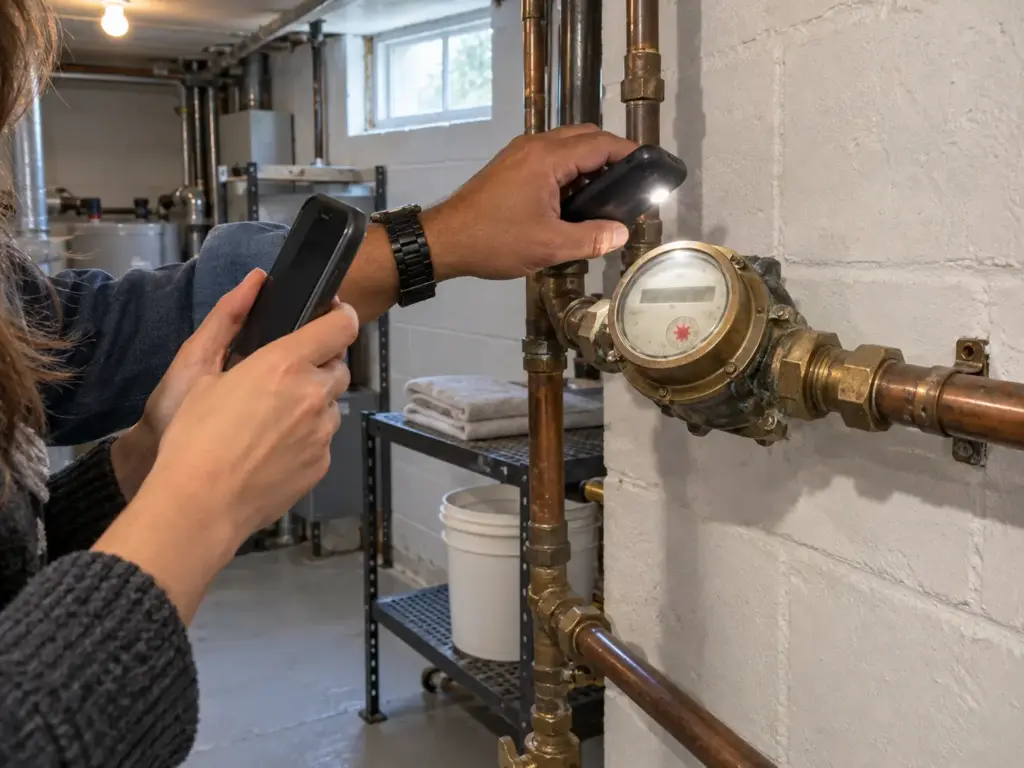
Shut off everything that uses water first
The test only means something if nothing legitimate is drawing water. Close every tap, then stop the dishwasher, the washer, the ice maker and any humidifier with a water line, and make sure nobody flushes during the reading. A softener is the appliance people forget, and it can run water to its drain with nothing visible, which the fixtures section returns to.
Find the leak-indicator dial
Most meters sit in a lidded box near the street, or on a basement or garage wall where the supply enters the house. Lift the lid, wipe the glass and look for the small leak-indicator dial, the one that moves when any water at all flows through. A phone flashlight does the job in a dark basement.
What a moving dial means, and what a still one does not prove
If the dial moves with the house quiet, water is leaving the pipes somewhere, and the next question is only where. The line of responsibility matters here: according to the City of Chandler, Arizona’s water-leak check guide, “Any leaks occurring after the meter on private property are the responsibility of the homeowner.” A dial that moves is therefore your repair bill, not the utility’s.
A slow leak does not make the dial spin. It makes it creep, a few small movements where there should be none, so the second reading tells you more than the first look. And a dial that sits still after one look proves less than it seems, because a leak that only runs when a fixture cycles can hide between readings. That is why the photograph below matters, and why the timing section near the end returns to it.
Photograph the dial with your phone before and after the quiet stretch. A dated picture settles the comparison, and memory does not, because a creeping dial looks the same from one glance to the next.
Shut the Main Valve and Read It Again
A moving meter says the leak exists. Closing the house’s own main shut-off valve and reading again says which side of that valve it is on, before anyone cuts into drywall or digs up a yard.
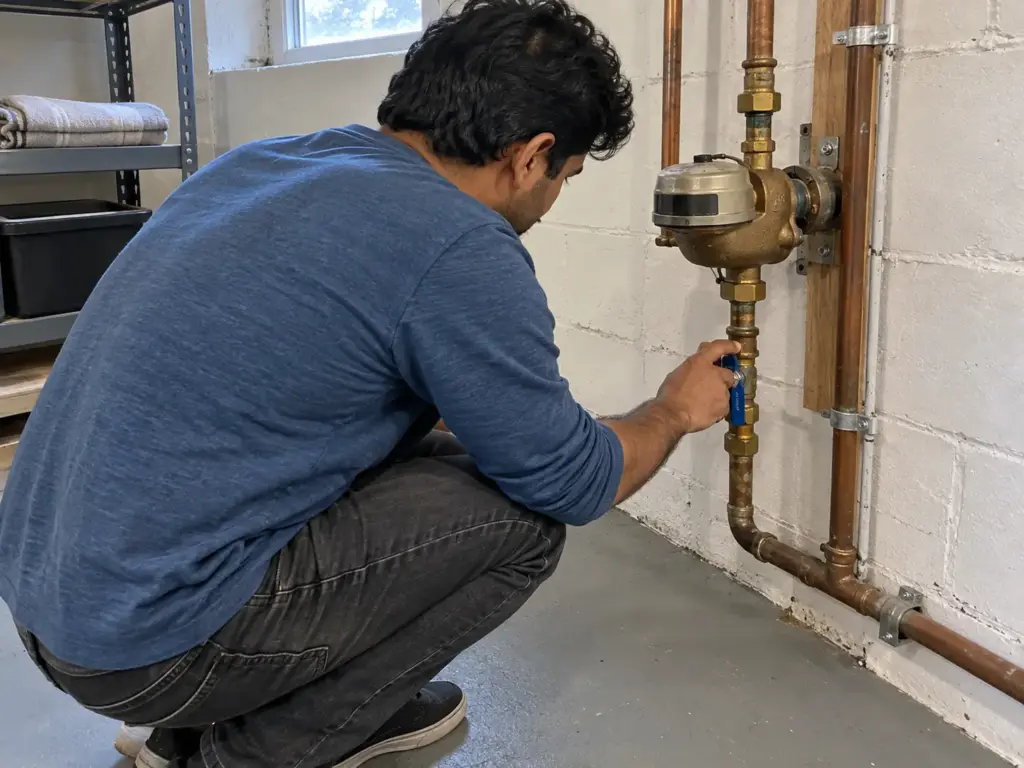
How the main shut-off test splits the problem in two
Find the valve where the supply enters the house, in a basement, a garage or a utility closet, and close it fully. Read the dial again. The test starts at the inside main shut-off valve: if the leak stops when that valve closes, it is past that point, and if the meter dial keeps moving, the leak is between the meter and the valve. This is the stop valve test, and it is the cheapest way to turn one big unknown into two smaller ones.
Shut things off one at a time inside
If the dial stopped, the leak is somewhere in the house. Shut things off one at a time and repeat the test: reopen the main, close one fixture, read the dial, put it back, and move to the next. Each pass is one change followed by one reading, so the thing that stops the dial is the thing that leaks. Three changes at once would leave you holding a stopped dial and no idea why.
What the result tells you to do next
The two readings together point somewhere, and the table keeps the combinations in one place.
| What the meter does | Where the leak is | What to do next |
|---|---|---|
| Still, with every tap off | No steady leak right now | Read again later; a slow leak can hide |
| Moves with taps off, stops with the main valve closed | Inside the house | Shut fixtures one at a time |
| Moves with taps off and with the main valve closed | Between the meter and the house | Stop searching indoors and call a specialist |
| Stops only once the softener is bypassed or one fixture is shut | That softener or fixture | Repair it, then read the dial again |
One snag shows up in practice: a main valve that has not been turned in years can stick. If it will not close fully, that is a finding of its own, because a plumber needs to know before the day it has to close in a hurry.
Learn where the main valve is and test that it closes while nothing is wrong. Closing a seized valve with water running is the worst moment to discover it.
Test the Fixtures You Can Reach, One at a Time
Once the meter says the leak is inside, the likeliest sources are the ones with a moving part or a drain that swallows the evidence. They are tested in an order that costs nothing, and the dial is read between each.
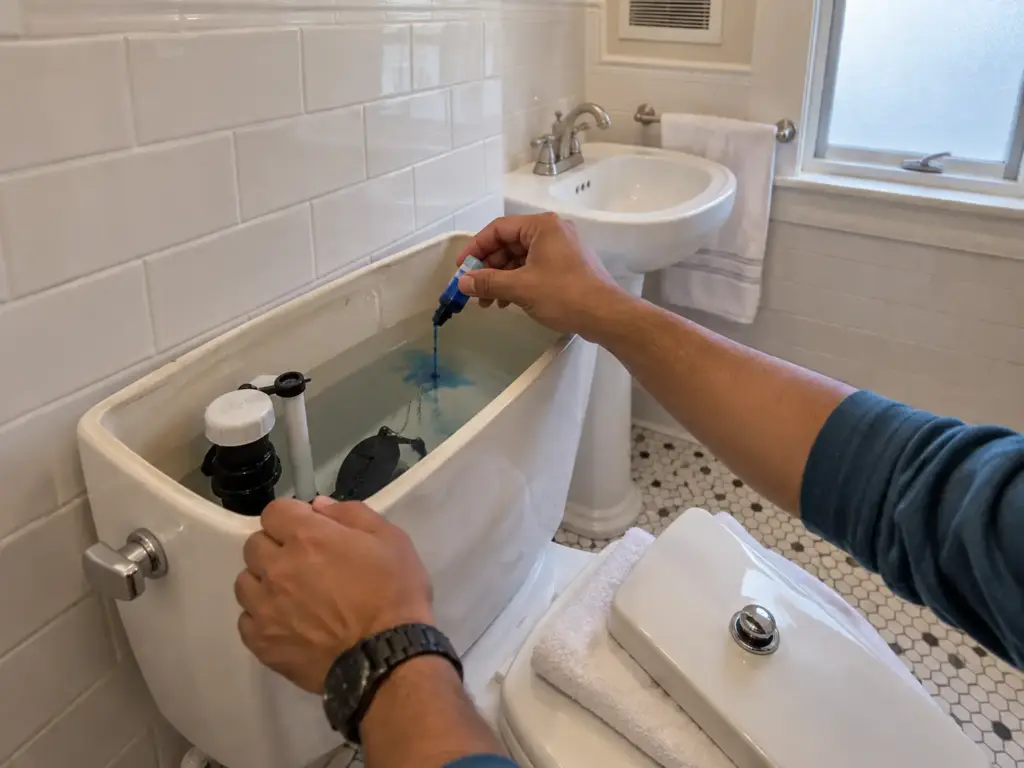
The toilet: dye in the tank
Lift the tank lid, drop in a few drops of food coloring from the kitchen drawer, and do not flush. A common check for a toilet is to add a few drops of food coloring to the tank: if the bowl water changes color without flushing, the toilet is leaking.
A running toilet is not always loud. The leak is more often water slipping past a poorly sealed toilet flapper than water running down the overflow tube, and a fill valve that never quite shuts off does the same quiet work. That is why the food coloring test beats listening: water that runs at a trickle makes almost no sound.
The water heater and the softener
A water softener with a sticky valve can run water to its drain all day without leaving a drip, a stain or a puddle. To check a water softener, turn its bypass valve, then read the dial; if the movement stops, the softener is the leak. Return the bypass valve to its normal position afterward. Beside it, the water heater pressure relief valve and the pipe that runs from it are worth a look, since a valve that weeps sends its water down that pipe where nobody sees it.
The furnace and AC drain line
A furnace or air conditioner that makes condensate has a condensate line and sometimes a drip pan under the coil, and either can overflow or back up. HVAC condensation is a steady source of water that nobody thinks of as plumbing. Look at the pan, the line and the floor under them, and check the furnace drip pan before deciding the problem is in a wall. This is the kind of leak that never makes a stain at all: a drain takes the water away, so only the meter shows it.
After each test, put the thing back the way it was and read the dial before starting the next. The test that worked is the only one you can name, and only if you changed nothing else in between.
Read the Room Before You Open a Wall
The meter finds that water is leaving the pipes, but the room is where it shows first, and room humidity is the reading that shows it. A wall that is handing water back keeps the air damp long after every tap is off, and that dampness is a reading you can take today.
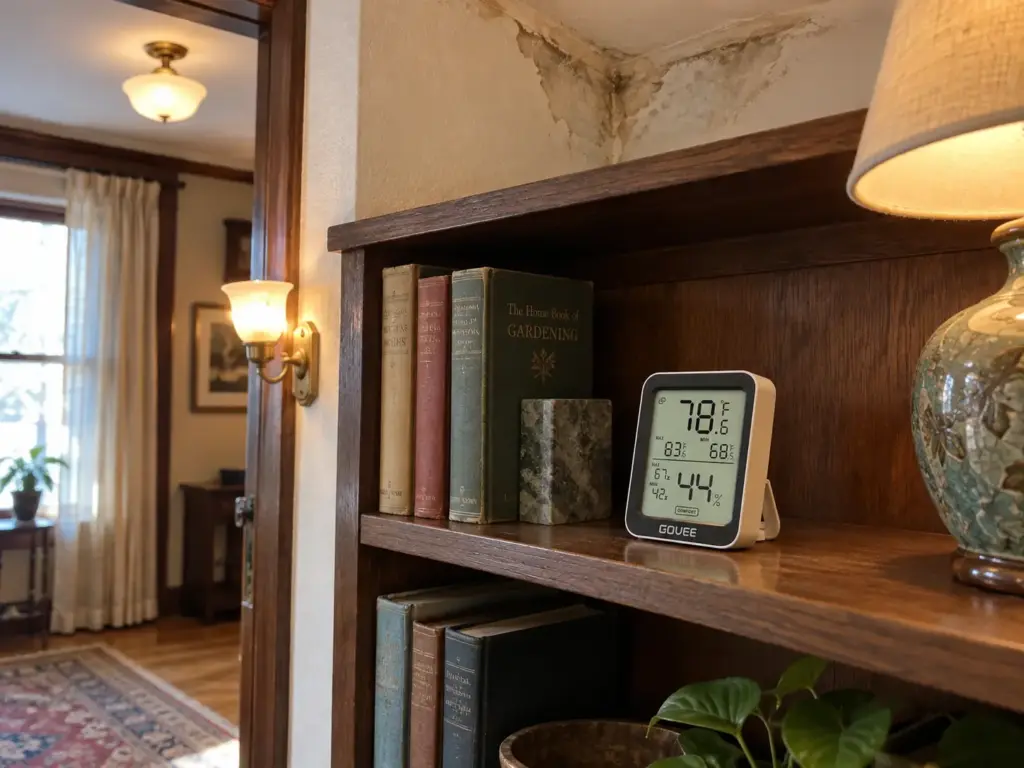
The humidity that will not fall back
Every room has a usual humidity reading, the one it settles to on an ordinary dry day. Shut off the water, and a room beside a suspect wall should drift back toward that number. When it does not, when the reading stays up for a day with the windows and the routine unchanged, the wall is handing moisture to the air and the air is not the source. A room that will not come back down is the signal; the particular percentage matters less than the stall.
Timing sets the stakes. According to the EPA’s guide to mold, moisture and your home, “If wet or damp materials or areas are dried 24-48 hours after a leak or spill happens, in most cases mold will not grow.” A wall still wet two days after the water was cut is past that window, and what happens next is a building problem for the wall, not a question about the air.
Reading the room with a cheap hygrometer
You need one number, repeated, and a cheap humidity checker you can trust gives it. The Govee H5075 logs humidity over days and sends an app alert when the reading leaves a range you set, which is the useful part for a room that has to come back down overnight. It is accurate to plus or minus 3 percent relative humidity, so it separates a 60 percent room from a 70 percent one and will not show a 2-point difference, and its Bluetooth listing range of 164 feet shrinks behind a wall or a floor. Some owners cannot get it to connect to the phone, and some say it stops working within six months, which is a reason to treat one hygrometer as a clue and not a verdict.
The phone and the app are optional if all you want is today’s number. The AcuRite 00613 reads humidity from 16 to 98 percent on one AA battery with no setup. It has a plain display and no logging, so you write down the reading yourself, morning and evening.
Where you put the sensor changes the answer. The same room reads higher near the suspect wall than in the middle of the floor, so move the hygrometer to the wall, wait for it to settle, and move it back; trust the difference between the two spots and not either spot alone.
What the number can and cannot tell you
A high reading says the air is damp. It does not say why, and it cannot say whether the water is a leak, a cold surface sweating or a shower that ran an hour ago. Against the usual band for a home, the reading tells you whether the room is in range or out, and the day-to-day change tells you whether something is feeding it.
Write down the room’s reading before the water goes off and again a day later. The difference between the two, not either number, is the answer.
Leak or Condensation? Check Before You Call Anyone
A wet window, a sweating pipe and a damp patch on a cold wall can all come from the room’s own humidity with no leak anywhere. The check below comes before a plumber is booked, because a surface that is wet only because it is cold needs a different change.

Which surfaces sweat without any leak
The EPA says that when you see condensation or moisture collecting on windows, walls or pipes, the step is to dry the wet surface and reduce the source of moisture, and that condensation can be a sign of high humidity. A cold water pipe, an outside wall in winter, a window pane, and the metal drip line of an air conditioner can all collect water from the room’s air and show no failure in the plumbing. The rule behind it is the dew point: air that touches a surface colder than its dew point leaves water on it.
The pattern gives them away. Condensation tends to fill in from the bottom of a cold surface in a fairly regular line, while a leak spreads outward from one point and keeps its shape from day to day. Window condensation on the room side is the clearest case: wet glass is the humidity doing its job, and the glass is no evidence of a pipe. The same split applies to a damp patch on a cold basement wall, which is why the leak-or-condensation check for a damp basement is worth reading beside this section.
Dry it, then see if it comes back
The test is the one change the EPA already names. Dry the spot completely, bring the room’s humidity down with a window, the exhaust fan or a lower humidifier setting, and then watch. If the spot stays dry, the surface was sweating. If it is wet again by itself with the room dry, the wall is being fed, and the meter and the room readings already point to where.
Window units and mini-splits muddy this check, because a drain that spills the wrong way looks like a ceiling leak. Before assuming a pipe, read when the AC makes the window sweat and look at where the condensate goes.
Signs on the Wall, Ceiling and Floor
The signs most people notice first are the ones the building shows: a stain, a bubble in the paint, a warped board. They say where to look and not always how big the leak is.
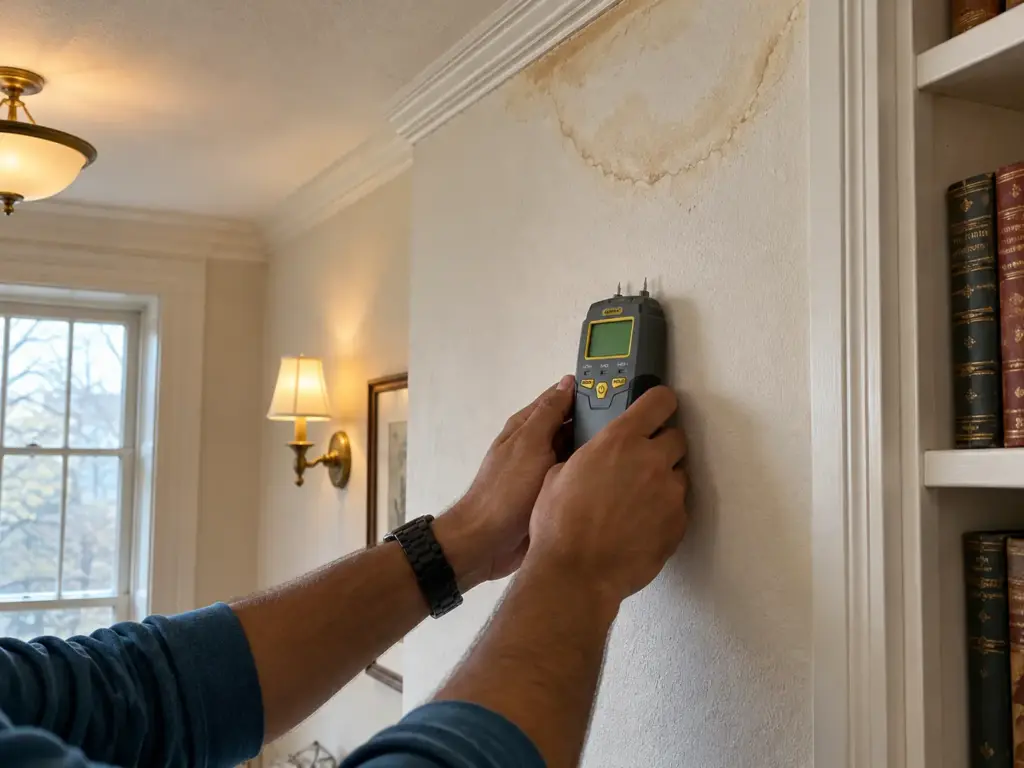
Stains, bubbling paint and warped boards
Look for water stains on a ceiling, paint that bubbles or peels, warped drywall that bows, a floor that cups, white chalky streaks on a basement wall (efflorescence), damp insulation in a crawl space, or a patch that stays darker than its neighbors. A stain with a darker line at its rim often means the leak has come and gone and come back, since each return leaves a new ring. How fast a wet wall can turn into a mold problem is its own question, and how fast mold grows on a wall after a leak covers the drying window in detail. Here the point is only the sign.
Smell and sound
A musty smell that returns after you open the windows means a damp material somewhere, and a faint dripping inside a wall at night, when the house is silent, means water moving where it should not. Neither pins down a location. They tell you that the meter and the room readings are worth repeating.
A wall reading against a dry reference
A moisture meter turns a hunch about a wall into a number, with one condition. The General Tools MMD4E is a pin-type meter that reads drywall and concrete from 1.5 to 33 percent and wood from 5 to 50 percent, with a backlit display that adds high, medium and low tones. A wall reading means little by itself because the drywall scale is narrow, so a dry wall in the same room is the reference, and the suspect spot is read against it. A wet wall next to a dry wall is a leak or a long-fed damp spot; both walls reading alike points back at the room’s air.
The General Tools MMD4E has a few catches. Its pins bend after about 30 uses, and some owners call the readings inconsistent. The listing’s subtitle says “pinless”, but it is a pin type, and the pins leave small holes where they go in. For a wall that is also a cold basement surface, a humidity sensor for a cold basement wall helps show whether the wall is the water source or only the coldest surface in the room.
Signs Outside the House and Under the Slab
When the meter moves with the house valve closed, the leak is outside the house, and the signs are in the ground rather than in the room. This is the part that nobody fixes from the living room.
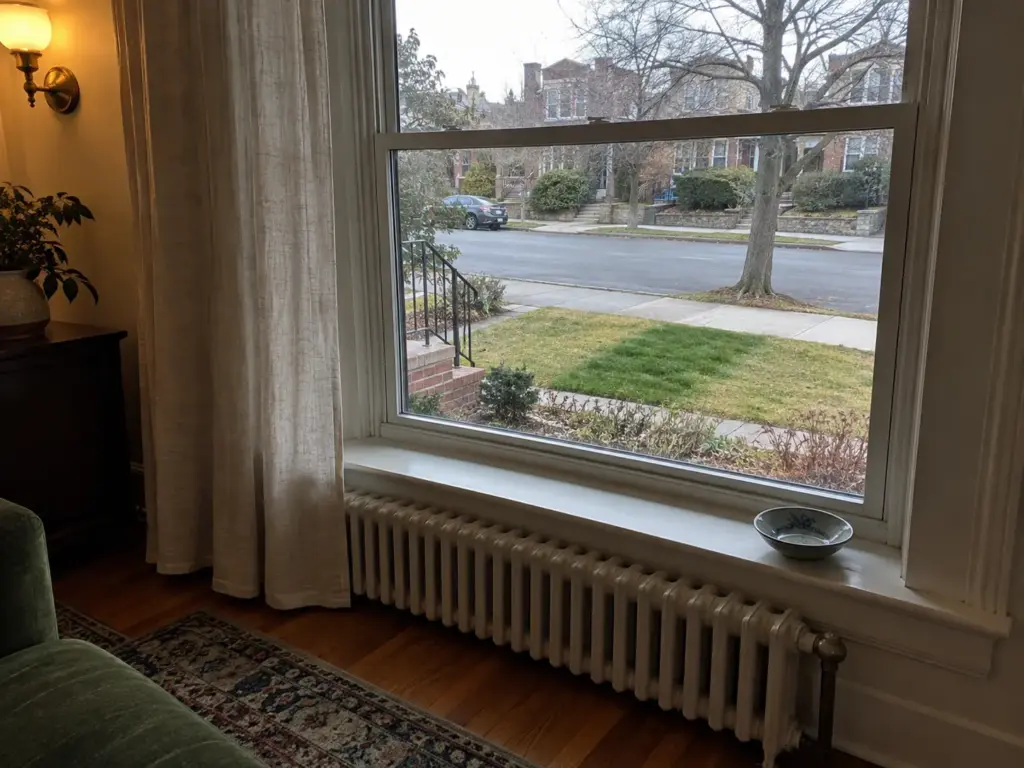
A greener, softer or sunken patch in the yard
Look out the window at one strip of lawn that has stayed greener than the rest all month, or a spot that stays soft and wet when it has not rained. A wet lawn that stays soft, cracked or lifted paving, a sunken stretch of driveway and a damp patch along the foundation point the same way, because an underground leak has to go somewhere. A hidden leak outdoors often shows only here. A leak under a slab can also warm a patch of floor, a sign that shows to bare feet and to no tool in this article.
A meter that moves with the house valve shut
If the dial keeps moving with the house valve closed, the leak sits between the meter and the house, and as the Chandler guidance above says, that line belongs to the homeowner. Slab leaks and crawl space leaks are the places this kind of water hides. The next step is a specialist, not a trench, and the closing section says what one brings.
A Rental, a Shared Meter and Other Ordinary-House Snags
Plenty of readers have no valve in the basement and no meter in the front yard, and there is still a way to narrow it down. The method bends to fit the house you actually have.
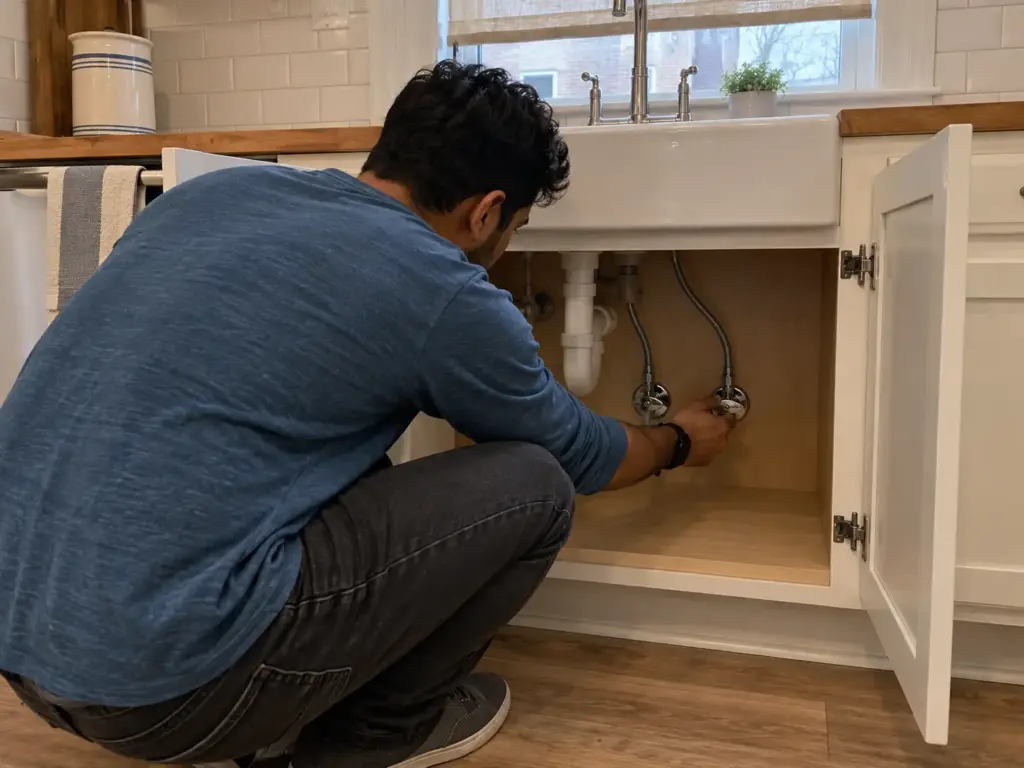
No main valve you can reach
The small stop valves under each sink and behind each toilet turn off one fixture at a time, which makes them a one-at-a-time test with no main valve at all. Close one, read what you can read, reopen it, and move to the next. The dye test from earlier needs no valve, so it works in any bathroom. A house on a private well often has no utility meter at all, which puts the same weight on the room test and the fixtures.
A meter shared with other units
Where one meter serves several units, a reading says little, because someone else’s shower moves the dial. This snag is common where one meter serves several units. In that house the room test and the dye test carry the weight: the hygrometer, the damp spot against a dry reference, and the toilet tank.
What a renter can do, and who to tell
The EPA’s advice for renters is to report all plumbing leaks and moisture problems immediately to the building owner, manager or superintendent. A leak inside a wall may not show a stain yet, so waiting for one costs time. The owner needs evidence in writing, not a phone call: a dated photo of the damp spot, a dated photo of the dial where one is reachable, and the room’s humidity reading from that day.
Send the owner the photo with the date and the room’s humidity reading together. Two matching facts in one message are harder to wave off than either alone.
Month Two: The Slow Leak the First Test Missed
A leak that passed the first meter test, or came back after a repair, still leaves traces. The check is to read again later with the same instruments, because week one can lie.

Read the meter and the room again
Repeat the meter reading with the house quiet and compare it with the first photograph. Take the humidity reading in the suspect room and set it against the earlier one: a reading that creeps up over a week, with no stain yet, is a wall slowly feeding the air. A stain with a darker ring is a leak that has come back. None of this needs new equipment, which is the point of doing the free version twice.
The repair that did not hold
A patched ceiling and a fresh coat of paint make the spot look finished and prove nothing. What you watch for is the edge of the old stain, where a new ring would show first, and the dial and the hygrometer reading in the days after the repair. If the dial moves again, the repair did not hold. If the room’s humidity stays up with the water off, the wall is still wet behind the paint.
The monitor that stops before the leak does
The instruments in this article have their own months. Some owners say the Govee H5075 stops working within six months, and the MMD4E’s pins bend after about 30 uses, which means a reading that was fine in week one can drift without any warning. A second instrument is the check: read the same wall with another meter, or the same room with a second hygrometer, before trusting either one. For a spot that needs watching every day, the best water leak detectors for a home covers the sensors that watch around the clock, and whether a leak detector is worth it covers the question of whether you need one at all.
When to Stop Looking and Call a Plumber
The free tests find most leaks inside a house. The ones that remain need tools the house does not have, and knowing when you have reached that point saves a weekend.
The leak you can place and the one you cannot
A leak you can place has a fixture, a valve or a spot where the dial stopped. A leak you cannot place keeps the dial moving after the main valve is shut, or after every fixture on your list has been closed one by one. At that point more testing from the living room adds only noise, and each fix you attempt without a location is a guess.
What a leak specialist brings
Leak specialists work with the same meter and valves you used, then add acoustic leak detectors that listen to a pipe and, for a buried line, a gas tracer that follows the leak to its source. They give you a location. The call goes better when you hand them the dial photos and the humidity readings, so they begin where your tests ended.
Where a sensor starts to earn its place
A leak found early, before the stain, is the case a sensor is built for: a small device that sits at the spot and tells you the moment water reaches it, and a wifi leak sensor can send the alert to your phone, some with a freeze sensor built in. Where to put a water leak sensor covers the spots that matter, and how a water leak detector works covers what the device actually senses. Fixes still come one at a time, with the dial read between each.
Photograph the Dial Tomorrow and Read the Room Again Later
The meter comes first, with every tap off, then the main valve and a second reading to split inside from outside. The room is read next, and a room whose humidity will not fall back points at a wall that is being fed. A surface that is wet is not a leak until it has been dried and has wet itself again.
A month on, read the dial and the room again with the same instruments, because the slow leak and the one that returned both hide for weeks, and the hygrometer and the pin meter both age in that time.
Tomorrow, find the main valve and the dial, check that the valve closes, and photograph the dial with the house quiet. Read it once now, put the photo next to the next reading, and the change between them tells you what the bill could not.
Frequently Asked Questions
01How do you find a water leak that isn’t visible?
Start with the water meter: with every tap and appliance off, a moving leak-indicator dial means water is leaving the pipes. Then close the main valve to split inside from outside, and read the room’s humidity.
02How do I find out where my water is leaking from?
Shut the main valve and read the meter, then shut each fixture one at a time and read again. The step that stops the dial points at the source, and the dye test covers the toilet.
03How do plumbers detect a water leak?
They begin with the meter and the valves, the same way you can, then bring acoustic detectors that listen to a pipe. For a buried line they use a gas tracer to follow the leak to its source.
04How can I tell if there’s a water leak in my house?
A bill that jumps, a meter that moves with everything off, a musty smell or a stain are the signs. The meter test is the one that proves a leak exists, since the others can have other causes.
05Can I check for a leak in a rental with no main valve?
Yes. Use the small stop valves under each sink and behind each toilet one at a time, run the dye test in the tank, and report any leak or damp spot to the building owner right away.