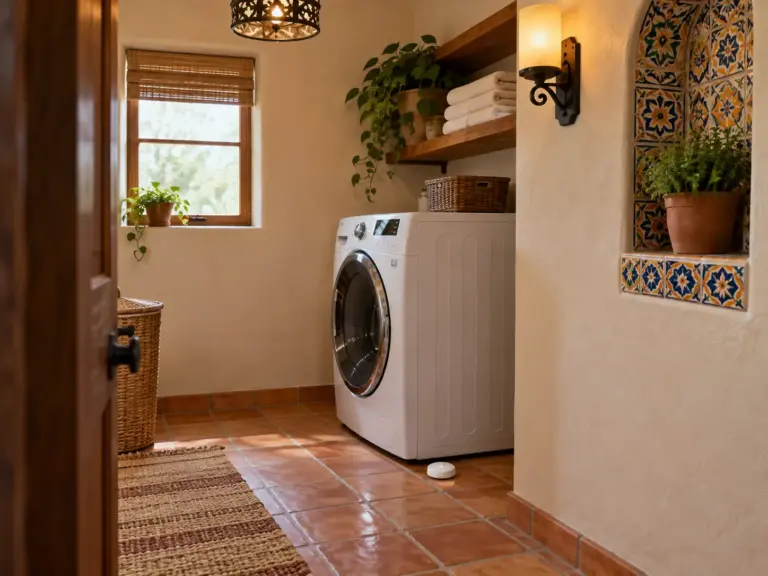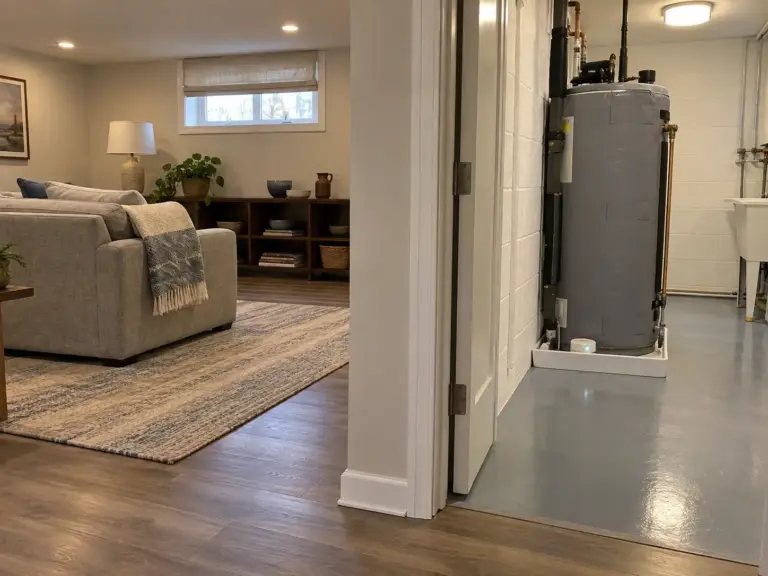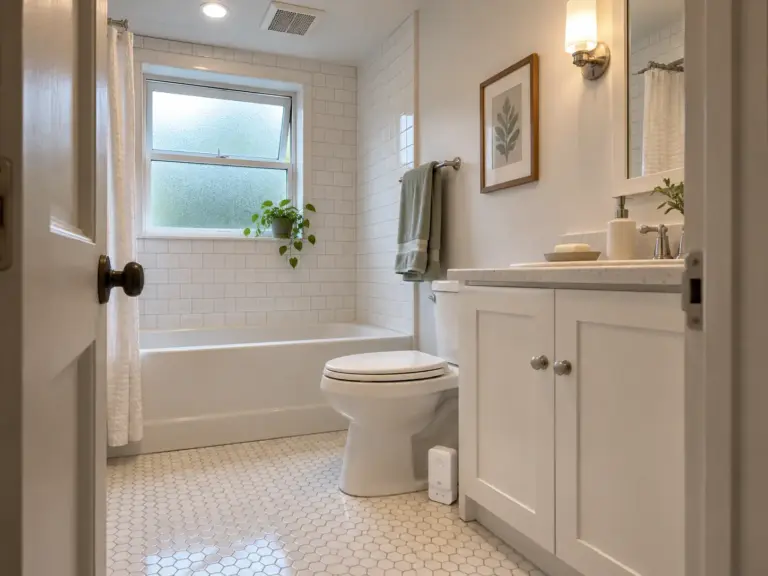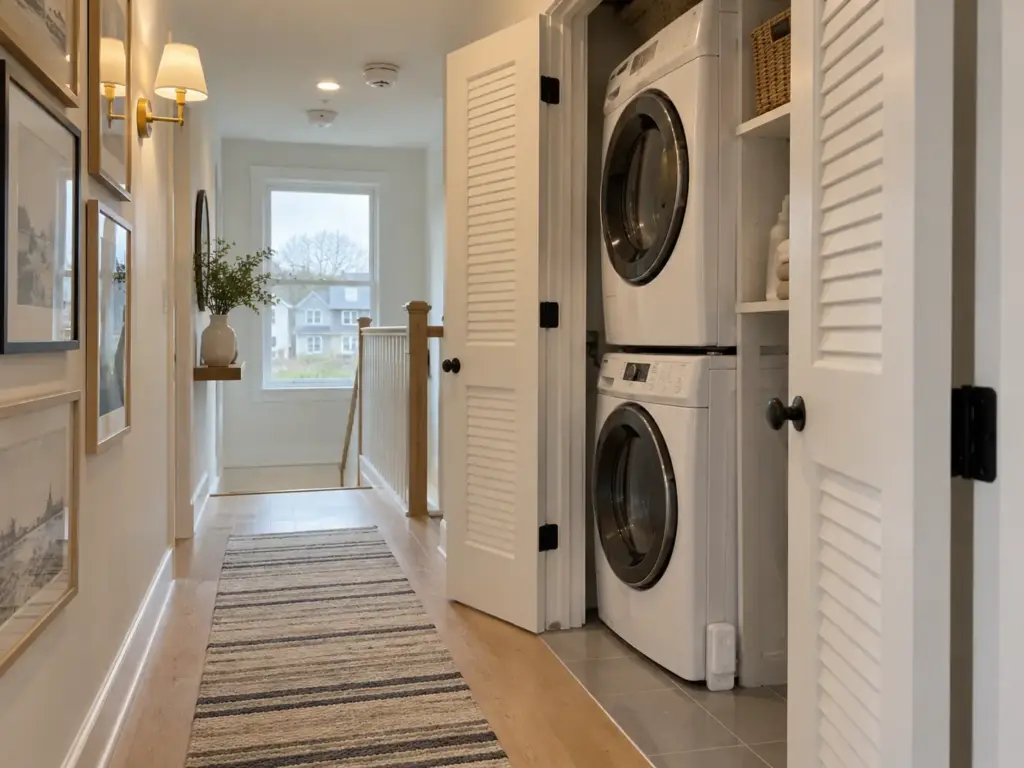
Upstairs the washer sits behind louvered closet doors, in the basement the water heater stands in a corner with a finished floor running up to it, and under the kitchen sink the trap hides behind two cabinet doors: three places where water can run for hours before anybody walks past. So are water leak detectors worth it? A leak sensor is a pair of contacts that closes when water touches it, which means it reads one spot and nothing else, and the answer changes with the spot. Below you get a rule for choosing the spot, what a sensor will not do, what sets one off by mistake, and the answer for a renter, an owner and a house left empty all day.
One check costs nothing and comes before any purchase: how to find a water leak with the meter and the room.
Quick Answer
Yes, at a spot where a leak would run unseen and reach something costly to replace: the water heater, a washer or dishwasher, a supply line, a sump pit or a finished floor. No, as a purchase for every room. A sensor sounds an alarm only when water reaches its probes, and it stops nothing.
The Leak That Earns the Sensor
A sensor earns its place by one comparison: what the water at a single spot would reach, times the hours it could run before anybody saw it, set against whether you would hear the alarm and could act on it. That is a ratio, the cost benefit of one spot, not a list of rooms, and you can run it on one place in your own house tonight. The first step needs no device at all.
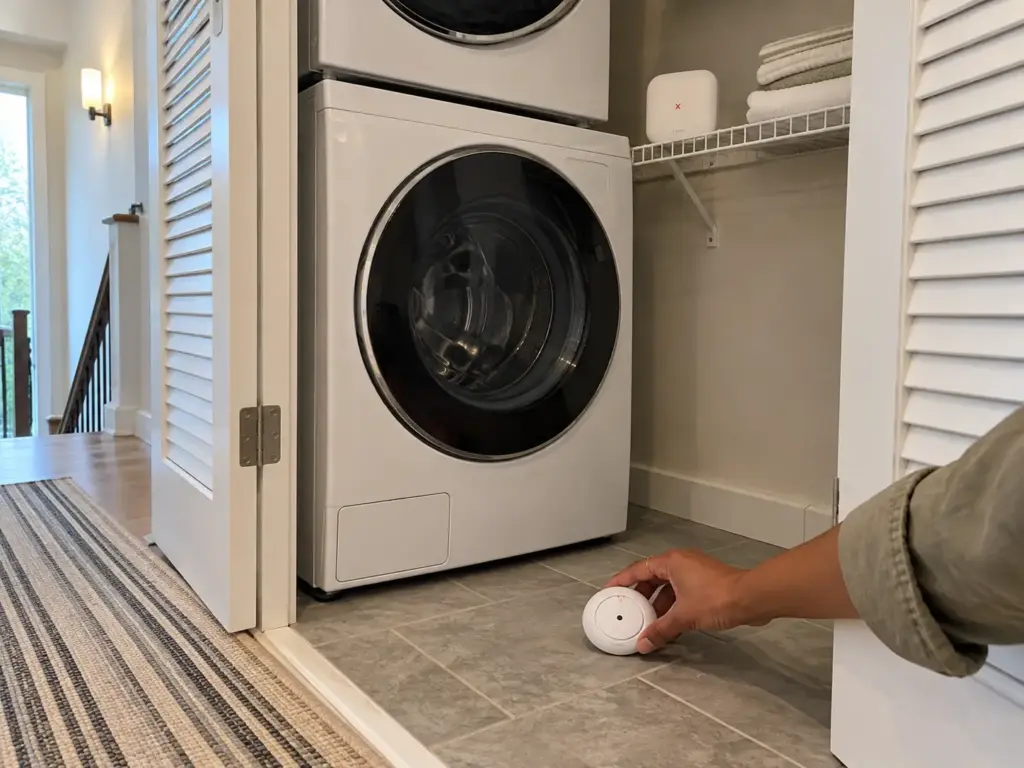
Run the free test first
Water that leaves the pipes and never reaches a probe is invisible to a sensor, so the first reading comes from the meter. According to EPA’s Fix a Leak Week page, “If the meter changes at all, you probably have a leak.” The test it describes is two hours with every tap off: read the dial, use no water, read it again. Anything that draws water on its own in that window, an ice maker line refilling or a softener cycling, moves the dial too, so run it while the house is still.
The same page sets the scale. Household leaks waste nearly 1 trillion gallons of water a year across the country, yet only about nine in a hundred homes have a leak wasting 50 gallons or more a day. A leak is the minority case, which is why the decision belongs to a spot and not to a house, and why a meter that holds still is worth knowing before you buy anything. (The meter and the sensor answer different questions: the meter asks whether water is leaving the pipes at all, the sensor asks whether water has landed on one square of floor.)
What sits under the spot, and how long before anybody sees it
Three things set the value of a spot: what is under it, how long water could run there unseen, and whether the alarm would reach somebody who can act. A water heater with a drain pan and a finished floor around it scores high, and so does a washing machine upstairs, because the water lands on the ceiling of the room below and nobody sees it until the ceiling shows it.
A supply line behind a cabinet scores high, and so does a sump pit under a finished basement. A bare concrete corner beside a floor drain scores low: the drain does the sensor’s job, and there is little water damage to prevent in that corner.
The sump is where people disagree. The decision comes down to the risk at the spot. With a sump in the basement, a leak sensor is usually not worth it.
The counter-case is the pit itself: a sump pump that stops is the leak, and the water it was holding back rises toward whatever the basement holds. Both views fit different basements. A pit with bare floor around it can skip the sensor, a pit under a finished room cannot, and the ratio settles it better than a rule of thumb.
Where the sensor sits matters as much as whether it exists. It reads only water that has reached its probes, so the spot right beside the appliance is not always where the water ends up.
A sensor at the lowest drain in the basement, the first place to overflow, is a sound choice. It can catch a pinhole leak in a humidifier line while the puddle is still too small to notice. The sensor did its job, but the water was already pooling before it did. The lowest point the water would flow toward is worth more than the square of floor next to the machine, and where each sensor goes is a decision of its own, after this one.
On a floor that can take it, pour a cup of water a foot from the appliance and watch which way it runs. The sensor belongs where the water ends up, and that is rarely where it started.
When one sensor is enough and when the kit is
If the rule gives you one spot, one sensor does the whole job, and a base or a hub adds nothing. If it gives you three, the arithmetic changes: the cost per spot falls as the number of spots rises, and one base can serve all of them. That is the case for the X-Sense Wi-Fi Water Leak Detector Kit, a base station with 3 sensors in the box and a 120 dB alarm, which is the listing’s figure and not a measurement.
The limits are on the same listing: the base has to stay powered and on your Wi-Fi, three sensors is the fixed count (a fourth spot means a second kit or another model), and a loud number on a page tells you little about a closet with the door shut. Three spots that really earn a sensor justify a kit. Three spots invented to use up the last sensor do not.
What a Sensor Will Not Do
A leak sensor is an alarm, and an alarm and a shutoff are two different purchases with two different costs. This section keeps them apart so you can pick one, both or neither with those costs in view.
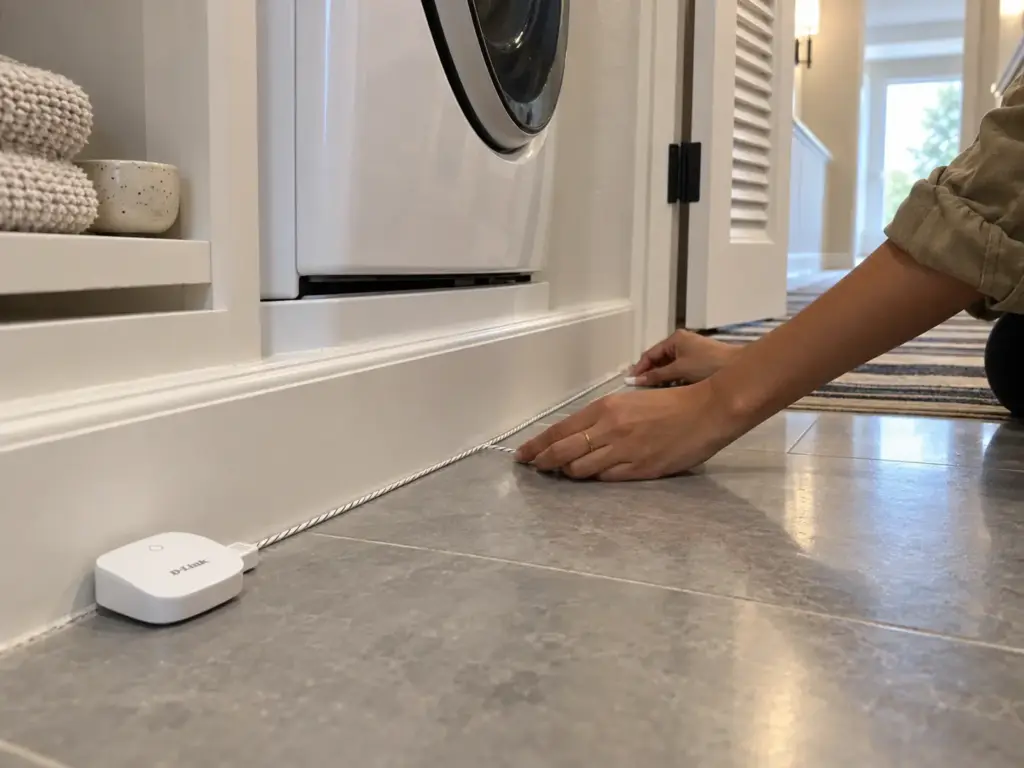
An alarm, not a stop
The sensor sounds and sends a push to your phone. It closes nothing. A leak that starts while the house is empty runs until somebody comes home, and the whole value of the sensor in that stretch is that you find out.
For someone who is away a lot, a sensor is invaluable: it reports a leak that would otherwise go unnoticed. The value is in finding out, not only in the saving. A sensor shortens the time until somebody notices, and it does nothing to the time the water keeps running, which is the part a household overlooks when it counts the sensor as protection. Between the alarm and the stop sits a person with a phone, a key and a way to get to the house.
The shutoff valve and what it trades
The more complete answer is a smart shutoff valve on the main line, which closes the water when a sensor trips. It is named here by class only, because a valve is a plumbing decision more than a gadget one. The trade-off shows up in practice: sensors at the toilets, sinks, washing machine and dishwasher, all tied to a valve controller that shuts the main, are a common setup, and a sensor under the kitchen sink can false-alarm.
“But every time it gave a false alarm, the Bulldog cut off the water supply immediately.” He took that as proof the system worked, and it did. It also shows the price of the arrangement: one false trigger and the whole house has no water until somebody opens the valve. The two devices also save different things: the sensor shortens the time to notice, and the valve shortens the time the water runs, so a household that wants the second saving cannot get it from the first.
Whose decision it is matters too. The City of Chandler’s guide to checking for a water leak is plain about the money side: “Any leaks occurring after the meter on private property are the responsibility of the homeowner.” A valve on the main is therefore the owner’s call. For a renter the page is silent on who pays, and the lease decides, which is why renters get a section of their own further down.
The spot a sensor misses
A round sensor on the floor reads the square inch of floor it sits on. A slow leak that sprays a fine mist or weeps from a pinhole can put so little water on the probes that the alarm comes late or not at all. A water-sensing cable changes the geometry.
The D-Link WiFi Water Leak Detector Starter Kit gives you two sensors and a cable that reaches a probe along a wall base or under a long cabinet, where a puck would watch a single point. Its limits: it needs a Wi-Fi hub plugged in and kept on your network, two sensors is the whole kit, and the alarm volume is worth checking on the listing before counting on it in a closet with the door shut.
And one miss no sensor repairs. A sensor sits where water will flow, not where it starts, so a leak inside a wall that never drips to the floor is not caught, and how a leak sensor senses water is the reason why. The free meter test from the first section is the one that finds it, because the dial moves whether or not any water reaches a probe.
Let a sensor run on its own through its first false alarm before a valve is wired to it. A sensor that has already tripped on a damp cabinet floor is a poor candidate to close the main; a few weeks with no false alarms on the same spot is the better credential.
When the Sensor Cries Wolf
A sensor that goes off for the wrong reason teaches a household to ignore the right one. Most wrong reasons are water doing what it was meant to do, in a place a probe can read, and where you put the sensor decides whether the alarm stays believable.
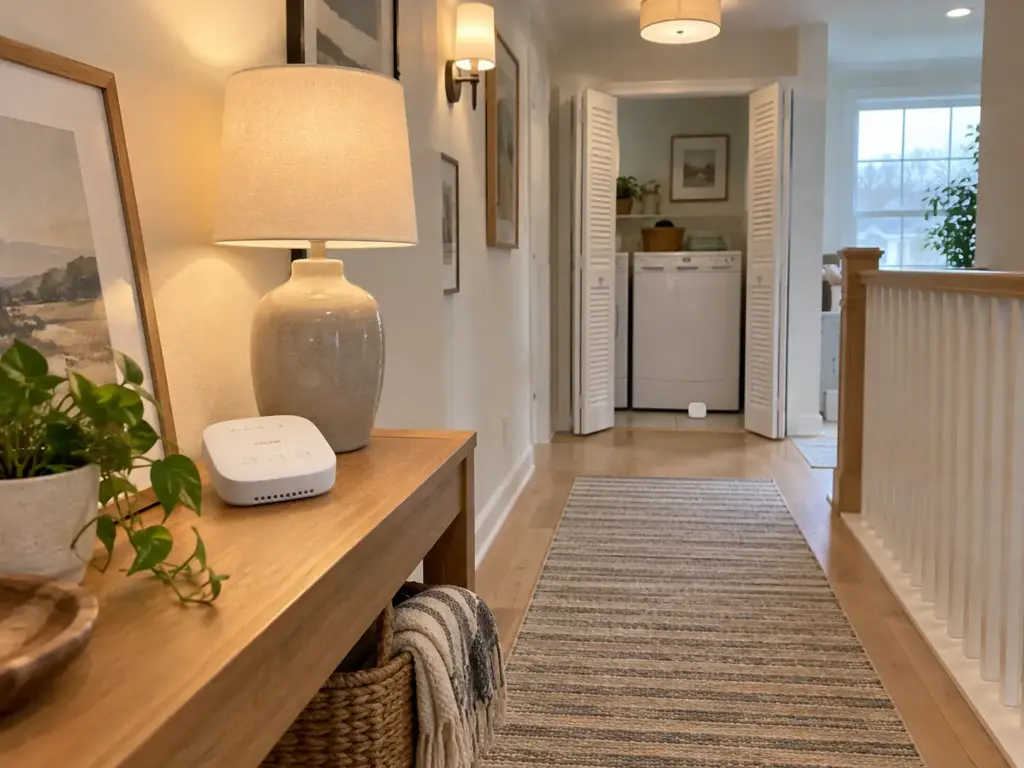
Condensation is not a leak
A probe cannot tell a leak from condensation. It reads water on its contacts, whatever the source, so leak or condensation looks the same to it, and several things in a house put water on a floor on purpose or by routine: a condensate line from an AC or a dehumidifier, an ice maker drain, a cold pipe that sweats.
Condensation near a sensor can set off false alarms, so a sensor under an ice drain is often the wrong place. The sensor did exactly what it was built to do; the placement was the problem. To see how that water forms in the first place, condensation when the AC is running walks through it from the glass side, and the leak-or-condensation check in a basement is the test to run before you decide which one you have.
Next to a drain, a sensor reads the drain
A dehumidifier drain, an AC’s condensate line and a humidifier’s supply line all put water near the floor deliberately, so a sensor set right at the drip trades one true alarm for a daily false one. Put it where the water would go if the drain failed: downhill of the usual path, on floor the water would reach only if the hose slipped or the pump stopped. Where to run a basement dehumidifier’s drain covers the hose, the pump and where each overflows. And the sign that a sensor is being read as a drain shows up as a pattern: if yours trips at the same hour in the same spot, right after the dehumidifier cycles, it is reporting the drain and nothing is leaking.
After you place a sensor near a drain, run one full dehumidifier or AC cycle and watch it. If it trips, it is on the drain’s path and not on the leak’s; move it a hand’s width downhill and run the cycle again.
An alarm nobody hears
An alarm only counts if somebody hears it. The decibel figures for the three sensor products in this article, 120 dB, 105 dB and 100 dB, are the makers’ own or the listings’, and none was measured here. Whatever the figure, a siren in a closet with the door shut sounds weaker from the next room and weaker again from the next floor, and a number that depends on the door is not a number to buy on. That is a reason to place the sensor within reach of a person, or to lean on the phone alert and not the siren.
The YoLink Water Leak Sensor 4 with SpeakerHub kit is built around that problem: a 105 dB alarm by the maker’s figure, and a SpeakerHub in the kit that gives the system a speaker apart from the sensor on the floor. The limits come with the parts. The kit holds one sensor, the hub is a second device to plug in, and the 105 dB is the maker’s number, not a reading. With a hub, the push to your phone depends on the hub staying on your network; with no hub, it depends on your Wi-Fi reaching the spot.
Renter, Owner or Away All Day
The first three sections gave a rule, a limit and a source of false alarms, but not who is reading them. Whether a sensor is worth it changes with whether you rent, own or leave the house empty from morning until evening, and the free meter check comes first for all three.
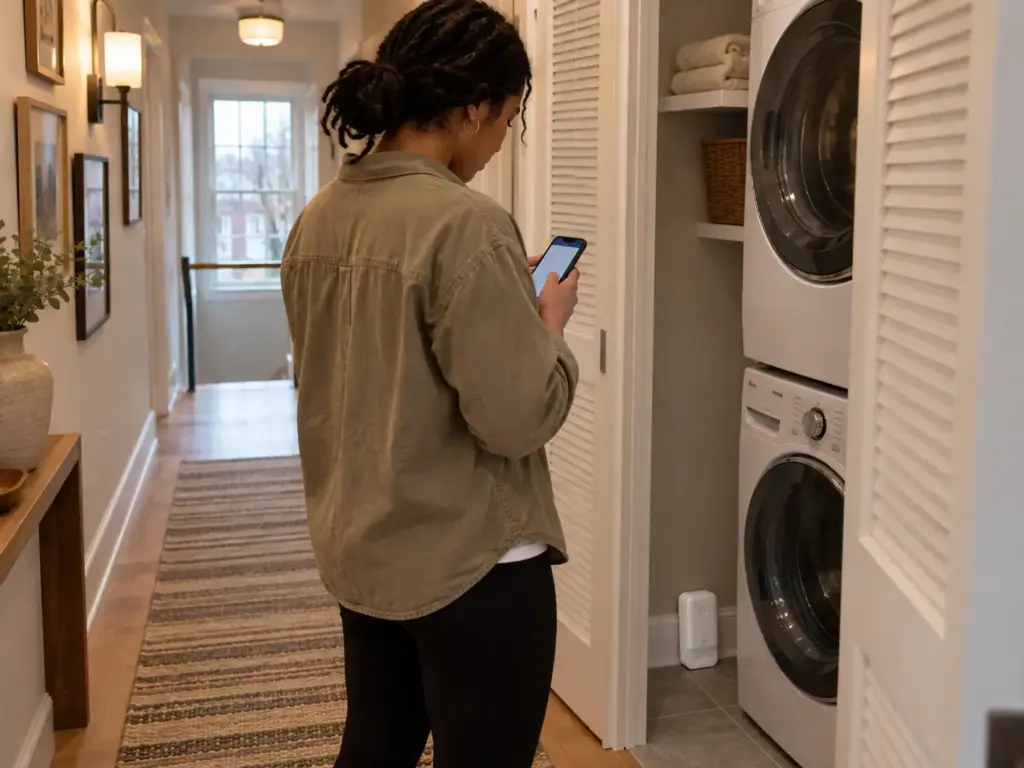
If you rent
A shutoff valve needs the owner’s say. A sensor does not, and a sensor with no hub is the lowest-friction version: a hub is one more thing to plug in at a place that is not yours, while a hub-free sensor sits on the floor and leaves with you when you move out.
The SwitchBot WiFi Water Sensor is that case: one sensor, rated IP67 by its listing, with a 100 dB alarm by the listing’s figure and no hub. Its limits are plain. It is one sensor, your Wi-Fi has to reach the spot, and 100 dB is the lowest alarm figure of the three in this article, so it leans on the phone alert more than on being heard. What the lease says about the water main is the lease’s business, and this article does not guess at what yours contains.
Then there is who gets the alert. In a building with leak alerts, a neighbor can report the alarm while the tenant of the leaking unit is away. The alarm sounded, and the person who acted was a neighbor, not the tenant. A sensor with its own app on your phone is the one alert path you control.
If you own
The leak after the meter is yours, as the Chandler page above puts it, which is the reason to put a sensor at the high-scoring spots from the first section: you pay for what the water reaches. A valve is a plumbing decision you may take, with the false-alarm trade from the second section attached. And if a leak has already wet a wall, the sensor becomes secondary. The clock on a wet wall is its own subject, set out in how fast mold grows on a bedroom wall after a leak, and it is a building question: find the source, then dry the wall.
If you are gone all day
For somebody away all day or on vacation, the value is the notice, not the stop. The longer the house sits empty, the more the hours term in the rule grows, so say it as arithmetic: the hours the water can run, times what it reaches, set against an alert that gets to a phone. A bare concrete corner by a drain stays low risk however long you are out, while a ceiling under a washer climbs with every hour of the workday.
If the first alarm you get is a splash under the sink and your phone buzzes at work, that is also when you learn whether the alert reaches anyone: you, a partner, a neighbor with a key. A sensor you cannot act on from where you are reports to nobody. Once you know whether and where, which model still reports when nobody is home is the next question.
Before a long day or a trip, decide who the alert reaches. If the sensor’s app allows a second account, add a person who can get to the house, or tell a neighbor with a key what the alarm means. An alert that lands on a phone nobody is watching reaches no one.
Read the Meter First, Then Test the Alert Every Month
A sensor is worth what sits under the spot it watches and how long water could run there unseen. It is an alarm and stops nothing, so a shutoff is a separate, owner’s decision with its own false-alarm trade. And a sensor next to a drain reads the drain, so it belongs where water would flow if something failed, not where it drips on purpose.
Once a month, press the sensor’s test button if it has one, or touch its probes with a damp cloth, and confirm the alert arrives on your phone. If it does not, the sensor is protecting nothing, whatever the box says.
Tomorrow, read the meter with every tap off for two hours. If the dial holds still, put one sensor on the lowest spot under the costliest source, the water heater, the washer or the sink trap, and the reading to take afterward is whether the alert reached your phone.
Frequently Asked Questions
01Do water leak detectors actually work?
Yes, at the spot where they sit: a sensor reacts to water that reaches its probes and sounds an alarm or sends a push to your phone. It does not stop the water, and it cannot see a leak that never touches it.
02Are water leak detectors worth it for a renter?
A sensor is worth it for a renter, because it needs no plumbing and a hub-free model goes with you when you move out. A shutoff valve is the owner’s decision, and the lease decides who controls the main.
03What is the average cost of water leak detection?
Cost is the number of sensors you need times the price of each, weighed against what a leak at those spots would reach and how long it could run. Buy one sensor per costly spot, and a three-sensor kit only when three spots pass that test.
04Does a water leak sensor shut off the water?
No, a leak sensor sounds an alarm and sends a push to your phone, and that is all it does. Shutting the water takes a separate valve on the main line, and a false alarm then closes the water to the whole house.
05Can condensation set off a water leak sensor?
Yes, because a probe reads any water on its contacts, whether it comes from a leak or from a condensate drain. Place the sensor where water would flow if the drain failed, not where it drips on purpose.