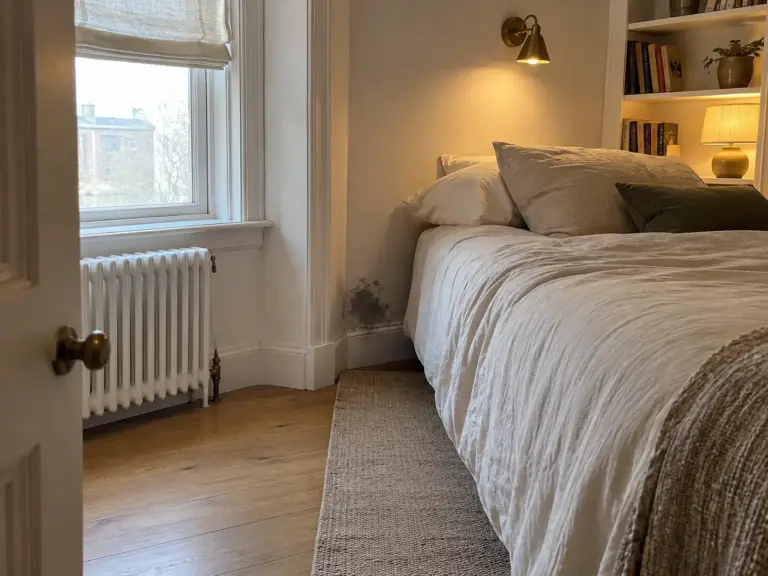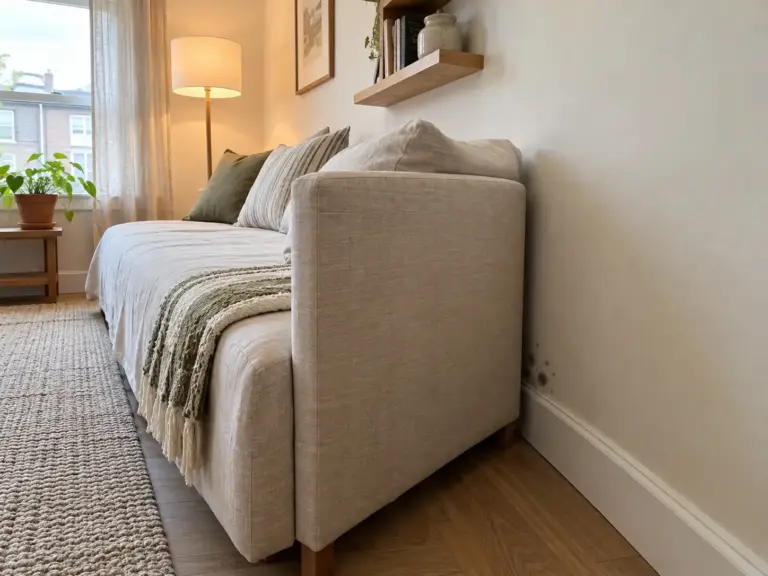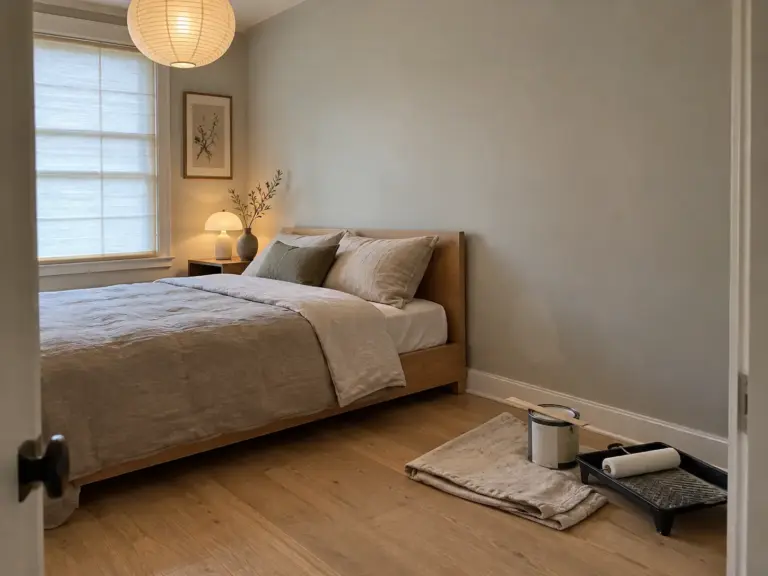
Behind the headboard, or in the corner by the window, there is a patch of black spots that was not there last winter, and the room is not dirty. So why does mold grow on bedroom walls that get dusted, vacuumed and aired? Its spores are already in the air of every room, which means the spores never decide it. What decides it is whether one patch of surface stays damp.
A bedroom has three ways of keeping a patch damp: a cold surface where the room’s own moisture condenses, still air that never reaches the wall, and water that arrives through the building. Whether any of this matters to the people who sleep in the room is a question for a doctor, and this article stays with the wall and the room. Cold, still or wet is the order of the sections below, and two cheap readings tell you which one you have.
Quick Answer
Mold spores are in every bedroom, so they never decide it. Mold grows where a surface stays damp: usually the coldest wall, or the corner behind a bed or wardrobe, where the room’s moisture condenses and the air does not move. Water coming through the building is a different fix, and one reading tells them apart.
Spores Are in Every Bedroom, So the Surface Decides
If the spores are already in the room, the wall cannot be blamed for having them. What separates the patch that grows from the stretch of wall beside it is how long that one patch stays damp.

Why a clean room still grows it
A spotless room and a damp wall can be the same room. Spores are everywhere and float in the air, they need moisture to grow, and mold that keeps returning means a moisture problem. The CDC’s mold guidance says it plainly: mold will grow where there is moisture, and the job is to clean it up and fix the moisture. The CDC’s mold guidance says it from the institutional side: mold will grow where there is moisture, and the job is to clean it up and fix the moisture.
A wipe changes the surface for a few days. It does nothing about the damp that fed the patch, and a new coat of paint does no more than the wipe.
That is also why the useful question is never how clean the room is, but how long this wall stays wet. Whether a damp patch needs days or weeks to turn into growth is the subject of how fast mold grows on a bedroom wall.
What a wall needs besides spores
A surface that stays damp, and that is a smaller ask than it sounds. In a bedroom the first spots rarely appear in the middle of a wall. They start in a cold corner, behind the headboard, behind the wardrobe or along the baseboard, on drywall or plaster alike, which tells you the problem lives at the surface and in pockets rather than in the room’s air as a whole.
Three things can keep such a pocket wet. The room’s own moisture can condense on something cold. Air that does not move can leave the damp where it landed. Or the water can come from the building itself, which no amount of work inside the room will touch.
Each gets its own section below, and the order matters: the first two are free to test, and the third is the one you rule out before spending anything.
Where a Bedroom’s Moisture Comes From
The room is shut for the night and holds the people in it. Before blaming the wall, count what the room puts into its own air.
What people and the night put into the air
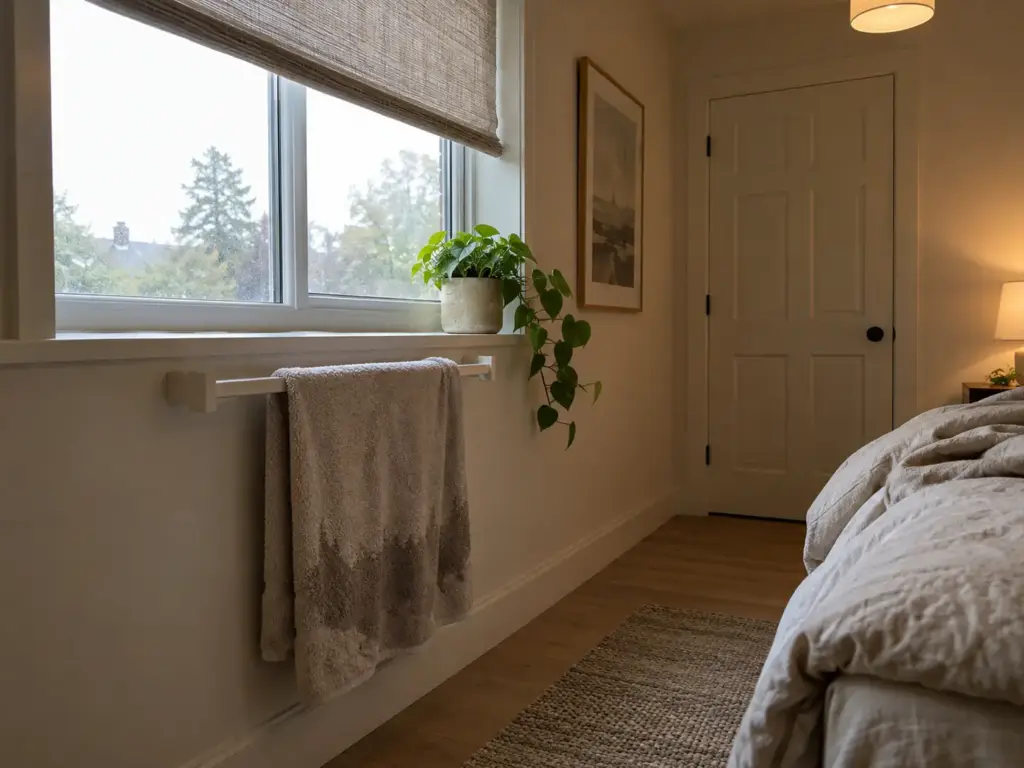
Breathing and sweat go into a closed room all night, and a shower earlier in the evening with no exhaust fan running, a damp towel over a chair and drying clothes on a radiator all add to it. None of that is unusual, and none of it causes mold by itself. It becomes a problem when the moisture has a cold place to land.
The number to watch is relative humidity, in percent. EPA says to keep indoor humidity below 60 percent, ideally 30 to 50 percent, and lists the controls in EPA’s list of the main ways to control moisture: fans, moving furniture off wall corners, and drying what is wet. The CDC is stricter, no higher than 50 percent all day. What a bedroom in particular should sit at is covered in the humidity band for a bedroom; here only the two agency figures matter, and the stricter one is the safer aim for a room with a cold wall.
Change one thing per week. If the wet towel, the radiator laundry and the shut door all change at once, a lower reading cannot tell you which one did the work, and the next time the number climbs you will not know which one to put back.
The sources the bedroom adds on its own
The free changes come first, in this order: take the wet towel out of the room, dry laundry somewhere else, and leave the bedroom door open for part of the day, because poor ventilation lets the night’s moisture sit where it landed. After one of these, read the room again a few days later before touching the next.
A room in a humid climate can be kept in check with a dehumidifier running for hours a day and the windows open, but that belongs to that room and that climate. That figure belongs to that room and that climate. The reading that matters is yours, and it is not the same at the start of the evening as it is after the door has been shut for hours: a meter that keeps a high and a low shows the room as it is, where a single glance shows only the moment you looked.
The Cold Surface Gets the Water
Warm room air carries the moisture, and a cold wall is where it lands. This section is the mechanism, and it covers the ceiling too.
Why the coldest wall is the one that grows it
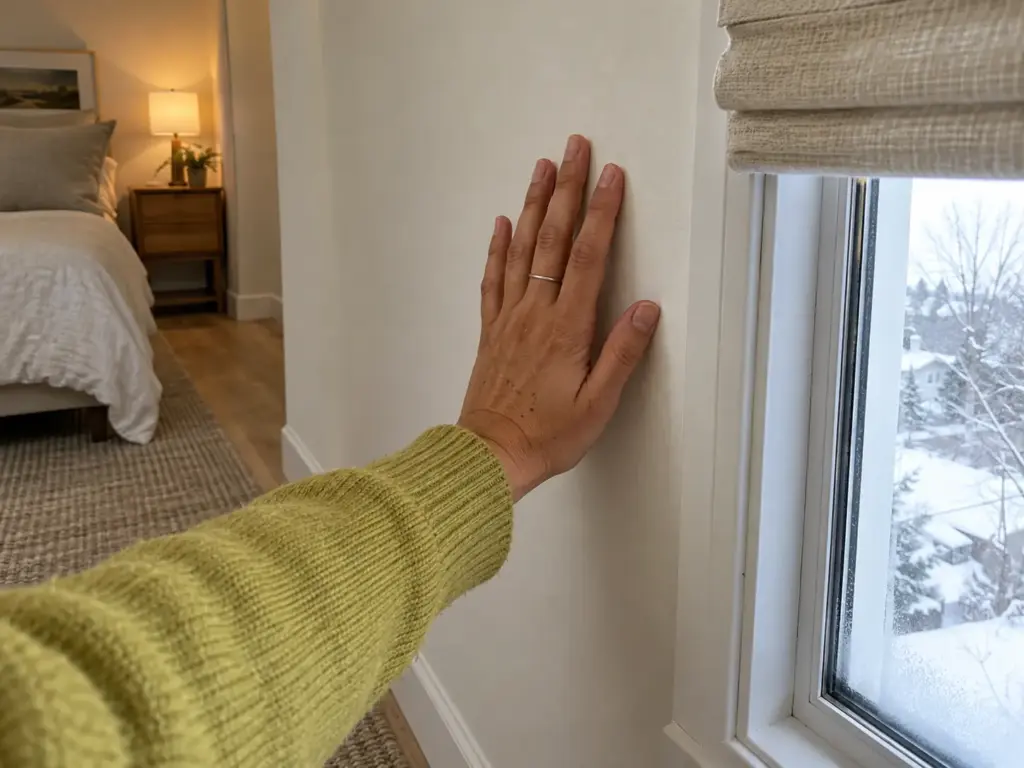
Air holds less water as it cools, and that single fact explains most bedroom walls. According to EPA, “This is why, in cold weather, moisture condenses on cold surfaces (for example, drops of water form on the inside of a window)” (EPA’s list of the main ways to control moisture). The window is the visible example, and the wall behind the bed is the same event where nobody is looking. In winter, with the heating off at night or turned down, the wall’s surface temperature follows the outdoor temperature down faster than the room’s air does, so the gap between the two grows.
Which wall goes first depends on the building: a solid wall, a north-facing wall, an outside corner and any cold bridge through the structure run colder than the rest. A bed pushed against the one outside wall because that is the only place it fits sits on exactly that surface. The beads on the window and the cool patch of wall under it are the same cold surface showing up two ways, and whether window condensation means mold is its own question, answered in does condensation on windows mean mold.
The same thing on a ceiling
An upstairs bedroom ceiling can be the cold surface. If a cold roof or an unheated attic sits above it and the insulation between is thin, the ceiling runs colder than the walls and collects the room’s moisture the way the outside wall does. That is a cold-surface case, and it is the room’s moisture.
The sources say no more than that, and so does this article: EPA lists the roof materials above ceiling tiles as a place hidden mold grows, from roof leaks or insufficient insulation. The leak half of that sentence belongs to the building and has its own section further down. A ceiling stain that appears after rain is a leak until a roof or attic check says otherwise, and no humidity change in the room will touch it.
What the standard figures say, and the numbers that drift from them
The reference figures are short. EPA puts the ceiling below 60 percent relative humidity and the target between 30 and 50. The CDC says no higher than 50 percent, all day long. These are different instructions, not two ways of saying one thing: 60 is the line you stay under, 50 is the line you aim under, and a room that sits at 55 is inside EPA’s limit and over the CDC’s.
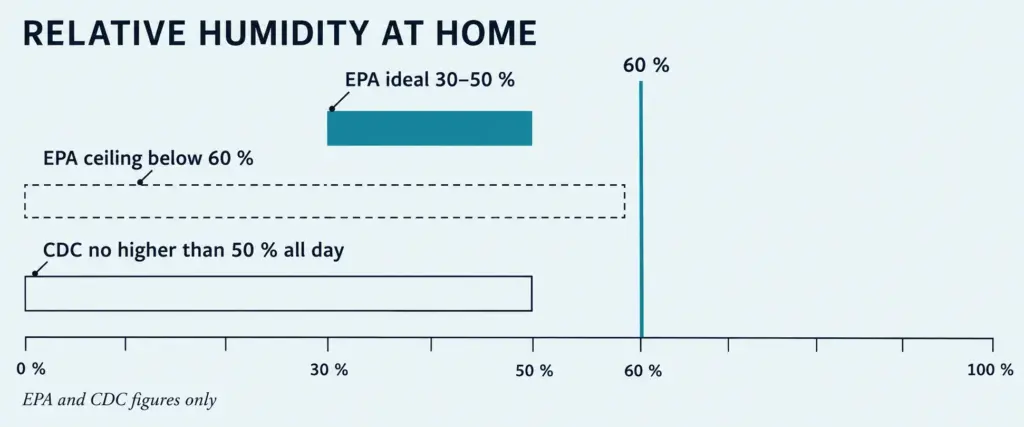
Other figures circulate with no agency behind them: a loose “around 50 percent”, an “over 50 percent” with no source named, a winter room temperature of at least 64°F (18°C). Treat those as rules of thumb, useful at most as a sanity check against the agency figures. And whichever number you use, it describes the room’s air, not the wall: a room that reads 50 percent can still have a wall cold enough to run wet, which is why the wall’s own temperature gets measured in the section on reading both.
Still Air Behind the Bed and the Wardrobe
The wall can be cold and the room can be dry, and mold still shows up behind the wardrobe. The air at the wall is not the air in the room.
The pocket behind the furniture
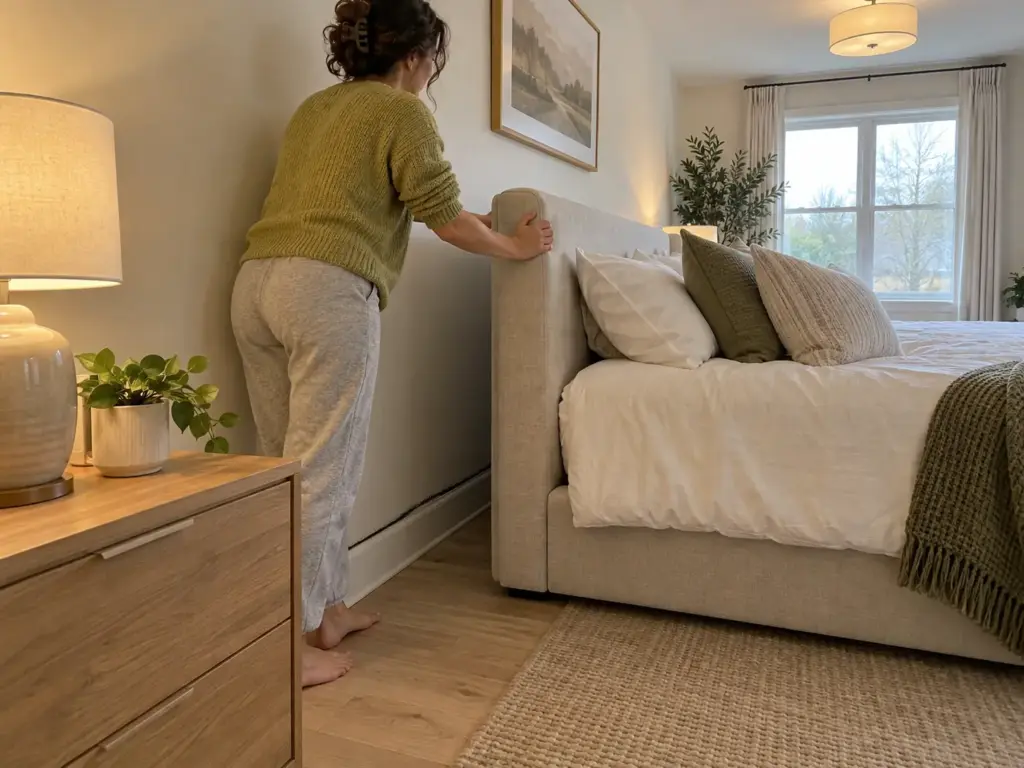
Push a bed or wardrobe tight against a wall and you build a pocket of still air. With furniture against the wall, the room’s heat and air circulation do not reach the wall behind it, so that stretch stays cooler than the rest, and whatever moisture arrives there stays. The sequence is plain: warm stagnant air meets a cold area, the moisture condenses out and covers the wall, and mold develops at that hot-cold point. EPA names the same spot in its list of places mold hides, the surface of walls behind furniture, where condensation forms.
The free change is to pull the furniture off the wall, open the wardrobe doors and leave the gap. A wardrobe on an outside wall is the same case with a door on it, and a closed door keeps the pocket closed. The first sign is usually a musty smell and a dark line along the baseboard, found the day somebody moves the furniture.
Slide a flat hand into the gap behind the bed or wardrobe. If it does not go in freely, air is not moving there either, however many inches the tape measure says. A gap that passes the hand test is one the room’s air can actually enter.
A bed on the only outside wall
Pulling the bed away from the wall assumes a room with options, and the renter’s ten-by-twelve bedroom with one window often has none: the bed goes on the outside wall or it does not fit. Leaving just a little space between the bed and the wall is not enough: a large black stain can still turn up under the mattress months later. Pillows and wedges used to plug the gap can grow mold themselves, because a filler in a damp pocket is one more damp surface.
The answer people gave was blunt: move the bed further from the wall, or switch walls, and use a fan or heat to dry the area out. If the bed truly cannot leave that wall, the gap is the whole job, and it only works open. The steps that keep a wall from growing it again have their own article, how to prevent mold on bedroom walls.
When the Water Comes From the Building
If the wall is wet and the room is not the cause, nothing inside the room fixes it. This section is the check that separates the two.
Signs that point to the building
The building sources are a roof leak, a pipe leak, rising damp, penetrating damp from wind-driven rain and a gap around a window. The signs are a stain on the ceiling below a roof, peeling paint or a patch under a window, and a wall that feels wet to the touch while the room reads dry. A patch that comes back in the same place after the heating season, or a wall that stays damp through a dry week, points away from the room.
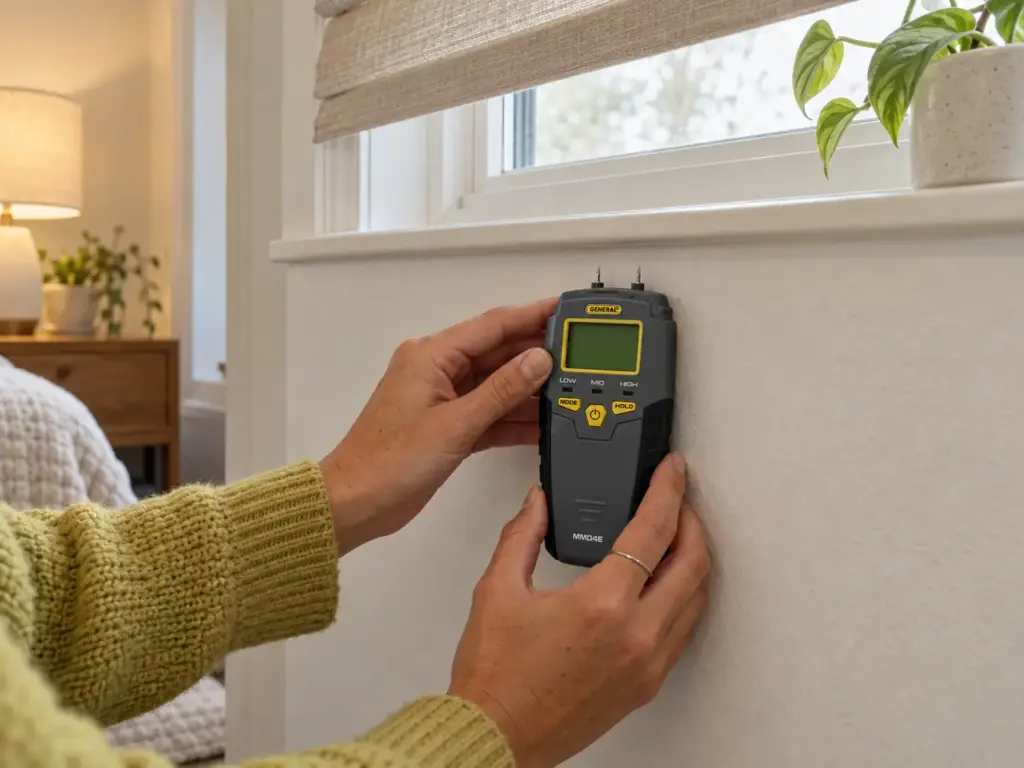
They are worth checking in order, cheapest and likeliest first: the wall’s feel and the room’s reading together, then the window and the wall around it, then pipes and ceiling stains, and a surveyor last. To tell a wet wall from a damp surface, a moisture meter helps. The General Tools MMD4E reads the wall board itself in pinless mode, on a 1.5 to 33 percent scale for building materials, and it answers whether the wall is wet, which no room meter can.
It reads moisture, not mold, so a reading is a clue about the wall, not a verdict. The pins used in wood mode bend after about 30 uses, according to the review summary on the listing, and the same summary mentions inconsistent readings, so take the same spot twice before trusting it.
What to do first, and who to call
Stop the source if you can see it. EPA’s rule for building water is a clock: dry water-damaged areas and items within 24 to 48 hours, and in most cases mold will not grow. The room’s own damp has no such clock, and building water does.
A professional is the answer in three cases. Hidden mold behind a wall with no visible source is one. A damp patch that returns after the room has been fixed is another.
The third is size: EPA treats a moldy area under about 10 square feet, roughly a 3 ft by 3 ft patch, as something most people can handle, and points to professional guidance above that. How serious a patch is for the house gets its own article, how serious mold on a bedroom wall is.
Read the Room and the Wall Before You Change Anything
Three possible causes and one wall. Two cheap readings tell which one it is, before any furniture moves or any product arrives.
Read the room’s humidity, over days
A hygrometer changes more decisions than a new device, and the room’s number comes first. The Govee H5075 shows humidity over days: a 20-day curve in the app, a 3-inch display with high and low records, and alerts when the room leaves the band you set. Its stated humidity accuracy is plus or minus 3 percent, so a reading of 50 may be 47 or 53, and a 30 to 50 band needs that margin in mind. Reviewers in the listing summary report multiple units that stopped working within six months, and Bluetooth is described as mixed, so keep an eye on it after the first season.
The AcuRite 00613 is the budget reading: one AA battery, a plain display, a humidity range of 16 to 98 percent and no phone at all. With no app and no history it cannot show the overnight swing, only the number at the moment you look.
A reading taken once at noon looks fine, and the meter’s high and low over a night show the room as it is. Put the meter away from the outside wall and the radiator, since either one pulls its reading off.
Read the wall’s surface against the room
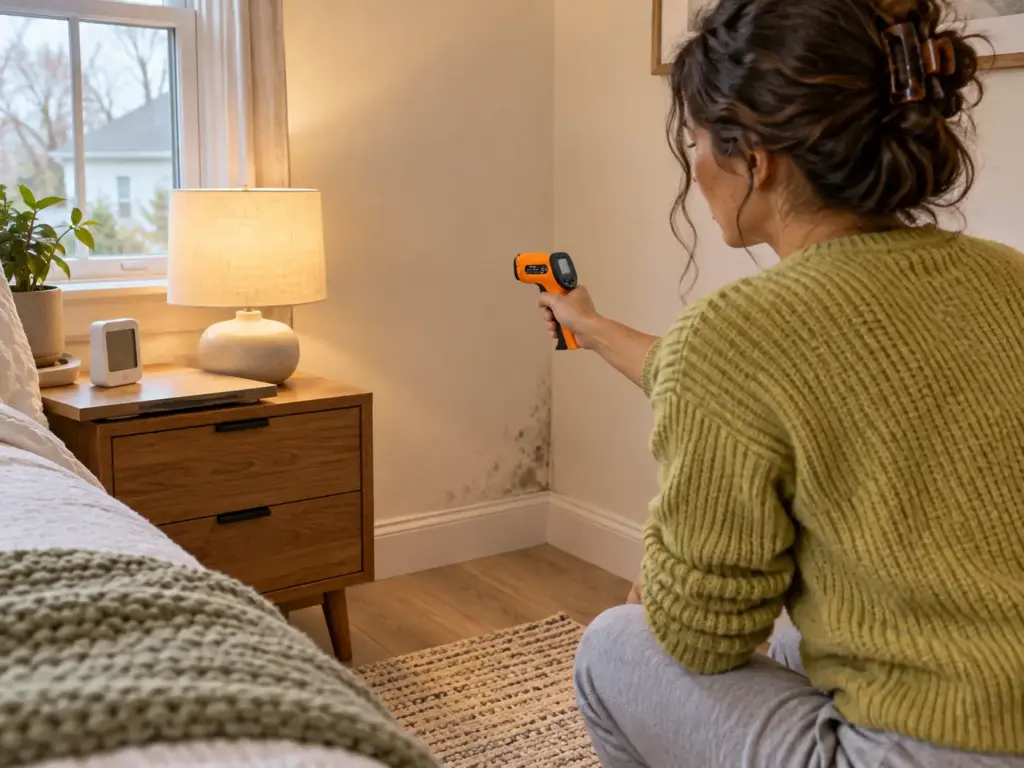
The comparison that settles it is the wall’s temperature against the room’s air. Check the affected area with a temperature probe; non-contact infrared ones work well and are not expensive.
The TempPro TempScan TP30 is that kind of infrared thermometer: a 12:1 distance-to-spot ratio, an adjustable emissivity setting from 0.1 to 1.0 and a short response time. At 12 inches it reads a spot about an inch across, which is small enough for one corner. It reads the surface only, never what is inside the wall, and the emissivity setting matters on a painted wall. The listing summary reports inconsistent readings from some buyers and, in a few cases, a laser that broke on first use, so take the same spot twice.
Read the corner and the middle of the same wall from the same distance. The difference between the two is the cold spot, and one reading alone says little. At 12 inches the 12:1 thermometer averages a spot about an inch wide; from six feet away it averages about six inches, which blurs a corner into the wall around it.
Which reading points where
Put the two readings side by side. A wall whose surface temperature is below the room’s air temperature, in a room with high relative humidity, means condensation, and the fix is on the room’s side: lower the humidity and warm the surface. A wall that reads wet with no source in the room points at the building. And if both are in range but the patch sits behind a bed, the still air is the cause and the furniture moves.
The cold outside wall and the 60 percent line are covered in more depth in what a monitor can and cannot see about mold; here the point is only to take the two readings together, and make the one change they point to.
Why It Comes Back After a Wipe
Cleaning the spot is the first thing most people do, and the spot returns. The return is information about the cause, not about the cleaning.
A wipe treats the surface, not the cause
Scrubbing a cabinet with bleach can bring green mold back within a week or two. That was a cabinet and not a wall, so read it as a pattern: when the same spot returns fast, the room or the wall is still feeding it. EPA says that a background level of spores remains after cleanup and that those spores will not grow if the moisture problem has been resolved, and that using a biocide such as chlorine bleach is not recommended as a routine practice during mold cleanup. The removal steps themselves are in how to remove it from the wall.
Photograph the patch with a coin beside it before touching anything. A week later, the same frame shows whether it grew, held or came back, and that answer is worth more than anyone’s memory of how big it was.
Paint and sprays that look like fixes
Paint is the second reflex, and the labels promise years of protection. A coat on a wall that is still wet or still cold is a coat on top of the cause, and the cause keeps working underneath. Cleanup products have their own article, the best mold removers for bedroom walls, and the painting question has another, whether to paint over mold on a wall. Neither belongs in this article beyond saying that both work on the surface and neither works on the damp.
The cheap change, if the room is the cause
If the readings say the room is the cause, the free fixes come first and are laid out in the free ways to lower a room’s humidity: the wet towel out, the laundry elsewhere, the furniture off the wall. Read again after a week. Only then does a dehumidifier make sense, and only for a room whose own moisture is the cause.
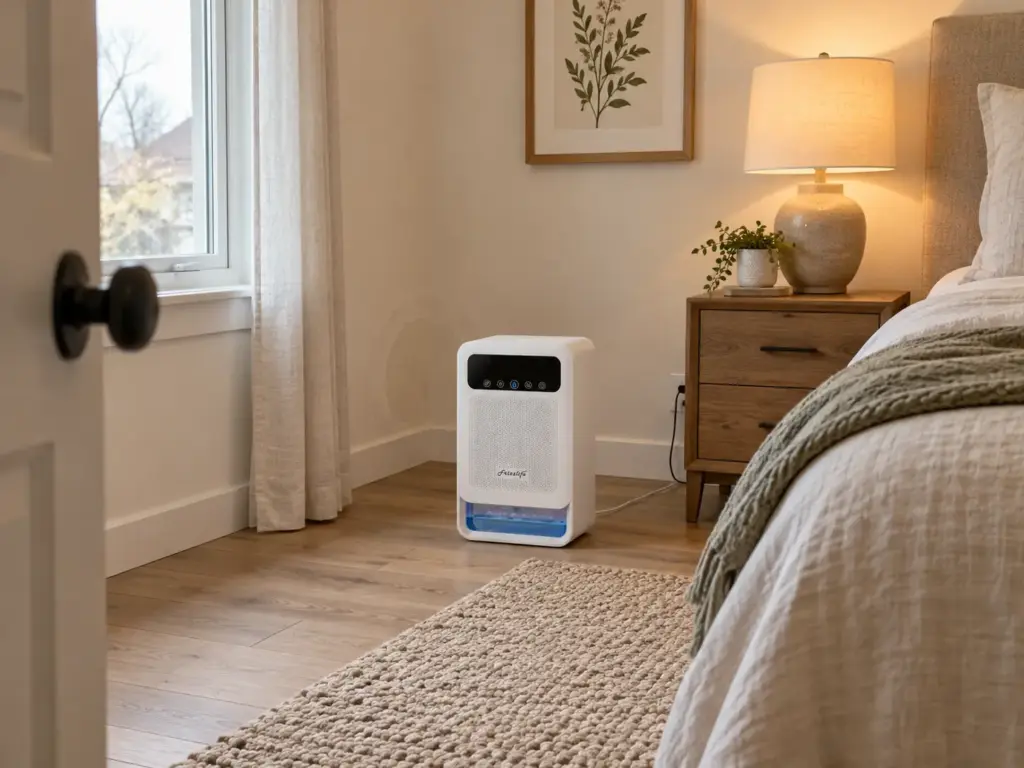
For a small bedroom, the Frizzlife DH80 is a semiconductor unit with a 135 oz tank and a 28 dB sleep mode, rated for up to 40 oz of water a day at 86°F and 80 percent humidity. A cooler bedroom pulls less than that rating, which is worth remembering before expecting the label’s number.
The humidity level cannot be set on the unit, per the listing’s own note, so the hygrometer decides when it runs, and it is a small-room unit, not a basement one. A wall wet from a leak is not helped by a dehumidifier in the room. The device decision for a reader who does need one is in what to look for in a dehumidifier.
Which Cause Is Yours, and Where to Go Next
By now the wall has told you something: it is cold, it is still, or it is wet. That is the map from reading to change.
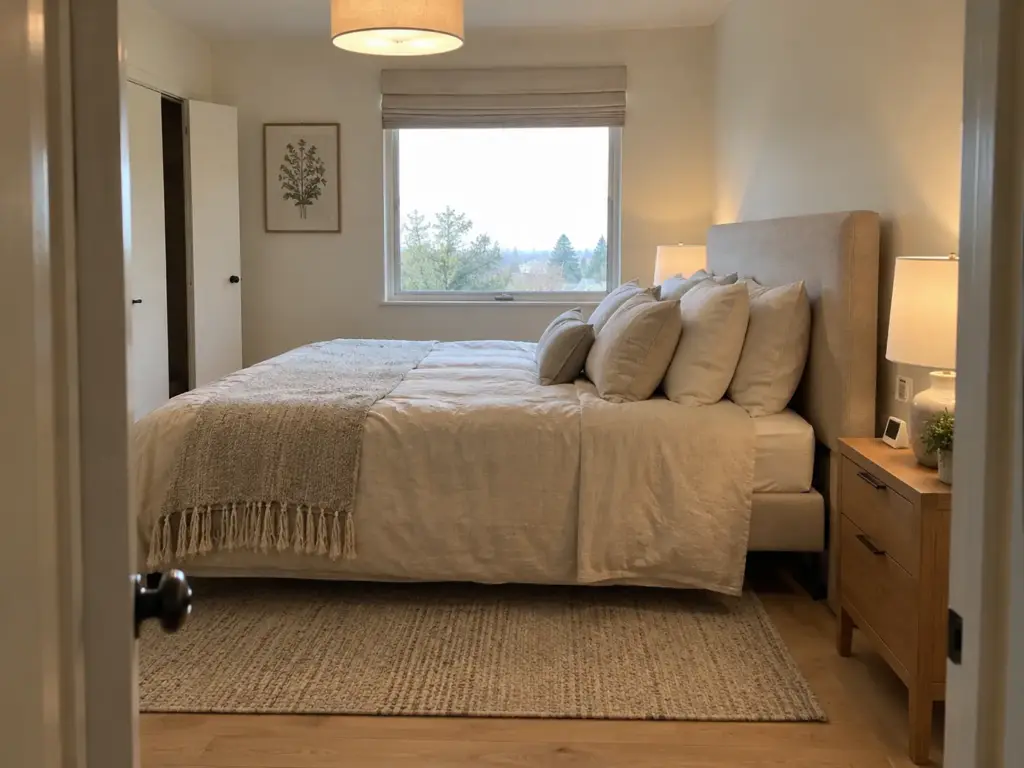
A cold wall in a humid room means lowering the room’s humidity and warming or insulating the surface. Still air behind furniture means moving the furniture. A wet wall with no source in the room means the building, and a professional.
In each case, make one change, wait about a week, and read both numbers again. If the room fix is the one, the prevention steps are the natural next article; if there is a patch to clean, removal is; if the patch is large, the severity article comes first.
Pull the Furniture Out, Then Read the Wall Again in a Week
The surface decides, not the spores. Read the room’s humidity and the wall’s surface together before changing anything. And water from the building is a different fix from anything done inside the room.
A month from now, look at the hygrometer’s high and low record and check the same corner behind the furniture again. A reading that has crept up, or a spot that has darkened, is the room telling you the first change did not reach the cause.
Tomorrow, pull the furniture off the outside wall and take the wet towel out of the room. Then read the humidity once in the evening and once after the door has been closed overnight, and compare the two with the 50 and 60 percent figures above.
Frequently Asked Questions
01Why does mold grow on bedroom walls in winter?
In cold weather the wall’s surface cools faster than the room’s air, and the room’s own moisture condenses on whatever is coldest. Furniture pushed against that wall adds still air, which keeps the patch damp. Read the room’s humidity first: EPA’s ceiling is below 60 percent.
02Why does mold keep coming back after I clean it?
Cleaning removes the growth, not the damp that fed it, and the spores stay in the room’s air. Read the room’s humidity and the wall’s surface before wiping again. A patch that returns in the same spot while the room reads in range points at the building.
03Why is there mold behind my bed on the outside wall?
The wall behind a bed is the coldest and stillest surface in the room, because the room’s heat and moving air never reach it. Move the bed off the wall and leave the gap open. Pillows and wedges used as fillers grow mold themselves.
04Will a dehumidifier stop mold from growing on a bedroom wall?
Only when the room’s own moisture is the cause. A wall that is wet from a leak or a pipe is not fixed by a unit in the room. Read the room with a hygrometer first, and run the dehumidifier only while the reading is above the band.
05When does mold on a bedroom wall need a professional?
When there is no visible source, when the patch returns after the room has been fixed, or when it covers more than about 10 square feet, roughly a 3 ft by 3 ft patch, EPA’s line for handling it yourself. A wet wall with no source in the room points at the building.