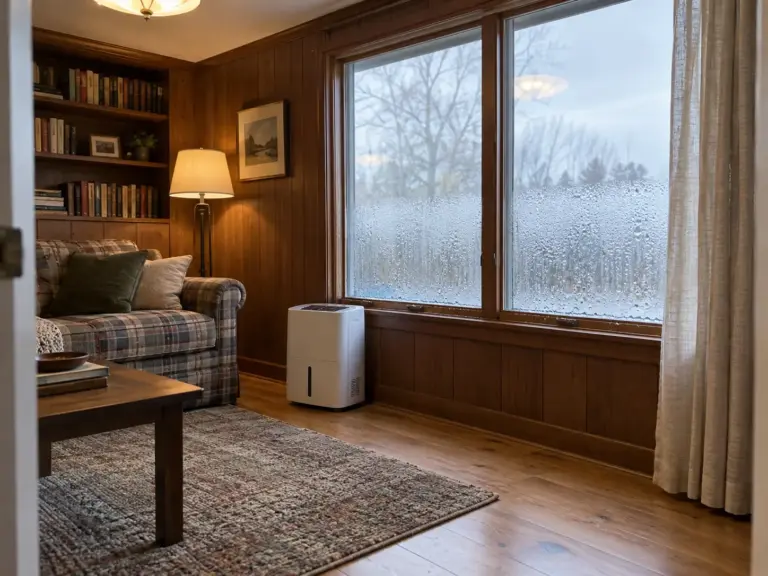
You pull the curtain back in the room where you sleep and the lower half of the glass is wet, with a bead of water already working toward the sill. That film is where the room’s moisture lands first, because the pane is the coldest surface the air touches, and it turns how to prevent condensation on windows into two jobs: less water arriving, and a warmer pane to arrive at. Do one, read the glass, then do the other.
Below you read the room and the glass, cut the moisture, warm the pane and move air across it, count what an open window costs in heat, and find out when none of it reaches the water. The year-round target lives in the humidity range the EPA gives, and this page carries that number to the glass.
Quick Answer
Condensation stops when the glass stays warmer than the room’s dew point, so the order is moisture first, then a warm pane, with a reading of the glass between changes.
- Read the room and the glass with a hygrometer before changing anything.
- Run the fans that vent outside and stop making steam in the room that fogs.
- Keep the glass warm: curtains open at night, heat reaching the pane, a fan across it.
- Open a window only when the air outside is drier than the air inside.
- Check where the water sits; water between the panes means a failed seal.
Why the Glass Fogs Before the Room Does
The room’s air is rarely the whole problem. The glass is simply the coldest thing that air touches, so it is the first place the air gives up its water, and two numbers decide when: how cold the pane is and how much moisture the room carries. The cold outside moves one of them without asking you, which is why the order of the fixes matters.
The pane’s own arithmetic
Warm air holds more water vapor than cold air. When room air meets a cold surface below its dew point, the extra water has nowhere to stay as vapor and settles on the surface as liquid. Think of a glass of something iced on a summer table: the same physics, and the same film, only here the cold glass is your window.
The dew point temperature is the number to hold on to, and it climbs with humidity. Roughly, a room at 70 °F (21 °C) and 40% relative humidity reaches its dew point near 45 °F (7 °C), at 50% near 50 °F (10 °C), and at 60% near 55 °F (13 °C). Any pane colder than that line fogs; any pane warmer stays clear.
So you can fix it from either end: lower the room’s number, or raise the pane’s temperature. The film shows first along the lower edge of the lower pane, where the glass is coldest, and that strip is the last to clear.
What the cold outside does to the number
The inner pane follows the weather outside it, which is why the same room can stay clear in March and show winter condensation in January with nothing else changed. According to North Dakota State University Extension, in its 2011 release on window condensation, a double pane window starts to show condensation when the outside temperature dips below zero °F (−18 °C) with 40 percent humidity indoors.
That same release adds that “With triple-glaze windows, condensation should not begin to show until the outside temperatures reach closer to minus 40 F.” It is a 2011 extension figure, fifteen years old, so treat it as the shape of the rule: the colder it is outside, the lower the indoor reading the glass can live with. For the full table, see how the right indoor number shifts with the outdoor temperature.
Winter targets get quoted anywhere from the low 30s to the high 40s, and most of them come with no source. The one with a public source is the EPA’s. In the EPA’s mold house tour, the agency says “To help prevent mold growth, try to keep the indoor humidity below 60%, ideally between 30 and 50%.” Put plainly, 30 to 50 percent is the working band and 60 percent is the ceiling.
The 40 percent in the NDSU release is a winter target inside that band, not a second standard. And the EPA adds the line this whole article leans on: condensation on windows can be a sign of high indoor humidity, which has many possible causes and should be investigated. So the film is a reading, and the glass itself tells you whether the room is too high today.
Read the room and the glass before changing anything
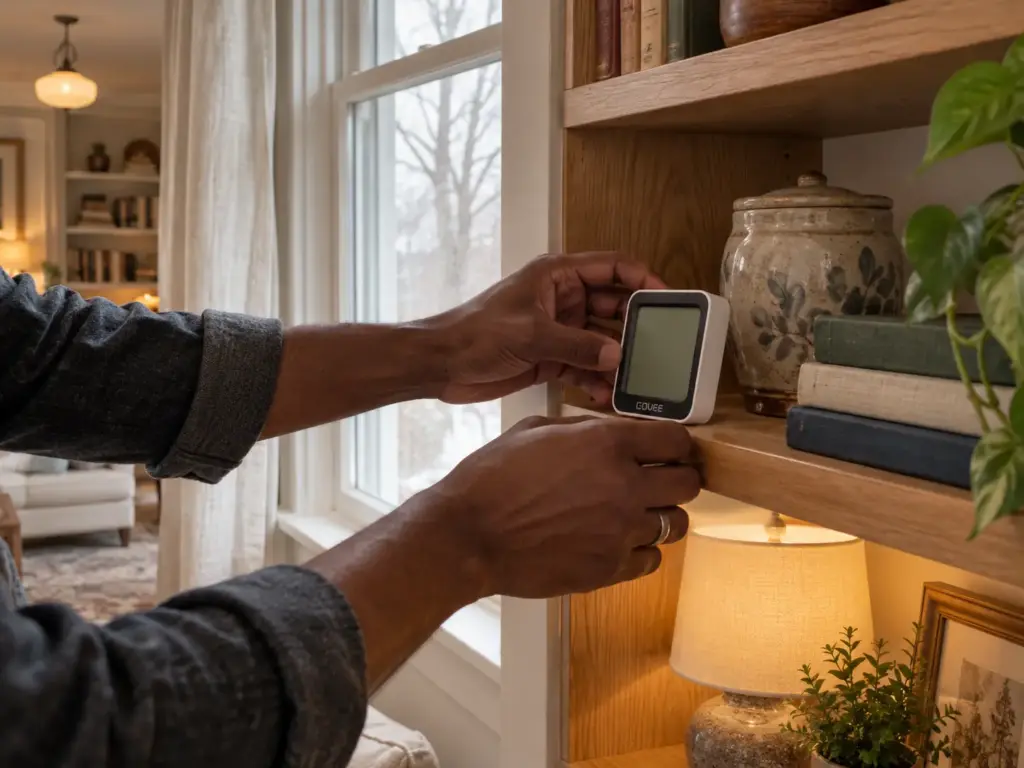
Before the first fix, take two readings: one meter in the middle of the room, one a hand’s width from the glass. If the humidity reading sits inside the band and the glass still fogs, the pane is the cold side of the story. If the room reads high, the moisture is. Three readings with one meter walks through the method.
The Govee H5075 is a Bluetooth hygrometer and thermometer that sends its reading to a phone app, which makes it easy to park near the glass and check the number from the bed. Like any cheap sensor it can sit a few points off, so use it for a direction rather than a decimal, and you need the phone to see its history.
The AcuRite 00613 is the plain version: a 3-inch display with no app and no setup, which shows the number now and keeps no history. A hygrometer changes more decisions than a new appliance does, and how to trust a cheap humidity checker covers what to expect from either.
Put the meter in front of the curtain, not behind it, and note the reading at the same cold hour two mornings running. One reading is a mood; two in a row, with the glass wet or dry beside each, is a baseline you can change against.
Three Places the Water Sits, and Only One Is the Room’s
Every fix below works on one of three places the water can be, and it pays to know which before you give an evening to it. Room side condensation, outside condensation on the outer face, and fog between the panes are three different problems. Only the first answers to anything you do inside the room.
The room side of the glass
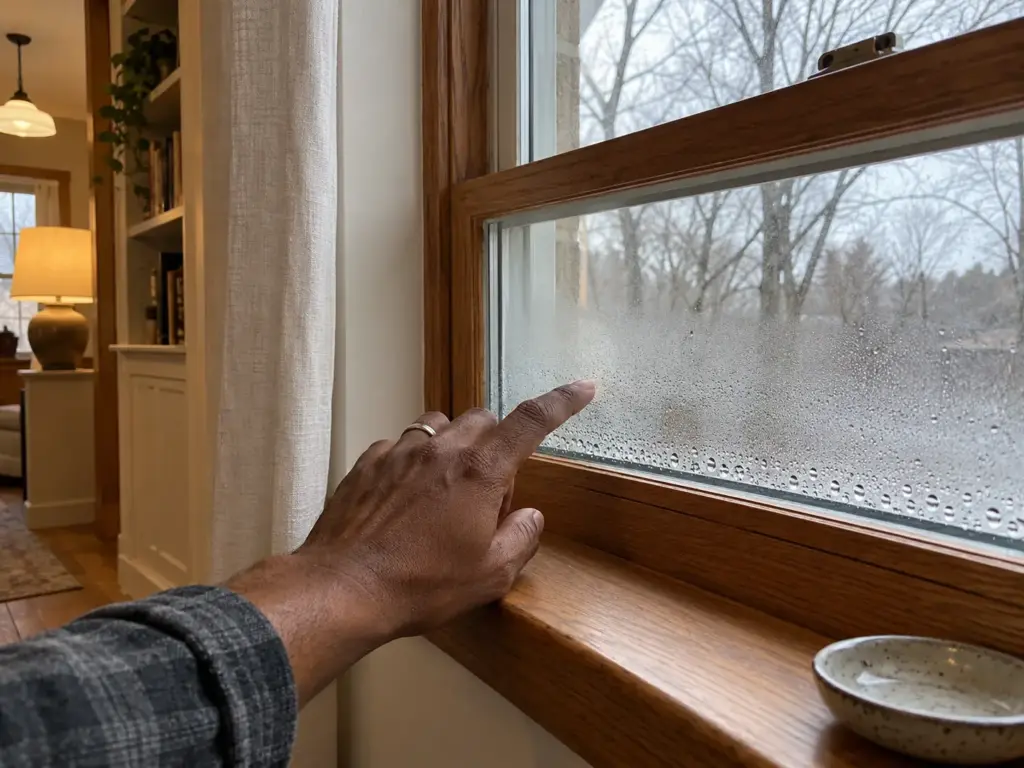
This is the room’s own moisture meeting the cold inner pane, and it is the case the rest of the article works on. It is also the usual one in a tight house, and the usual one in a rental apartment with its windows shut all winter. Whether the film on the glass is normal has its own page, with a ten-second wipe test; here it is enough to say that a film you can wipe off the inside face belongs to the room.
Even a dry house can fog new double-pane windows, because the glass is the coldest surface and it can cloud or ice over at a reading that would be fine elsewhere in the house.
The outside of the glass
Dew on the outer face is outside air meeting a pane that sits colder than it, and window makers treat it as normal rather than a fault. Nothing you change inside the room reaches it. The exception is a pane cooled from within, and for that case, read about when the air conditioner is running.
Between the panes
Haze or water trapped inside the glass sandwich is a failed window seal. Wiping never clears it, and lowering the room’s humidity does not touch it, because the moisture is sealed in the gap. The last section returns to that case; for now, the test is simple: run a hand over both faces, and if both are dry while the glass still looks wet, stop reading the rest of this page as a to-do list.
Cut the Moisture Reaching the Glass First, and Cut It for Free
With the water on the room side, the first lever is how much moisture arrives at the pane, and the cheapest ways to reduce it are already in the house. The changes come in order, and the glass gets read between each one.

Run the fans that vent outside
The EPA says to run the bathroom exhaust fan or open a window while showering, to vent a range hood to the outdoors, and to vent a clothes dryer to the outdoors too. NDSU’s 2011 release adds that a vent fan has to exhaust outside, and that venting into the attic can cause unseen moisture problems, mold growth included. A fan that dumps its air into the attic has only moved the water to a place you cannot see.
Run the bathroom fan through the shower and for a while after it. If its duct ends in a cap on an outer wall, hold a hand there while it runs: you should feel the air. A fan that runs loudly and delivers nothing outdoors is a motor, not a fix.
Stop making moisture in the room that fogs
People are a moisture source before anything else is switched on. NDSU’s 2011 figure is about 3 pints of water vapor per person per day from breathing alone, with showers, cooking and laundry on top, which is the reason a closed bedroom is wet at seven in the morning; why the glass is wet at seven in the morning takes the overnight condensation case on its own.
The sources you control are smaller and more numerous. Houseplants, cooking steam, drying laundry indoors and a humidifier setting turned up too high all feed the same pane. The free fixes are simple: keep the bathroom door shut during a shower so the steam does not walk down the hall, dry laundry in a room with the window open, and keep lids on pans. A renter often cannot change the extraction fan or a recirculating hood, so the levers left are the door, the lid and the window rather than the ductwork.
The full order for lowering the room’s humidity lives on its own page; this section keeps to the glass side of it.
Read the glass again before the next change
After one change, wait for the next cold morning and look. The tell for an unchanged source is morning condensation that is wiped every day and is back by the next one. If condensation returns every morning, the source has not moved, whatever the cloth has been doing. Only when the glass is clear, or clearly better, is the next lever worth reaching for.
Keep the Glass Warm and the Air Moving Across It
The second lever works on the pane, not the room: a warmer pane stays above the dew point, and air movement across it does not let a film settle. This lever costs heat, and the next section is about the window you open.

Open the curtains and the blinds
A heavy curtain pulled across a window at night traps a cold pocket against the glass while the room stays warm, and that is the pane at its coldest. Insulated curtains make it worse when they stay closed: they keep the room warm and the pane cold. NDSU’s 2011 release says leaving drapes open at night helps the windows behind them, then adds that “Unfortunately this causes energy losses, which need to be balanced” against the drop in condensation. So the trade is written in the same paragraph as the fix: a drier pane, a bit more heat leaving through it. The corner behind a curtain is the one that stays wet longest, and a curtain left shut all winter is a likely place for the sill problem to start.
Heat that reaches the glass
One tester’s routine in a home-test article was to run the heating at the hours when condensation peaked, which is a single person’s routine and not a standard, but the mechanism holds: a pane warms when warm air or a radiator can reach it. A couch or a curtain in front of a heat source does little for the glass, so the heat has to be able to get to the pane. Check what sits between the vent and the window before turning the thermostat up.
A fan pointed at the pane
A fan blowing across the lower pane, or a ceiling fan on low, can keep a film of moisture from settling on the glass. No figure is claimed here for how much. Airflow that falls short of the glass can also trace back to the furnace, and whether a dirty furnace filter plays a part is its own question, one this page leaves open rather than naming a cause.
Opening a Window Works, and the Heat Bill Is the Flaw
The free fix everybody names is opening a window, which is plain ventilation, and it works for the same reason it costs. It works when the air outside is drier than the air inside, and it costs because the air that comes in has to be heated.

When the air outside is drier
The EPA’s condition is to let outdoor air in only when it is not humid outside. A window opened onto damp, mild air swaps one wet air for another, and the glass shows it by morning. A raw winter day is often the right day for it, because cold air carries little water even when it feels damp; a rainy, mild one is not. That is the same reasoning behind why the winter reading shifts with the cold.
The heat it takes out with the moisture
Every cubic foot of cold air let in is warmed again by the furnace or a space heater, and it shows up as run time and kilowatt-hours. Opening the windows raises the energy bill. The cost is real. But it is a reason to open the window for a short, deliberate burst rather than leaving a crack all day, not a reason to skip it.
Opinions split on this. Opening windows more often and running the heating more often helps for some, and windows alone are not always enough. Sleeping with the bedroom windows open makes a room colder by morning, even if the pane is drier. Both are the reader’s to weigh.
Trickle vents and the draft they bring
The small permanent vents in a frame are a trade, not a fix. Trickle vents can let drafts and noise in, and some people simply open windows as and when they need to. If a vent is already there, leave it open and read the glass over a week. After you open anything, read the glass the next cold morning before opening more or turning up the heat.
The Frame, the Film and the Better Window
Moisture and heat are in order, and the pane is still the coldest object in the room, so now the lever is the glass itself. This is where the cost grows, which is why film goes first and a new window goes last.
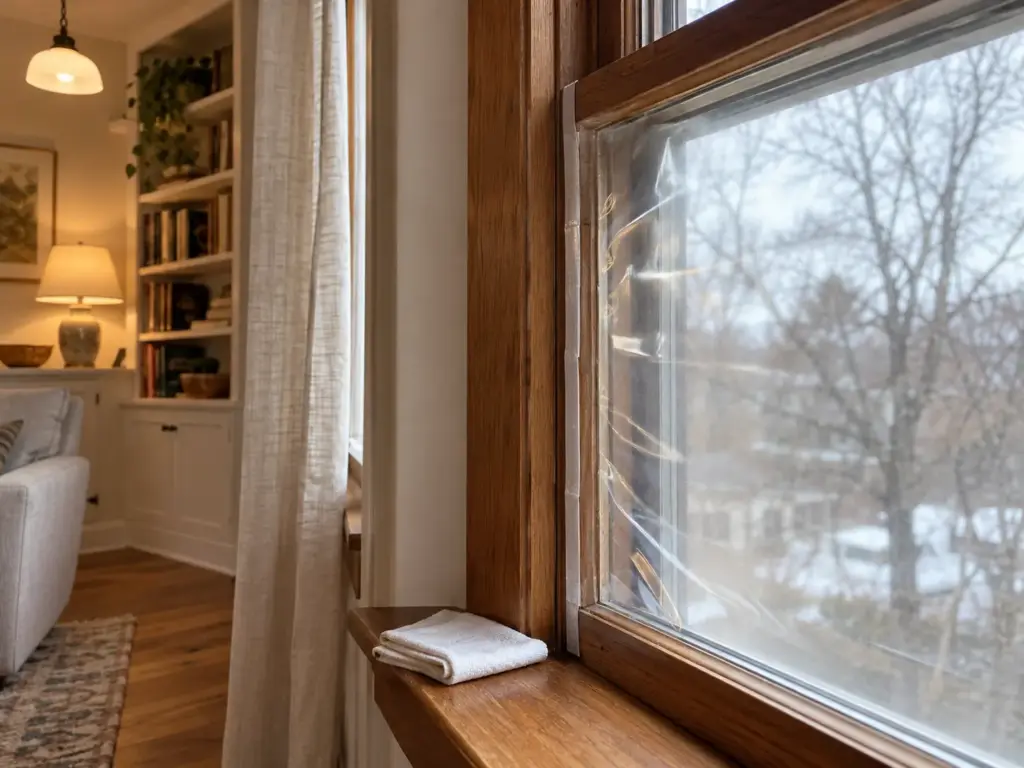
Window film with an air gap
Plastic film taped to the frame is a cheap form of secondary glazing: it creates an air gap that keeps the room-side surface warmer, and it is the renter’s option (nothing is drilled, nothing is replaced). A storm window does the same job in glass, at a higher price in effort.
Window film can clear the glass and still leave the water somewhere else. The condensation moves to the sill, and a sill that stays wet all winter is the next problem. Film that looks tight in week one can leave the sill wetter by month two, because the water has found a new place to go.
If you put film up, wipe and dry the sill each morning for the first two weeks and watch whether the line of water moved there. A clear pane with a wet sill is the film working and the moisture simply relocating.
Why a triple-pane window moves the line
A triple pane window, or triple glazing in a window-maker’s words, keeps its inner pane warmer, which is why NDSU’s threshold sits so far below the double pane one. It does not change what the room’s air holds, only the temperature of the surface it has to reach. It is not a first move: read the glass before you price a window, because the cheaper levers above may already be enough.
The frame is a cold bridge too
A metal spacer line at the edge of a double pane unit, or the frame of a bay window, can run colder than the glass beside it as a thermal bridge, according to window makers’ guidance. That is why the wet line sometimes follows the perimeter rather than the middle of the pane. Adding air vents to the window frames is a cheaper change than replacing the window, and it can ease fogging.
Where a Dehumidifier or an Absorber Fits, and Where It Doesn’t
A device comes after the reading and the free changes, not before. The reading has to sit above the band after those changes to justify one. And the limit comes first: these do little in a room that is already dry.

When the reading stays above the band
NDSU’s 2011 release says dehumidifiers “generally are ineffective if humidity levels are below 50 percent”, which describes much of a heated house in winter. A dehumidifier does not always help a fogged window, so check the reading before running it harder.
If the room does sit above the band after the free fixes, the Frizzlife DH80 is a small unit with a 135 oz (about 4.1 L) tank, a plain choice for a small bedroom. The tank has to be emptied, and a unit pulls little from a cold room, which is the reason to read the glass again after a week. If neither the glass nor the room has moved, the source is somewhere else, and which dehumidifier suits a window that keeps fogging takes the choice further.
What an absorber tub does and doesn’t do
A moisture absorber, usually a tub or box of desiccant, sits at the sill and takes moisture from the air next to it. It has to be refilled, and it looks like what it is. It does nothing for a room above the band, since the tub has no way to keep up with a source. No absorber is recommended here.
The cold-room limit
A dehumidifier works best in a warm, damp room and least in a cold one. NDSU’s line covers the dry-winter half of that, and nothing more is claimed. A full tub or bucket again on the first day of the second month is the sign the moisture source has not changed.
What Month Two Looks Like on the Sill
Week one is the easy part to write about. Once the change has had a few cold mornings, what matters is what the wipe, the sill and the frame look like, and a first heating season is a normal span for a new house to settle, according to window makers.
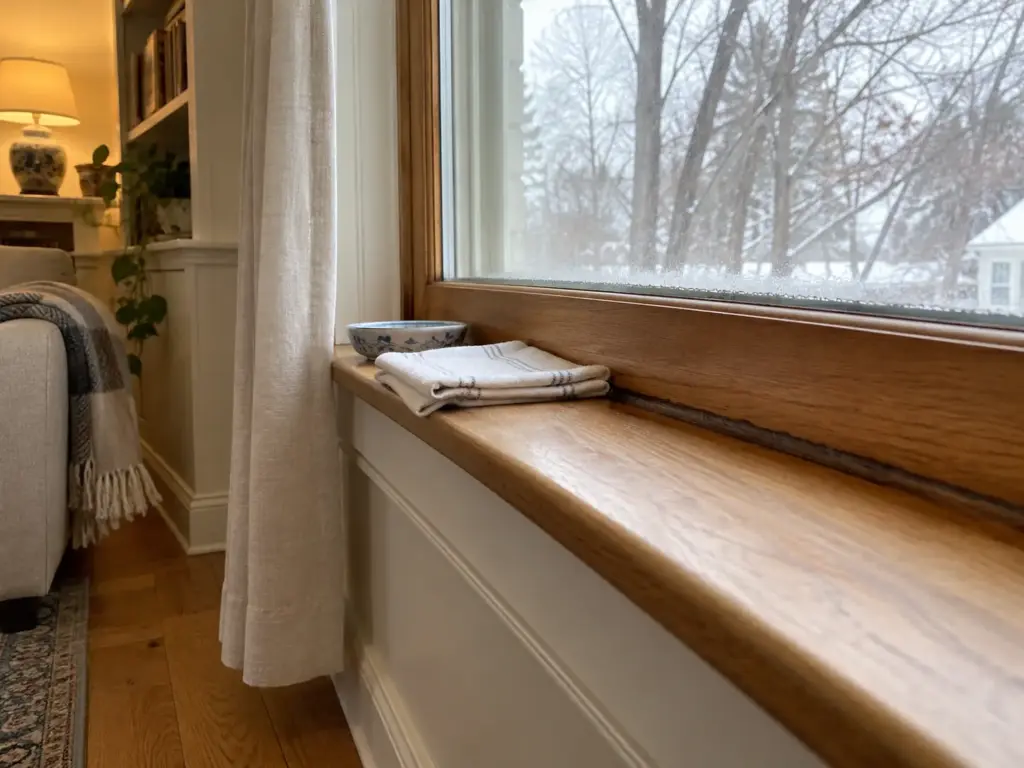
The wipe becomes a routine
Wiping down wet windows and cills every morning is a common answer (cills are what US readers call sills). The wipe is a routine to keep, not a fix, and a film that returns each night tells you the source is unchanged. The dark water line low on a wooden sill is the first place month two shows.
The sill and the frame
Mold on the window frame or the sill is a building sign. In a new build, condensation can come back in the same spot while wiping is the only change, even with trickle vents tried both open and shut. Dry the sill and frame each morning, and reseal the line when it keeps returning. Whether the film on the glass is a mold sign has its own page.
Mark the spot on the sill where the dark line starts with a strip of tape. If the line is longer at the end of the month than at the start, the moisture is still winning, whatever the glass looks like.
The first heating season, and the renter’s version
Window makers say condensation in a new build may clear during the first heating season. Some homes fight this problem for several winters, so give any fix a full season before judging it. If the extraction or the window cannot be changed, the levers left are the door, the lid, the curtain, the film, and the window opened under the EPA’s condition.
No opened source gives a month-by-month reading for the same window, so no timeline is invented here.
When the Water Is Not the Room’s Fault
If the room reads inside the band, the free levers are done and the glass is still wet, then the water was never the room’s. The three suspects are the seal, the frame and the building, and the right person is a window installer or a building professional.
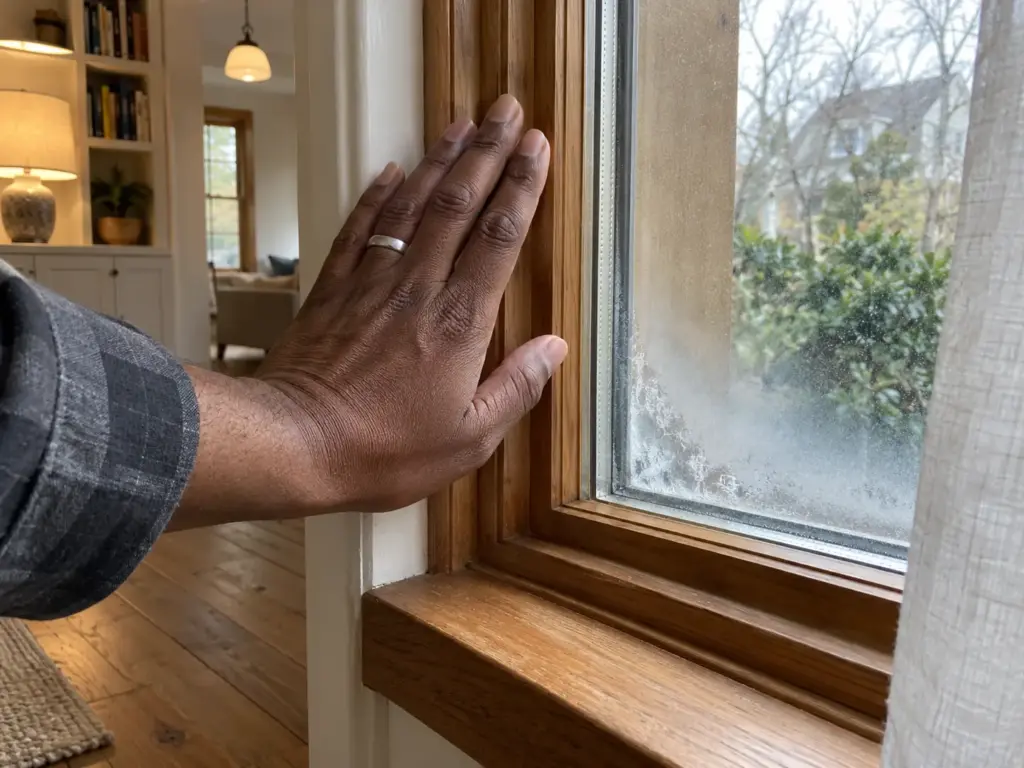
Water between the panes
A failed seal lets moisture into the gap, and the room’s humidity cannot reach it. Repair or replace is a separate decision, and whether the window needs replacing takes it on its own. A wet pane with a room reading already in the band, week after week, is the sign the pane is the problem.
A very tight house
NDSU’s 2011 release notes that a very airtight new house may want an air-to-air exchange system, and that the heat exchanger can recover as much as 70 percent of the heat from the indoor air. That is a building decision for a professional, not a weekend job.
Mold behind the trim
Mold behind the trim, wet paint at the frame, or a wall that stays damp points to the house rather than the pane, and it is a professional’s call. The same cold-surface rule works on the wall side in why mold grows on bedroom walls and ceilings, and what a damp frame and wall mean for the house covers the building side. What damp air does to a person is a question for a doctor; this page stays with the glass and the wall.
One Reading Tomorrow, One Change After It
Three things carry the page. The pane against the room’s dew point is the whole mechanism. The order is moisture first, then a warm pane and moving air, with the glass read between each change. And water between the panes sits outside every one of these fixes, because no change to the room reaches it.
A month on, look at the dark line on the sill and at whether the film comes back in the same corner on each cold morning; a corner that returns is telling you something the average reading hides. Tomorrow, set the meter a hand’s width from the glass, write down the reading at first light, change exactly one thing from the moisture list, and read the glass again the morning after.
Frequently Asked Questions
01How can I stop condensation on the inside of my windows?
Keep the glass warmer than the room’s dew point by cutting moisture at the source and moving warm air across the pane. Change one thing at a time and read the glass the next cold morning before the next change.
02Does condensation on windows mean the house is too cold?
Not by itself; it means one surface is colder than the room’s dew point, and the outside temperature moves that line. NDSU Extension said in 2011 that double-pane glass starts to fog below zero °F (−18 °C) outside at 40% indoor humidity. Read the room and the glass to see which side is off.
03What can I put on windows to prevent condensation?
Window film with an air gap, taped to the frame, keeps the room-side surface warmer, and curtains left open at night help the glass behind them. The flaws are a wetter sill with film and a higher heat bill with open curtains.
04What is the best window condensation absorber?
An absorber only takes moisture from the air next to the sill and has to be refilled, so the reading comes first. It does nothing for a room above the band, and no product is recommended here.