Your bedroom gets vacuumed every week, the sill is wiped, a purifier sits on the dresser, and nobody has ever read the room’s humidity. Allergies in the house trace back to five things the house holds (dust mites, the dander an animal leaves, mold, cockroach and rodent debris, and the pollen that walks in on shoes), and all five lean on one condition the house controls: moisture. Mites and mold both need it, and the biggest reservoir of it is not the air a machine cleans but the mattress, where eight hours a night go by with the door shut. What follows puts each trigger on the surface that holds it, gives you the number to read first, and then runs the order: the bed, the vacuum, the water, the devices and the open window.
Quick Answer
A house holds five triggers, and all five lean on moisture, so the first move is a reading: the EPA’s band for a home is below 60 percent relative humidity, ideally 30 to 50, and the bed is where the hours go.
- Dust mites: the mattress, pillows, upholstery and carpet
- Pet dander: where the animal sleeps and on clothes
- Mold: the wet corner, window frame, shower liner and drip pan
- Cockroach and rodent debris: under the sink, behind the refrigerator, in stored cardboard
- Pollen: shoes, hair and the open window
Five Triggers, Five Places in an Ordinary House
A list of allergens tells you what exists and stops there. This section sets each of the five on the surface that holds it and on the condition that keeps it going, so everything after it can work from a map of your own rooms. It is also the one place where the question about a person gets handed to a doctor, which leaves the rest of the article free to stay on the house.
Dust Mites, Dander and Debris: Where Each One Settles
Dust mites live where fabric holds warmth and moisture: the mattress, the pillows, upholstered furniture such as the sofa, the curtains, the rugs, the soft toys and any carpet that has been down for years. Pet dander, cat allergen and dog allergen alike, settles wherever the animal sleeps, and because it rides on clothes and pet hair it turns up in rooms the animal never enters. Cockroach debris and rodent droppings collect under the sink, behind the refrigerator and in stored cardboard boxes that have sat in a damp closet. The EPA’s page on biological contaminants in a home lists mites, mold and pet allergens together as one group.
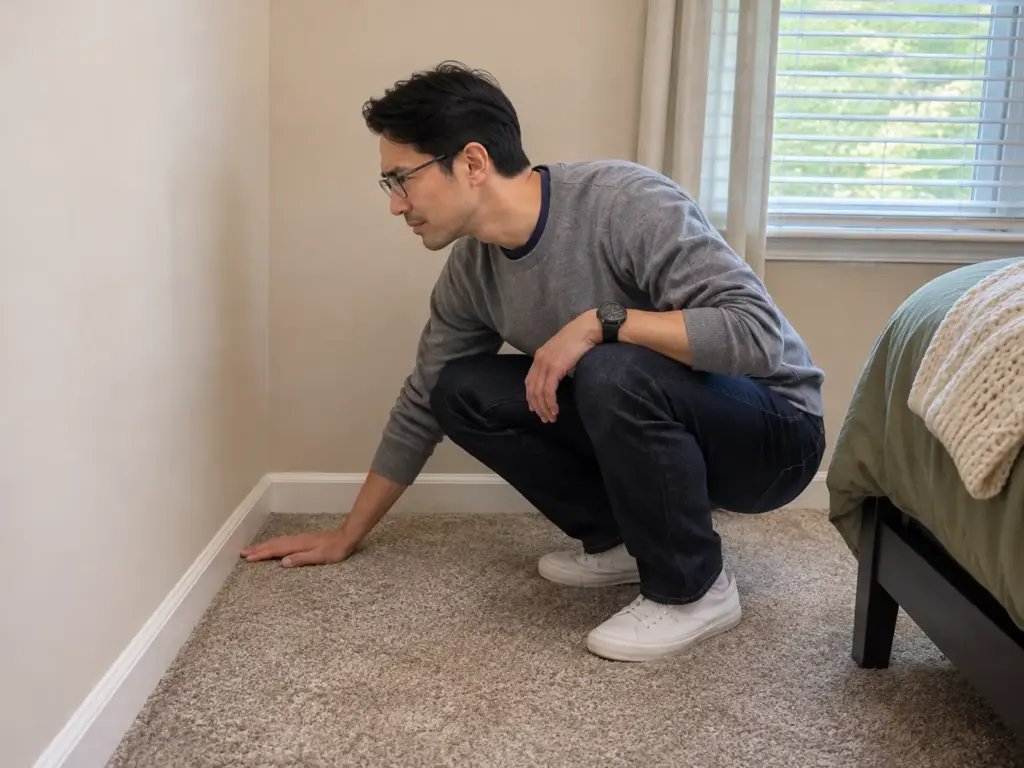
A carpet in a rental is the clearest case. It cannot come out, it cannot be emptied, and no weekly pass of the vacuum reaches what sits at its base, so it ends up as the room’s reservoir. That is why this article keeps arriving at the room and not at the machine.
Mold and Pollen: The Wet Corner and the Open Door
Mold, mildew included, grows on surfaces that stay wet: the corner where an outside wall meets the floor, the shower curtain liner, the window frame, the refrigerator drip pan. Its spores travel on air and settle on the next damp surface. Pollen comes in on shoes, in hair and through the window you open for air, and indoor pollen follows the pollen season. Of the five, it is the one that follows the weather; the other four stay all year.
What the five share is moisture and warmth. Mites and mold both need it, and water damage gives mold its start (the EPA’s drying window for that is spelled out in the section on where the water comes from).
Not every particle in a room is biological, either. Secondhand smoke, cleaning chemicals, sprays and air fresheners add volatile organic compounds (VOCs) and fine particles to the room’s load, and the fix matches the fix for the rest: remove the source, then bring in fresh air. That is a fact about the room, and it needs no number.
What a Doctor Settles and What the House Does
Which of these five a particular person reacts to, whether a symptom has anything to do with the house, and any test or treatment are questions for a doctor. The house, the air and the devices that move or filter it are what this article covers, and the house side has house answers: what the bedroom’s humidity reads, which surfaces hold water, how much air a filter is rated to pass, where the leak is.
A reader who has cleaned thoroughly, bought a machine and still has no reading and no order does not need another purchase. The order is what is missing, and the sections below give it.
Why the Bedroom Comes Before Every Other Room
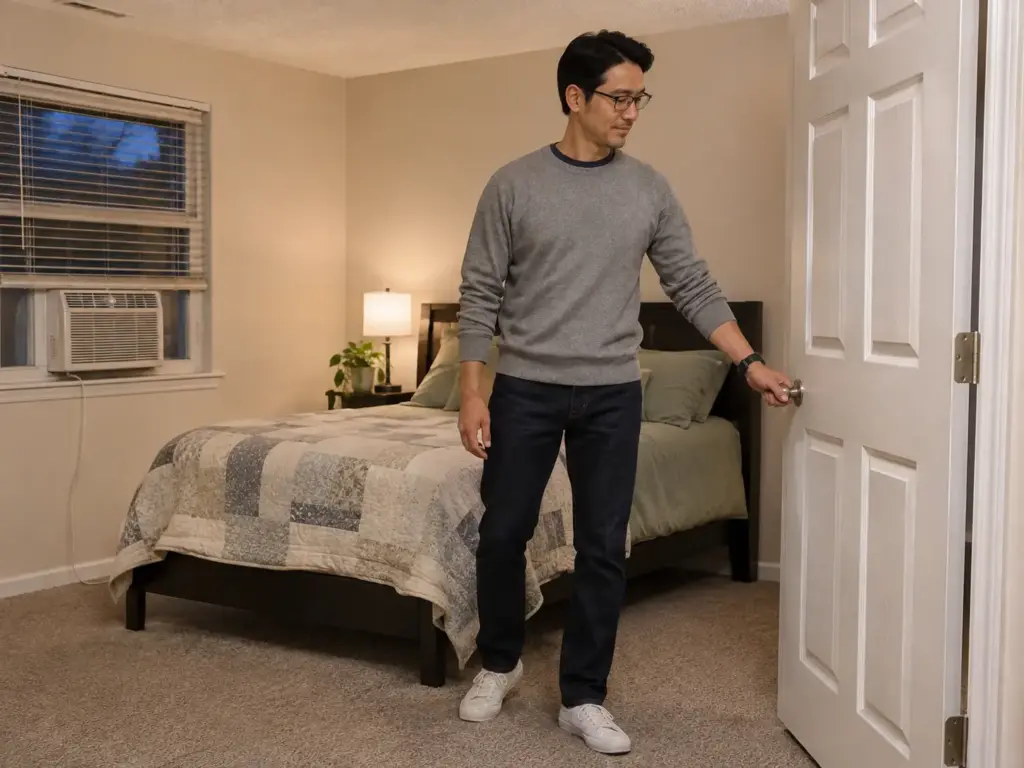
After a map of five places, the question is which one to take first, and the answer is the room where the hours go: eight a night, door shut, on a surface nobody has sealed.
Eight Hours on a Surface Nobody Seals
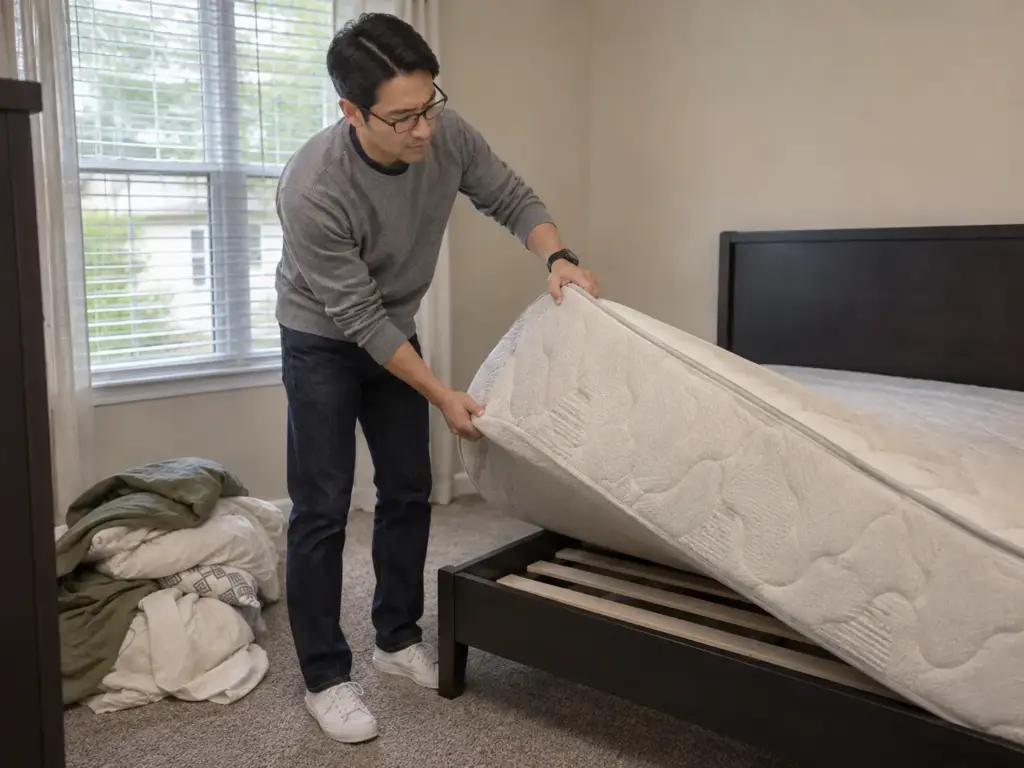
The mattress, the pillows and the carpet are the allergen reservoir. The air is only the part that moves through. A bedroom that gets a vacuum weekly can still hold more of the five triggers than any other room in the house, because it gets the longest stretch of use and its mattress has never worn a cover. Read the room first and the weekly routine finally has a target.
What the Air Machine Reaches and What It Does Not
A purifier treats the air that passes through its filter. It does not reach the mattress, the carpet or an animal’s bedding, and the EPA says as much in its own terms: filtration should supplement source control and ventilation, because it removes some biological contaminants and not all of them. So the order that holds up in a room runs from the number to the bed, from the bed to a vacuum with a bag, then to the water, and only then to a machine for the air.
Picture the room where it goes wrong: carpet, no window, a purifier, a dehumidifier and a fan running around the clock, and the reservoir still in the room. The carpet ends up as the one thing left to change.
The Closed Door and the Night Number
With the door shut and a window unit running, a bedroom’s humidity climbs through the night, and the number at bedtime is not the number in the morning. The reason is laid out in why a shut bedroom reads wetter by morning. The reading that counts for a bed is the later one, taken before the door opens, because that is the air the mattress has just spent eight hours in.
Read the Bedroom’s Humidity Before You Buy Anything
Every step after this one depends on a number you have not read yet. This section names it, says where the meter goes and shows what each reading points to.
The EPA’s Band: Below 60, Ideally 30 to 50
The number has an owner. According to the EPA’s humidity band for a home, you should “keep indoor humidity below 60 percent (ideally between 30 and 50 percent) relative humidity.”
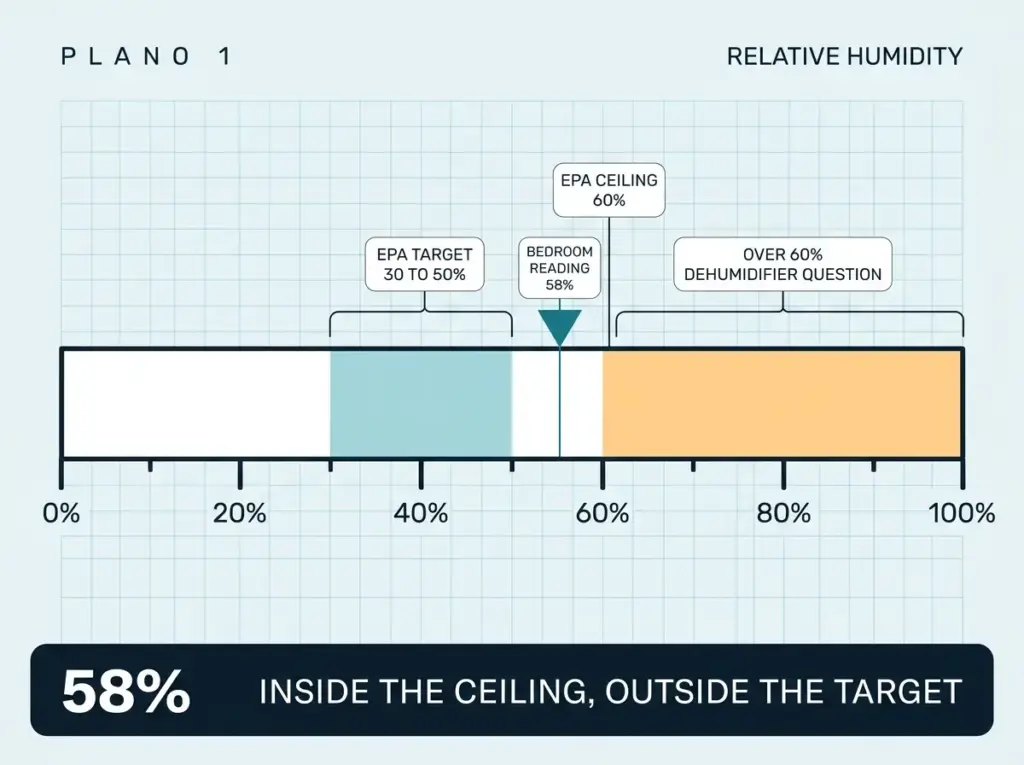
Sixty is the ceiling and 30 to 50 is the target. The round “under 50” that gets passed around is tighter than the figure the EPA publishes, and it has no owner. A room can sit at 58 and be inside the ceiling and outside the target in the same reading, which is the exact spot where a purchase feels urgent and the next step is a measurement. The range for a bedroom in particular narrows the band to the room where you sleep.
Where the Meter Goes and When to Read It
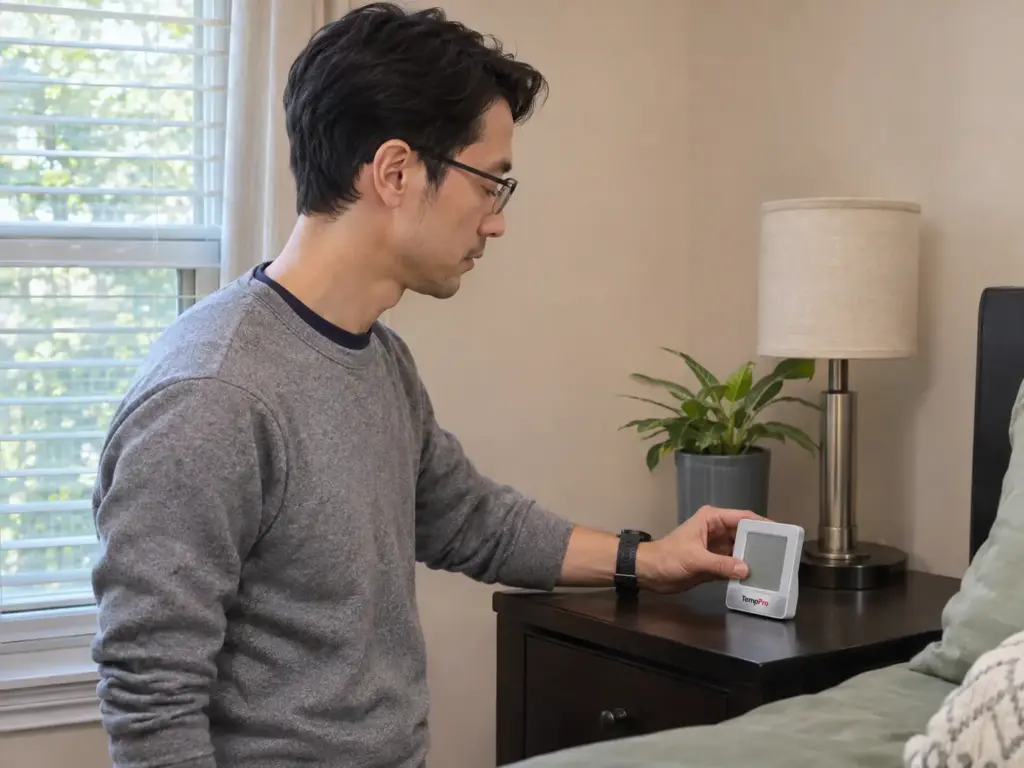
Put a hygrometer at bed height, a few feet from the window and away from any vent, and read it twice: at bedtime and again in the morning before the door opens. A second pair of readings a week later shows the pattern, and three readings with one meter covers the method. The two readings often differ by more than the meter’s own margin, and that gap is the signal.
The TempPro TP49 Digital Hygrometer (TempAir CORE TP-49-W) is the first dollar in this whole sequence, because it changes more decisions than any device that follows. Its maker rates the accuracy at plus or minus 2 to 3 percent relative humidity, and that is the cheap sensor’s limit: it stores no history, and a margin that wide cannot prove a 2-point change. It can tell you which side of 60 a room is on. It cannot tell you that a fan moved the number by two, and how far a monitor can be trusted sets out what that margin means.
Tape an index card under the meter and write the bedtime and morning readings in two columns for a week. The meter keeps no history, and seven mornings in a row tell you more than any single number that sits inside its 2 to 3 point margin.
Which Way the Reading Points
The humidity level on the meter, set against the EPA humidity guidance, sends you in one of a few directions. Inside 30 to 50, humidity is not the problem and the bed in the next section is. Over 50 and under 60, the free fixes come first: the door, a fan, the window.
Over 60 and staying there after those fixes, a device enters the picture, and that is the dehumidifier section. A reading under 30 points the other way, a different fix that nothing in this article moves.
Wash What Reaches, Then Seal the Bed
The reading says whether the room is the problem. The bed is the surface where the hours go, and the cheapest changes on it cost nothing and come before any cover.
The Wash Comes First and the Label Sets the Heat
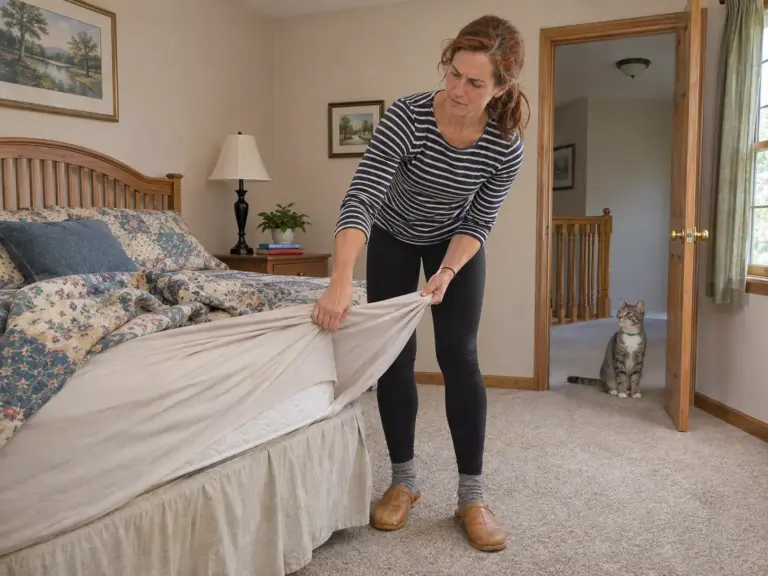
Strip the bed, wash the bedding at the temperature its care label allows, dry it fully, and repeat the whole routine weekly with the cover included. The label is the authority for the fabric, and a wash too hot for that fabric wrecks the sheet before it helps anyone. A bed that is stripped, washed and made again the same afternoon still has the mattress underneath, which nobody has touched. And the cover goes onto a bed that is already stripped and dry.
A Cover Over What Cannot Be Washed
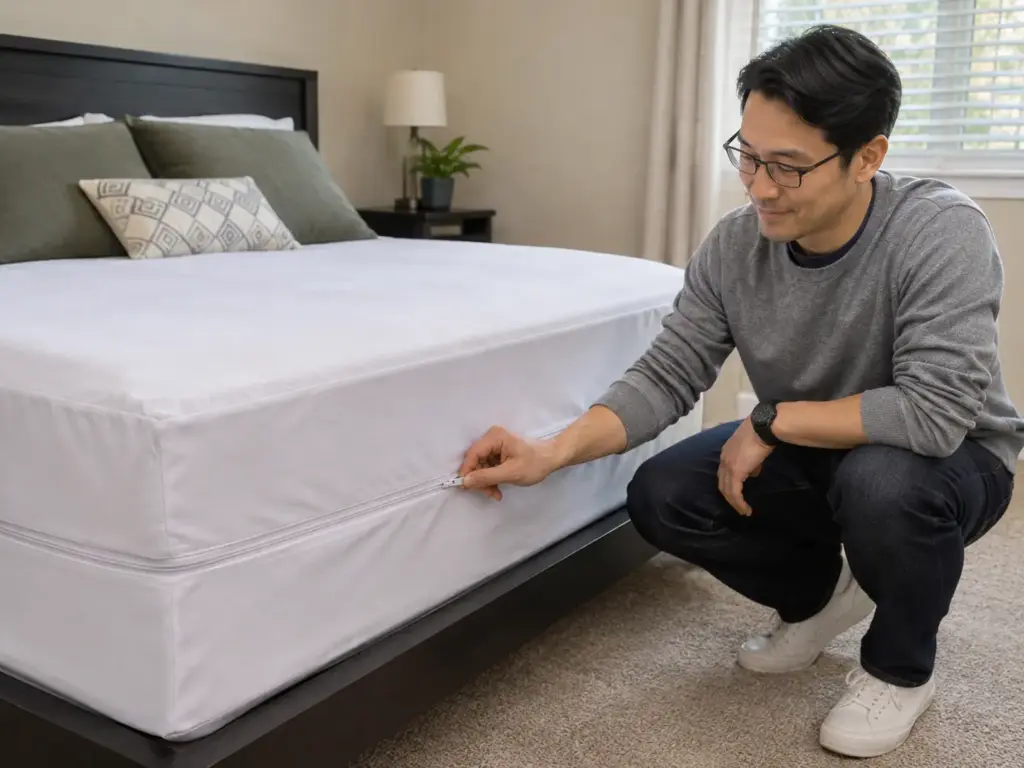
The mattress, the box spring and the pillow are the layers a washer never reaches. A zippered allergen-proof cover over them seals that surface and gives the weekly wash a washable layer to reach in place of the core of the mattress.
The SafeRest Premium Waterproof Zippered Mattress Encasement in the full size is a six-sided waterproof cover that fits a mattress 9 to 12 inches thick and goes through a machine wash. A cover is a product fact with a narrow job: it seals and it washes. The pillow needs its own, since a mattress cover alone leaves the surface nearest your face open.
What Fails at the Zipper
The weak point is the zipper. The membrane is rarely what fails; on this cover the zipper quality runs mixed, and it can rip within weeks, so check the seam after the first few washes instead of trusting it for a year. A cover with a torn zipper has stopped sealing, and it goes in the trash and gets replaced.
A Vacuum That Keeps What It Lifts, and a Damp Cloth
The bed is sealed. The next surfaces are the floor and the shelf, and the question is whether the machine keeps what it picks up or hands the fine part back to the room.
Top Down: The Order That Keeps Dust From Landing Twice
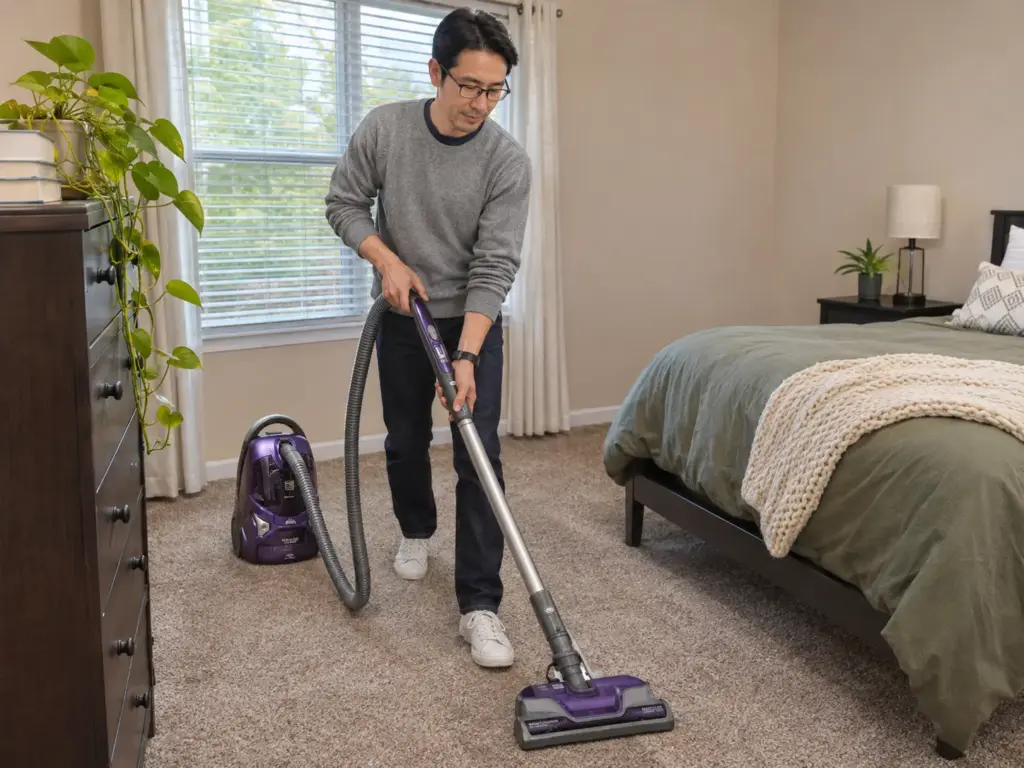
Work from the highest surface to the floor: shelves, sills and the headboard with a damp cloth first, the floor last. Damp dusting keeps the fine part on the cloth; dry dusting throws it back into the air, and it settles on whatever you just finished. Weekly is a house routine for a bedroom that gets its eight hours a night, with no standard behind the interval.
A Bag That Seals Against a Bin You Empty
A HEPA vacuum label means something specific. The EPA’s own description of what a HEPA filter is rated to catch is that it “can theoretically remove at least 99.97% of dust, pollen, mold, bacteria, and other airborne particles with a size of 0.3 microns.” On a vacuum, the filter is only half of the job. The other half is a system that does not leak, and a bag that seals keeps what the machine lifts where a bin lets the fine part drift back into the room when it is emptied.
The Kenmore 600 Series 81615 Pet Friendly Bagged Canister Vacuum is a bagged canister with a triple HEPA filter that the maker rates at 99.97 percent, two motors and a weight of 22.6 pounds. The bag is the point: when it fills, you know. Its flaw is in how it ages. Durability runs mixed, with some units giving out around the three-month mark rather than at the unboxing, and a 22.6-pound canister is a chore on stairs.
The Bissell MultiClean Allergen Lift-Off Pet 2998 is the alternative with a sealed HEPA system; with anything that has a bin in place of a bag, empty it outdoors or into a bag, held at arm’s length.
Pull the bed away from the wall before the weekly pass and run the nozzle along the baseboard and under the frame. A quick pass skips that strip, and it is the stretch of floor the mattress sits over for the eight hours.
Carpet in a Rental
A rental’s carpet cannot come out and cannot be emptied. The weekly pass keeps the surface down and the reservoir stays, which is the honest limit of this step. If the carpet ever does come out, it is the biggest single change available in the room, and no device in this article matches it.
Where the Water Comes From — Mold, Condensation and the Building
The order so far assumes the cleaning is the answer. When the source is water, it is not, because a wet wall and a leak are the building’s job and no vacuum reaches them.
Condensation, the Wet Corner and the Shower Liner
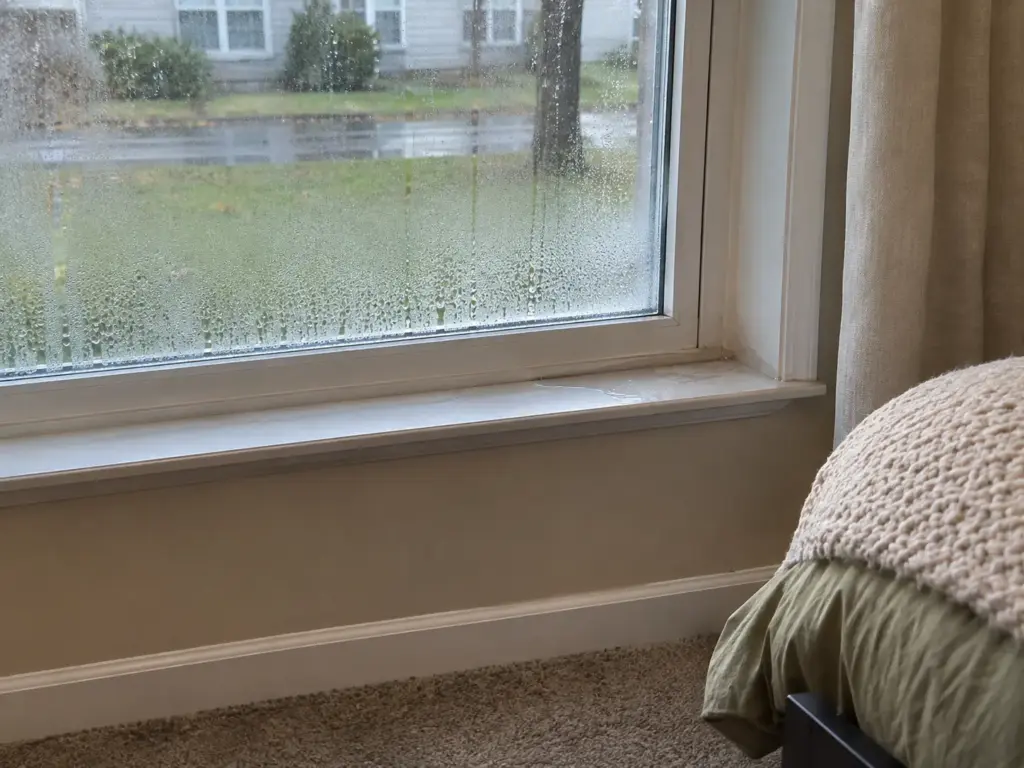
Mold is a moisture problem, so the question is where the water comes from, and what to spray on the patch comes second. The coldest surface in a room takes the water first: the window pane, the inside of an outside wall, the corner behind a dresser. Window condensation at the bottom of the pane on a cold morning is the room telling you it is over the line, and when the wet glass is a warning and when it is only morning separates the two. The shower liner and the drip pan under the refrigerator work the same way: dry them, or they keep the patch alive.
The 24 to 48 Hours Are a Drying Window
The EPA’s 24 to 48 hours is the time to dry wet materials after a leak, a spill or a soaked carpet, and the EPA’s guidance on drying wet materials says so in those terms. It is a drying window. It is not a clock on how fast a damp room grows mold over a winter, and treating it as one turns every foggy morning into an emergency. How fast a wall patch spreads when there is a leak and when there is none draws that line.
No monitor detects mold. A shelf monitor reads the humidity that lets mold start, and why no shelf monitor can see mold, only the humidity that lets it start goes into the reasons. That makes the reading from the earlier section the first thing to take.
When the Wall, the Floor or the Crawlspace Is the Job
Some of this is not yours to clean. Hidden mold behind drywall, under flooring or in a crawlspace, an active leak, and a patch that keeps coming back after the water is fixed all belong to a professional with a moisture meter, and professional mold remediation starts with finding the moisture, not the patch. A dehumidifier running in a room with an active leak is a bucket under a faucet. When the water comes up from below, where the water comes from when the basement is the source is the place to start.
A Dehumidifier Only When the Meter Stays Over 60
This is where the reading turns into a purchase, and only for the room that stays over the line after the free fixes.
The Free Fixes Before the Machine
The EPA’s wording is that if humidity is consistently above 60 percent, a dehumidification strategy should be employed. Consistently is the word that matters.
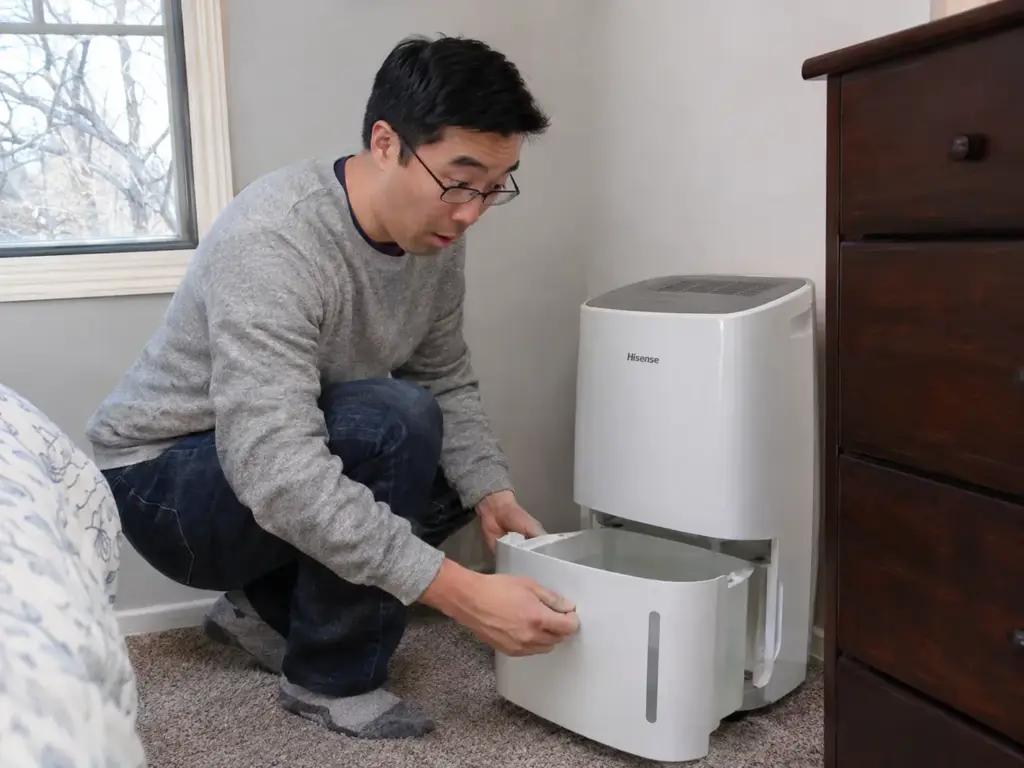
Before the machine, try the free ways to lower the reading first one at a time, with a reading between them: the exhaust fan run longer after a shower, wet towels moved out of the bedroom, the door opened for ten minutes in the morning. After each, the next morning’s reading should be lower than the one before. If it has not moved, the source is still in the room, and the next fix is the one to try. Stop when the number is inside the band.
A dehumidifier is also the obvious pick that stops being obvious in a cold room, and an air conditioner pulls water out as a side effect only while it cools: it pulls the most water from warm, moist air and very little from a cold one, so a basement corner at low temperature may need a heat source or a repair before it needs a unit.
The Set Point and the Drain
The set point is a number in percent that follows the meter. Pick a figure inside the band, and the percent to set it to gives the reasoning. The Midea Cube 20 Pint Dehumidifier adjusts from 35 to 85 percent, is rated by its maker for up to 1,500 square feet, and takes a drain hose so the water leaves by gravity and the bucket stops deciding the summer. Where the hose cannot reach a drain, the Levoit DOE 25 Pint has a removable pump and a MERV 11 filter.
Running cost is arithmetic. The nameplate watts times the hours it runs, divided by 1,000, gives kilowatt-hours, and a unit that shuts off at its set point runs fewer hours than one set at the bottom of its range, so the set point is also the cost lever.
Close the door of the room the dehumidifier is in. It dries the air around it, so an open door gives it the hallway to work on, and the bedroom number in the morning will not move the way the set point says.
What Breaks by Month Three
Reliability is the failure pattern on the Midea: some units die within hours of the first run, so put it to work in the first week and watch that it is actually pulling water. The bucket is heavy to carry and the compressor makes noise, which matters in a bedroom; the bedroom sizing in decibels and bucket hours covers that decision. A bucket that is full every summer morning is the unit telling you the room needs a drain, and a larger machine would only fill a larger bucket.
What an Air Purifier Does and Does Not Reach
The purifier comes after the bed, the vacuum and the water because it treats the air that passes through it and nothing else. This section says what it is rated to do, how large it has to be for a bedroom and what it leaves behind.
What HEPA Is Rated to Catch, and Where It Stops
HEPA is the filter class behind the 99.97 percent figure, and 0.3 microns is the worst-case size: capture goes up on both sides of it. MERV is a different scale. It is the rating a furnace or duct filter carries, covering particles of 0.3 to 10 microns.
Where the filter stops matters more than where it starts. The mattress, the carpet and the animal’s bedding are reservoirs that a purifier cannot reach, and filtration supplements source control and ventilation. A pet that stays in the room is a source that keeps producing, and a unit on the dresser cannot outrun it.
Sizing a Purifier for a 10 by 12 Bedroom
The EPA’s sizing table for a portable air cleaner, at an 8-foot ceiling, gives 65 cfm of clean air delivery rate for 100 square feet, 195 for 300 and 390 for 600. A 10 by 12 bedroom is 120 square feet, so it asks for about 78 cfm, and a small bedroom in an apartment asks for no more than that.
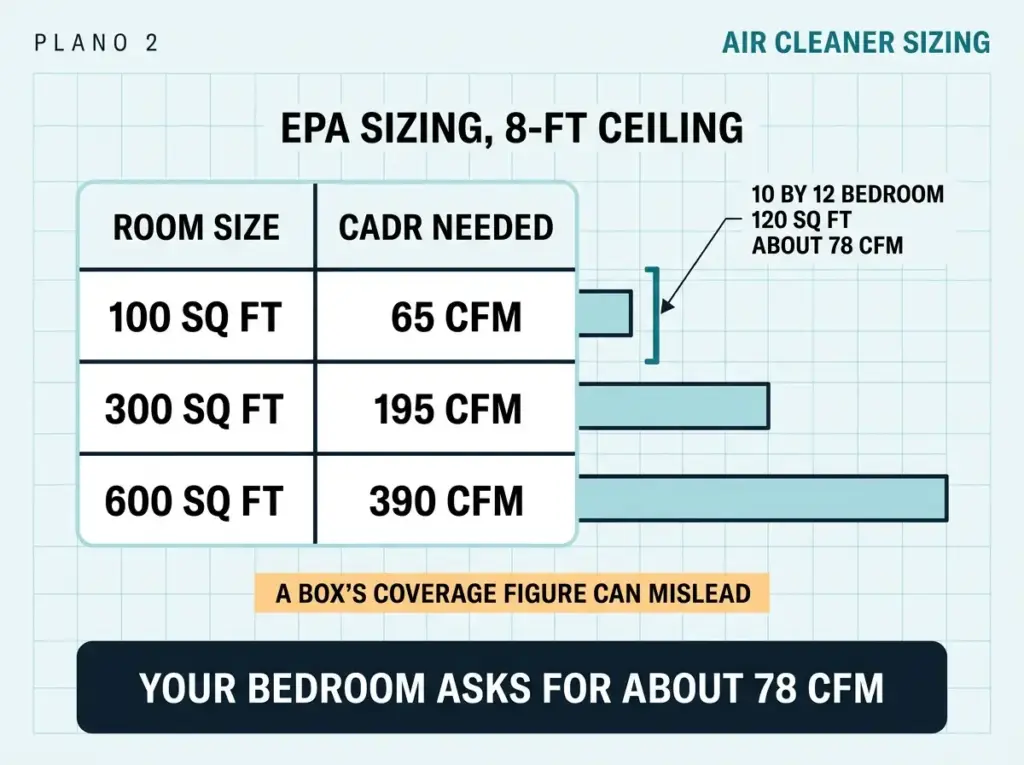
Particle size matters here too, since the 0.3 micron figure is the hard one. A coverage figure printed on a box depends on how many air changes the maker assumed, so the CADR is the number to hold against the table, and the headline square footage is not.
The Coway Airmega AP-1512HH Mighty is a true HEPA unit that the maker rates at 99.97 percent at 0.3 microns, with four stages, a washable prefilter, 361 square feet of AHAM coverage and 39 dB on medium. It lists 8.1 watts; at that draw, a day of running adds up to under a fifth of a kilowatt-hour. The Winix 5520 is the alternative with H13 filtration for a small room.
The Prefilter and the Third Month
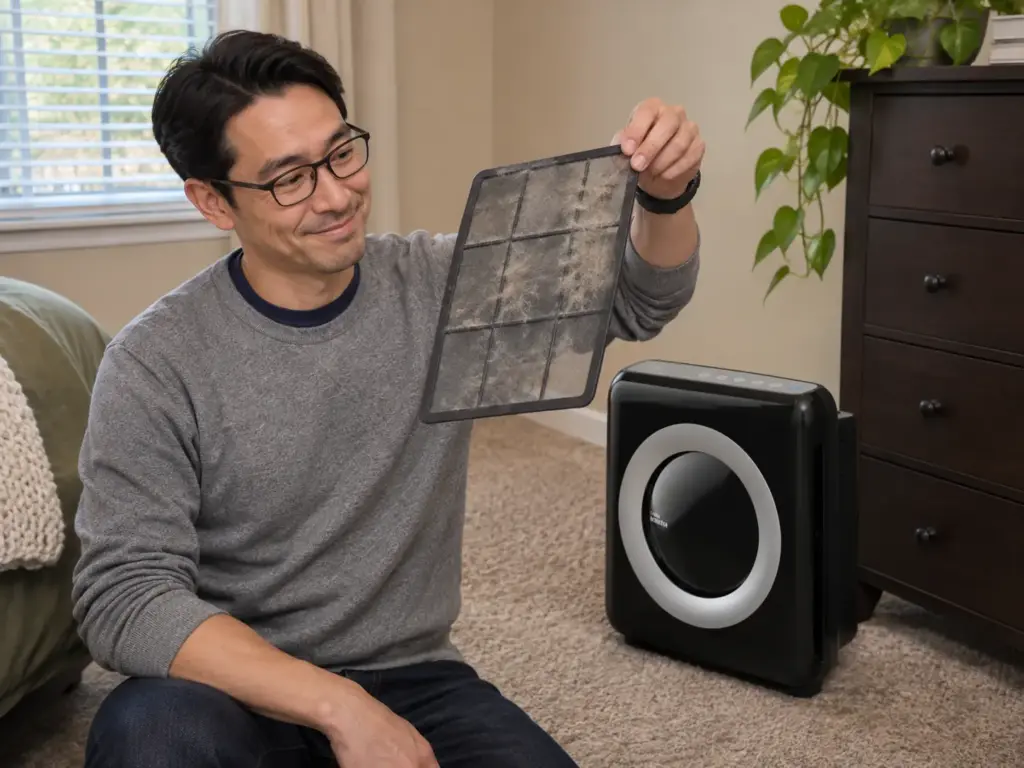
The Coway has no app, which matters only if you want one, and the prefilter has to be washed by hand or the airflow falls. By the third month it is gray with dust, and it decides how much air the unit moves, not the HEPA layer behind it. Rinsing it is the maintenance. Skipping it turns the 99.97 percent into a figure for air that is no longer passing through.
The Furnace Filter and the Ducts Come Third, Not First
A house with ducts has a second machine that moves all the air, and its filter is the part you can act on. This section gives the EPA’s recommendation, the case for changing it on a calendar and the reason the duct quote waits.
MERV 13 or As High as the System Takes
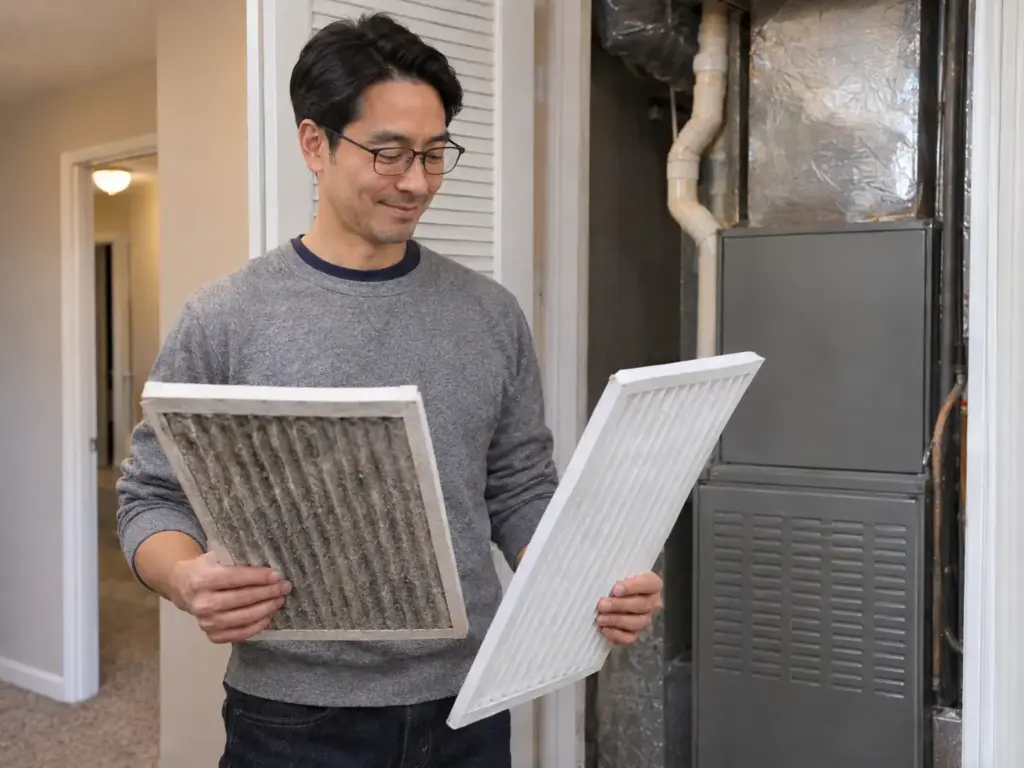
The EPA recommends a furnace or HVAC filter rated at least MERV 13, or as high as the system will accommodate, and says most systems can take MERV 13 if the filter is replaced frequently. The highest rating is the obvious pick, and it stops being the right one on a system the blower was not sized for: a high rating is a decision about whether the blower can pull air through it. In a rental with no ducts, a window unit and a shared wall, this section does not apply; the window unit’s filter, if it has one, is the slot to check.
The Loaded Filter and the Airflow
A loaded 1-inch filter starves the airflow first, so frequency is part of the recommendation: change the filter on the date and by the gray face. A maker’s four-pack of 1-inch filters prints 90 days as its interval, a calendar the maker sets and the EPA does not, and the filter is the better instrument: when its face has gone from white to gray, it is due. What a loaded filter does to the unit that pushes the air goes through the consequences.
Write the install date on the filter’s cardboard frame with a marker when it goes in. If the face is already gray before the date is up, trust the filter over the calendar.
The Duct Quote Is the Last Dollar
The EPA’s guidance on whether to have the ducts cleaned says studies do not conclusively show that particle levels in homes rise because of dirty ducts, and that much of the dirt stays on the duct surface. A look at the supply registers shows what the air carries at the grille, and the air ducts behind them are a separate job. Duct cleaning is a quote, not a first move, and it comes after the bed, the vacuum, the water and the filter, in that order.
The Pet in the Bedroom and the Window Left Open
Two things come in from outside the order so far, an animal that lives in the house and the pollen that arrives on the air. Both are managed by what the house decides about them.
The Bedroom Door and the Pet’s Bed
The animal’s bedding is a reservoir like the mattress: wash it by its care label. If the bedroom is the room being fixed, the door shuts on the animal and the room becomes a pet-free bedroom, because a source that sleeps in the room outlasts any machine pointed at it. Brushing the animal outdoors cuts what it sheds indoors.
Dander on Clothes and Walls
Dander is the material that settles and travels. It rides on clothes and lands on walls, which is how a room the animal never enters can still carry it. The clothes worn on the sofa go into the bedroom with it, and changing at the bedroom door cuts that trip.
The Open Window Is a Decision
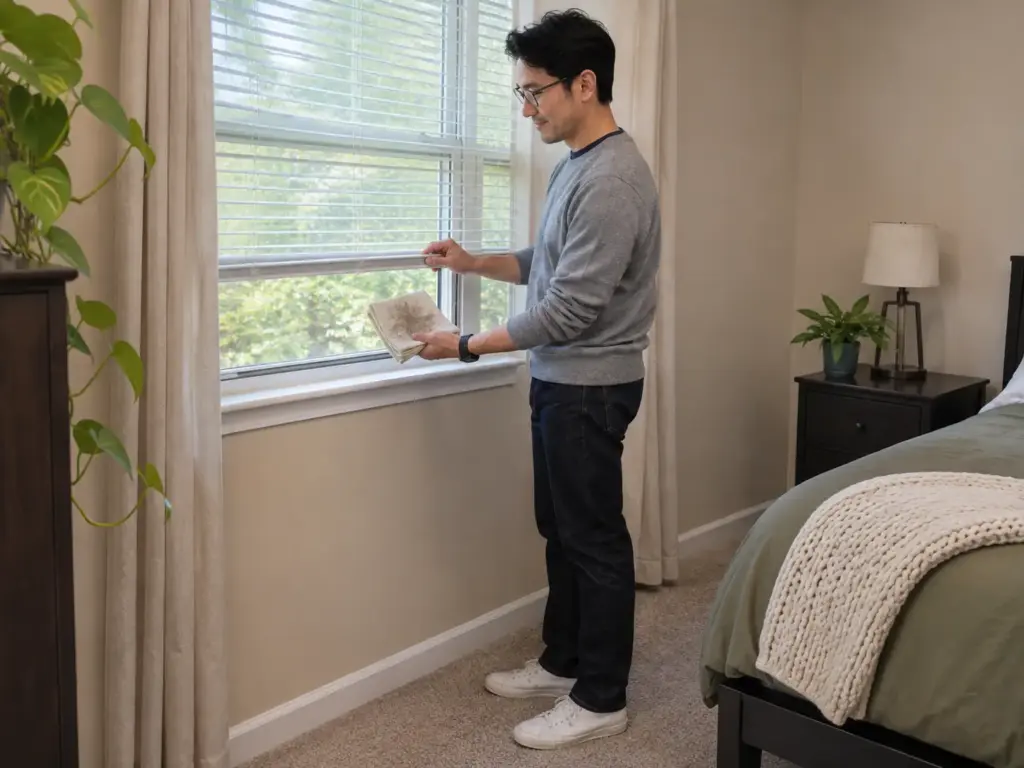
The EPA’s advice on ventilating when pollen is high is to avoid ventilating with outdoor air when outdoor air pollution or pollen is high, and to check the local pollen count. AirNow publishes the air quality figure daily, so look before you open the window, since window timing counts as much as the window itself, the way you look at the temperature. Shoes and coats at the door bring the outside in, and a tray by the door keeps pollen out of the bedroom. The sill, wiped after a week of open windows, shows the delivery.
Tonight’s Reading Decides the Next Dollar
Read the bedroom against the EPA’s band at bedtime and again in the morning. Wash the bedding by its label and seal the mattress and the pillows. Vacuum with a bag that seals and wipe with a damp cloth, top down.
Find where the water comes from, and give the wall to a professional when the wall is the source. A dehumidifier comes in when the meter stays over 60, a purifier after that, and the furnace filter before any duct quote. The pet and the window are decisions you make each day.
The meter earns a second look a week after the first change. The zipper deserves a look at the seam after the first few washes, the prefilter and the vacuum bag at about three months, and the furnace filter at the date on its frame.
Put the meter at bed height tonight and read it again before the door opens tomorrow. The first change comes after the second reading, and where the water lands in a room explains what moves that number. If the meter stays high, what to look for in a dehumidifier before buying is the next stop.
Frequently Asked Questions
01Where in the house do allergy triggers build up first?
In the surfaces that stay damp and warm and that nobody seals: the mattress, the pillows, the carpet, the upholstery and the wet corner of a bathroom or window. The bedroom comes first because the hours are spent there.
02What humidity should the bedroom stay at?
The EPA says to keep indoor humidity below 60 percent, ideally 30 to 50 percent, read on a meter. Over 60 and staying there is when a dehumidifier becomes the question.
03Does a HEPA purifier clean the mattress?
No. A purifier treats the air that passes through it, and the mattress, the carpet and the pet’s bedding are reservoirs it does not reach, which is why the EPA says filtration supplements source control and ventilation.
04How often should the furnace filter be changed?
The EPA recommends a filter rated at least MERV 13 or as high as the system takes, provided the filter is replaced frequently. A loaded 1-inch filter starves the airflow first, and a maker’s four-pack prints 90 days as its interval.
05Does mold start in 24 to 48 hours after a leak?
The EPA gives 24 to 48 hours as the time to dry wet materials after a leak, a spill or a soaked carpet. It is a drying window that says nothing about how fast mold grows; a damp room over a winter is a different problem.