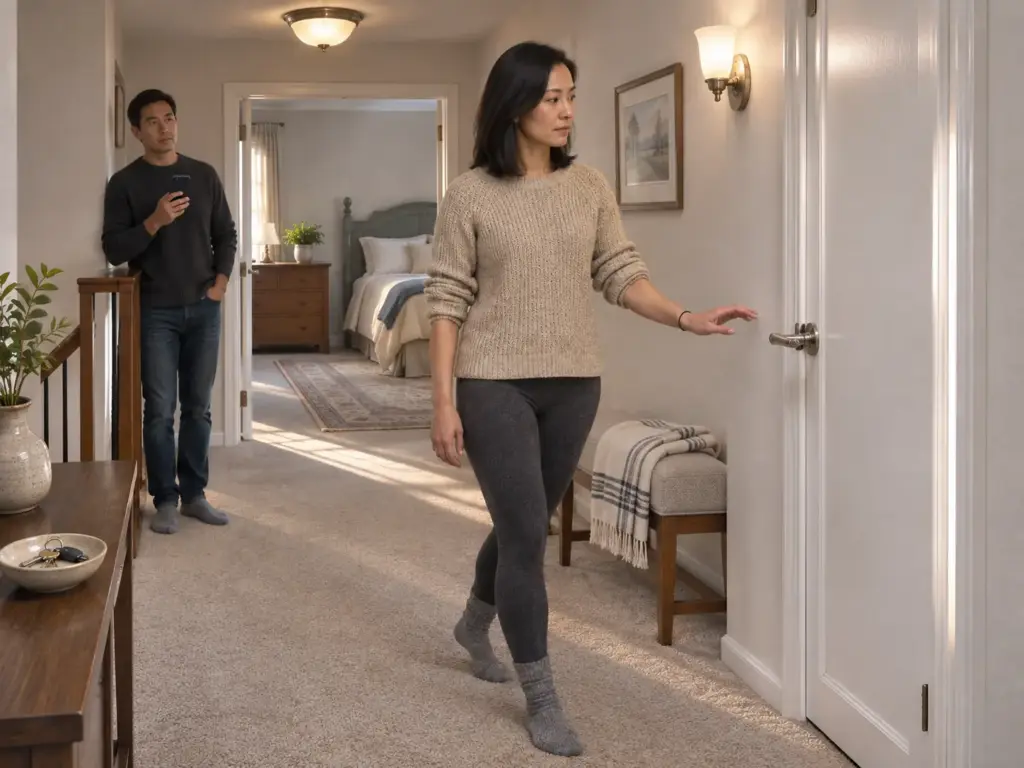
You cross the hallway rug in your socks, reach for the same door handle you reach for every winter morning, and the spark arrives a fraction before your fingers do. The charge you picked up in those few steps had nowhere to drain, because dry air leaves too little moisture on surfaces to carry it off, so it waited for the first piece of metal. To stop static shocks indoors, read the room’s humidity first, then work through the free fixes (metal, then fabric), and add water to the air last, with a meter reading after each change. This guide follows that order so you can tell which step did the work.
Quick Answer
A static shock is a stored charge with no way to drain, and dry air is the usual reason. The EPA keeps indoor humidity below 60 percent, ideally 30 to 50, so that is the band you work toward, in this order.
- Read the humidity with a meter at sitting height where it zaps.
- Touch metal with a key or coin held tight before your skin.
- Wear cotton and natural fibers where you can; skip the synthetic layer.
- Add moisture in small steps toward the band, never past 60 percent.
- Check the window glass; fog means back off one step.
- Read the meter again after each change before making the next.
What Builds the Charge Behind Static Shocks Indoors
What you feel at the handle is a discharge: a stored charge crossing a small gap into metal. In a house with sound wiring it is ordinary physics, and the house has done nothing wrong. That is why the first move in this guide is a reading, not a purchase.
Where the charge comes from
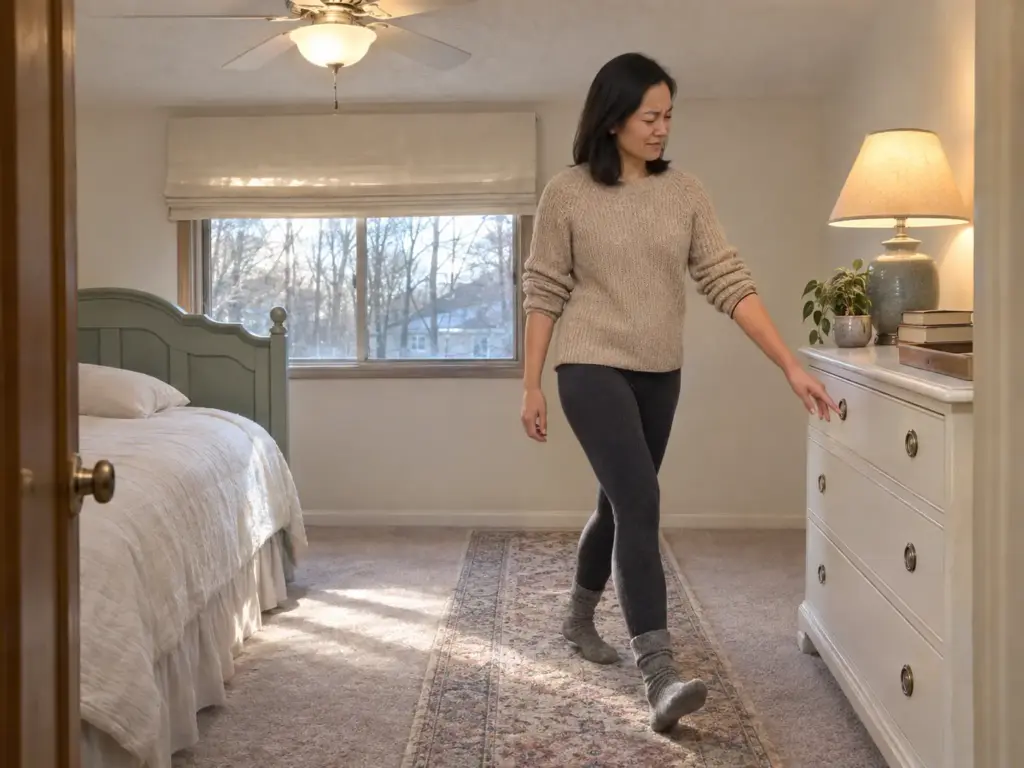
Friction loads the charge, and the static zap at the handle is the release. Soles dragging over carpet, wool socks across a rug and a sweater pulled over your head all separate charge between two materials, and the surface you are wearing keeps its share until something lets it go. Physicists call this triboelectric charging, and synthetic fibers such as nylon and polyester do it most readily.
Carpet and synthetic clothing are sources of charge. Neither is a defect of the house.
Why dry air lets it stay
In humid air, a thin film of moisture on skin, fabric and furniture gives a charge a path to leak away a little at a time, so you never feel it build. Dry air removes that path. The charge rides along with you until the first metal object offers a way out, and in practice that means the same two or three spots every day: the front door handle, a lamp switch, the car door.
Humidifiers are the remedy the EPA names, too. According to the EPA’s guide to using and caring for a home humidifier, “The moisture they add to dry air also helps alleviate common nuisances brought on by winter heating, such as static electricity.”
Why it shows up in winter heating
Cold outdoor air holds very little water. Bring it indoors and heat it to 68°F (20°C), and the amount of water in it stays the same while the relative humidity reading falls, because warmer air could hold far more. A house in a cold snap can read dry with no appliance doing anything wrong, and why the number inside drops when the cold arrives is laid out for the whole season in a separate guide. It also explains why the zaps tend to start in the first week of heating.
Read the Room’s Humidity Before You Change Anything
“It’s dry in here” is a guess, and the room that shocks you may be sitting at a number nobody has looked at. One reading points the direction for every later step, and where the meter sits decides whether that reading is true. The free fixes go better when you know whether the room is at 22 percent or at 38.

Put the meter where the zap happens
Set the meter at sitting height in the room that gives the shocks, a few feet from the heating vent. Warm air straight off a vent, a sunny windowsill and the shelf above a kettle all read differently from the air you stand in. Then read it at the same hour for several mornings: the number dips when the heating runs and recovers when it cycles off, so compare a morning with a morning, never a minute with a minute. A second reading in a second room, with the two agreeing, is worth having before anything gets bought, and where to set the meter and how to compare two readings covers the placement rule in detail.
Write the morning number on a sticky note beside the meter for three days. A single reading tells you almost nothing; the swing between the heating-on number and the heating-off number tells you how far the furnace drags the room down.
The AcuRite 00613 Indoor Thermometer Hygrometer does this job: a digital thermometer and hygrometer that shows relative humidity in percent and is small enough to stand on a shelf at sitting height. It is a common pick among home hygrometers. Its listing gives no accuracy rating, so treat it like any cheap meter that can be off by a few points: read it for direction and leave the decimals alone.
How far to trust a cheap humidity meter goes into that limit. The TempPro TempAir hygrometer, the one CNN Underscored used in its humidifier test, makes a good second meter for the cross-check, and I would buy that second meter before any humidifier.
The EPA band and the static zone are two different numbers
The only institutional number here is the EPA’s. According to the EPA’s guidance on indoor humidity, “Indoor relative humidity (RH) should be kept below 60 percent — ideally between 30 percent and 50 percent, if possible.” That band is what every step in this guide is checked against, and the full humidity range the EPA gives explains the reasoning behind both ends.
The static figures that circulate come from sellers and informal tip lists, and no standards group publishes one. A cut-off near 40 percent is the commonest, and a zone of roughly 30 to 45 percent is the other. Both are working figures: sensible, and unproven. The target in this guide is 40 to 50 percent, which sits inside the EPA band and stays under 60 even in the worst case.
What a reading below the band tells you
Below 30 percent the direction is plain. The room is too dry, and the one change that follows is more water in the air, after the free fixes below.
Between 30 and 40 percent the room is inside the EPA band and may still shock you, so metal and fabric come first and the water goes up in small steps. At 40 to 50 percent with the shocks continuing, moisture is no longer the lever, and the likelier cause is what you wear and what you walk on. Above 60 percent, adding water is off the table.
Touch Metal First and Let the Spark Go Somewhere Harmless
This is the free, fastest change in the order, and it needs no room reading to start. It changes where the discharge happens and leaves the charge alone. Start here tomorrow, and keep the meter running in the background.
Touch the metal with something small and conductive first
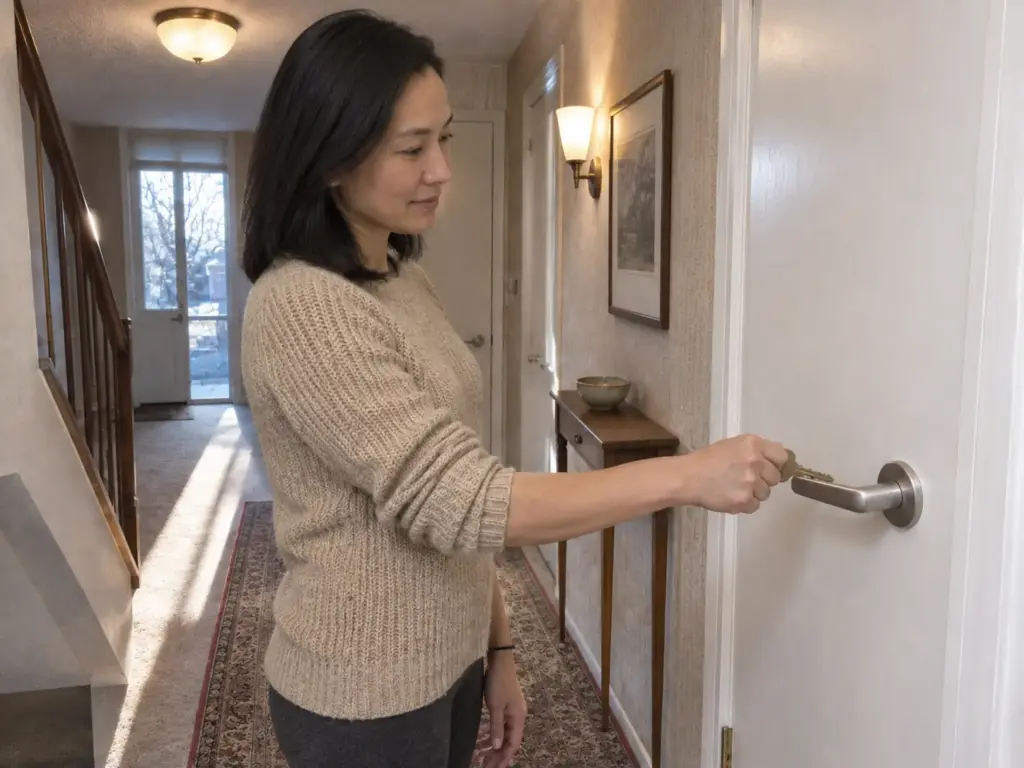
Hold a key or a coin tight in your fist and touch it to the metal before your skin does. The discharge then jumps between the key and the handle, and your fingertip never takes the spark. Keep the key ring in the pocket you reach into at the door, because a habit that needs a search never lasts. Firm contact matters, because a loose grip leaves a gap for the spark to cross at your fingers.
Knuckles before fingertips
The same habit works with no tool at all: reach with a knuckle instead of a fingertip. A knuckle is where a spark is least felt, and the habit costs nothing to try. No standard backs it, so judge it by your own zap count.
Why an ungrounded wrist strap does nothing
An anti-static wristband only works as a path to ground. Clipped to nothing, or clipped to a painted surface instead of bare metal, or running on a worn cord, it drains no charge and only looks like a fix. A grounding mat or a heel strap belongs where the zap keeps returning after the room has been fixed, and it is the last purchase on the list. After a week of touching metal first, read the same meter in the same spot and count the zaps: fewer zaps with the same room number means the habit is doing the work.
Change What Touches Your Skin and the Floor
The second free layer is materials. These changes lower how much charge you pick up and leave the room’s humidity exactly where it was, so the meter will not move. That makes them easy to judge: the zaps either thin out or they do not.
Cotton and natural fibers over synthetics
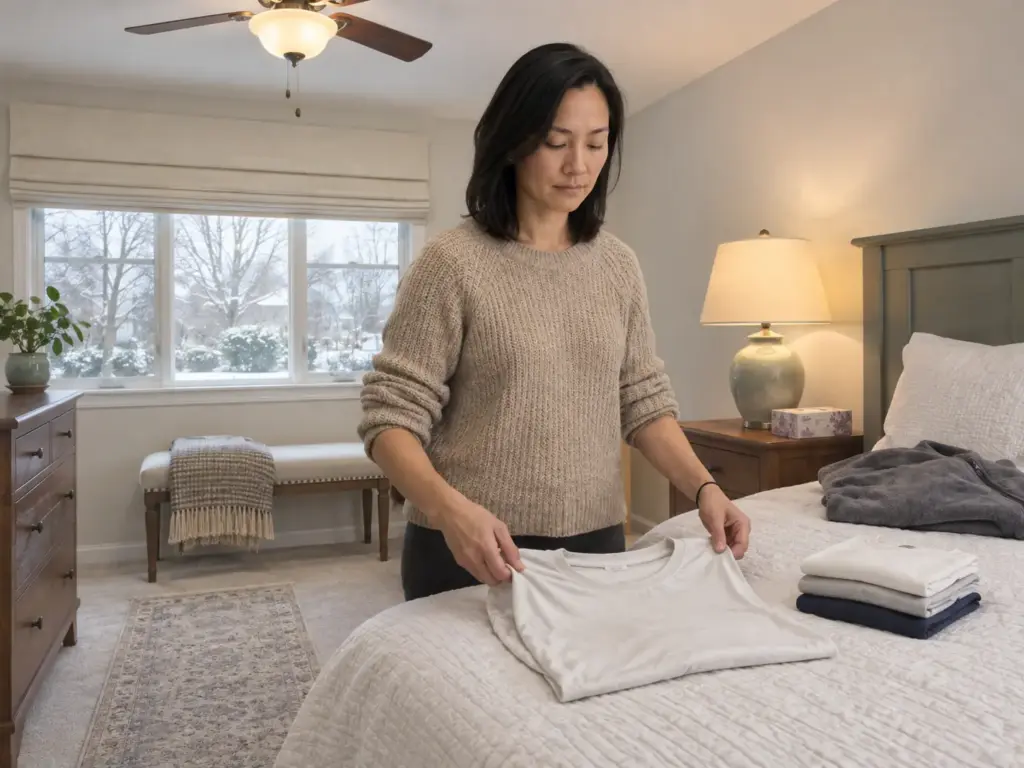
Cotton builds charge slowly, while polyester, nylon and fleece load fastest, especially in the layer closest to a carpet or a car seat. Natural is a tendency with exceptions, and wool socks over a rug can still charge a person up in dry air. Swap the single garment that crackles when you pull it off, and watch whether the zaps follow it. The fabric you stop wearing is usually the worst one.
Dryer sheets and anti-static spray
A dryer sheet wiped over a carpet and a diluted fabric-softener spray are cheap fixes used on rugs, and an anti-static spray does the same job on fabric. Each one wears off. The spray washes out of clothes, the softener leaves a film that needs rinsing out, and what you put on a carpet walks away under your feet. Plan to repeat it, and judge it by how many days it lasts.
Dry skin and a dusty floor
Dry hands hold charge and moist ones release it, so hand lotion before the handle gives the charge a moister surface to leave through. A vacuumed carpet carries less loose dust than a neglected one, and a damp mop on hard floors removes the dry film that sits on top. Neither changes the room’s number. Both take a little off what a walk across the floor adds.
Raise the Humidity Where the Zaps Happen, Free Ways First
This is the change that moves the reading, so it comes with its own check: the meter at the handle, before and after. If the number stays low whatever you add, leaks and fans that keep the number low can explain it before any device does.
The free ways first
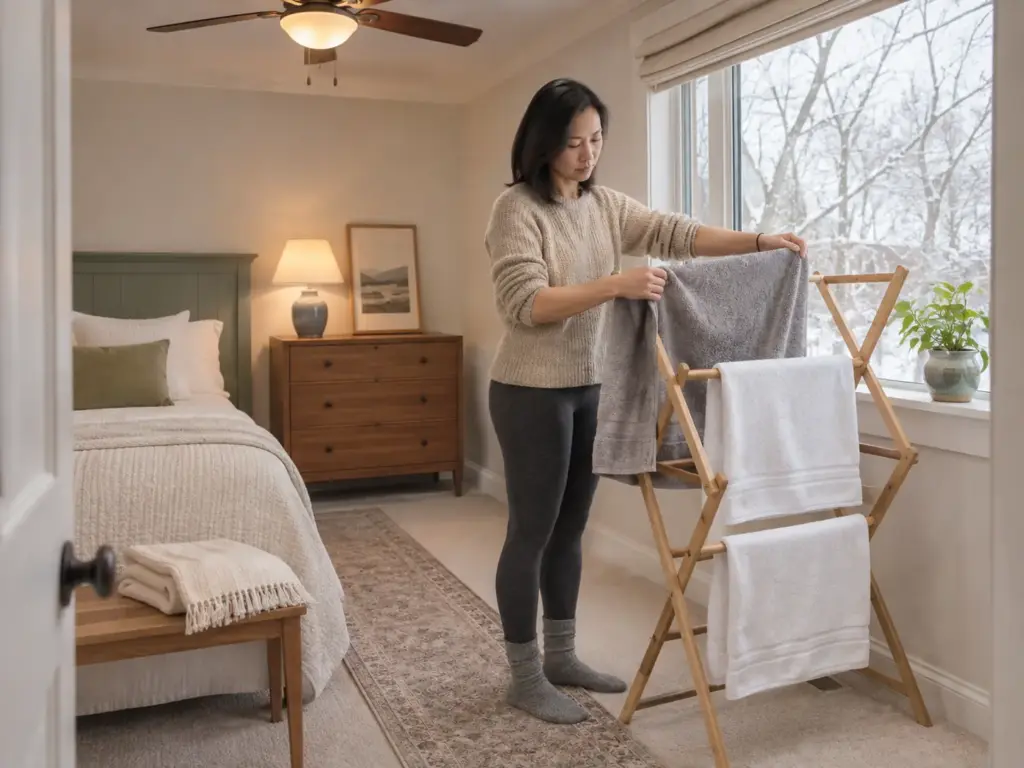
A wide pot of water kept just under a simmer while you are in the kitchen, a drying rack with a load of wet laundry in the room that shocks, and a shorter run of the bathroom fan after a shower all put water into the house for free. The free ways to add moisture to a dry house lists more of them.
Never leave a pot to boil dry, and stay within earshot of anything on the stove. In a rental with one wall thermostat and no ducts, these are the whole toolkit, and the old kettle on the wood stove did the same thing for the room around it. Expect a few points of movement on the meter, nothing dramatic.
A room humidifier when the free ways are not enough
When the pot and the rack stall, the next step is a room unit. The one tested most often is the Dreo HM713S 6-Liter Smart Humidifier, an ultrasonic unit with a 6-liter tank (about 1.6 gallons), a listed coverage of up to 740 square feet, and sound of about 28 dB on low and 36 dB on high. Its app keeps a 24-hour and 30-day humidity history with refill reminders, and that history is the useful part here: the reading climbs for the first day, then flattens, and the flat line is the number the unit can hold in your room. In CNN Underscored’s test it ran about 58 hours on low against 60 hours rated, the closest of the set to its label.
The lid’s two corners curl upward after almost a year of use, and the whole unit is large, heavy and tall enough to block a TV. The Levoit Classic 300S reaches the same 6 liters for less, but the same test clocked it at about 39 hours on low, so the tank size on a box says little about how often you will refill. Plan on the chore either way: the EPA’s advice for a portable humidifier is to empty and refill the tank daily, and a unit holding a dry house at the band will not outlast that.
Keep the meter at the handle and the humidifier several feet away from it. A mist plume beside the sensor reads high, and the whole test then tells you the humidity of the plume instead of the room.
Raise in steps and read between them
Aim for a few points at a time toward 40 to 50 percent, never above 60. Set the unit to the lowest setting that moves the meter, read it the next morning, and move one step only if the number is still short. A unit that runs all night flattens out after the first day, and the plateau tells you whether the room can hold more. If the plateau sits at 33 percent with the unit at full output, the room is losing water faster than the unit adds it, and a bigger tank will not fix that.
Pick a Humidifier for the House You Actually Have
“Get a humidifier” says too little. An open ground floor, a bedroom and a rental ask for different units, and the wrong size either runs flat out and never reaches the number or overshoots a small room within an hour. The size and the type come first, and the brand after.
Evaporative or ultrasonic
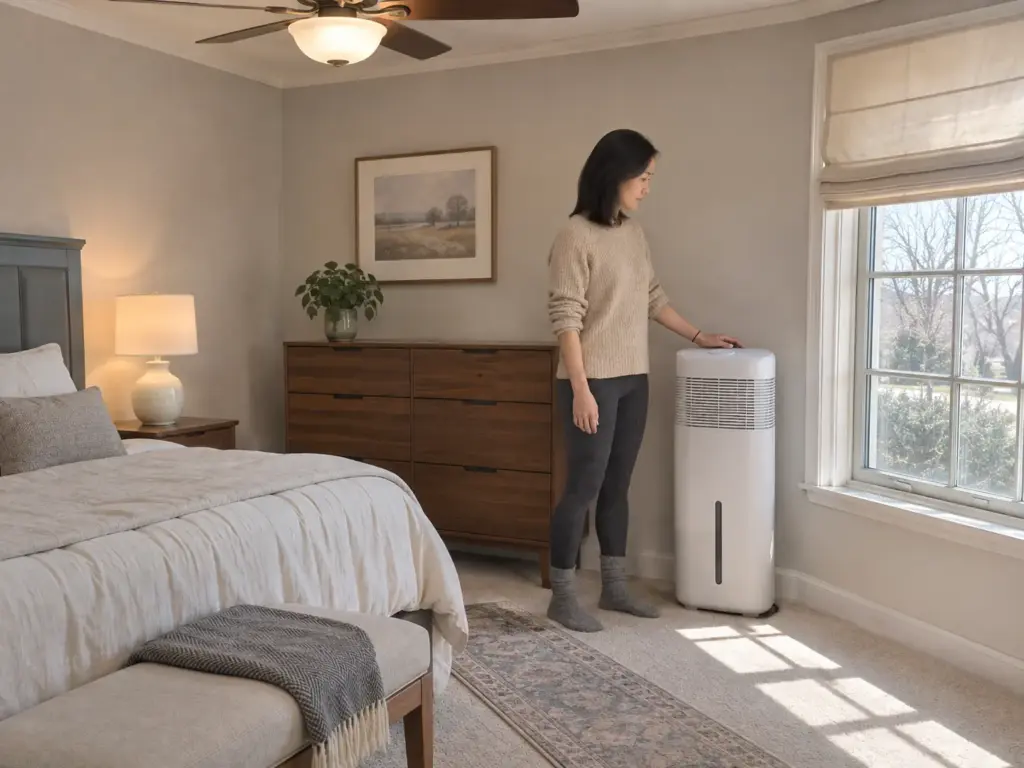
Ultrasonic units disperse the minerals in tap water into the air, and the white dust on the furniture is that mineral. Most ultrasonic models run as cool mist, and some add a warm-mist setting. According to the EPA, distilled water lowers the mineral load, and a demineralization cartridge reduces it by an amount that varies widely, so the cartridge is a claim to test. An evaporative humidifier pulls air through a wet filter, tolerate tap water and leave the minerals in the filter.
A larger tank means fewer refills and a heavier unit to carry. Whichever type you choose, the filter or the mineral crust is what drops the output around month two. The fan keeps spinning, and the mist quietly shrinks.
An open living area needs more than a bedroom unit
The Levoit Superior 6000S is an evaporative unit with a filter, a 23-liter tank (about 6 gallons), a rated coverage of up to 3,000 square feet, an upward-facing fan at about 28 to 45 dB, and an auto setting, which Bob Vila’s three-month test of seven evaporative models through fall and winter weather ran near 50 percent. It is the unit for a ground floor that runs together. The tank gets heavy, so the whole machine gets rolled to the sink to refill, and at 26.8 inches tall it is far from small. A room unit like the Levoit 2.5-liter top-fill is the budget route for a single room, with a tank a fraction of the size.
The bedroom
A bedroom of ten by twelve feet is 120 square feet, well inside what a small unit can cover. The Levoit Sprout is an evaporative top-fill unit with a 3.8-liter tank, rated for up to 219 square feet, with a sleep mode of about 20 dB against about 50 dB on high, which is quiet enough to leave on beside a bed and a metal frame. A dry mode limits mold on the wick.
Its lid nests on top and does not screw shut, so keep the unit out of reach of small children. The Dreo HM311S, a 4-liter unit with a built-in hygrometer, ran about 41 hours on low in CNN Underscored’s test against 32 hours rated, and works as a budget pick for the same room.
The furnace humidifier
A forced-air furnace can carry a humidifier that raises the number through the whole house. It is installed by a technician on the furnace and a water line, and a renter cannot do it. If you own the house, ask a heating professional about it, and keep the meter running anyway, because a whole-house unit still needs a reading to tell you whether it is set right. For a rental, the room unit is the answer.
Read the Window Glass So You Don’t Overshoot
The 40 to 50 percent target is a ceiling as well as a floor, because the coldest pane in the room sets the limit. The two numbers pull against each other in winter: static wants more water, and the glass says when that is too much. This section reads the glass.
The cold pane fogs first
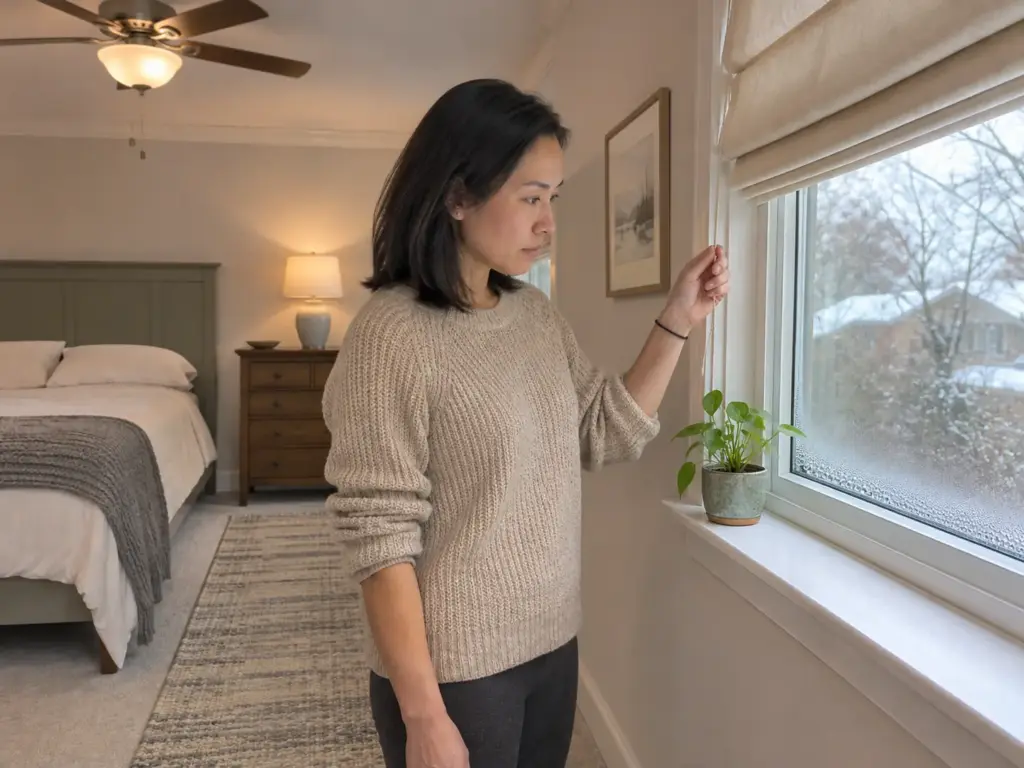
Glass is the coldest surface in most rooms. Air that touches it drops below its dew point and leaves its moisture as a film, so window condensation on the room side is the overshoot sign: the room holds more water than the weather outside can support. The EPA’s ceiling is 60 percent, but the glass usually speaks sooner, and it shows up as a damp lower corner or a hazy bottom edge at seven in the morning. Where it appears first also tells you which wall the moisture is reaching.
What normal condensation looks like helps separate a faint morning haze from a pane that streams.
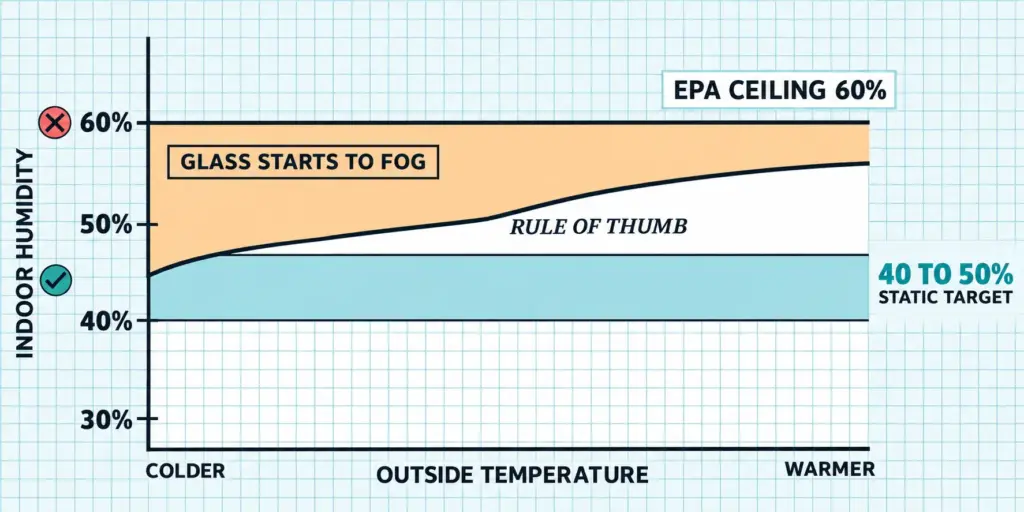
Look at the bottom corner of the coldest window before you check the meter. If that corner is already fogged, the room is full for this weather, whatever the number says, and the humidifier setting comes down a step.
Back off a step, not to zero
When the glass fogs, lower the humidifier by one setting and read the glass again the next morning. Backing off a step clears the fog and keeps most of the gain, while shutting the unit off sends the room back to where it started. Some shocks will creep back, which is the trade you accept in a cold week. When a low reading is a problem and when it is not sets out how far a low number can sit before it matters, and it keeps any humidifier at the bottom of the band.
The ceiling on cold days
The ceiling falls as the outside gets colder. A target of 40 to 50 percent that suits a mild week is too much during a cold snap, and on those days the number you can hold is lower and the shocks return. Lean harder on metal and fabric when that happens. The ceiling for each outdoor temperature gives the number to aim for as the weather changes.
What Month Two Looks Like
A humidifier is easy to like on the first night and a chore by the second month. The flaws that show up later are the ones that decide whether the unit gets used at all. Each fix in this guide carries one.
The tank and the schedule
The EPA says to empty and refill the tank daily, and its cleaning schedule for a portable humidifier says to clean it every third day to hold down scale and microorganisms. Where the maker’s manual gives a cleaning method, follow that. Without one, the EPA suggests a 3 percent hydrogen peroxide solution for the surfaces that touch water.
The tank refill count belongs to the unit and not to the tank on the box: about 58 hours on low for the Dreo, about 39 for the Levoit Classic 300S and about 41 for the Dreo HM311S, all from CNN Underscored’s test. The bigger tank is the less annoying one, because the schedule decides whether the unit is on or off.
White dust, scale and the filter
White dust on the furniture is tap-water mineral, and it shows up first on the shelf nearest an ultrasonic unit. Distilled water lowers it, at the cost of buying water, and a cartridge may or may not. On an evaporative unit the crust forms in the filter, and the signal is a unit that runs at full fan and moves less mist. Replace the filter on the maker’s schedule and rinse the tray, and the output comes back.
What wears off
Anti-static spray, fabric softener and a dryer sheet drawn over the carpet all wear off with washing and walking. A fix that lasts three days is not wasted, but it is a subscription to a chore. Count the days between sprays, and if the gap shrinks, go back to the cotton and the key.
Moisture where you did not want it
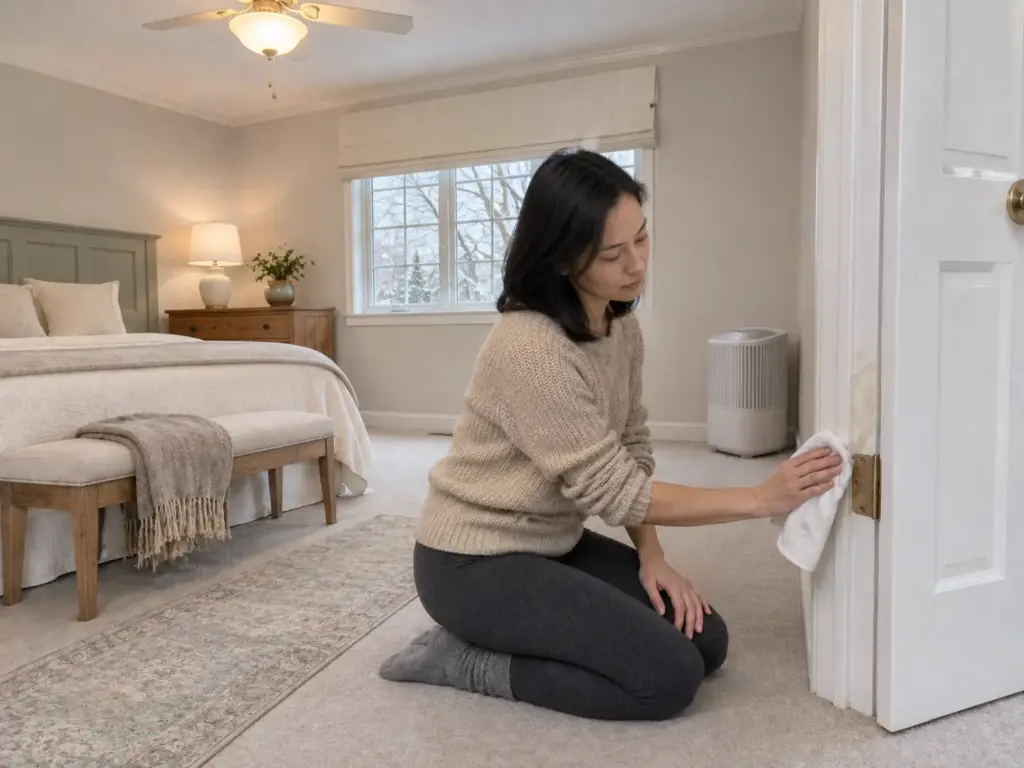
A humidifier that holds a dry house at the band is refilled so often that the moisture settles on wood. The first places to look are the door hinges, the window trim and the baseboard nearest the unit. Wipe them dry when you refill, move the unit away from the wall, and lower it a step if the glass fogs too. Water on wood is a sign the unit is set higher than the house can carry.
Refill the tank at the same moment every day, such as when the coffee goes on. A refill tied to something you already do survives past the second week; a refill you remember when the app nags does not.
When the Tingle Is Not Static at All
Not every shock is the air. Some are the room, some are the clothes and floor, and a few deserve a different call. This section sorts the three apart.
Carpet and synthetic clothes are the source, not the house
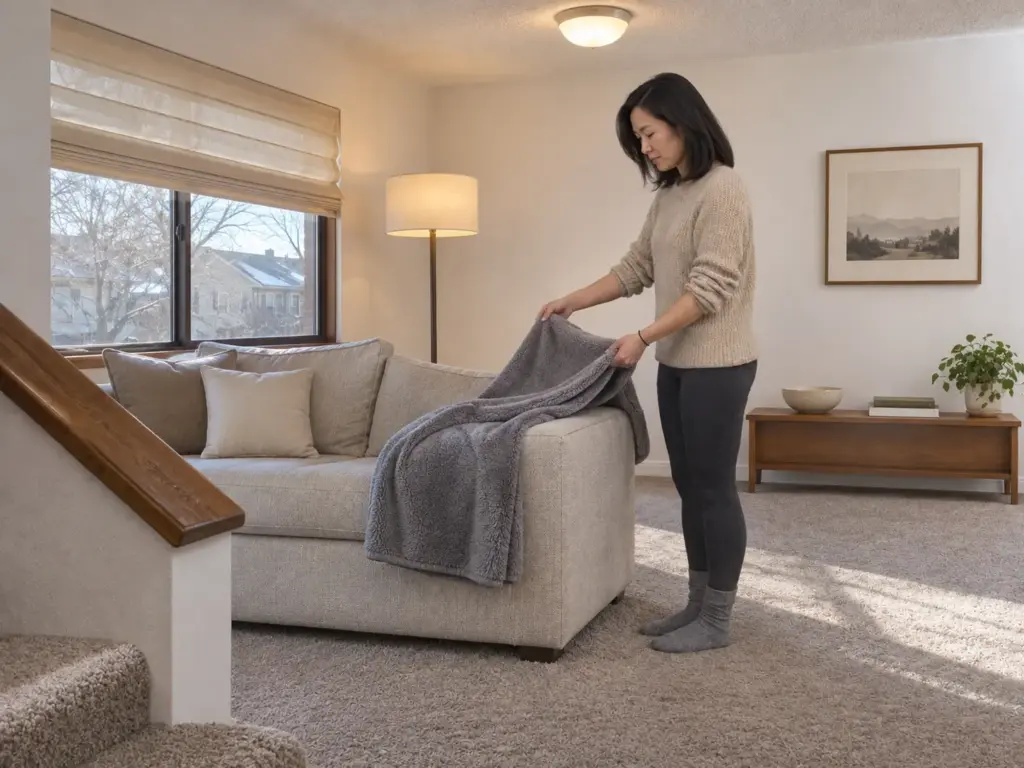
A one-time snap after you walk across carpet in socks is static. It follows you from room to room: the hallway handle, the kitchen drawer pull, the bedroom lamp. When the zap travels with you to every metal object, the cause is on your feet and your back, and a floor cleaning or a different fabric deals with it. A meter that reads 45 percent does not rule that out, because a rug and a fleece will build charge at any reading.
A tingle from an appliance, a switch or a fixture is an electrician’s question
A steady or repeating tingle from the same appliance, switch, faucet or light fixture is a different thing. It stays at one fixture and does not follow you around the house. The only action is to stop touching it and call an electrician, and to describe what you feel and where. No humidity change, no cotton shirt and no key will fix that, and no reading from a meter stands in for a person checking it.
The questions that need their own answer
Five questions come up once the basics are in place: which products are worth buying, why shocks happen around dogs and other pets, what it means when a fix that worked stops working, which rooms of a house are worst, and whether a humidifier alone is enough. The order in this guide gives the first answer to each of them: the meter, then metal, then fabric, then water.
Start Tomorrow With the Meter at the Handle That Bites
Static is a charge with nowhere to go, and the order that works follows the evidence in the room. Read the humidity at the handle, give the spark a harmless route through a key, change the fabric that loads you, add water in small steps toward 40 to 50 percent, and let the window glass say when to stop. A tingle that holds steady at one fixture belongs to an electrician.
After the first two weeks of cold, look again at the meter and at the tank and lid of whatever humidifier you chose. The unit is what scales and drifts first, so compare a Monday-morning reading with the first ones you took and see whether the plateau has moved.
Tomorrow, set the meter beside the handle that bites, write down the number, and change only the first thing on the list. Read it again the next morning, then decide whether the next step is water.
Frequently Asked Questions
01Why do I get so many static shocks at home?
Dry indoor air lets the charge from your shoes and clothes build up instead of draining, so it jumps to the first metal you touch. Winter heating lowers the humidity reading further, and carpet and synthetic fabrics add more charge.
02How do I stop static shocks at home?
Read the room’s humidity first, touch metal with a key or coin before your skin, and wear cotton. If the number is below the EPA’s 30 to 50 percent band, add moisture in small steps and read the meter after each one.
03Does static mean your house is dry?
Often it does, but a rug and synthetic clothes build charge even at a normal reading, so the meter has to confirm it. A reading below 30 percent in the room where it happens points to dry air.
04How long until static electricity goes away?
Touching metal clears a charge at once, while changes to the room itself take several days to show on a meter. Raise humidity a few points at a time and read it each morning; the zaps fade as the number settles in the band.
05How to stop static shocks indoors in winter?
Winter heating drops the humidity reading, so the fixes stay the same and keep their order: metal first, then cotton, then a humidifier set so the window glass stays clear. Cold snaps lower the ceiling, so back off a step when the glass fogs.