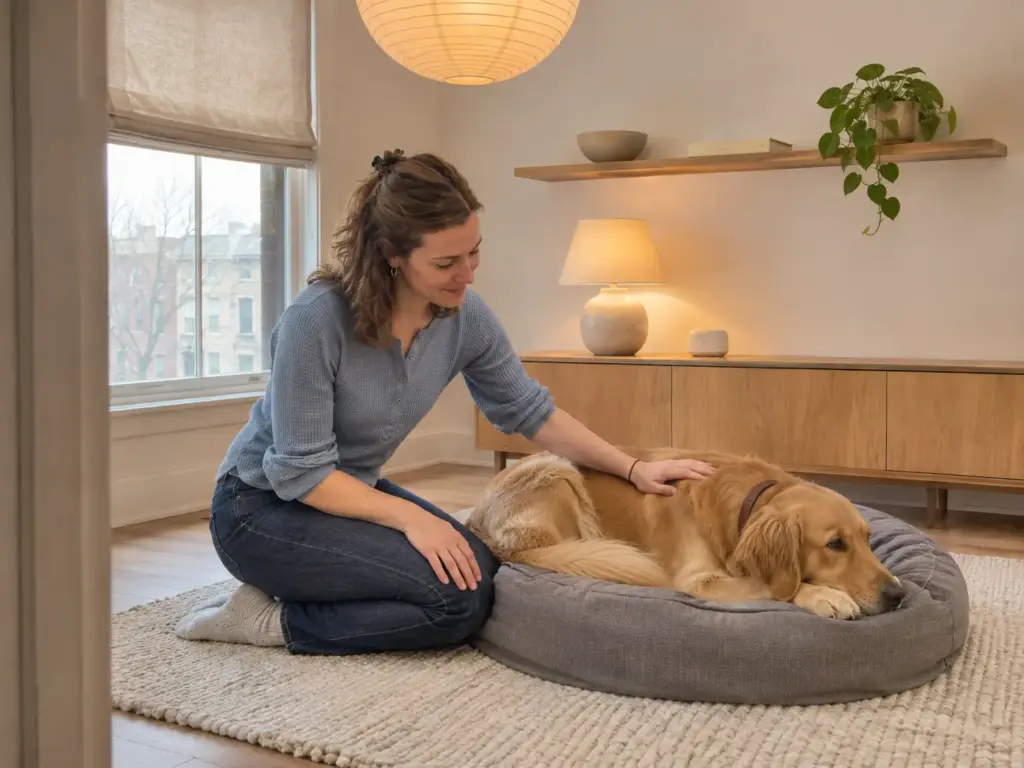
You reach down to lift the dog off its bed and a snap jumps between your fingertip and its coat. What to do about static shocks indoors with dogs starts with where the charge actually sits: in a dry room, a coat, a bed cover and a rug trade charge freely, and your hand is simply the first conductor to arrive. The dog is where the snap lands, which does not make the dog where it starts.
This guide gives you a two-minute test that separates dog from room, the one number to read, the fabric worth swapping first, and what to leave on the shelf. If your dog pulls away from being touched, scratches, has skin trouble or has licked anything off a product, that is a question for its vet; everything below stays with the room, the fabric and the touch.
Quick Answer
The zap is the dog’s coat and bedding loading charge in dry air, so the room’s number comes before any purchase. Try these in order.
- Touch metal, then the dog; if the snap vanishes, the charge was on you.
- Swap the one fabric the dog lies on most, then test again.
- Read the humidity where the dog sleeps against the EPA’s 30 to 50 percent.
- Add a room humidifier only when that reading is low, away from the bed.
- Leave coat sprays for last, and keep dryer sheets and softener away from the dog’s bed.
Does the Snap Start With Your Dog or With the Room?
The static shock from a dog lands on your fingertip, which makes your fingertip the worst witness to where the charge started. Before you touch a setting or open a shopping cart, there is a test that takes two minutes and needs nothing but a piece of metal. It sorts the cause into two piles: the dog and whatever it lies on, or you and the room around you.
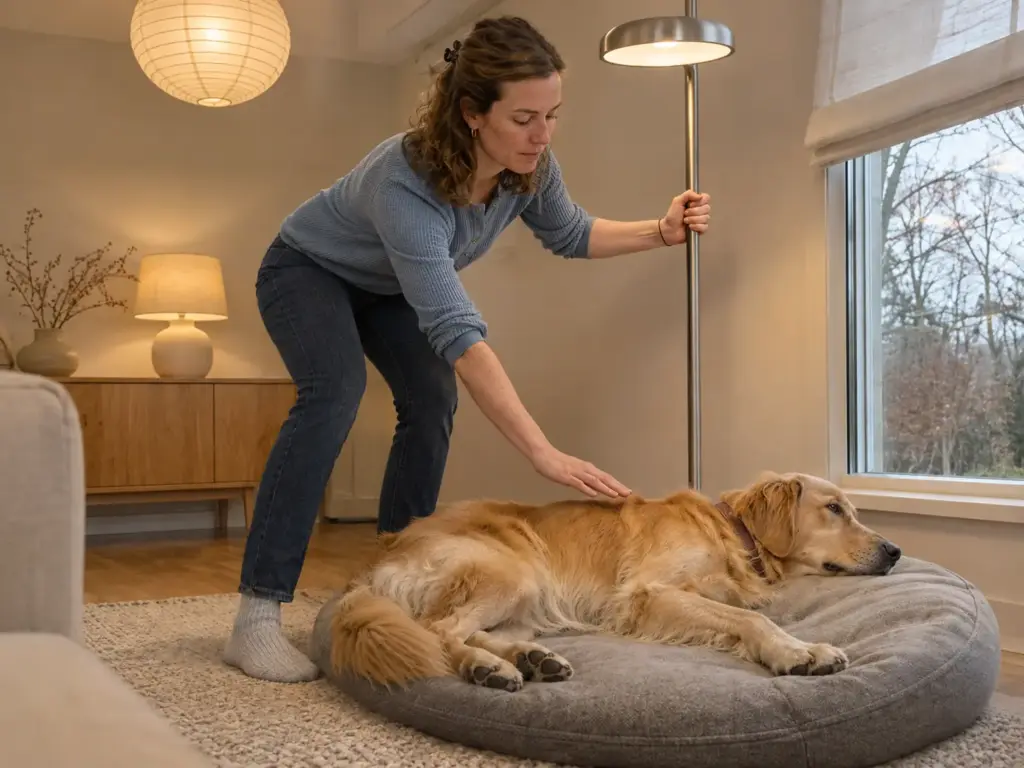
What the Snap Tells You About Where the Charge Sits
Charge builds when two different surfaces rub and then separate: a coat dragging across a fleece cover, paws across a rug, your sleeve across a sofa blanket.
Dry air lets that charge stay where it was made, while moist air gives it a thin film of water to drain along. So the pattern of snaps works as a map. A snap at the dog and nowhere else, with no sparks at doorknobs, the fridge handle or a lamp stem, points at the coat and the things it lies on. A snap at every metal point in the house points at you and the room: socks, carpet, the air itself.
The order things happen in matters. The snap that comes at the bedside in the evening, after the dog has lain on its cover for an hour, and not at the kitchen counter, is the same dry room meeting a different fabric. A dog touched right after a brushing answers differently from a dog that has been curled up on synthetic fleece, and the difference tells you which surface is doing the loading.
The person-side half of this check, the same test done on yourself, with a doorknob and your socks, is written up in the guide to stopping static shocks at 30 to 50% humidity. This page runs it from the dog’s side.
A Damp Hand Before You Pet
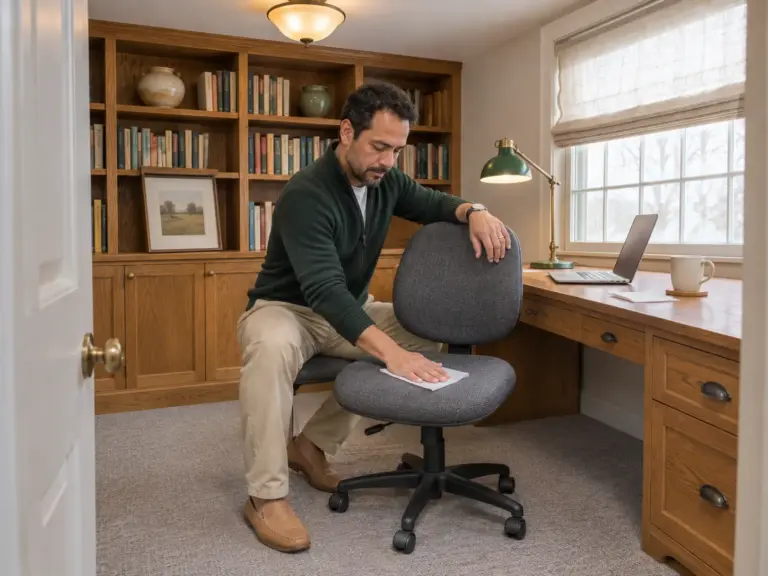
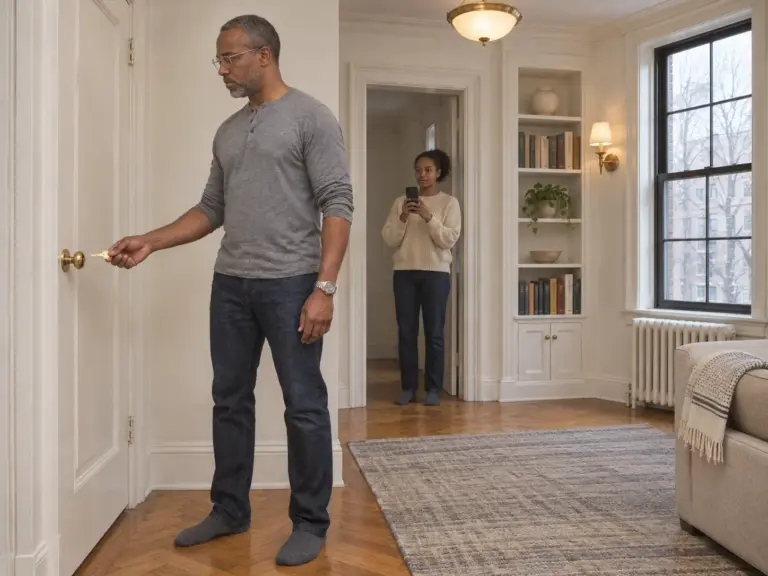
Put a fingertip on a metal chair leg, a lamp stem or a doorknob first, then lay your hand on the dog. When the snap disappears, the charge was on you. When it stays, it sits on the coat or on the bed. Either answer is useful, because each points at a different fix and neither costs anything.
Touch the same metal point, then the dog, then the metal again, then the dog a second time. If that second touch at the dog is silent, the first snap emptied the coat and something it lies on or brushes past is refilling it. If it snaps again, the coat holds charge and refills fast.
A damp hand works from the other direction. Wet your palm lightly, or wipe a barely damp cloth over the coat, and the charge has a path to leave by. It is free, it takes seconds, and it makes a decent stopgap while you hunt for the source.
Why the Dog Gets the Blame
The dog is the one thing in the house covered in insulating fur, handled with bare fingertips and dragged across synthetic surfaces many times a day. A dog that sparks off the sofa blanket every time it hops down is a fabric story before it is a humidity story, and dog static electricity often starts at the surface rather than in the air. The coat is only where the charge shows up. How long it stays there depends on how dry the room is, and that number is the next thing to read.
Read the Room Where the Dog Sleeps, Then the Fabric
A charge needs somewhere to build, and that is the humidity of the room plus whatever the dog lies on. The room the dog sleeps in is rarely the room the thermostat is in, so the reading you want is the one beside the bed. Take it before you change anything else.
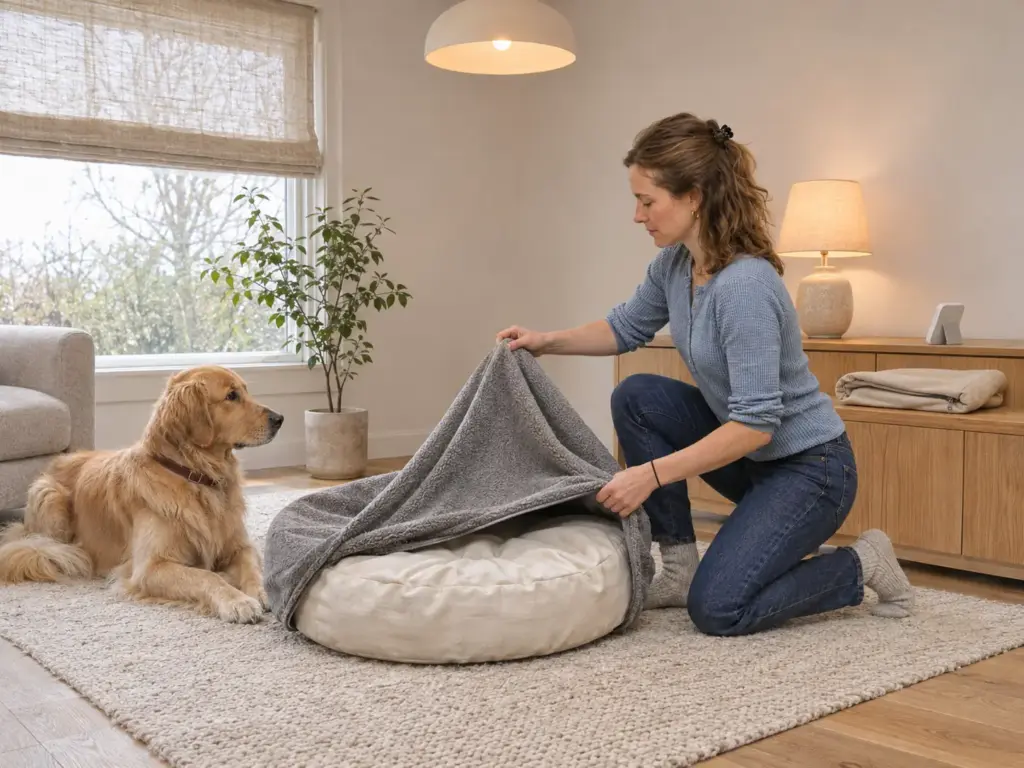
Put the Meter Where the Dog Lies
A hygrometer is the one purchase that decides every step after it, because it tells you which way the room is off. The Govee H5075 reads relative humidity to within about plus or minus 3 percent and temperature to within about 0.54 °F (0.3 °C). It sends readings to a phone app over Bluetooth, rated for 164 feet (about 50 m) in open space, and keeps two years of data you can export as a spreadsheet. A meter costs a fraction of what a humidifier does, and it can save you the humidifier.
The Bluetooth link is where this model gets weak: it drops on some units, and a few stop working within about six months. And any meter at this level can sit a few points off the truth, so read the trend over several days instead of trusting one digit. For where to hold it and when, how to take three readings with one meter goes through the routine.
Where it sits matters as much as what it is. The corner the dog sleeps in can read several points apart from the hall over the course of a week, so the meter belongs on the shelf beside the bed instead of on the wall by the thermostat.
Note the reading at the same hour each day for a week before you decide the room is low. One evening is a weather reading; a week of them is the room.
What the Reading Says, Against the EPA’s Band
According to the EPA’s guidance on indoor humidity, “Indoor relative humidity (RH) should be kept below 60 percent — ideally between 30 percent and 50 percent, if possible.” Thirty percent is the edge of an ideal humidity band, not a cutoff, and 60 percent is the ceiling. The other numbers in circulation for a dog’s room (a hard line at 30, a range of 40 to 60, another of 30 to 40) cannot all be right at once, and the EPA’s is the one to hold them against.
What each result means:
- Under 30 percent: the room is the cause. A humidifier becomes the one change worth making, and the section below says where it goes.
- 30 to 50 percent humidity: the room is not the problem. The fabric and the coat are, and nothing needs buying yet.
- Above 60 percent: a humidifier is the wrong move entirely. Water is already in the room, and that is a different problem to chase.
If the dog sleeps in a bedroom, what a bedroom should read at night goes through the same band for that room.
Swap One Fabric, Then Read Again
Free fixes first, in the order they are most likely to matter. Start with the bed cover: change a synthetic fabric, such as a fleece bed or its cover, to cotton canvas or a similar woven fabric.
Then take the sofa blanket off the route the dog uses to hop down. Then move the bed off the carpet edge, where it drags and rubs, and away from the cold outside wall, where a corner can read differently from the rest of the room (another reason the meter goes beside the bed). A collar or leash (a fleece-lined martingale collar or a nylon leash, say) comes last, and only after the cover, because a collar that changes along with the bed tells you nothing.
Change one fabric per reading. After each swap, run the touch test again and glance at the meter, so you know the fabric changed and the room did not. If the snap fades after the cover swap, you have your answer and the rest of the list can stay as it is. If it doesn’t, the cover was not the loader, and the next item gets its turn.
When the Number Is Right and the Snap Is Still There
A reading inside 30 to 50 percent with the snap still arriving is the case where the common advice fails. A humidifier is the pick everyone names, and in this room it would be a purchase aimed at the wrong thing, adding moisture to air that was already inside the band. The coat and the fabrics are the source, and they are free to change.
The number can also mislead for a plain reason: a single reading is a moment, and the bed may sit in a drier spot than the meter does. Move the meter to the dog’s corner for a few days before you decide the band is “fine.” If it still reads inside the band, stop at the fabrics. A cover that has been through a wash with softener, a nylon-and-fleece collar and a rug the dog drags itself across are all enough to keep a coat charged in a room that is perfectly humid.
When the Reading Is Low: Where the Humidifier Goes in the Dog’s Room
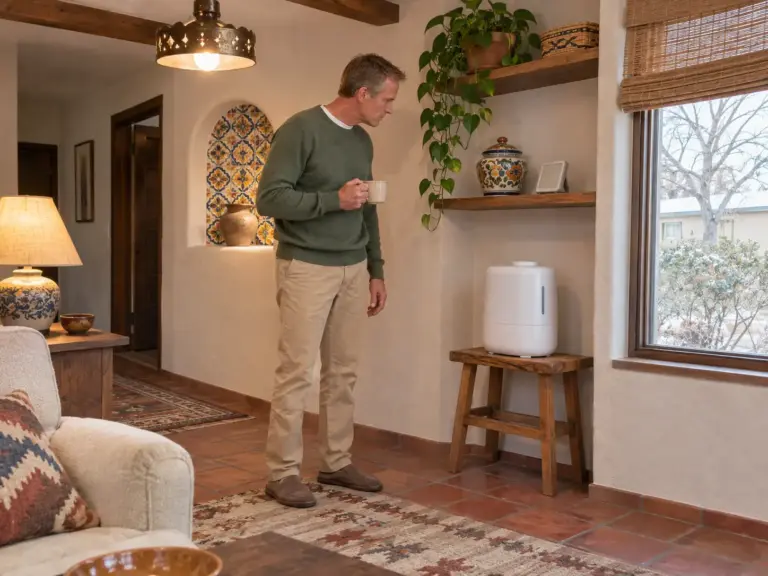
A low number in the dog’s room is the one case where a unit is the answer. What a reading under 30 percent means for the room covers the reading itself; this section covers where the unit goes, so the bed stays dry and the cord stays out of reach.
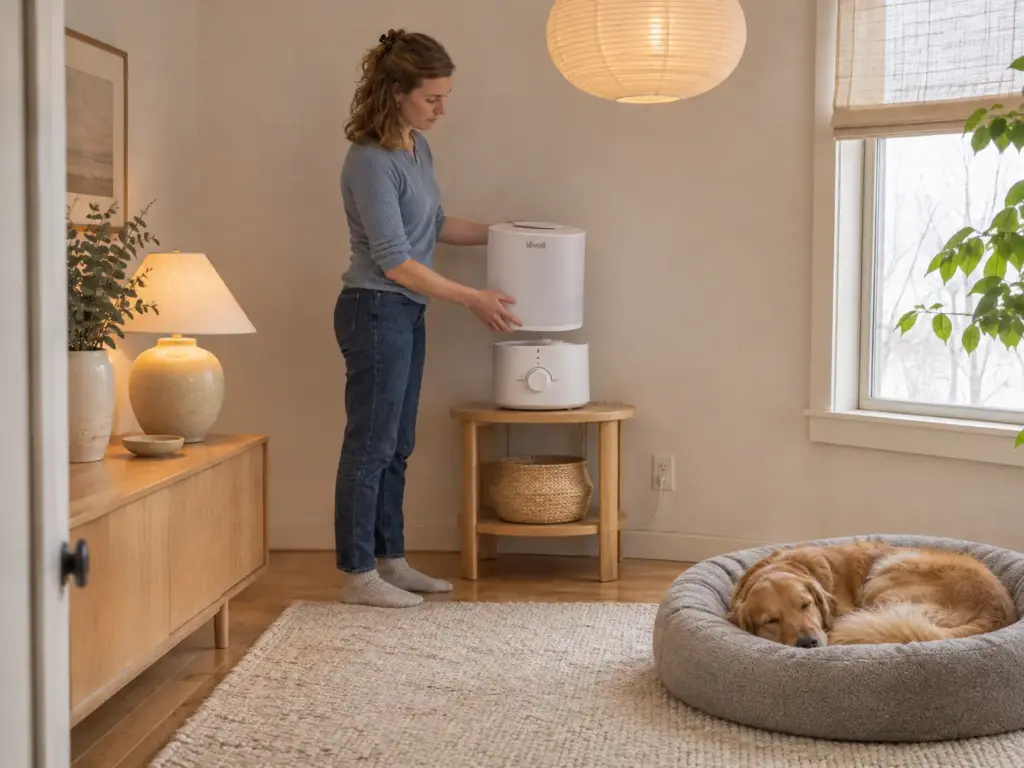
Aim It Away From the Bed
The Levoit LUH-D302-WUS is an ultrasonic cool mist humidifier with a 3 L tank (about 0.8 gal), a top fill and a 360-degree nozzle. It is listed for rooms up to about 290 square feet (27 m²), and it draws 25 W, which works out to about a quarter of a kilowatt-hour over a ten-hour night. It handles one room.
Humidifier placement does more than the model does. A unit parked two feet from the bed wets the bedding before it moves the room’s number, and a week of mist aimed at one side of a cover leaves a damp ring on the fabric facing it. Put the humidifier on a stand, off the floor, aimed across the room instead of at the bed, and a few feet (about 1 m) from where the dog lies. For comparison with other options, the full set of meters and room humidifiers that cut static is laid out in the guide to the best products.
The Cord Is the Hazard Here
The dog finds the cord before you find the leak. A cord lying across the floor is something to chew, trip over or tug, and a tug can bring the unit down with its water. Run the cord short and flat along the wall, behind the stand, with the outlet on the unit’s side of the room so there is no slack for the dog to reach. If you cannot get the cord out of reach, the unit belongs in a room the dog is out of while it runs.
Unplug the unit before you lift the tank for filling. It takes five seconds and keeps water off the cord and the plug.
Put the meter and the unit on opposite sides of the room. The meter reads the room; beside the unit, it reads the mist.
What a Mist Knob Will Not Tell You
The knob sets how much mist leaves the unit. It says nothing about the humidity of the room, and the meter you placed earlier is how you know when to turn it down. As the reading climbs toward the top of the 30 to 50 percent band, ease the knob back; overshooting is how a window starts to sweat and a bed cover starts to feel damp.
A furnace-mounted whole house humidifier is a different tool. It feeds the ductwork, and it does not reach every room evenly, so it is the wrong fix for one dog’s room. It needs a furnace and an HVAC technician anyway, and nothing here is for sale on that front.
After a few months of running, two things show. The reading drifts back down once the heating runs against dry winter air, because the outdoor air the house leaks in is drier, and the tank needs emptying between fills, with the unit wiped out on a schedule. How easy that wipe is varies by hand: the wide opening suits some people and frustrates others, so check that you can reach the bottom of the tank before a film sets in.
Coat Sprays, Metal Brushes and the Ionic Brush Nobody Measures
Once the reading and the fabric are in order, the coat is the last place the charge can sit, and the shelf of coat products is where most of the money goes. A coat product works on the surface, and the room is still dry underneath it. What follows is what each kind does and what it leaves behind.
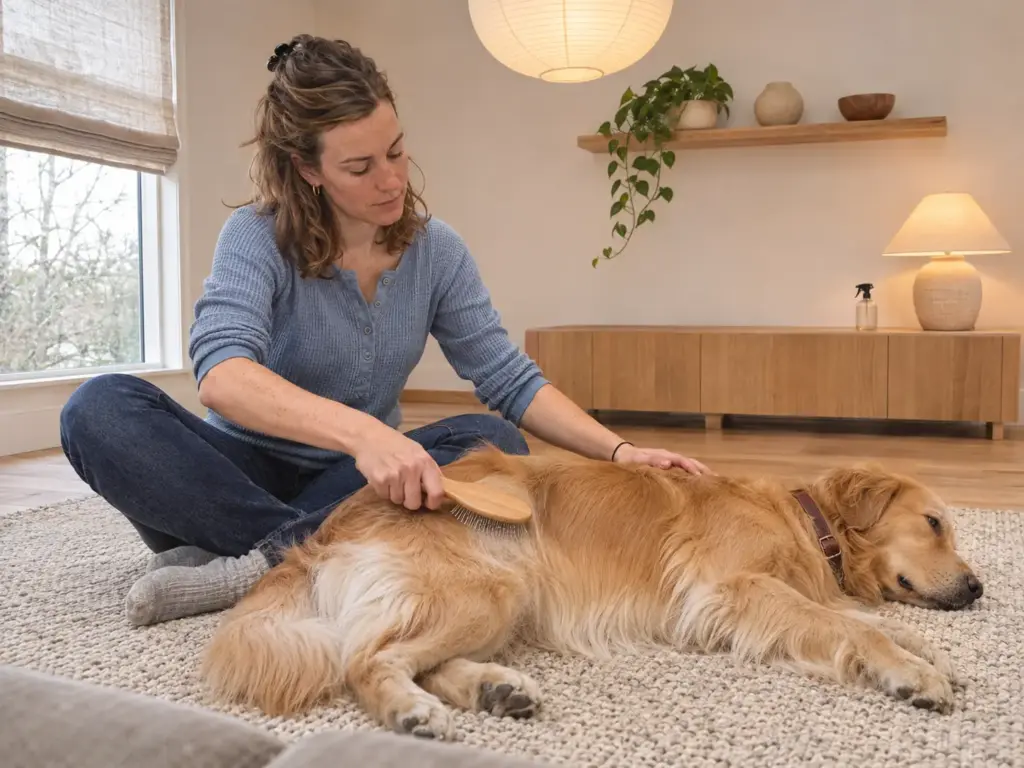
What a Coat Spray Does and How Long It Lasts
The Paul Mitchell Pet Soothing Oatmeal Conditioning Spray is a leave-in conditioning spray in an 8.5 fl oz bottle (about 250 mL). It is sold for coat finish, and its listing makes no claim about static: it is not sold as an anti-static spray. A conditioner like this one sits on the outside of the hair and wears off, so a coat that was easy to touch on Tuesday can be snapping again by Thursday. Plan on reapplying it.
That is the nature of every surface fix. It lowers the charge a coat can hold for a day or two while the room’s dryness goes on loading it, and it does nothing about the cover underneath.
The Crown Royale Magic Touch Formula 3 is a pet grooming spray, a finishing spray sold to prevent matting, in a 16 oz bottle (about 470 mL). The larger size suits a long-coated dog; the smaller bottle above is the one for a trial. The spray mechanism and the scent are where this one loses people, so test the sprayer on a towel before it goes near the dog. A finishing spray also leaves a slick on a rug under the dog’s favorite spot, and that shows in the first week.
Both are sold for a coat’s finish, and nothing here says anything about skin or itch.
Try one bottle on one side of the coat and run the touch test a day later. A spray that has worn off by the next evening has told you it is a surface fix.
Metal Pin or Plastic Brush
Brushing a dry coat and its loose pet hair with a plastic brush is two insulators rubbing, which is exactly how charge is made. A metal pin brush takes the plastic out of that contact. If you already own one, swapping it in is free, and it is worth trying once the bed cover is sorted. Change the brush by itself, so the touch test afterward points at one cause.
The Ionic Brush and the Ozone Number Nobody Prints
Ionic grooming brushes get named as a feature, and the flaw they carry is one no page measures. An ion generator can be an ozone source, and the word ionic on a box does not tell you how many parts per million it puts into the room. The only published ozone number in this part of the market comes from California. The California Air Resources Board’s fact sheet on its ozone limit says, “These air cleaners must produce an emission concentration less than 0.050 parts per million (ppm) of ozone.”
That limit applies to air cleaners sold in California, among them ionizers and corona-type devices; it was never written for grooming tools, and it says nothing about what a brush gives off. CARB also notes that some makers of devices that make ozone on purpose describe it by other names, such as activated oxygen. So if you are weighing an ionic brush, ask the maker for the ozone figure in ppm. With none printed, treat it as unknown.
Dryer Sheets and Softener Are the Fix to Skip
It is the trick everybody knows, and it is the one this guide leaves out. A dryer sheet or a splash of fabric softener leaves a coating on fabric, and the fabric here is what the dog lies on and licks. Keep both away from the bed and from the dog.
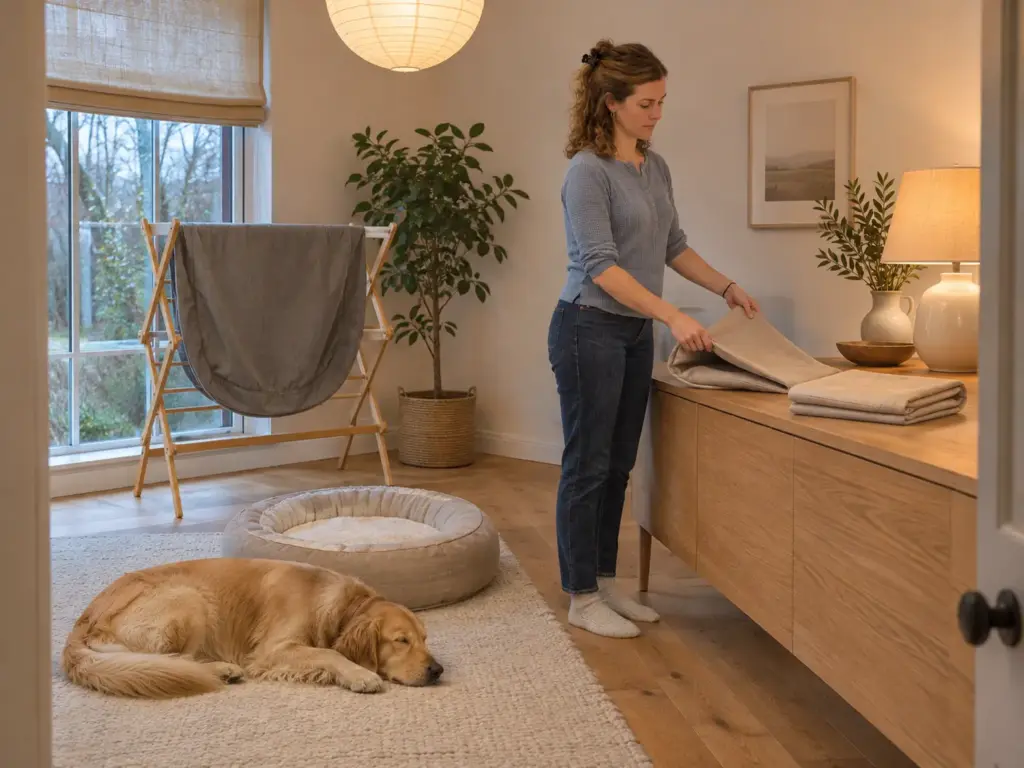
Wash the bed cover with plain detergent and no softener, and dry it without a sheet. A cover that went through the wash with softener keeps some of it for several washes, and the snap comes back with it, so give it a plain re-wash before you judge whether the fabric swap worked. The sign is a cover that still feels slick after two plain washes. That one needs another.
Touch Metal First, Then Read the Meter by the Bed
Most of the work here is order. Touch metal, then the dog, and you know whether the charge sits on you or on the coat. Swap the one fabric the dog lies on most and run the test again. Put the meter beside the bed and hold its number against the EPA’s 30 to 50 percent.
A room humidifier earns its place only when that number is low, with the unit across the room and the cord against the wall. Coat sprays come after all of that, and they wear off. Nothing from the laundry shelf goes on the dog or its bed.
Read the meter at the bed again after the first cold snap, and again after the unit has run for a week. Between fills, empty and wipe the tank. If the hygrometer drops its Bluetooth link, check its battery and its distance to the phone before you blame the room. That drift follows the season, and how winter pulls the indoor number down explains why static returns every cold month.
Tomorrow, touch metal and then the dog, and set the meter on the shelf by the bed. Read it at the same hour for a few days and let that number pick the next change.
Frequently Asked Questions
01How do I stop static shocking my dog?
Touch metal before the dog, swap the one fabric it lies on most, and read the humidity where it sleeps. A room under the EPA’s ideal 30 to 50 percent needs a humidifier; a room inside it needs the fabric looked at.
02Why do I keep getting shocks from my dog?
The snap is a charge on the coat or the bed jumping to your hand when you reach it. Test it by touching metal first: if the snap vanishes, the charge was on you.
03What humidity stops static shocks in a room with a dog?
The EPA’s ideal is 30 to 50 percent, with 60 percent as the ceiling. Static eases as a room moves into that band; a reading inside it that still snaps points to the bed or the coat.
04Does an ionic grooming brush put ozone in the room?
An ion generator can be an ozone source, and the word ionic does not give the number. California’s 0.050 ppm limit applies to air cleaners and does not cover brushes; ask the maker for the ppm and treat none as unknown.
05Are dryer sheets a good fix for a dog’s static?
No. A sheet leaves a coating on a surface the dog licks, so it stays off the dog and its bed. Wash the cover with plain detergent, and use a damp hand on the coat.