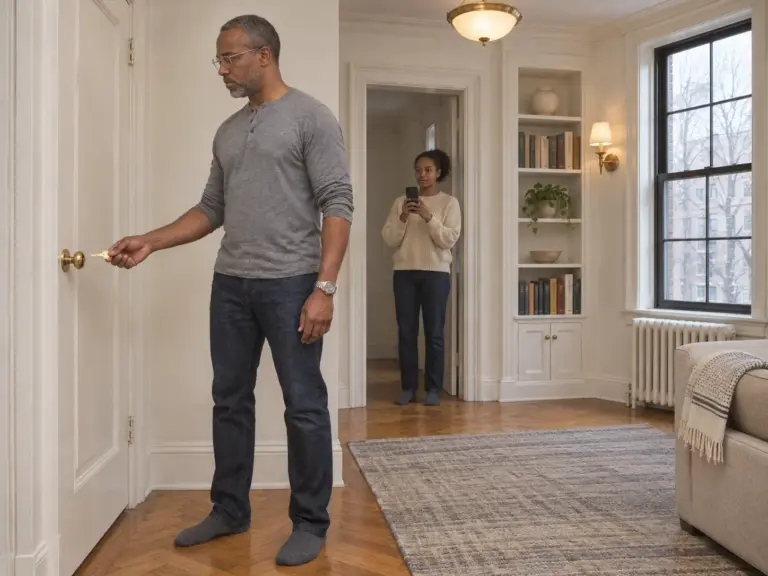
You touched a key to the doorknob, wiped the chair seat with a dryer sheet, misted the carpet, and on the first cold evening of the heating season the same switch plate bites you anyway. So why is my static shock fix not working? Most of those fixes do one job, which is emptying the charge you are carrying, and the room goes on refilling you with every step across the carpet. Dry air is what lets that charge pile up instead of leaking away, so the order below starts with a reading of the room, moves to what you wear and walk on, adds water to the air only if the number asks for it, and ends with what the setup looks like a few weeks in.
Quick Answer
Touching metal, a spray or a dryer sheet empties you or covers one surface, and none of them changes how much charge the room lets you build. Dry air does that. Read the room’s relative humidity first, aim for the EPA’s house band of 30 to 50 percent, and watch whether the zaps fade.
Why the Fix Works Once and the Zap Comes Back
The key, the knuckle and the spray all work in the moment, which makes a zap that returns the next day feel like a contradiction. It is not one. There are two separate jobs here: emptying the charge you carry right now, and lowering how much charge the room lets you build in the first place. Nearly every quick fix does the first and skips the second.
What Touching Metal Actually Does
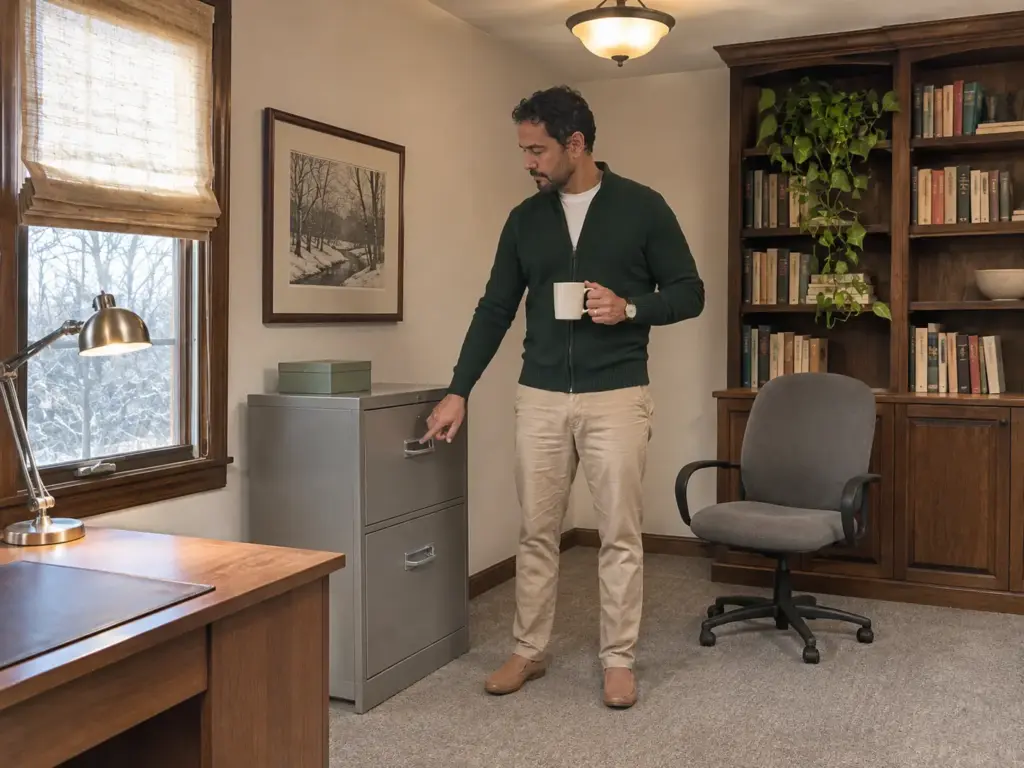
Metal conducts and wood does not, so a wooden door or a plastic chair arm leaves the charge sitting where it was, while the metal part releases it. According to Northeastern University, “Discharge yourself often by touching metal objects to avoid a big, painful shock.” Northeastern’s physicist says the same habit works better with a key or coin in your fist, because the discharge spreads over a larger area, and a knuckle takes it where fewer nerve endings sit.
What changes is the feel of the jolt. How much charge you walked in with stays exactly where it was.
That makes the touch a habit worth keeping and a poor fix. It empties you at the doorway, and the carpet starts filling you again at the second step.
Why Dry Air Lets the Charge Build Again
Friction from a rolling chair, a sweater or a rug builds up static electricity by stripping charge off one surface and onto another. Moist air gives that charge a path to leak away along; dry air barely does. Northeastern engineers explain why dry winter air builds the charge, and the physicist quoted there puts the seasonal part simply: in winter or dry climates the air holds less moisture.
That is the whole reason a fix that held in October can fail in January. Same room, same habits, less water in the air.
The zap also tends to land on the same metal part every time, a receptacle screw or a switch plate in a carpeted room. That part is the first grounded metal on the charge’s path, and the pattern gets worse where a gas fireplace or a furnace has been drying the room further.
Jot the metal part that got you next to the humidity reading at that moment, three times over. Three zaps with the meter under the band and one with it inside say more about your room than any label on a spray bottle.
Where a Spray or a Dryer Sheet Fits
Anti-static sprays and dryer sheets work on the surface they touch: a carpet, a sweater, a chair seat. They add no water to the room’s air, so they cover one surface for a while and then wear off. That is useful for the single chair that gets you every time and no help for the room. They also come late in the full order of fixes for static shocks at home, for exactly that reason.
Read the Room’s Humidity Before You Change Anything Else
If dry air is what lets the charge build, the one number that says which way the room is off is relative humidity, and reading it is the cheapest step in the whole fix. A reading already inside the band sends you toward fabrics and the outlet, and saves the cost of a humidifier you did not need.

Where to Put the Meter
Set the humidity meter at chest or sitting height, in the room where the zaps happen, away from the mist of any humidifier, the cold glass of a window and a heating vent. Each of those pulls the reading toward its own corner of the room instead of the air you actually sit in. Three readings with one meter is a short walk through taking them properly.
One room can sit under the band while the hallway by the thermostat reads fine, and the reading at the desk in the morning is rarely the one from the evening. Take it in the room, at more than one time of day.
What the Number Says
The EPA gives the house band, and it is a ceiling and an ideal range for mold and comfort: according to the EPA’s indoor humidity range, “Indoor relative humidity (RH) should be kept below 60 percent — ideally between 30 percent and 50 percent, if possible.” It prints no static-electricity number, so treat 30 to 50 percent as the target to aim for and watch whether the zaps fade as the reading rises into it.
Under 30 percent, the air is off on the dry side and a humidifier is a reasonable next step. What a low reading means covers how far under is too far. Inside the band, the air is probably not your main problem. Above 60 percent, a humidifier is pushing the wrong way entirely, and a dehumidifier is the device that fits.
One more wrinkle: the meter reads relative humidity, and that figure moves with temperature. Two rooms can show the same reading while holding different amounts of actual water (the absolute humidity) if one is much colder, so the number only means something read in the room where the zap lands.
What This Meter Cannot Tell You
The Govee H5075 is a Bluetooth hygrometer and thermometer that reads humidity to within 3 percent and temperature to within 0.54 °F (0.3 °C), reaches a phone from 164 feet away, and exports two years of readings as a CSV file. That tolerance matters: a reading of 40 percent could be anywhere from 37 to 43. Its weak spot is the Bluetooth link, which drops on some days, and some units stop working before the six-month mark, so keep a second reading in mind if the number ever looks wrong. A broader look at a cheap humidity checker you can trust goes through what any of these meters can and cannot promise.
Leave the meter on the shelf for a full day before deciding anything. A single reading taken beside a heating vent can sit several points away from the one at your chair, and the day’s low is the figure that matters for the zaps.
Fabrics and Floors: What the Water in the Air Cannot Fix by Itself
Even a room reading inside the band still holds surfaces that charge whoever touches them. This is the free part of the fix, and it comes before any device.

Synthetic Against Natural Fibers
Fabric sets how much charge you pick up, and the air sets how fast it leaves. Synthetic fibers insulate and absorb little moisture, so a Northeastern physicist on synthetic fibers calls them far more prone to generating and holding static than natural ones. Cotton holds more moisture than the synthetics do, and fabric softener cuts the friction that creates the charge to begin with. Dryer sheets belong in the same group: they treat the cloth, not the room.
A sweater swap that quiets the zaps in November and stops working in the first cold week of January tells you the fabric was only part of it. The air is the rest.
Shoes, Rugs and Chairs
Leather soles let charge drain away where rubber and plastic hold it, so rubber-soled slippers on wall-to-wall carpet are the worse pairing for a room that keeps zapping you. A rolling chair is the other usual source: the seat rubs against clothing every time you shift, and the casters build charge against the rug as you roll.
A carpet spray earns its place here, on the one rug or the one chair that always gets you. When the surface doing the charging is a dog’s coat or a dog bed, a separate fix covers that case, because the material and the cure differ.
The Metal You Reach First
Keep a key or coin in your hand and make the first touch a habit on the way into the room, against the metal part that has been getting you, before your fingertip is anywhere near it. The free changes run in order: touch the metal first, then swap the one fabric or the one pair of shoes, and read the meter again before deciding the room needs more.
If the metal part that gets you is a file cabinet or a light-switch plate, keep the coin on the shelf beside it. A habit that lives where the zap happens survives longer than one you have to remember in the hall.
The Humidifier That Holds the Number
A humidifier is the answer only when the reading says the air is dry. If the meter already sits inside the band, skip ahead to the last section: more water in the room is not the missing piece.
When the Reading Says Dry and the Other Fixes Did Not Hold
The obvious move is a humidifier, and the condition that breaks it is a reading that is already fine or a unit set too high. Run past the band and the window glass starts to sweat, which turns a static problem into a moisture one. The target is a reading, not a mist. A product-by-product look at static shock fixes sorts each one by the part of the problem it changes, if you want that comparison next to this section.
Expect the first night to be slow. The carpet, the walls and the furniture take some of the water before the air does, so the reading creeps up instead of jumping. For anyone who would rather skip a device, ways to raise the humidity that start with the meter covers the options that cost nothing.
A Humidifier That Reads the Room and Holds a Number
The DREO HM717S holds an 8-liter tank (about 2.1 gallons), covers up to 600 square feet and makes warm or cool mist, with a humidistat that lets you set a target and have the unit hold it. The listing gives 28 dB for sound. It can be run from an app or by voice. The humidistat has a 5 percent tolerance, so it gets close and the meter stays the reference.
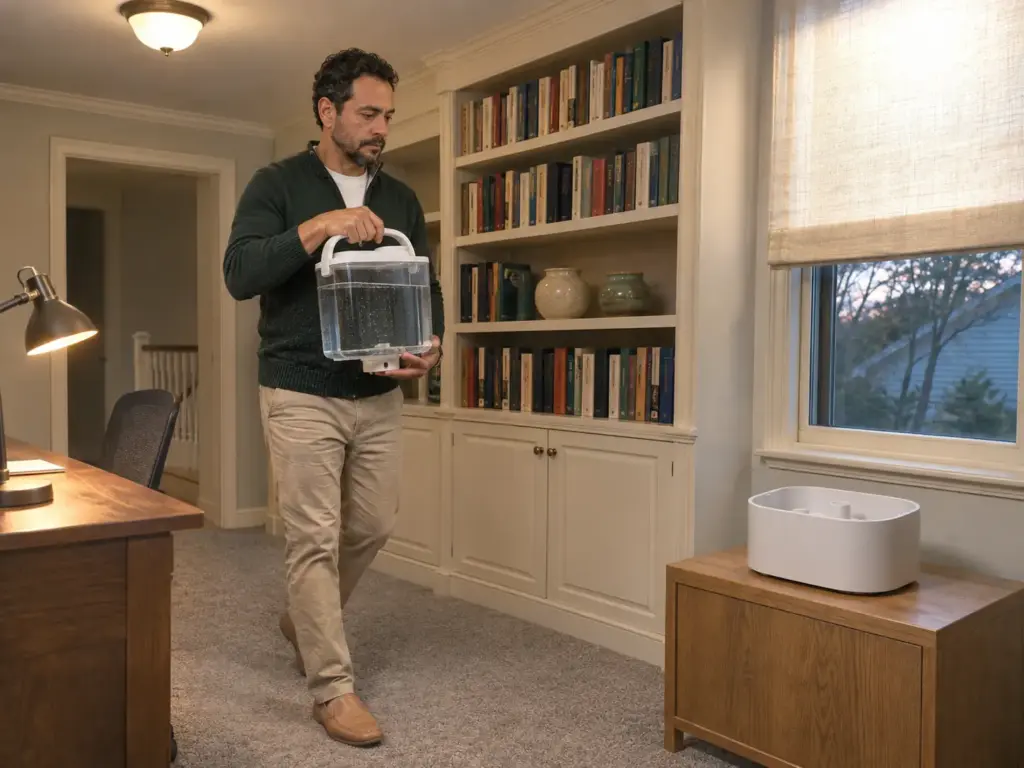
The tank math is simple: at its top output of 550 ml per hour, 8 liters lasts about 14 hours, and on the low setting the listing gives roughly 80 hours. The tank is heavy too. Eight liters of water weighs about 18 pounds, which is a real carry to the sink and back. In a small spare room, that size is more than the room needs, and the next two units are the better call there.
Two Simpler Ones That Leave the Reading to You
The Pure Enrichment MistAire XL is an ultrasonic cool-mist unit with a 1-gallon tank rated for up to 500 square feet, running 10 to 24 hours depending on the setting. It has a mist dial and a 360 degree nozzle, and shuts off when the water runs low. What it lacks is a humidistat: you turn the dial, read your meter and turn it again, so it only works if the meter is in the room.
The Levoit Top Fill 2.5 liter is the smallest of the three, a top-fill cool-mist tank that lasts about 25 hours on low at a listed 25 dB. The listing gives no coverage area in square feet, so judge it as a one-room unit for the corner where the zap happens most. Filling from the top keeps the carry short. Its weak spot is the tank: how easy it is to reach inside and clean decides whether it gets rinsed on schedule, and that varies from hand to hand.
What the Tank and the Meter Do After the First Few Weeks
By the end of week one the shocks may already be gone, and week one is the least informative week of the whole setup. What follows is what drifts.
The Tank and the Parts It Wets
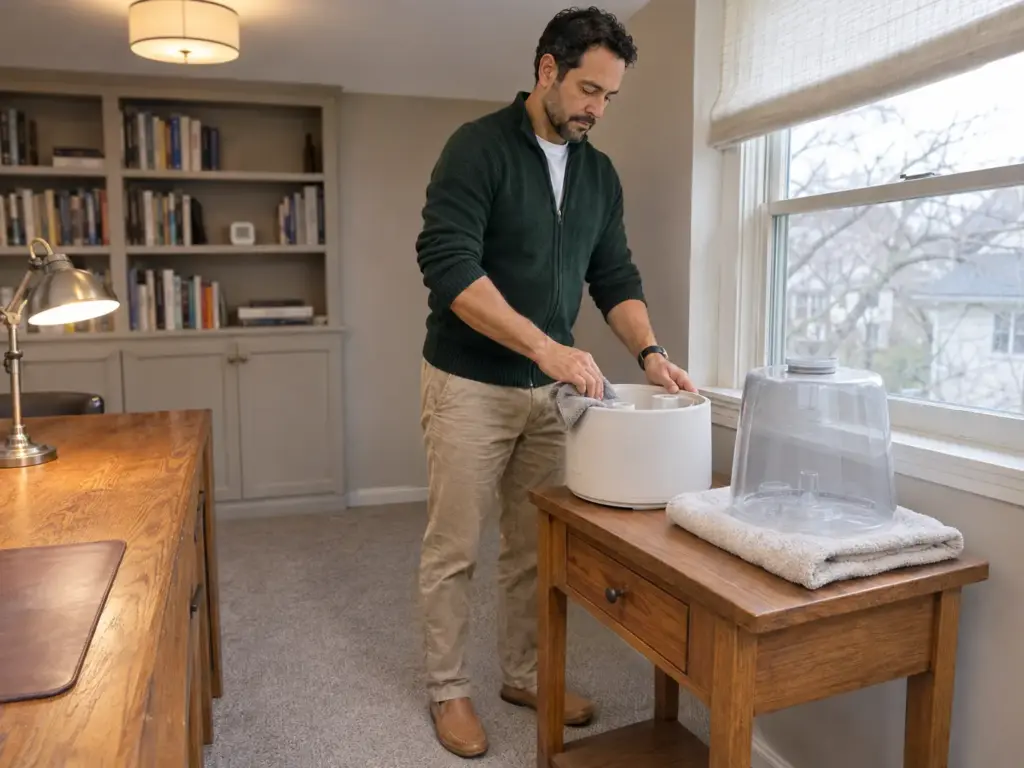
Scale forms wherever water sits, and a tank humidifier is mostly a place where water sits. Hard water leaves mineral crust on the parts it touches, and ultrasonic units throw some of those minerals into the air as a fine white dust on nearby shelves. After two weeks a film can already line the tank. Humidifier cleaning is what keeps that film from building, and the manufacturer’s manual is the authority on it, so follow its interval and its products, and rinse and dry the tank rather than leaving it standing wet, because what stays wet in a closed tank grows.
How often you rinse is worth settling early. A tank that is easy to open gets cleaned every time; one that is awkward gets cleaned when the film is already visible.
The Reading Drifts and the Meter’s Own Tolerance
Meter drift is the quiet part of the setup. With a tolerance of 3 percent, a reading of 38 percent could be 35 or 41, so one number tells you less than a week of numbers does. Compare the meter with itself across several days and trust the trend, and note when a Bluetooth unit drops its connection or goes quiet. If the numbers ever stop making sense, a second meter settles it faster than guessing.
Pick a fixed rinse day and tie it to the tank running empty. A tank that empties every second morning needs the rinse more than one that lasts the week, because the water sits less and the film builds faster.
When the Zaps Come Back
The heating season keeps getting drier as the weather turns, so the tank empties sooner and the reading slides before the shock returns. The reading tells you first. Why the winter reading shifts with the cold explains what the outside temperature does to the number, and why a setting that suited autumn can be wrong by January.
When the Zap Is Not About the Air at All
If the room’s reading is inside the band, a humidifier is not the missing piece, and a zap that resets a machine is a different problem from one that stings a hand.
A Machine That Resets or Goes Black After a Zap
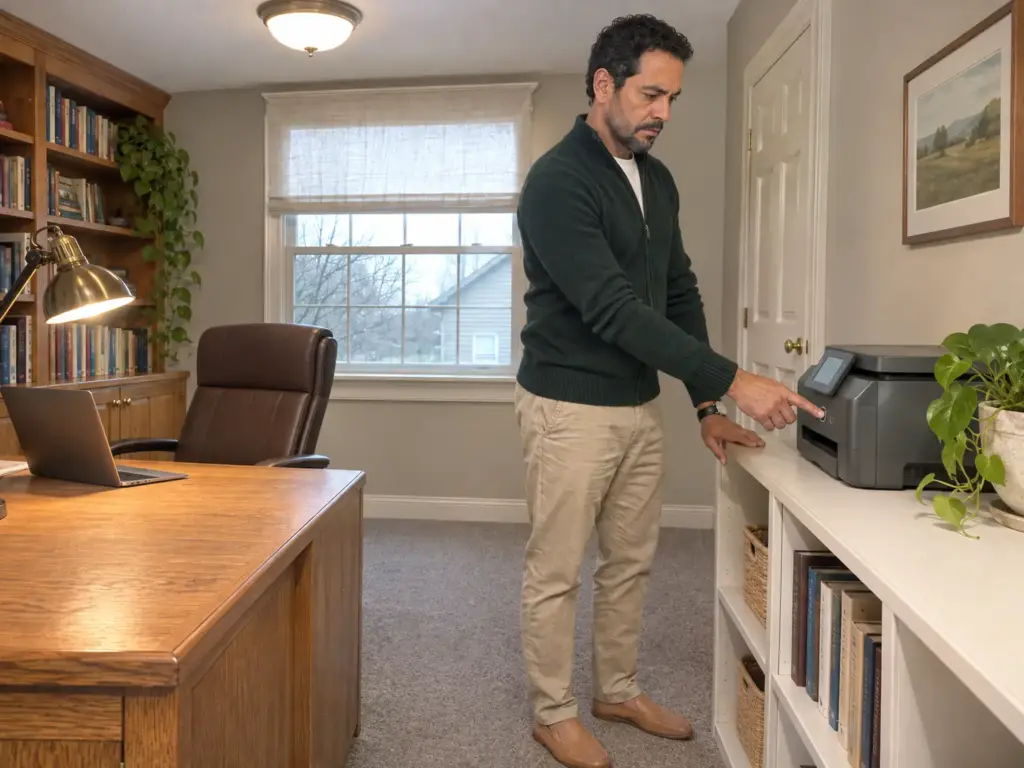
A printer that restarts, a monitor that goes black when the chair rolls or a thermostat that blanks after a spark is the device protecting itself, and the zap is the trigger. Check the outlet and the cord first, then the maker’s manual, which is the authority on whether a discharge can damage that model. Touching a metal part of the case before the controls is the same habit as at the doorknob.
A Room That Stays Dry for Another Reason
When the meter stays under the band and the humidifier cannot keep up, the room is losing water or never gaining any. Why a room stays dry when the heat is the cause covers the usual suspects. A zap that lands at the same time each day usually points to a routine: the chair, the heater cycle, the moment you cross the same rug.
When to Call an Electrician
A loose or ungrounded outlet is a job for an electrician, never a step to attempt here. If the shock lands every time at the same outlet, with the reading in the band and the fabrics already changed, have the outlet looked at.
Read the Number Where You Get Zapped, Then Read It Again After the Next Cold Snap
Touching metal empties you but leaves the room alone. The meter says which way the air is off.
Fabrics and floors are the free part of the fix. A humidifier belongs to a reading that says dry. The tank and the meter both need attention after the novelty wears off.
Check the meter’s trend over a few days, the film in the tank after the first couple of weeks, and the reading again when the next cold snap arrives, because the zaps usually come back after the reading does.
Tomorrow, put the meter where you sit, leave it for a full day, and read it against the 30 to 50 percent band. After your next change, read it again before touching anything else.
Frequently Asked Questions
01Why do I keep getting static shocks off everything I touch?
Dry air lets charge build on you and your clothes until you reach a metal object, and then it jumps. Read the room’s humidity first, because the fabrics and floors you use add to it.
02Why is my static shock fix not working even with a humidifier?
A humidifier only helps when the room reads under the band and the unit can raise it. Check the meter, the tank and the surfaces you touch before blaming the machine.
03How do I fix static shock for good?
Read the room’s humidity, wear natural fibers, touch a metal object with a key or coin first, and add a humidifier only if the reading says the air is dry. The fix stays in place by watching the meter each season.
04Does touching metal first really stop static shocks?
It empties the charge you carry so the shock is smaller, but it does not change what the room does next. The charge builds again while the air stays dry.
05Can a static shock hurt my laptop or printer?
A shock can reset or black out a machine, and the maker’s manual is the authority on damage. Touch a metal part of the case first, and check the outlet if it keeps resetting.