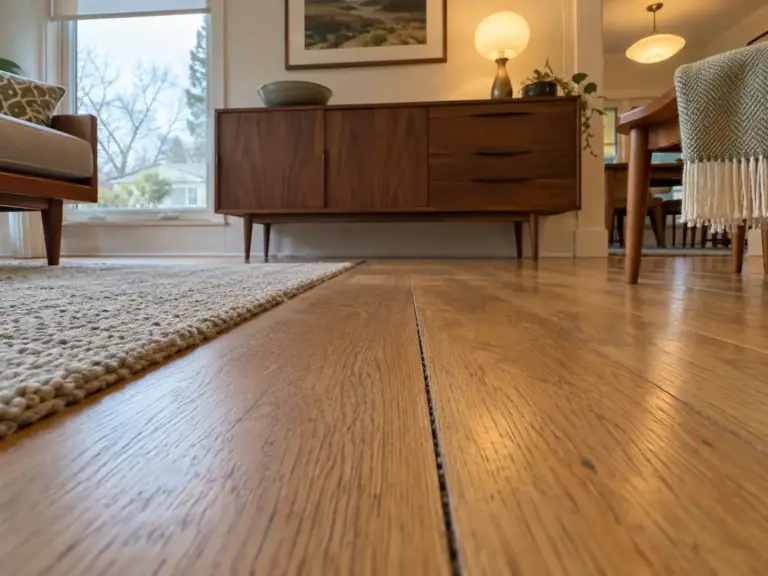
The heat has been on since morning, the one small humidifier in the bedroom has run all day, the wood floor has opened a hairline gap along one seam, and every doorknob gives a static shock. Nobody in the house has looked at a meter. So how do I increase indoor humidity, and by how much?
The percentage on a hygrometer is a ratio: the same water in the air reads lower as the air gets warmer, so a heated house can read as dry air while the humidifier is working fine. The order below runs from the reading to the free moves, then the furnace unit that may already be in the house, then the heating system, with a portable humidifier last.
Quick Answer
Read the meter before you add any water. The EPA publishes a ceiling and a band but no floor, so a reading under 30 percent is yours to fix, one change at a time.
- Read the percentage across the room, at shelf height.
- Set a plate of water on each radiator or at the floor vent.
- Check the furnace humidifier’s water feed, damper and pad.
- Match the fix to your heating system.
- Add a portable humidifier last, sized to the floor area.
- Stop adding water at 60 percent, or when the glass fogs.
How to Increase Indoor Humidity Only When the Meter Says It’s Low
Before a bowl is filled, the room has to say which way it is off. A damp room and a dry room need opposite changes, and a gap in the floor does not tell you how far from the band the air is. A number does.
What the Band Is and What the EPA Does Not Say
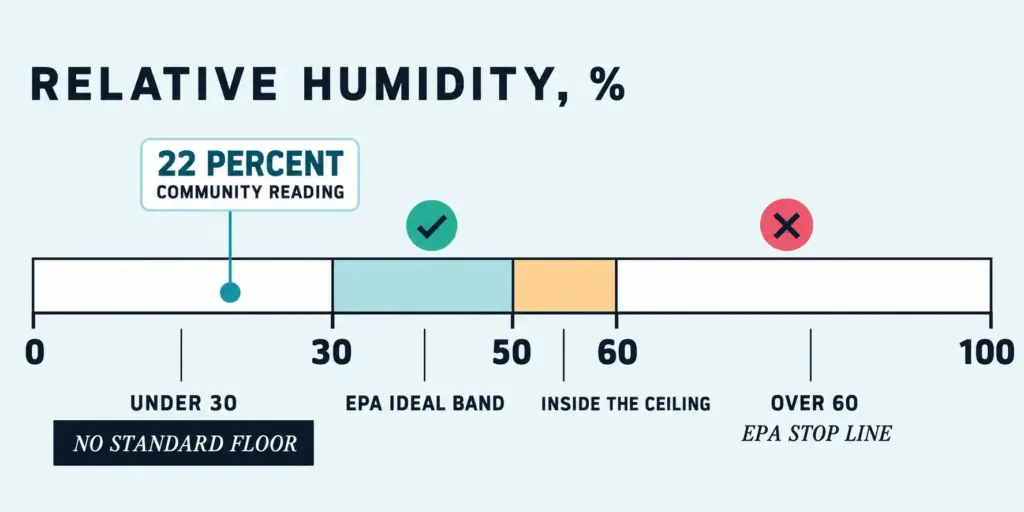
The reference most houses should use is public. According to the EPA’s brief guide to mold and moisture, “If possible, keep indoor humidity below 60 percent (ideally between 30 and 50 percent) relative humidity.”
That sentence has a ceiling and a target band, and it has no floor. Nothing on the page says what is too low, so a reading of 22 or 27 percent is a number to fix, not a number a standard condemns. The full humidity band explains how the 30 to 50 percent humidity range is built and why 60 is where the trouble starts.
Low also has to be real before it is fixed. A meter that sits next to a radiator, or one that reads eight points off, will send you after a problem the room does not have, and the question of whether a reading is actually too low is settled in its own piece, so this one takes a confirmed low reading as the starting point.
Which Meter to Read, and How Far to Trust It
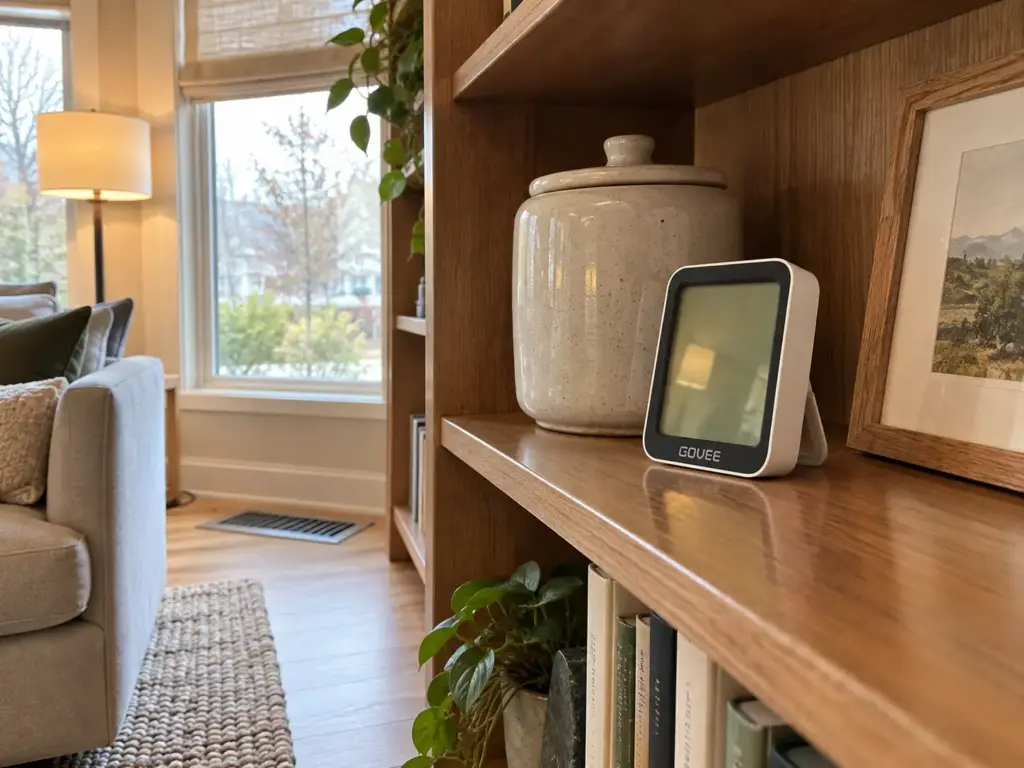
The EPA calls a humidity meter a small, inexpensive instrument sold at many hardware stores, and it is cheap enough to buy before any device. The Govee H5075 is a Bluetooth hygrometer-thermometer with a 196-foot range, a stated humidity accuracy of plus or minus 3 points and temperature accuracy of plus or minus 0.54 °F (0.3 °C).
The Govee H5075 also sends an app alert when the reading leaves a range you set, so you hear about 28 percent before the floor does. Plus or minus 3 cannot tell 48 from 51, which is why you read the band and not the decimal. Connectivity and reliability are mixed according to Amazon’s summary of the reviews: some units will not pair with a phone, and others stop working within six months.
A meter in the same room as the humidifier reads the humidifier, not the house. Take the reading across the room, at the height of a shelf, away from the radiator and the window. A setting is not a reading either: a humidistat set to 45 percent says nothing about what the room is actually holding, and a hygrometer is the simplest way to monitor it. How to take three readings from one meter is worth ten minutes before the first bowl goes out.
Put the meter on a shelf on the far side of the room from the heat source, and give it a full hour to settle after you move it. Carrying it from a cold hallway into a warm room makes it read the hallway for a while.
Two Meters on the Same Wall Before You Act
One meter can be wrong by a few points and still look confident. A second one on the same wall for a week shows whether the first can be trusted. The AcuRite 00613 is a small tabletop thermometer-hygrometer that runs on one AA battery and lists a humidity operating range of 16 to 98 percent.
The AcuRite 00613 is sold as a multi-pack, so the link buys several, which suits this job: one for the bedroom, one for the living room, one for the basement. The listing publishes no accuracy figure and no repeated complaint turned up, so treat it as a cheap cross-check, not as a reference.
If the two sit within a few points of each other, the band reading is good enough to act on. If they are ten points apart, one is wrong, and nothing in this article should be done until you know which.
Water Left Out Next to the Heat: Bowls, Saucers and the Stovetop Pot
The meter says low, so the first way to raise humidity is the one that costs nothing: put water where the heat already is. It is slow, and the moves below are slow in a way a portable humidifier is not, but they are free and they tell you how big the problem is.
Bowls and Saucers on the Radiator or at the Vent
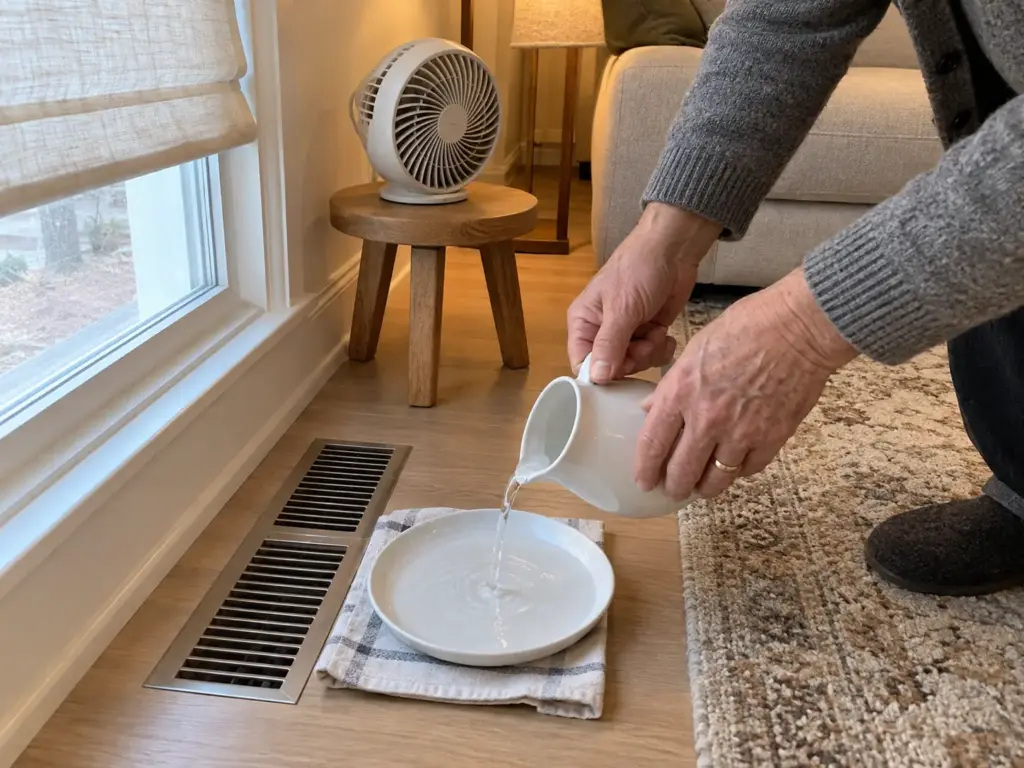
A shallow dish of water, ideally set under a radiator, is a common no-cost way to add a little moisture. How much it adds is hard to predict, so it is a helper, not a fix. The mechanism is plain: heat speeds evaporation, and a wide, shallow dish gives the water more surface than a tall glass. Bowls near heating vents work for the same reason.
The flaw is the refill. The routine means refilling the bowls daily and cleaning them every few days. That is a chore with no end date, and a bowl left dry does nothing.
No source gives a per-bowl output, so measure your own: mark the water line with a pencil on the side of the dish tonight and look at it tomorrow morning. If the line has barely moved and the meter has not moved either, the room is losing water faster than the dish adds it.
Change one thing, then give the meter one full day before you add a second. A plate on the radiator on Monday night means Tuesday’s reading is the plate’s report. Add the pot on the stove the same evening and you will not know which one moved the number.
The Simmer Pot, and Why It Is Never Left Alone
The old standby is to “Simmer a large pot of water on the stove.” Hot water gives off far more vapor than a cold dish, so a pot moves the number faster than any bowl. It is also the only move on the list that can start a fire if you leave.
Turn it off when you leave the room, keep the lid partly on, and use it while the kitchen is occupied. A pot that boils dry is a worse outcome than a low reading.
A Fan Across the Water
A fan can help pull air across the bowls. Moving air carries the moisture off the surface of the water, which is why a wet towel dries faster in a draft. No source puts a rate on it, so there is no figure to quote, and the fan adds noise and a little electricity for an effect you will have to read off the meter. If the number still does not move after a day of bowls, a fan and a plate on every radiator, the water is leaving as fast as it comes in, and why the number keeps falling is the next question, not a bigger bowl.
Showers, Laundry and the Winter Window: Free Water Already in the House
The house already makes water. A hot shower, a rack of wet laundry and dishes left to air-dry all put moisture into the room, and the winter window is the one apparent freebie that works against the reader.
The Bathroom Door and Bath Water Left to Cool
A hot shower with the bathroom door open adds moisture, but it spreads it. The steam goes into the house instead of staying in a closed room. A tub of hot water left to cool before it is drained does the same job more slowly, and it costs only the hot water you were going to use anyway.
This is where the exhaust fan needs one rule. Run the fan right after a shower only when the reading is at or above the band; below 30 percent, leave it off for that hour so the steam stays in the house. At or above the band the fan vents the moisture outside, where it belongs. A fan that runs all winter whatever the meter says is a different problem, covered under fans and leaks in the sibling piece on why the number is low.
Laundry on a Rack and Dishes Left to Dry
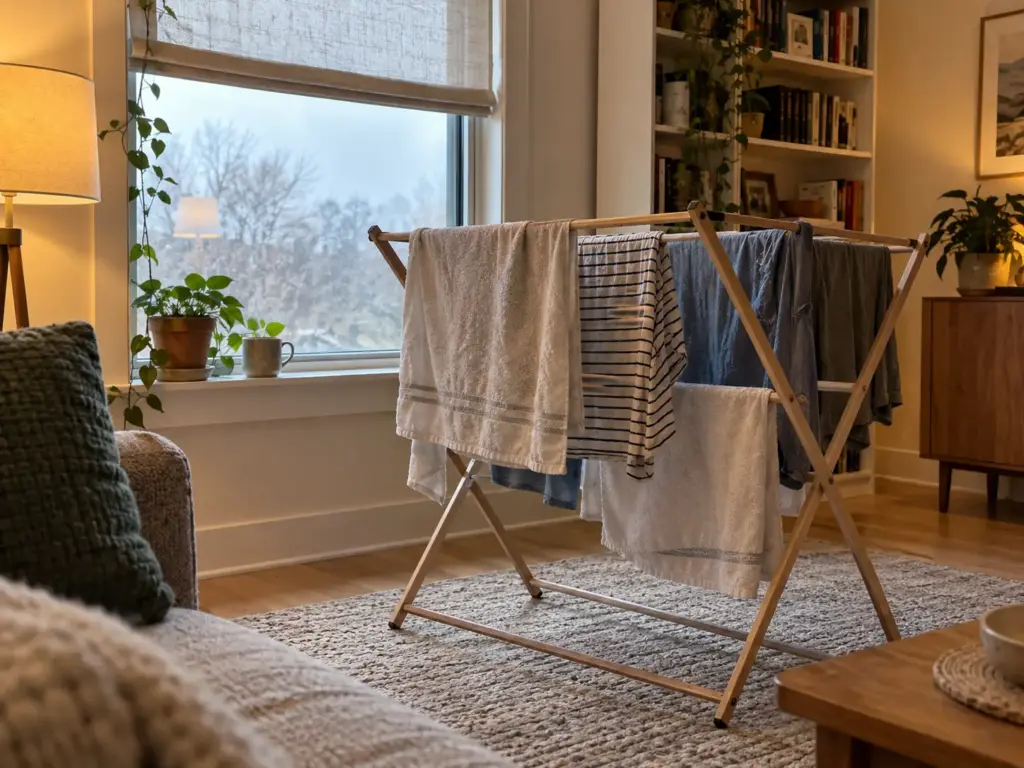
A rack of wet laundry keeps the room wet as long as the clothes are damp, and the same goes for a sink of dishes left to air-dry after the rinse.
Under the band, that is free water. Over it, it is a mold risk on the cold wall behind the rack. The meter decides which of the two the rack is, and it can change from week to week as the weather changes. Houseplants and a pebble tray add a little through transpiration and evaporation, a small effect and no fix on their own.
Why the Winter Window and the Lower Thermostat Mislead
Two moves feel like they should help and do the opposite. Opening a window in a heated room lets in cold outside air, and cold air holds very little water. Once the house heats that air, the percentage on the meter drops. The window adds water only when the outside air carries some, such as after rain.
The test is a comparison of two dew points, and comparing the two dew points before opening a window takes the arithmetic from there; this piece does not repeat it.
The thermostat runs the other way. Turning it down raises the percentage on the same water, because cooler air holds less water for the same ratio. The reading climbs as the room cools and nothing was added to it, which is why the reading climbs overnight as the room cools.
Lower heat can still protect the wood floor from wood cracking, but the meter will look better than the water supports. Both effects are part of how the reading shifts with the cold, and neither is a way to add water.
The Furnace Humidifier You May Already Own
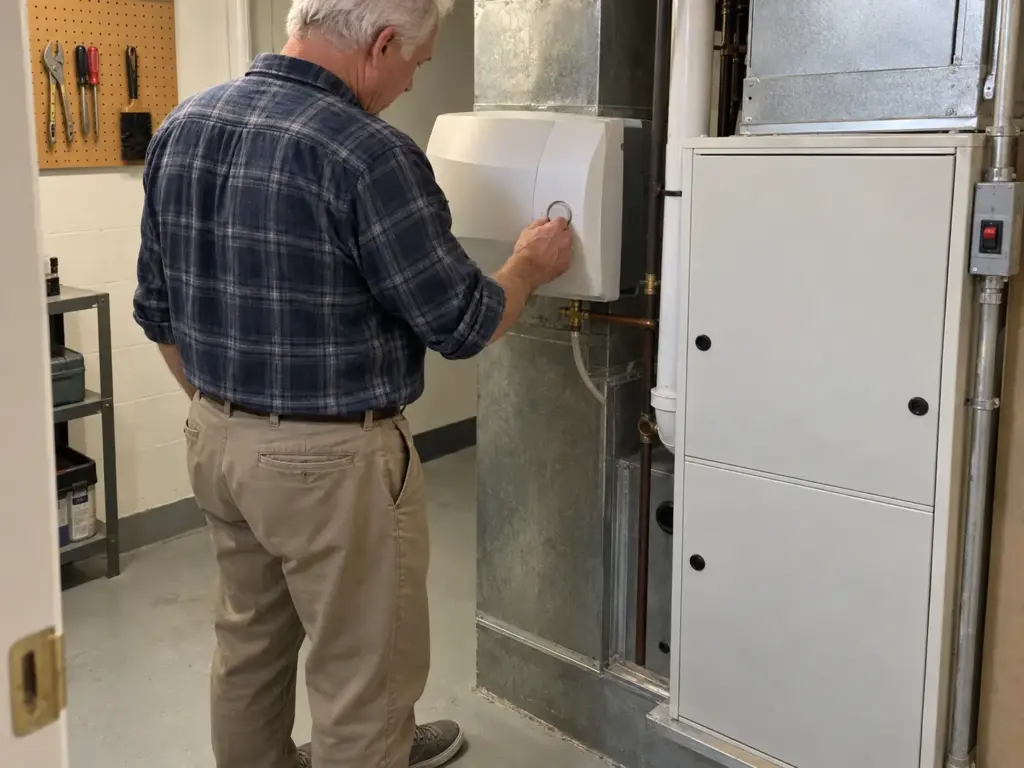
Before buying anything, ask whether the house already has a humidifier on the furnace, and whether it is moving any water at all. Many houses with a forced-air furnace do, and a unit that is installed but not working looks identical to one that is working fine.
A Humidistat Set to 45 Adds No Water
If a house sits far below its humidistat setting, the humidifier is not doing its job, so check the unit before raising the dial. Without a whole-house humidifier installed, a humidity control usually only keeps the house from getting too humid. It does not add moisture.
Both are right. A humidistat sets when the unit stops asking for moisture; it never creates any. A house at 22 with the dial at 45 is a unit that is on and not delivering. The pillar on where the water lands in a house explains why a setting is not a reading.
The Water Feed, the Damper and the Pad
Check the unit in this order: water feed, bypass damper, pad, then the humidistat. Carrier explains that a bypass humidifier uses the furnace blower to route warm air over a wet pad, so none of it works without water on the pad. A closed saddle valve or a clogged solenoid leaves the pad dry while the furnace runs, and that is a usual reason the dial reads fine and the room does not.
The bypass damper is the second suspect. The seasonal lever has to be moved from the summer position to the winter one, which Carrier words as sliding it “from the summer position to the open, or winter, setting.”
On a bypass humidifier, the damper has to be set for winter so that the air blows through the pad, and the water supply has to be on. The damper has a stop side as well. Carrier warns that leaving it open in summer pushes humidity into the HVAC system and creates conditions for mold growth, so the same lever goes back in spring.
Shut the furnace off at its switch, open the humidifier panel and look at the pad. A pad that is clean, unmarked and dry after weeks of heating has not been getting water, so the feed or the damper is the problem and the dial is not. Check those two before touching the humidistat.
Scale in Month Two
The unit that worked in November can quit in December. The drip feed that wets the pad builds mineral scale, and it has to be cleared out from time to time. The pad scales too: Carrier says to replace evaporator pads annually, and Bryant says to replace the water panel at the beginning of each heating season, more often with hard water. A scaled pad moves less air and less water, so the reading drifts down by degrees and the pad is the last thing anyone blames.
Radiators, Forced Air or One Window Unit: Your Heating System Picks the Fix
The same list of tips fails in a rental with baseboard heat and works in a house with ducts, so the heat source decides which move to make. Radiators, floor vents and a single window unit each point somewhere different.
| Heating system | First move | Its flaw |
|---|---|---|
| Radiators | A shallow plate under each one | Daily refill, and slow |
| Forced air, floor vents | A bowl near each vent, then the furnace unit | A spill near the register |
| Forced air with a furnace unit | Feed, damper, pad, then the dial | Scale builds up by month two |
| Baseboard heat or one window unit | The pot, the rack and the bath door | Nothing to check, so every move is manual |
Radiators: A Plate on Each One
Radiators put the heat in one spot, so the plate goes in that spot: one per radiator, not one per room. An oil-filled electric radiator is the odd case. It is radiant heat rather than moving air, so check the manual before anything sits close to it. With a steam or hot-water radiator the plate can sit under the unit, where the warm air rises past it.
Forced Air: Bowls at the Vents and the Furnace Unit
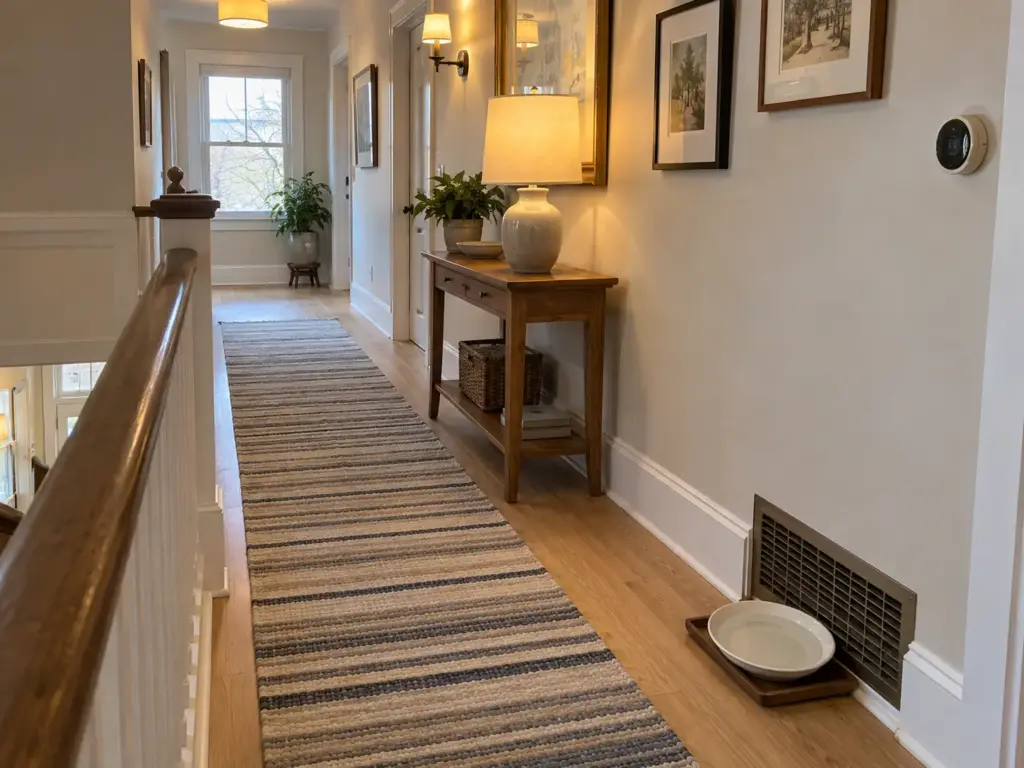
In a forced-air house, shallow bowls of water set near the heating floor vents are a common approach. The warm air coming up the register carries the vapor into the room. Keep the bowl beside the vent, not on it, so a spill does not run into the duct. If the house has a furnace humidifier, the unit from the section above comes first, because a working unit does more in an afternoon than a row of bowls does in a week.
Baseboard Heat or One Window Unit: The Pot, the Rack and the Bath Door
With no furnace there is nothing to check and nothing to buy first, so the moves are the pot, the drying rack and the bathroom door, in that order.
The stop side matters here as much as anywhere. Too much humidity can cause mildew and mold, and a unit pushed too far leaves the cold walls wet before it leaves the air comfortable. The first sign is the glass. If the pane fogs by morning, the cause is the same as the one behind windows that sweat overnight, and the water has to stop.
A Portable Humidifier Comes Last: Where to Stop and What Month Two Looks Like
If the meter is still low after the free moves and the furnace unit, a portable humidifier is the next step, and it is the one that most often overshoots. The small unit that “doesn’t do much” in a bedroom is usually either too small for the floor or fighting a house that is draining water faster than it adds it.
Room Size Decides the Fit, Not the Tank
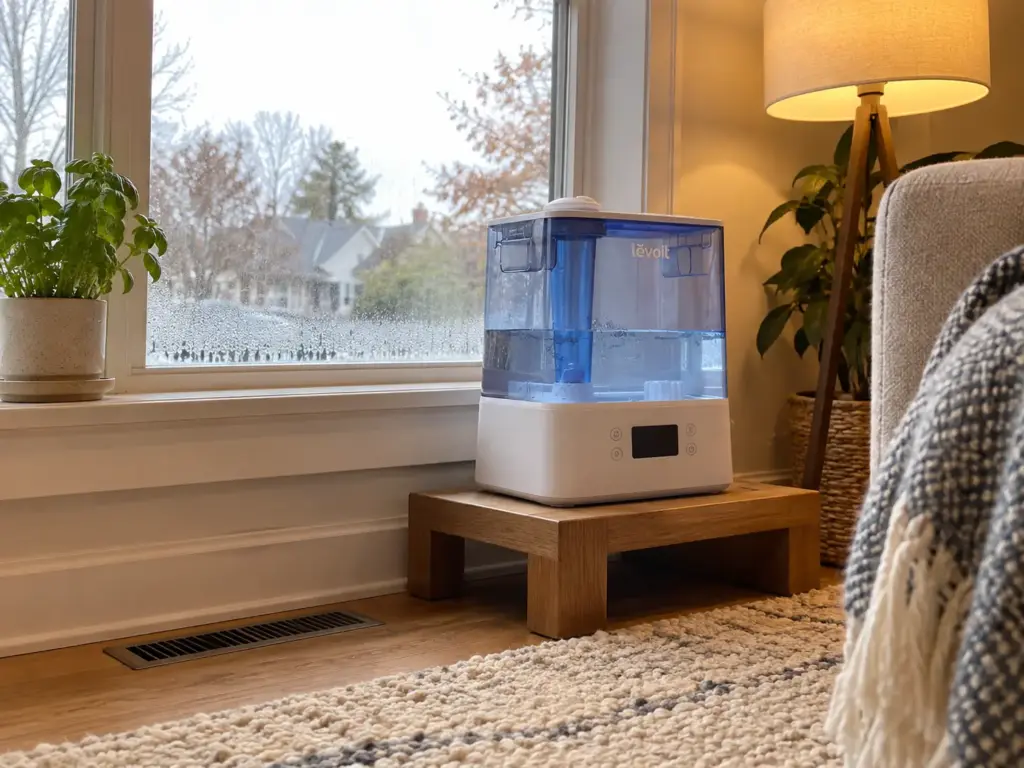
The Levoit Classic 300S is an ultrasonic unit with a 6-liter tank (about 1.6 gallons) that fills from the top and runs for up to 60 hours on one fill, according to the listing. The Levoit Classic 300S is listed for 505 square feet and has an Auto Mode that uses a sensor; the listing does not say what humidity it stops at, so set it by the meter, not by the label.
Floor area decides the fit, not tank size: a 10 by 12 foot bedroom is 120 square feet, well inside the rating, while an open living room can be outside it. Output gets mixed feedback in Amazon’s summary of the reviews: some owners report a good amount of mist and others say it does not raise the humidity at all, some units break after a month, and there are leak complaints. A unit with those records needs a meter beside it, not trust.
The Stop Line at the EPA’s Ceiling
Use the EPA’s 60 percent ceiling as the stop line, and the 30 to 50 band as the place you want to sit. The EPA says moisture on windows, walls or pipes is a sign that humidity is high. That makes the window glass the stop signal: a humidifier that fogs the window has passed the point where it helps. If the reading climbs above where you want it, the work becomes finding the source of a high reading, not turning the dial down and hoping.
Month Two: Refills, Tank and Scale
A portable unit is a chore with a tank. Use distilled water to slow the scale, and clean the tank on a schedule you will keep.
An uncleaned tank can spray mold through the whole house. A drying rack beside a unit that runs past the band keeps the walls wet, which is the second way a humidifier overshoots without anyone noticing. A cheap humidity checker you can trust beside the unit is what catches it.
The coldest window in the room is your second meter. A humidifier that runs overnight and leaves the glass wet in the morning has already pushed the room above the band, whatever the label says about a maximum setting.
Which portable unit suits a given house, or whether a whole-house unit is the better buy, is a separate decision that this piece does not try to settle.
When Adding Water Is the Wrong Fix: The Fan, the Dryer Vent and the Leaks
Sometimes the room is dry because the house is draining water, and a second bowl only chases it. If the meter does not move after the plate, the pot and a working furnace unit, the problem is not the supply.
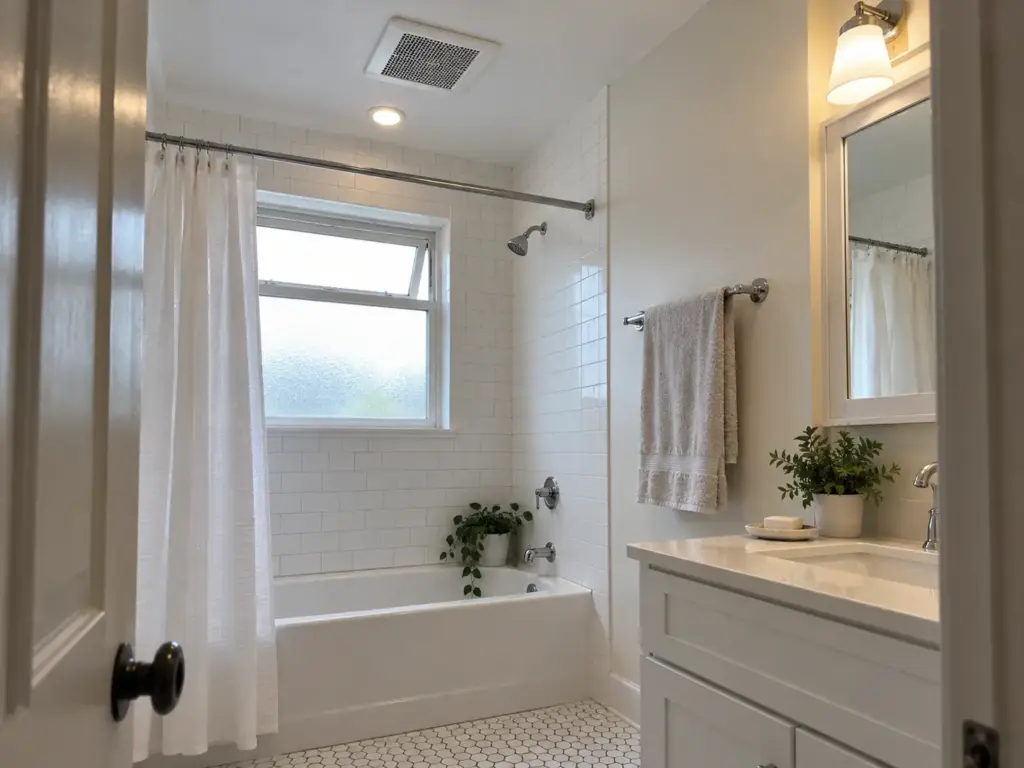
An Exhaust Fan or a Dryer Vent That Runs All Winter
A bathroom exhaust fan that runs every day, a kitchen hood that never stops and a dryer that vents through a cracked duct all send the house’s moisture outdoors. The rule from the shower section holds everywhere: the fan stays off right after a shower only when the reading is under 30 percent; otherwise it vents outside. To check fans and leaks first, start with how long they run and whether the make-up air is coming from a gap around the window.
Air Leaks and Drafts
A leaky house trades its inside air for dry winter air all day long. A blower-door test is the usual way to find air leaks. A strip of tissue held near a window frame or an outlet cover flutters where a draft comes through, and sealing one is worth more than a week of bowls.
The Dryer Exhaust Idea to Skip
Routing a clothes dryer’s exhaust into the house to add moisture is widely discouraged, and mold is the biggest risk.
Lint is the other. The EPA recommends venting dryers and stoves to the outside. The idea is a flaw, not a fix.
One Plate, One Reading, and a Check in a Week
Three things carry this article. Read the meter before you touch anything, and treat 30 to 50 percent as the target with 60 as the stop. Add water next to the heat first, and check the furnace unit before you buy a humidifier. Let the heating system choose the fix, and stop when the glass fogs.
The pillar on why indoor humidity is important explains where each of those numbers comes from, and if the next reading lands above the band instead, the dew-point reasoning behind why indoor humidity runs higher than outside tells you where the extra water came from.
A month from now, look at the bowls, the furnace pad and the humidifier tank. A film on the water, scale on the drip and a crust on the pad are the first signs of month two, and the meter will tell you the same thing a few days before you see it. For wet glass in particular, how to prevent condensation on windows is the next stop.
Tomorrow, move one plate to the radiator or check the furnace’s water feed, and read the meter across the room the following morning. Make that one change and no other.
Frequently Asked Questions
01How do I increase indoor humidity quickly?
The fastest free moves are a plate of water on the radiator and the bathroom door left open after a hot shower. A real change takes hours, not minutes, so read the meter again the next morning.
02Will a bowl of water humidify a room?
Yes, a bowl of water near a heat source adds moisture to a room, but slowly, and it needs a refill every day. No source gives a per-bowl figure, so mark the water line and read the meter.
03How do I humidify my house without a humidifier?
Put shallow bowls near radiators or floor vents, simmer a pot while the kitchen is occupied, dry laundry on a rack and leave the bath door open after a shower. If the house has a furnace humidifier, check its feed first.
04Why is my indoor humidity so low?
Heating the air lowers the percentage on the same amount of water, and the house may also be draining moisture through a fan or a leak. Check fans and leaks first before adding more water.
05What humidity should I stop at when I add moisture?
The EPA says to keep indoor humidity below 60 percent, ideally between 30 and 50 percent. Wet glass, walls or pipes mean you have passed the stop line, so cut the source.