
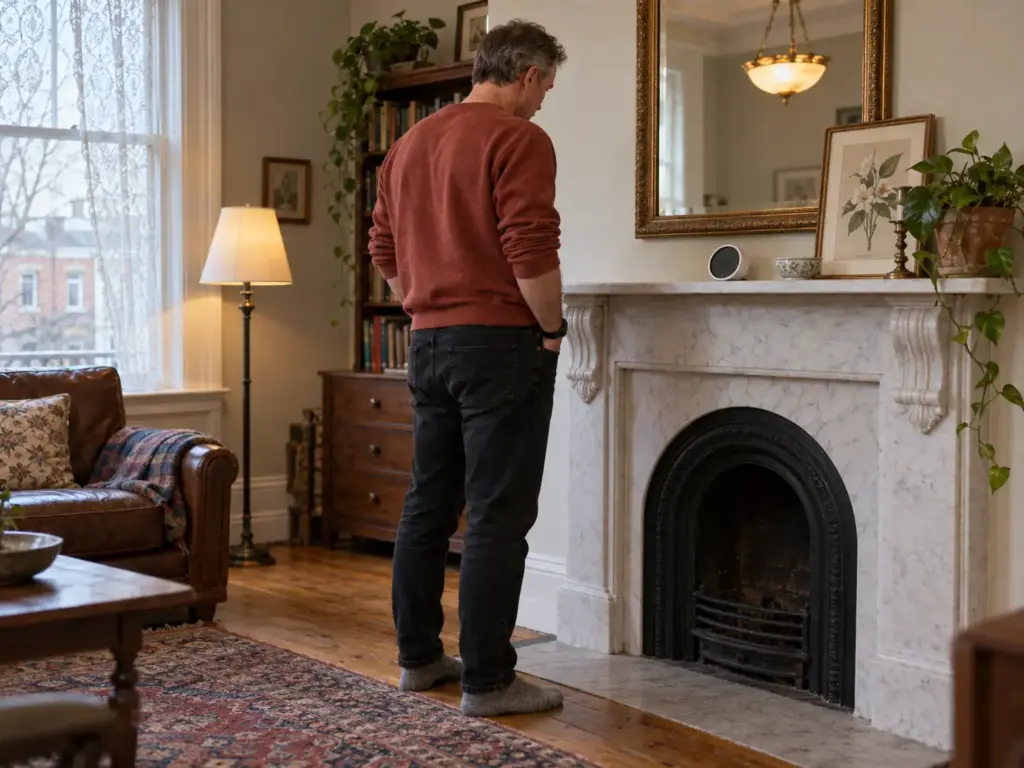
You glance at the little meter on the shelf and it says 52. The window next to it has fogged along its lower corners, and you cannot tell whether the number or the glass is the real problem.
The ideal indoor humidity levels printed for homes rarely agree past the first digit, which is why a reading like that feels like a verdict when it is only a position. Relative humidity is a share of what the air could hold, and air holds less as it cools, so the same moisture reads higher at the cold window than at the meter. This guide gives you the one number to aim for, shows how to read your room against it, says which way a reading is off, and lists the free changes that come before any device.
Quick Answer
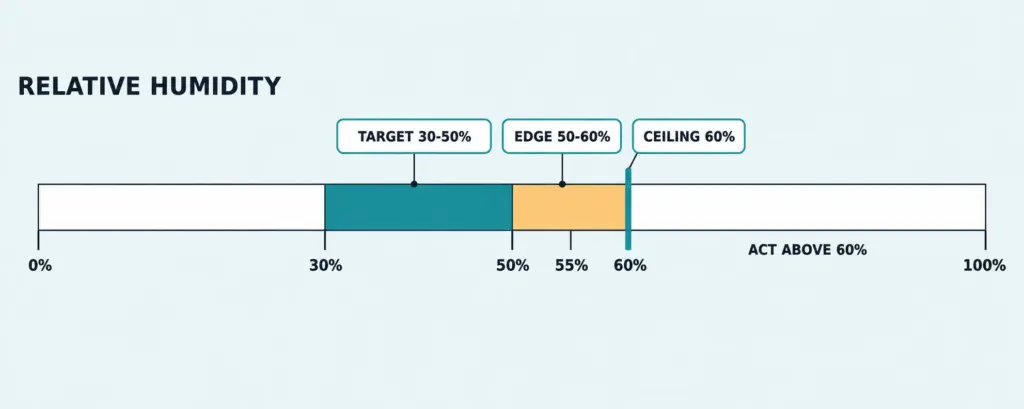
Keep indoor relative humidity below 60 percent, ideally between 30 and 50, which is the EPA’s range. That makes 50 the top of the target, not a problem. The signs that mean act are a reading above 60 or moisture collecting on windows and walls.
What the EPA Says Ideal Indoor Humidity Levels Are
A target for indoor humidity gets printed with a different number almost everywhere you look, and the numbers drift apart after the first digit. This section settles which one to trust before you measure anything, and what to do with a reading that falls between two of them.
The band: below 60 percent, ideally 30 to 50
The cleanest source is a public one. According to the EPA’s brief guide to mold and moisture in the home, “If possible, keep indoor humidity below 60 percent (ideally between 30 and 50 percent) relative humidity.”
That is one humidity band from one institution, with a ceiling and a humidity target inside it. The ceiling is the number the house cares about. The target, 30 to 50 percent, is where most people are comfortable.
Why 50 sits at the top of the target, not past it
In humid weather an air conditioner often holds a house a few points above the 50 percent most guides give as the top end. Whether that is a problem depends on the other signs. Owners in humid climates often consider that range fine, and trouble usually starts above 60 percent. They had the logic right. Fifty is the upper edge of ideal and sixty is the line to act on, so a reading of 50, or even 54, is not an emergency.
What to do when a home-comfort guide prints a different number
Some guides set the summer humidity ceiling lower than the EPA does and some set it higher, and a few attach a standards group’s name to a range without saying which edition. Take the EPA band and treat anything between 50 and 60 as the edge of it, not a failure. At the edge, let the glass decide (more on that in a moment) before you reach for a device.
The band also moves with the weather, because a cold week lowers the winter humidity a house can tolerate, which is the subject of indoor humidity levels by outdoor temperature. One more reason to treat a reading as a position rather than a verdict: the same house reads higher on a muggy week and lower on a cold one. A single number tells you where you are today, nothing more.
Reading the Number in the Room You Actually Sit In
A band only helps if you have a reading, and a reading depends on the meter and the spot where it sits. This section covers the basics, and the full method lives in its own article.
Why a cheap hygrometer is enough to start
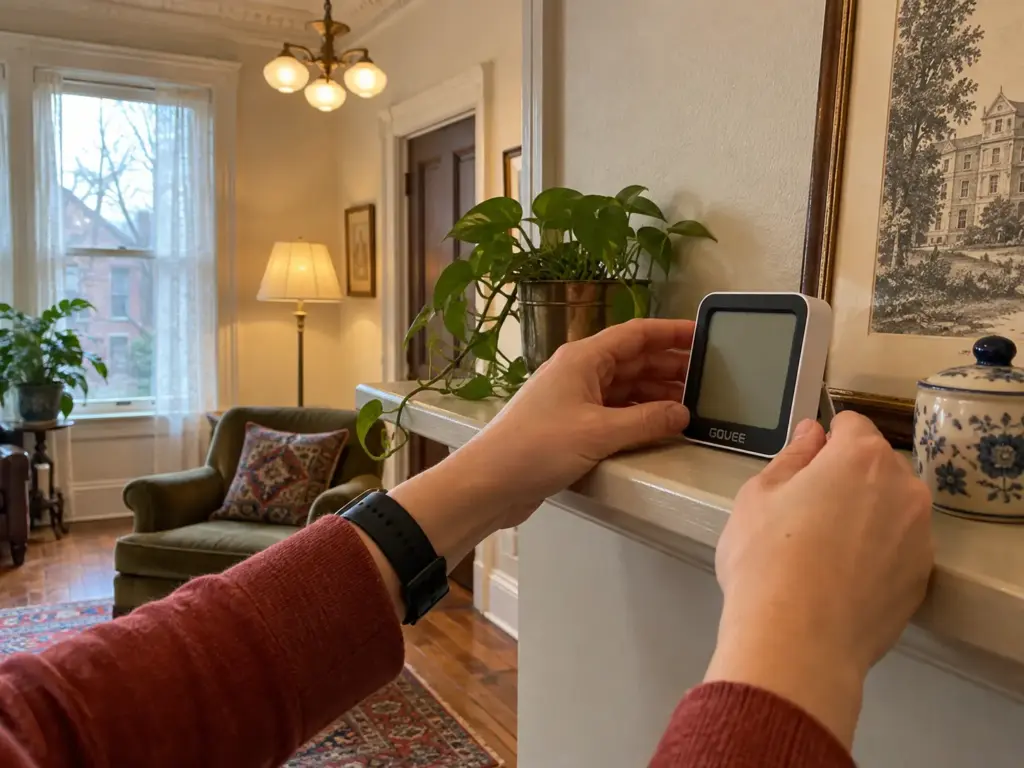
The EPA calls a humidity meter a small, inexpensive instrument sold at many hardware stores, and it costs far less than any device you might buy to change the number. That makes it the first purchase, since it settles the question every other purchase depends on.
If you want a unit that keeps a record, the Govee H5051 reads humidity and temperature over Wi-Fi and Bluetooth on a round LCD, and its app stores up to two years of data, refreshing every 10 or 30 minutes. In Bob Vila’s hygrometer test it came out closest to perfectly calibrated on arrival. The two-year log is what separates a seasonal climb from a unit that is simply off. The one catch worth stating is that logging runs through the app and a Wi-Fi network, and the test printed no complaint about the unit itself.
A plainer, cheaper option is the AcuRite 00613. For help choosing, there is a guide to a cheap indoor humidity level checker and how to trust it.
Where it goes and where it lies
The room around the meter changes what it says. A shelf on the window side is colder, so it reads higher, and a shelf near the bathroom door is damper than the rest of the room. Put it where people sit, at shoulder height, off the exterior wall.
A house that reads very high right after a move deserves a look at the fans and the leaks before anything else. When a number looks wrong, the useful question is where the meter is standing before it is whether the meter is broken. The reading that stays put for hours in the same spot is the one to believe. For the full routine, see how to measure indoor humidity at home.
How far to trust the last digit
A hygrometer is a rated instrument, and its rating is a margin. The Govee H5075 is the simpler of the two: Bluetooth to your phone within 196 feet, updating every 2 seconds, rated at 3 percent relative humidity and 0.5 °F (about 0.3 °C). Read that 3 as the honest margin, so a true 50 can show anywhere from 47 to 53, and a one-point gap between two units means nothing. The rating is the only limit to mention, since no repeated complaint turned up and nothing here claims the unit drifts over time.
Which Way Your Reading Is Off
Once you have a number, the next question is the direction. Too damp and too dry call for opposite changes, and a wrong guess makes the room worse, so read the direction first.
| Reading | Points to | First move |
|---|---|---|
| Below 30% | Dry air: static shocks, shrinking trim | Check the heating season setting before buying anything |
| 30% to 50% | Inside the ideal band | Leave it, and check the glass on the coldest morning |
| 50% to 60% | The edge of the band | Look at the windows; run the bath fan a few minutes longer if they fog |
| Above 60% | Damp: the EPA’s line to act | Work through the free fixes in order, reading the meter after each |
Above 60: the damp side
This is the side the EPA tells you to act on, and the first moves are free. Look for moisture on the glass, run the bath fan, open a window for a few minutes. A dehumidifier is not the first move, and the order is spelled out further down.

Below 30: the dry side
Dry air shows up as static shocks, gaps opening between the boards of a wood floor, and trim that shrinks away from the wall. The fixes belong to a separate article on whether indoor humidity can be too low, and the one rule to carry from here is that you never run a humidifier on a damp house or a dehumidifier on a dry one.
Between 30 and 60: the middle, and what the glass adds
A house can sit in the middle on the meter and still fog the glass on the coldest mornings, so the direction is read from both the number and the window. The bedroom is its own question, with its own target, covered in what humidity is right for a bedroom.
The Glass Tells You When the Number Is Too High Today
The meter reads the middle of the room. The window reads the coldest surface in it, and the coldest surface is where moisture shows first.
Why the coldest surface goes first
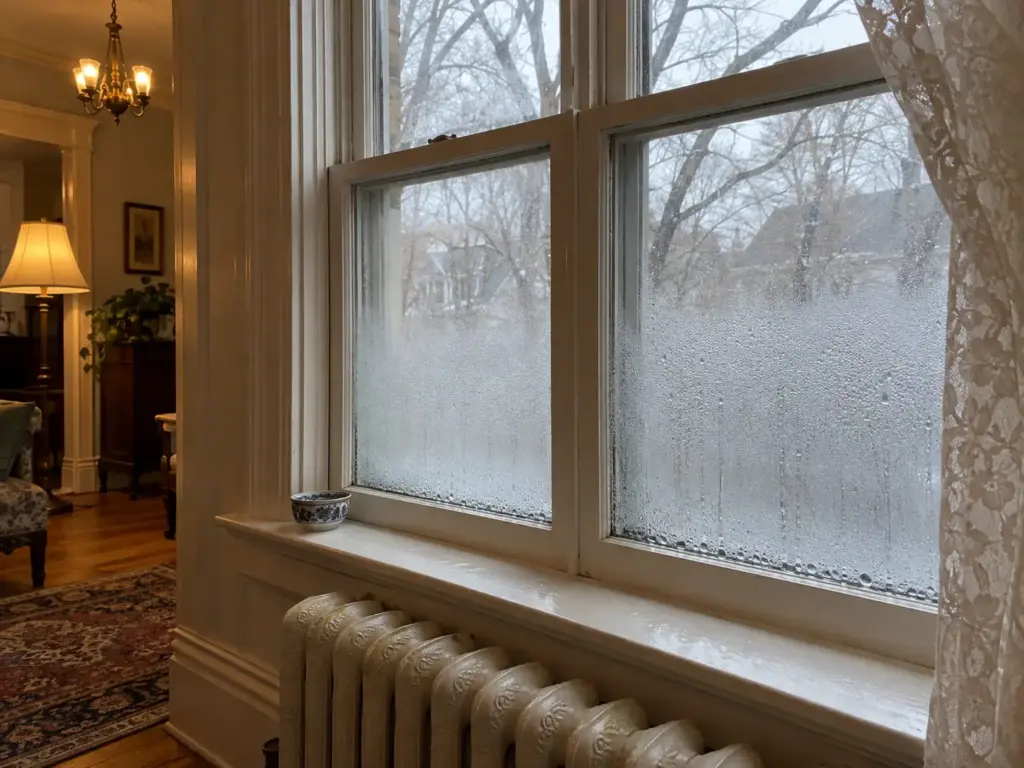
The EPA’s cue is direct: “If you see condensation or moisture collecting on windows, walls or pipes,” act quickly to dry the surface and cut the moisture source. The mechanism is simple. Warm room air touches cold glass, cools until it can no longer hold all its moisture, and leaves the surplus on the pane. It is the same air that looked fine at the meter.
What a film or beads along the lower edge mean
Fog on glass starts at the lower corners, where the pane is coldest, long before the middle of the glass shows anything. A thin film that clears by midday is a milder sign than beads that gather and run to the sill, and the full answer on whether either is normal is in is condensation on your windows normal. Treat beads as the house telling you the number is too high for this weather.
Why the same reading is fine in October and too high in January
Cold moves the ceiling. The colder it gets outside, the lower the indoor number the glass can tolerate, so a 48 that was fine in the fall can fog the windows in a hard freeze.
A single band for the whole year cannot show that, which is how a reader at 48 ends up with wet sills and a meter that says everything is fine. The reason is the dew point: the colder the pane, the lower the humidity at which room air starts dropping its moisture there. When the glass starts to sweat, lower the number a few points and watch the pane. If it keeps happening, the next step is how to prevent condensation on windows.
Why 60 Is the Line a House Cares About
The ceiling is not a cliff. It is the point where the coldest wall, pipe or window frame starts collecting moisture that stays.
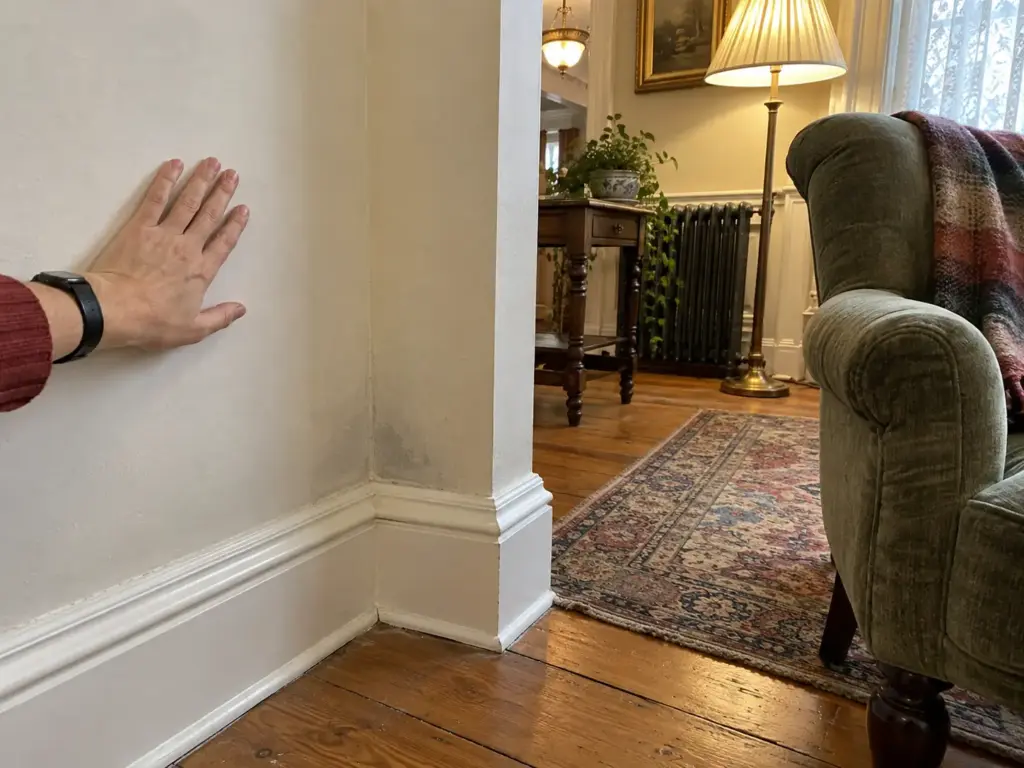
What happens first at the coldest wall
Moisture on cold surfaces is the whole story on the building side, and a cold wall is the first place it settles. The EPA’s guide is about mold and moisture in the home for that reason.
Above 60 percent, mold problems start to appear. Mold here is a building matter, a surface that stays wet. Nothing in this guide is about what it does to a person.
Why a reading of 55 can still leave a damp corner
A single meter in the middle of a room under-reads a cold corner. The corner behind a chair pushed against an outside wall stays colder and stiller than the open room, so it feels the problem first and shows it last. The number that counts for the building is the one at the coldest surface, which is what the glass already told you.
And the line is 60, not 50. Do not turn the top of the ideal band into a panic.
The Free Fixes, in Order, With a Re-Read Between Each
If the reading or the glass says the house is damp, the changes go in a fixed order, free and likeliest first, and you read the meter again before the next one. Never three changes at once: you would not know which one worked.

Vent the moisture makers outside: bath fan longer, dryer to the outdoors
First change: send moisture outdoors. The EPA says to vent appliances that produce moisture, such as clothes dryers and stoves, to the outside where possible, so check where the dryer vent actually ends. Run the bathroom fan after the shower until the mirror clears, then read the meter the next evening. Not for an hour, though.
Exhaust fans and the dryer pull replacement air in through leaks, so a fan left running too long can swap one problem for another. A fan that sounds fine can also be moving little air if the flap is stuck or the duct is crushed. A replacement fan installed without its backdraft flap lets outside air in all the time.
The window in the shoulder season
Second change: in spring and fall the AC runs little, outdoor air is humid, and the number drifts up. A window opened for a few minutes can swap damp room air for drier air outside, when the outside is actually drier. Check, open for a short stretch, close it, and read again.
The air conditioner’s fan on auto, not on
Third change: look at the fan setting. When a house reads very high, the first check is whether the fan is set to auto or left on all the time. The reasoning is the usual one: a fan left on keeps moving air after the cooling cycle ends and can carry moisture off the wet coil back into the room. Set it to auto and leave it a day.
Portable dehumidifiers can bring a house down to the low 60s and still leave it above the EPA’s line. Free fixes lower the number, but they do not always finish the job. If yours do not, the full list is in how to lower humidity at home.
Set the air conditioner’s fan to auto and read the meter the next evening before you touch anything else. If the number moved, you found the cause for free. If it did not, you ruled one out and can move to the bath fan with a fixed baseline.
When One Window Unit Is All You Have
Most advice assumes ducts and a whole-house system. Plenty of readers have a window air conditioner, a radiator or a rental, and the fixes look different there.

What a window unit does to the number, and what it cannot
A window unit pulls some moisture out of the air as it cools, but only while it is cooling. On a mild damp day it runs little, so the number climbs. The climb comes in the hours after it cycles off, not while it runs.
The numbers get better with effort, and the building can undo them.
Why the windows themselves can pull damp air in
Every exhaust fan and the dryer push air out of the house. That leaves the house at a slightly negative pressure compared with outside, and the replacement air arrives through the leaks, often through old windows.
If you run the bath fan and the dryer and the house still reads damp, the air leakage is the likely path for the damp air. A leaky window is a building cause, not a settings cause. Weatherstripping is a modest fix and a tighter window is a larger one, and neither is a reason to buy anything before you have read the meter after the earlier changes.
When a Device Is the Answer
Some houses need a machine: a dry house in a heating season, or a damp one the free fixes did not finish. The device follows the direction, not the other way around.
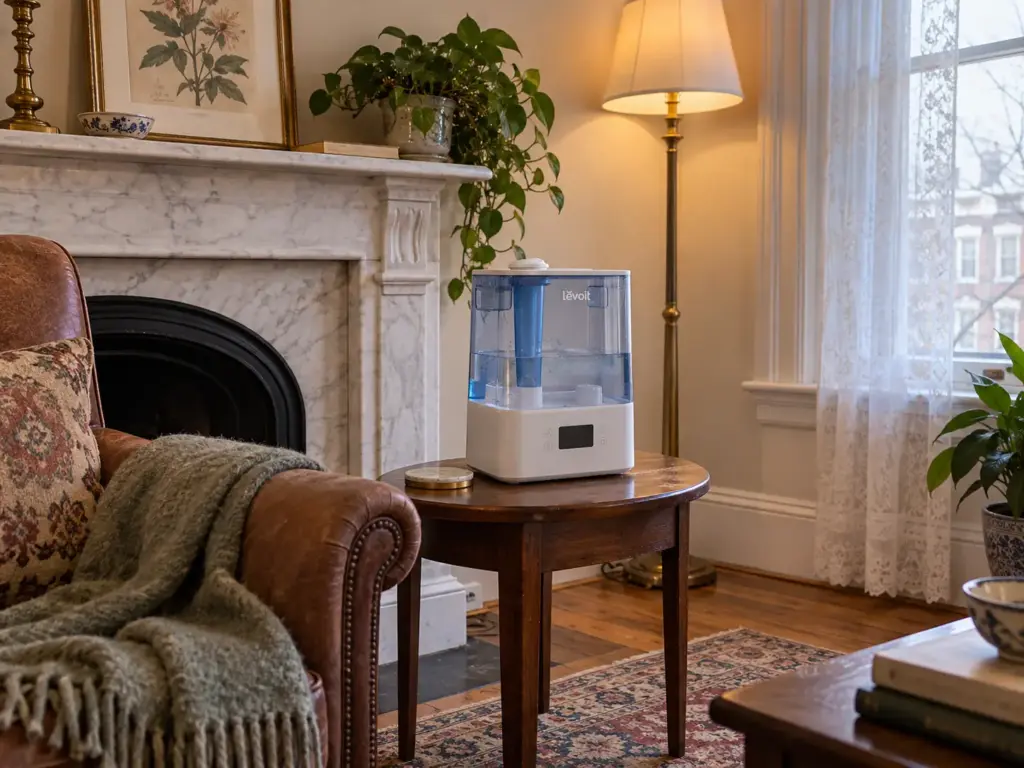
The dry side: a humidifier with its own humidistat
If the house really sits under the band after the free fixes, a humidifier with a built-in humidistat holds a target without a timer. The Levoit Classic 300S is a top-fill ultrasonic unit with a 6.8 L (1.8 gal) usable tank and a humidistat, and its automatic mode holds between 40 and 50 percent by default, according to RTINGS. It is a room unit, not a whole-house system.
RTINGS describes it as a bit of a hassle to clean, and none of the parts are dishwasher-safe, which is how a humidifier loses its place on the nightstand by month two. Set it too high and the window fogs, so keep an eye on the glass. If you read the meter by hand, a humidifier with no humidistat does the same job.
The damp side: why a dehumidifier waits for its own article
No dehumidifier gets a recommendation here. If the free fixes did not finish the job, the next question is which size and which features, covered in dehumidifiers for damp spaces and what to look for before you buy.
Checking the Meter Again in Month Three
Week one lies. A meter that agreed with the room in October does not have to agree with it in January, so the last step is a second look, not a purchase.
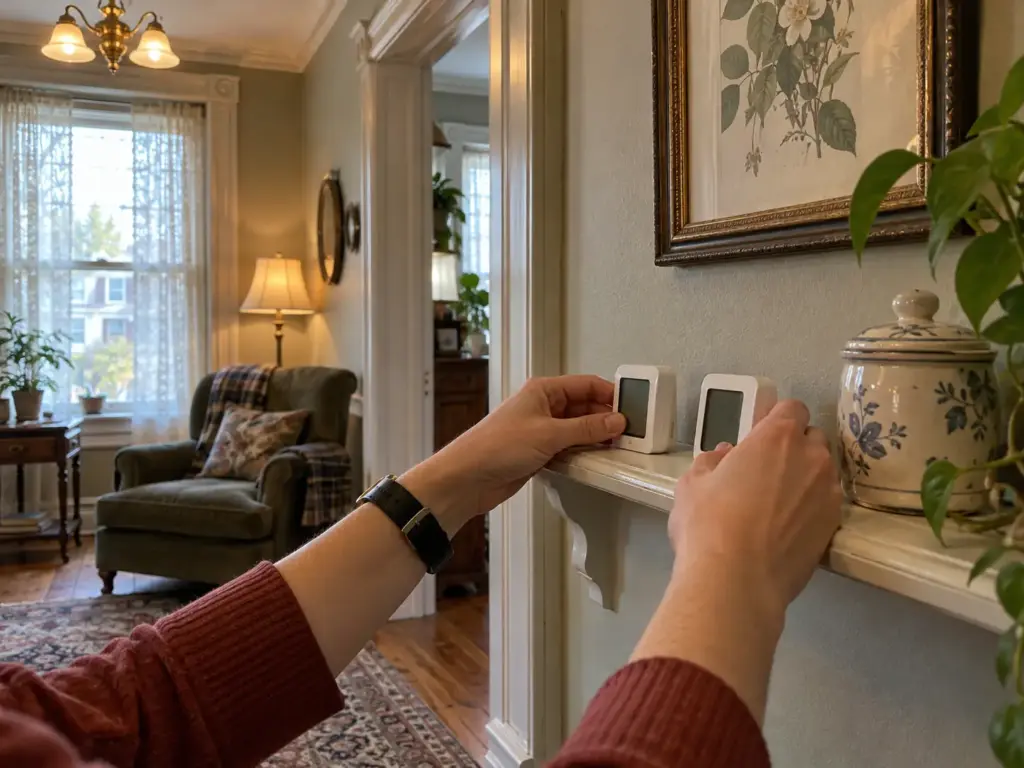
Put two meters side by side before trusting either
Set a second meter beside the first, in the same spot, for a day. A difference of a few points is the rated margin. A bigger gap is a reason to doubt one of them.
A reading that moved eight points between two shelves says more about the shelves than the meters. A meter moved from a shelf to a windowsill reads differently the same day, so the shelf is the baseline. How accurate these things are in general is the subject of are air quality monitors accurate.
What the seasonal climb looks like in the log
A unit that keeps a record, like the H5051 with its two-year history, shows the climb across a season instead of a one-day snapshot. That is what tells you whether a number is the house or the meter. Check the humidifier’s tank and the AC’s filter the same day, since both get worse with time.
Put both meters on the same shelf for a day before deciding which one to believe. If they agree within the rated margin, the room is the story. If they differ by more, move the odd one out to a third spot and compare again.
When the Number Will Not Come Down
If the free fixes are done and the reading, or the glass, still says damp, the cause is probably the building, not the settings.
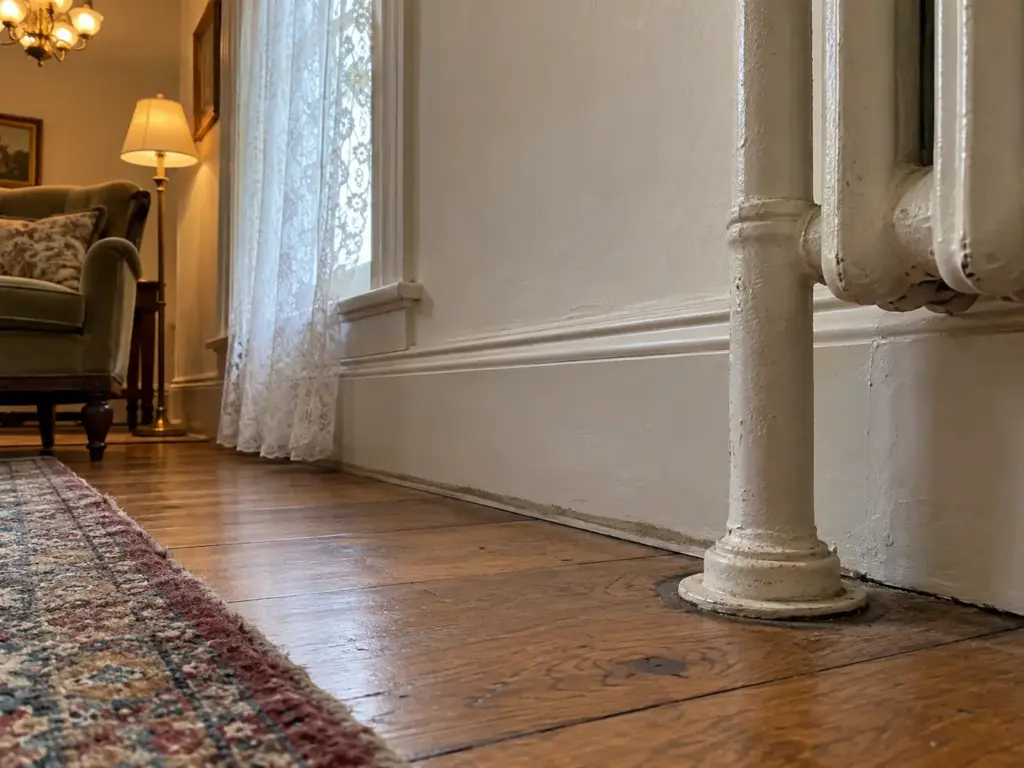
Signs the water is coming from somewhere else
A reading that stays above the line after the earlier changes points at the house: a roof or plumbing leak, ground water, a crawl space or basement, a bath duct that vents into the attic. The room that never drops under the line while the rest of the house does is the room to look at first. In one house, the worst culprits turned out to be leaky bedroom windows and a bath fan with no backdraft flap, found by elimination. Checking each leak in turn is the way to find them.
A basement or cold concrete wall reads differently from the living room, which is why there is a guide to a basement humidity sensor for cold concrete walls. And a monitor cannot see mold, a limit explained in an air quality monitor for mold and what it can’t see.
Who to call (a building professional, for the house)
When the cause is the building, the person to call is a licensed building or HVAC professional who can trace where the water comes from. That is a question about the house, and the meter and the weather notes below make the visit shorter.
Write down the reading and the weather on the same day for a week before calling anyone. A professional who starts from seven days of data finds the pattern faster than one who starts from a guess.
Tomorrow: One Change, Then One Reading
Three things to carry out of this guide. The band is below 60 percent, ideally 30 to 50, so 50 is the top of the target and not too high. The glass tells you when a reading inside the band is still too high for this weather. And the changes go in order, free first, with a re-read between each.
Look again next season at the meter and at the glass on the coldest morning of the year, because the number that was fine in October is the one that moves. For tomorrow, make one change: set the AC fan to auto, or run the bath fan a few minutes longer. Read the meter the evening after, and only then decide on the next move. If you want a routine for that reading, start with how to measure indoor humidity at home.
Frequently Asked Questions
01Is 50% indoor humidity too high?
No. Fifty percent is the top of the EPA’s ideal range of 30 to 50. The line to act on is above 60 percent, or moisture collecting on windows and walls.
02Is 65% humidity in a house too high?
Yes, it sits above the EPA’s 60 percent ceiling. Check the glass and the coldest corner, then work through the free fixes in order, reading the meter again after each.
03Is a humidity of 55 considered good or bad?
Neither: 55 sits between the ideal band and the 60 ceiling, so it is the edge. Look at the glass; if it stays clear, leave it, and if it fogs, start with the bath fan.
04Is 70% humidity too high for a bedroom?
It is well above 60, so yes, for any room of the house. Read a second meter in the room, then follow the order of fixes before buying a device.