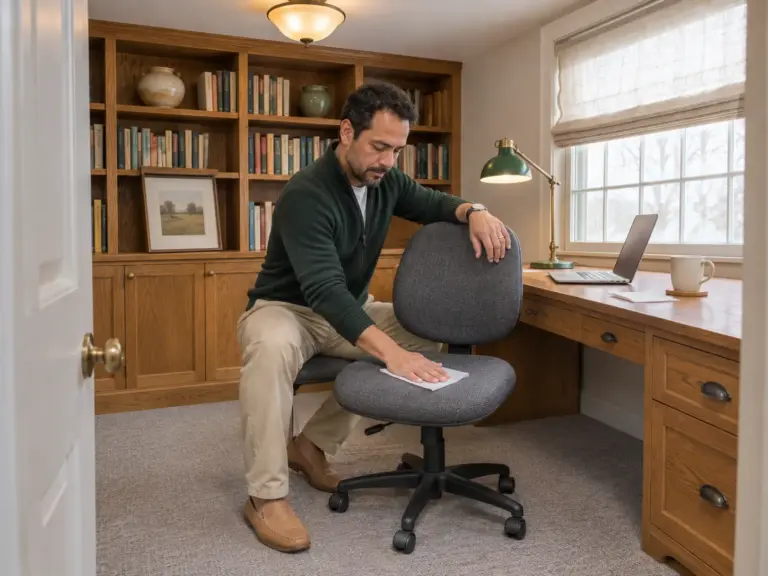
Most of what is sold for static changes how the zap feels, not whether it happens, which is why the best products to stop static shocks indoors begin with a reading of the room instead of a cart. Charge builds when two unlike surfaces separate (the triboelectric effect: a sock lifting off a carpet, a sweater leaving a shirt), and dry air lets that charge sit on you until a metal handle gives it somewhere to go. Humidity is the dial that decides how long it sits.
This page reads the room first, then the one purchase that moves the number, then the laundry ball that moves only the laundry, and finally the products that cover a surface and stop there. The full account of where the charge comes from and how to lower it sits one level up.
Quick Answer
Touch metal with a key before your fingers do, then read the room’s humidity. Under 30 percent, a room humidifier is the one purchase that changes the number. Wool dryer balls, anti-static sprays and dryer sheets change the laundry or one surface, and a wrist strap does nothing at home unless its cord reaches a real ground.
Read the Meter Before You Buy a Product to Stop Static Shocks Indoors
Every product below leans on one number you can read tonight. The person zapped at the same door handle every cold week has usually never checked what that room reads, so the purchase question starts life as a measuring question. The band comes first, then the meter that reads it, then the move that costs nothing.

Where the Room Should Sit
The reference is the public one. According to the EPA’s mold course, “Indoor relative humidity (RH) should be kept below 60 percent — ideally between 30 percent and 50 percent, if possible.” A room that reads well under 30 percent on a dry winter evening sits below that humidity band, and the charge has little moisture to leak away through. A room already inside the band leaves a humidifier little to do; the carpet, the leather soles of your shoes and synthetic fibers are the more likely source.
A Hygrometer Is the First Thing to Buy, If It Is Anything
The AcuRite 00613 Indoor Thermometer Hygrometer reads 16 to 98 percent relative humidity on one AA battery, so the whole EPA band, and everything on both sides of it, shows on the display. It turns the first decision from a feeling into a figure, and three readings, one meter covers how to place it and when to believe it. A room with no meter at all needs this one before it needs anything else on this page.
The listing prints no sensor accuracy, which is the unit’s flaw in writing. A few points either way matters when the question is whether the room sits at 28 or 32 percent, so set it beside a second reading from a cheap humidity checker for an hour. If the two agree within a few points, trust either. If they split by ten, neither number should decide a purchase.
Keep the meter off the shelf next to the radiator and away from the window. A heat source dries the air right around the sensor, and the number comes out lower than the room’s. Put it at chest height on an interior wall, in the room where the zap happens.
The Free Move: Touch Metal With a Key First
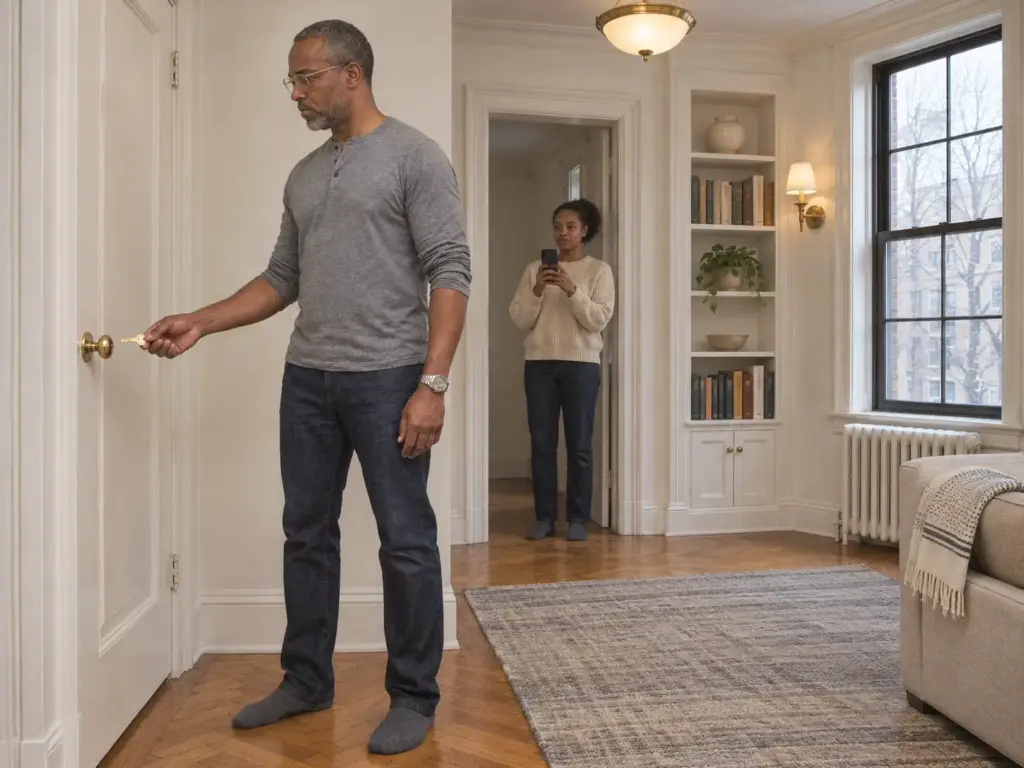
Hold a key or a coin and touch it to the metal handle before your knuckles or fingertips get there. The spark jumps between the key and the handle, away from your skin, and it costs nothing. Fabric matters too: cotton against your skin carries less charge than polyester or nylon, so swapping the synthetic layer nearest you for cotton for a week is a fair test. If the same door still bites after that, the clothing was not the source, and the meter has the next word.
The Humidifier Is the One Product That Changes the Number
Of everything sold for static, a machine that puts water into the air is the only item that moves the room’s reading, and that reading is what the whole problem hangs on. It also asks for care that a laundry ball never will, so the flaw belongs next to the recommendation. An evaporative humidifier is the other family, and the choice between machines lives in which humidifier fits the room you have; this section names a single ultrasonic humidifier.

Why This Is the Product That Works on the Room
The Levoit Classic 300S Ultrasonic Smart Humidifier is an ultrasonic, top-fill unit with a 6-liter tank (about 1.6 gallons), built for a single room. It is the one machine this page recommends for a bedroom or a home-office corner with a door that stays shut, and only when the meter says the room is under 30 percent. Inside the band, it adds water to air that does not need it.
The Tank, the Refill and the Hours It Really Runs
In CNN Underscored’s humidifier test, the 6-liter tank lasted about 39 hours on low, a day and a half. On a higher setting the tank empties sooner, and the refill becomes the chore that decides whether the product works. The room that nobody refills is the room that is dry again within days, and the tank also needs a regular rinse.
Fill the tank before the evening and pick one day for the rinse. A refill that depends on remembering gets skipped in the first cold snap, and the meter drifts back under 30 percent without announcing it.
Why One Room, and Where to Read the Glass
A 6-liter unit is sized for one room with the door shut. Leave the door open to a hallway and the moisture spreads into a volume the tank was never meant to cover, and the meter in the bedroom barely moves. After a night of running, the reading should climb toward the band. If it sits at the same figure, the room is losing moisture as fast as the unit adds it, and what is pulling the number down is a different question from which machine to buy.
The overshoot shows on the window before it shows on the meter. If the glass beads with water, the room is wetter than that cold pane can take, and the setting comes down a step. And if nothing is plugged in yet, you can raise the humidity without a machine first and see how far the number travels.
Wool Dryer Balls Change the Laundry Load, Not the Room
After the machine that changes the room comes the cheaper product that changes only what comes out of the dryer, and the change is small. The sweater that crackles as it leaves the drum and clings to a shirt is the target. A set of dryer balls does something about that, only less than the packaging suggests.
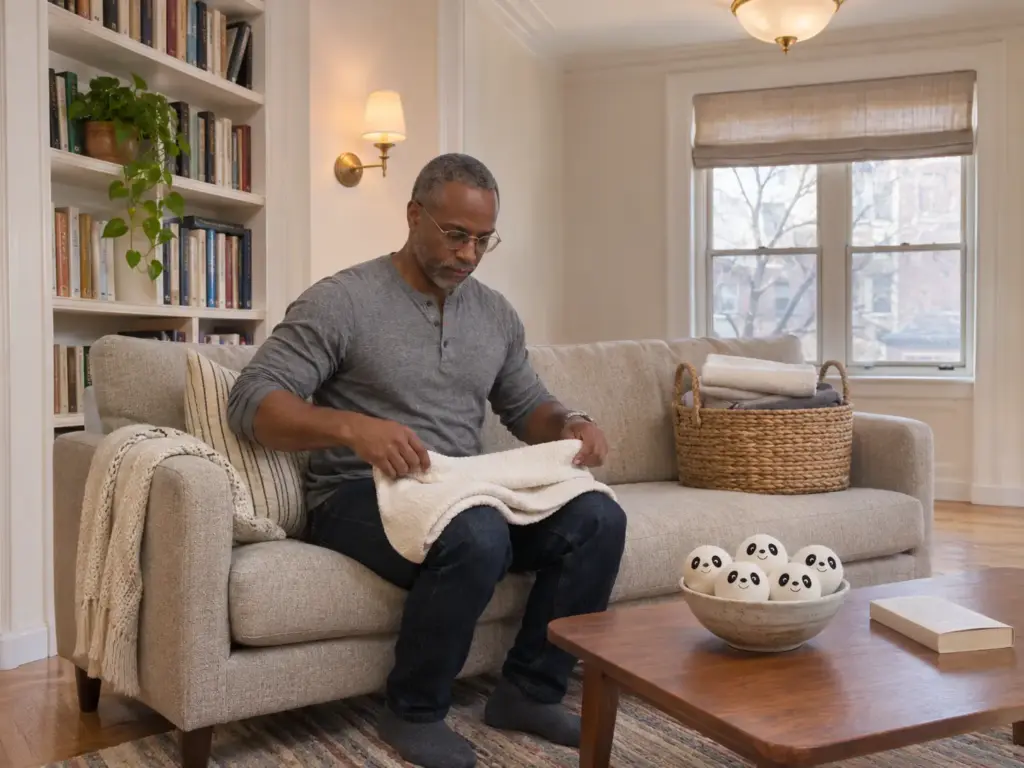
A pack of six wool dryer balls separates the load as it tumbles. TechTRP’s 2025 test found that static cling dropped from four instances per load to three. That is not dramatic, and a sweater that clings still clings.
The measurable job is drying time: down about 14 percent in the same test, roughly six minutes per load. The listing’s claim of 1000+ loads is the seller’s number, not a test result. A damp rag tossed in with the load is the free version of the same idea, and worth trying first.
The ball earns its place in the dryer anyway, because it keeps working in month two and asks nothing. It does nothing for the rug or the chair, which are different charge sources, and it does nothing for the door handle. Buy it for the shorter drying cycle and treat the lower cling as a small bonus.
What Sprays, Dryer Sheets and Wrist Straps Only Cover Up
Three more products are sold for static, and each acts on a surface or a person instead of on the room. This section says which surface each one touches and where it runs out. None of the three is a recommendation: they are categories, listed without a brand and without a link, because each has the same flaw whatever the label says.
Anti-Static Spray and Fabric Spray: A Coating That Wears
An anti-static or fabric softener spray leaves a thin coat on whatever it lands on, such as a sofa throw or a carpet, and the coat wears off after the next wash or the next dry day. The carpet needs redoing, and so does the throw. On hard flooring the residue is the first thing you notice in week two, as a slight film underfoot. A homemade mix of liquid fabric softener and water follows the same logic and does not suit every fabric; test it on a hidden patch before it goes on anything you care about.
The Dryer Sheet: Laundry, and the Coat Pocket
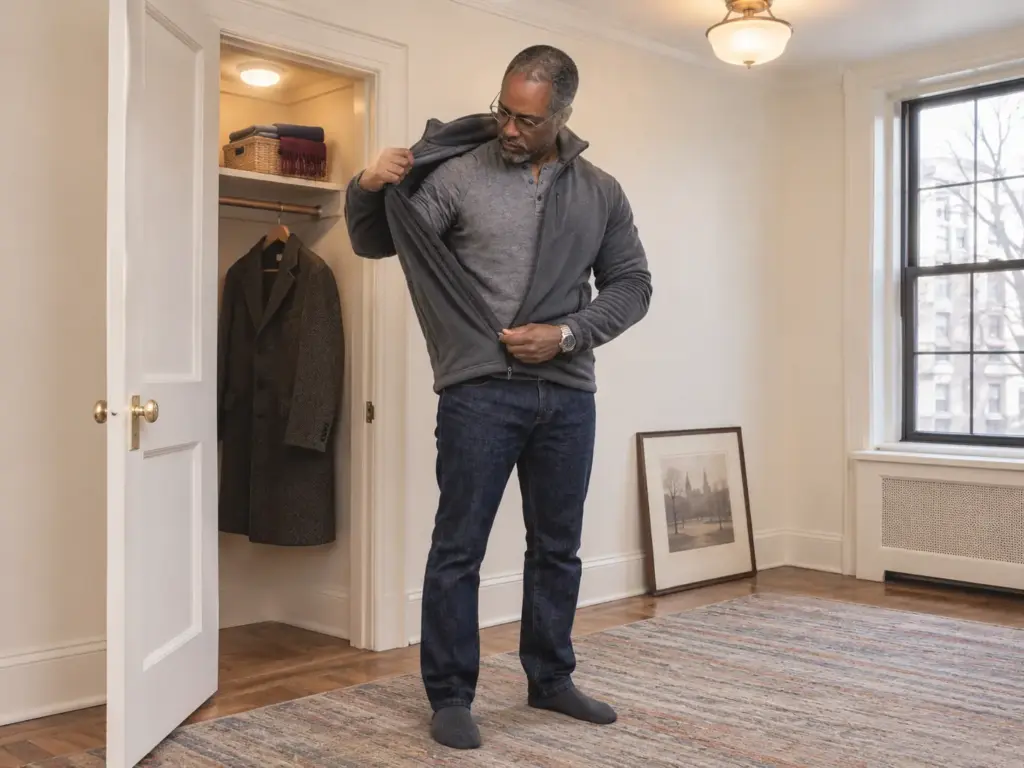
A dryer sheet works on the load it tumbles with. Carried in a coat pocket it helps that one coat, one more layer between the fabric and the dry air. It is a reasonable patch for a single stubborn jacket, and it leaves the door handle and the carpet exactly as they were.
The Wrist Strap: Only With a Real Ground
An anti-static wrist strap drains charge only to a real ground. Worn at home with its cord plugged into nothing, it does nothing, and the false sense of safety is its worst feature. It is a tool for a bench built with a ground point, and the strap’s own instructions are the only guide to connecting it; an improvised connection at home is never the answer.
A grounding mat or ESD mat under a desk chair follows the same rule: without a real ground behind it, it is just a mat.
Match Each Product to the Thing That Shocks You
With every product named, the useful question is which one goes with which source. The door handle, the chair, the rug, the bed and the sweater each deliver a shock for a different reason, and the table below lines the product up against the source instead of against a price.
| Charge source | What changes it | What it only covers | Where it fails |
|---|---|---|---|
| Door handle and metal furniture | A key or coin touched to the metal first | Nothing on the market replaces the key touch | It lowers the sting, not the charge on you |
| The room’s dry air | The meter, then a room humidifier | Nothing else changes the room’s reading | Tank refills and regular rinsing |
| Sweaters and sheets | Wool dryer balls, a little | Dryer sheet, fabric spray | Cling drops from four to three per load |
| Carpet and chair | The humidifier, for real | Spray, redone often | Spray wears off and leaves a film |
| The desk | A wrist strap, only with a real ground | Nothing | Does nothing plugged into nothing |
Two rows move the number: the humidifier and the meter that tells you whether to buy one. The rest change the feel or one surface, and a reading under the band is the sign to look at when the room really is too low before deciding which row applies.

What Each Product Still Does in Month Two
Week one flatters everything on this page. The relevant question is which product is still doing its job a month later, and which has become a chore.
The Ones That Keep Working Without Asking Anything
The dryer ball keeps working and wants nothing from you. The key in your pocket does the same, and so does a cotton layer where a synthetic one used to be. None of them moves the room, but none of them needs a Sunday.
The Ones That Need Redoing
Spray on a carpet needs redoing every time the carpet is walked or cleaned. The humidifier asks for its refill rhythm and its regular rinse. The meter needs a second meter exactly once, to confirm it reads straight. These are the ones that drift, and a drift you do not look for is how a room ends up dry again with a full set of purchases on the shelf.
Write the meter’s number on a sticky note by the door that zaps, with a tick for every day it zapped. Two weeks of numbers show whether the humidifier is moving the reading or only moving water.
Reading the Room Again
Once the humidifier has run for a while, read the meter in the same spot. Inside the band, the room is doing its part. Below it, the cause is the building rather than the product: a fan, a leak or a window that will not seal. And when the room reads inside the band but the zap continues at the same door, the shoes, the rug or the clothes are carrying the charge, not the air.
The reading also shifts with the weather. Why the reading drops as the weather turns cold is the next thing to check, because a room that sat inside the band in October can sit well under it in January with no change to a single product.
The Reading Comes Before the Purchase and Again After It
Read the room first. A figure under 30 percent says a humidifier will help; a figure inside the band says the clothes and the surfaces are the source, and no machine will fix that. The dryer ball changes the dryer and a little of the cling, and the sprays, the sheets and the strap cover a surface or do nothing at all.
For later, check two things after the humidifier has run for a couple of weeks: the second reading of the meter, and whether the tank’s refill rhythm is still one you keep. A purchase that depends on a chore you have stopped doing is not working, whatever the label says.
Tomorrow, take the meter reading away from the radiator and the window, and touch a key to the metal before your fingers do. Then buy only what the number asks for, and read it again.
Frequently Asked Questions
01How do I stop static shocks at home?
Touch metal with a key first, then read the room’s humidity against the EPA band of 30 to 50 percent. If the reading is under 30 percent, a room humidifier is the product that raises it. Fabric products only treat clothes.
02What is the best anti-static spray?
No spray changes the room’s humidity; each one only coats the fabric or carpet it lands on, then wears off. Treat a spray as a short fix for one surface, not as a purchase to rely on.
03How do I ground myself from static electricity?
Touch a metal key or coin to a metal object before your fingers do. A wrist strap works only when its cord is connected to a real ground, and improvising that connection at home is not advised.
04Why am I getting shocked by everything I touch at home?
Dry air lets charge stay on you until a metal object gives it somewhere to go. Wool socks, synthetic clothes and carpet add more charge, so a room under 30 percent humidity shocks most.
05Do wool dryer balls stop static?
Only a little. In one 2025 test, static cling per load dropped from four instances to three, and drying time fell about 14 percent. They treat the laundry, not the room.