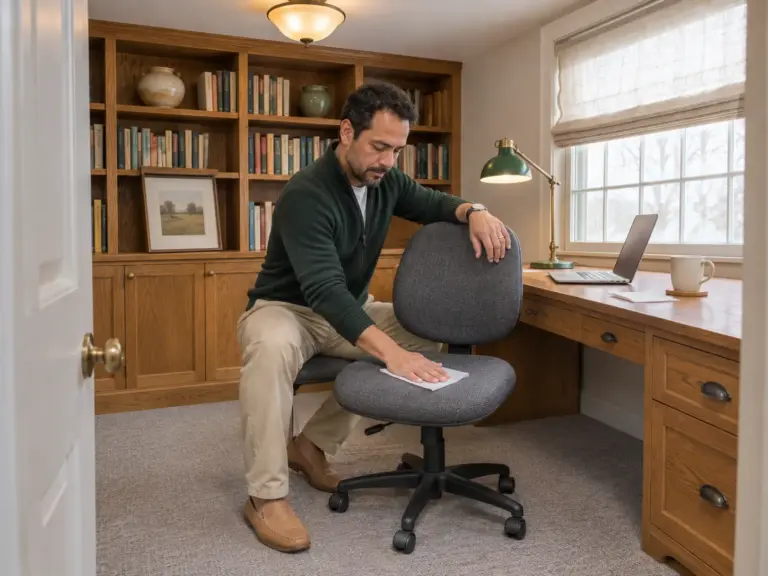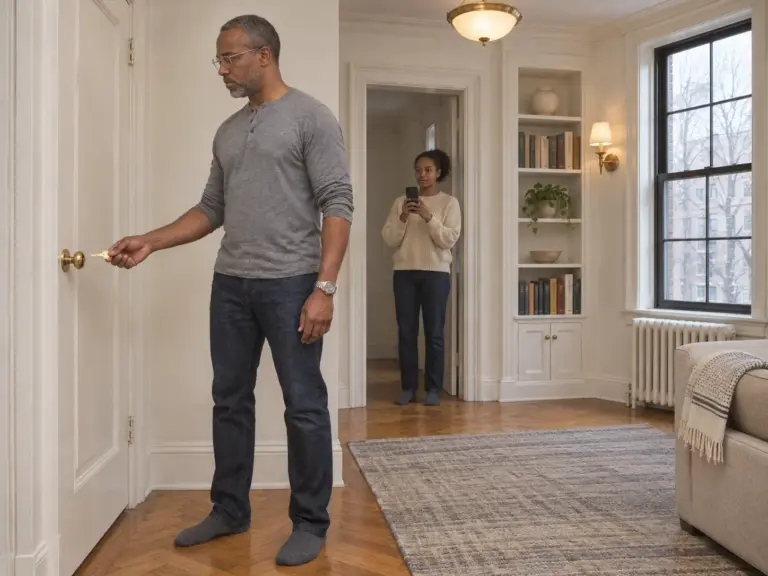
You come in from the cold, the forced-air heat has been running all night, and the first metal doorknob you touch snaps at your hand, then the lamp switch does the same. Does a humidifier work on static shocks indoors? It does, with a condition that is a reading: the room’s relative humidity has to reach 30 percent and stay there.
Heated winter air holds the same water it held outside but reads far drier, and a shock is charge looking for the water film that dry air never lets form on surfaces. What static does to a person is a question for a doctor, and this page leaves it there; it covers what the air in the room does and what a unit changes.
Free fixes come first, then the units, the room where a unit cannot get there, and the tingle that is not static at all, with the full routine for stopping static shocks indoors covering the whole-house version this page does not repeat.
Quick Answer
Yes, but only where the humidifier lifts the room’s relative humidity into the EPA’s 30 to 50 percent band and holds it there. A unit running in a room that stays in the teens or low 20s, or that leaks air in from outside, does not stop the shocks. The reading decides.
Why Dry Air Leaves the Charge on You
The verdict hangs on a number, so the reason that number matters comes before any unit does. A heated house can also read dry while holding as much water as the cold air outside, and no weather app shows that.

How water on surfaces carries the charge away
Charge builds as your shoes scuff the floor and fabric slides over fabric, and it needs somewhere to go. In humid air every solid surface wears a thin film of water, a conducting path that carries the charge off a little at a time, which is why you never notice it leaving. A University of Kentucky physics page on static in winter describes the same mechanism: where the air is dry the film does not form, and the charge waits on you until the first piece of metal offers a quick way out. That wait ends in the snap.
Picture a bedroom at seven in the morning with the heat just on: the knob, the lamp, the sock dragging across the rug, and a meter on the shelf that nobody has looked at. The shock lands at the same metal in the same room every time, because that room is the dry one.
The EPA’s band, and what a heated house does to it
According to the EPA’s brief guide to mold, moisture and your home, “If possible, keep indoor humidity below 60 percent (ideally between 30 and 50 percent) relative humidity.” That is a house figure, written for moisture and mold, and not a static figure. But it is a sound one to borrow: 30 is the floor of the band, and the floor is what this page asks the room to hold.
Heating, whether forced-air or a radiator, is where the number slips. A worked example from McGill University’s science office starts with outdoor air at 3 °F (-16 °C) and 57 percent relative humidity. Warm that same air to 68 °F (20 °C) without adding a drop of water and it reads 7 percent.
The room feels dry because it is dry by the only measure that counts for charge, and yet it holds exactly the water the cold air held outside. Why the winter reading slides as the cold deepens follows the same slide across a whole season.
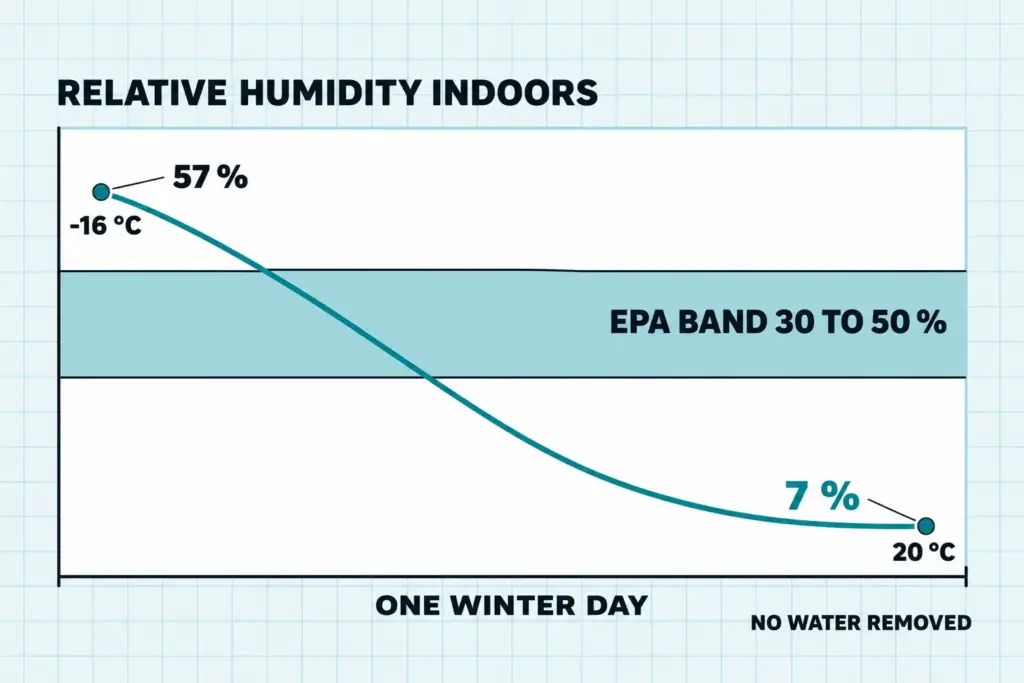
So the weather page tells you little about the room. The reading that counts is one taken a few feet from the metal that bites, and it decides whether a humidifier is worth running at all.
Read the room before you buy a unit
Put a meter where the shock happens: on a shelf or a wall near the knob, at hand height, away from the heater and the window. Where to put the meter and how many readings to take covers the placement, and the habit that matters is two or three readings across a few days instead of one. A cheap hygrometer, read at the start of the week and again after a cold night, shows a room that drifts down as the cold deepens.
The Govee H5075 Bluetooth Hygrometer Thermometer is a fair example of the type: humidity to ±3 percent, temperature to ±0.54 °F, and a Bluetooth range of about 164 feet, enough to check the bedroom from the kitchen. Three points of margin cannot separate a room at 30 from one at 33, so judge the trend and ignore the decimal (a room that reads 22 on Monday and 24 on Thursday is dry whatever the error).
The Bluetooth link is the weak spot. It pairs without fuss on some units and drops on others, and a unit that quits at about six months is part of that pattern, so write the numbers down instead of trusting the app’s history. How far a cheap humidity checker can be trusted sets out what a sensor like this can and cannot tell you.
The first night with a meter often turns up a room in the 20s where 40 was expected. If that is what yours shows, the free fixes below come first, and a unit follows only if the room still reads under 30 after them.
The Free Fixes That Touch the Charge First
A humidifier fixes the room, but a snap also depends on what you carry into it, and three free moves change that today. They go in order, with a look at how the shock behaves between them.

Touch metal first, with the knuckles or a key
McGill University’s Office for Science and Society explains the humidity link in a blunt line: “The number one factor influencing how many zaps you get is humidity.” The same page lists the humidifier first. The order here is reversed on purpose, because the free moves cost nothing and they show you how dry the room really is before you commit to a unit.
The quickest move is to touch a metal doorknob or a lamp base with something other than a fingertip, before the fingertip finds it by surprise. A key, a coin or a paper clip carried in the hand empties the charge through a larger contact, so the snap shrinks or disappears. It works at once and only once: dry air rebuilds the charge as soon as you cross the room again, and the next knob gets the next snap.
Touch the metal with the key or your knuckle before a fingertip gets there. The charge empties through the larger contact, and the bite is smaller.
Fabric: natural fibers, softener and dryer sheets
Cotton charges less against skin than synthetics do, and a dryer sheet or fabric softener cuts cling in the laundry. Take the cheapest first: the dryer sheet this week, then cotton for the nights, and read whether the snap fell after each. What changes when a long-coated dog sleeps on the rug covers the coat and the bed cover as extra sources of charge.
Swap one fabric, then watch the snap for a day before the next swap. Four changes in one weekend leave you with fewer shocks and no idea which swap did it.
Floor and shoes: where the charge starts
Leather soles are the better choice over rubber soles, and the floor matters as much as the shoe: wool and synthetic rugs build charge fastest, and wall-to-wall carpet builds the most. Which rooms of a house the shocks land in most helps when one rug seems to be the only place it happens.
If a unit is on order and the room is bad tonight, a pan of water simmering on the stove, with someone in the kitchen, adds water for an hour or two. It is a stopgap while the box ships, and it ends when the pan is empty. None of this replaces the humidifier either: the fix that holds in the first week often fades when the heating runs flat out, because the room kept falling underneath it.
What a Room Humidifier Changes in the Air
The verdict can now be given with its condition. A room unit works by putting water back into the air, so it works as far as it moves the reading, and the three units here move it by different amounts.
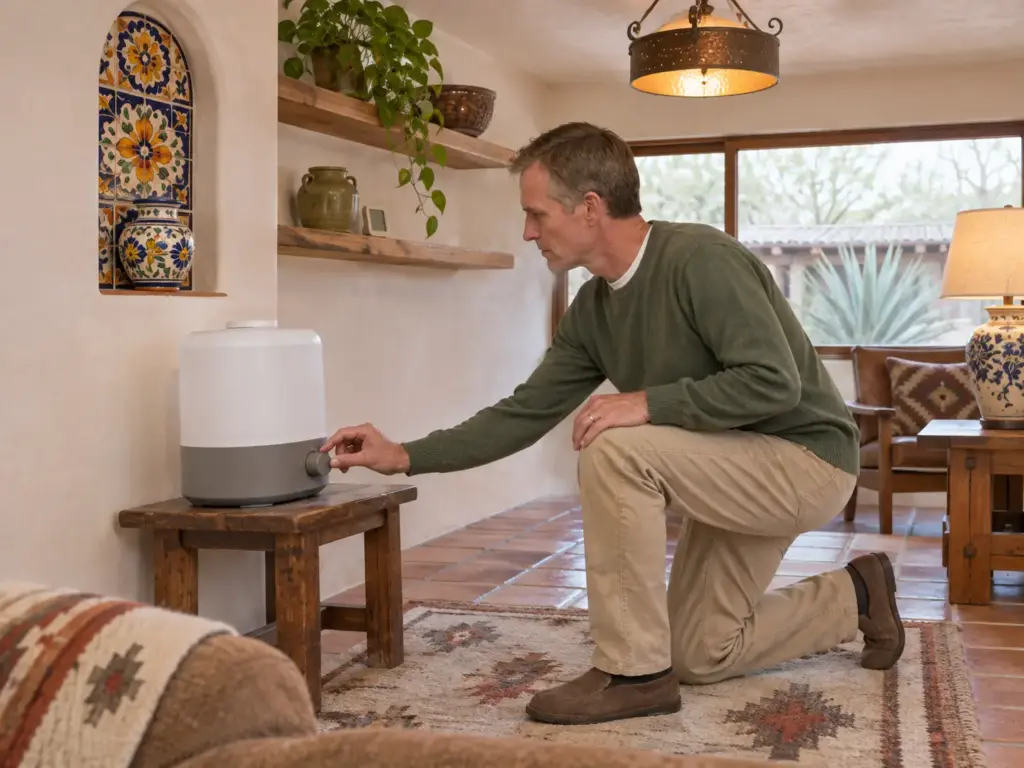
Yes, once the reading is in the band and stays there
A room humidifier stops the shocks when the meter reaches 30 percent, the floor of the humidity band, and holds it there. The unit’s job is that number, and the mist is only how it gets there. A unit set on a timer, or run only while someone is home, lets the room drift back, and the shocks return within days.
Free first: the meter, then the metal-first and fabric moves, and a unit only if the room still reads under 30 after them. How to raise a low reading in order, with the furnace humidifier last lays out the steps after that, including the whole-house path with a central humidifier on the furnace, which this page does not cover.
Reaching 30 is the start, and the top of the band is not the target to chase. In a cold snap the window sets the ceiling long before 50 does, and the glass tells you when you are there. Hold the room somewhere between 30 and the point where the glass fogs, and read it again after the next cold night.
Which tank size fits which room
Match tank and coverage to the room using the maker’s printed sheet. A small unit in a big room only reaches the corner it sits in.
For a larger or colder room, the DREO 8 L Smart Humidifier (HM717S) has the biggest tank of the three: 8 liters, a printed 80 hours of runtime and coverage rated up to 600 square feet, with humidity held within a 5 percent tolerance at 28 dB.
A bedroom or a medium room asks for less water and less output. That is the territory of the DREO 6 L Smart Humidifier, with a 6-liter tank, 60 hours of runtime, 500 mL per hour of output and a humidity sensor whose auto mode runs between 30 and 90 percent. That sensor gives you a second reading to hold against the meter on the wall.
For one small room and a first test of the idea, the budget route is the Levoit Top Fill Humidifier (2.5 L): a top-fill tank, up to 25 hours on low, 25 dB and an auto shut-off when the tank empties. What it asks in return is the daily refill, and month two comes back to that.
The flaw each unit carries
The 8 L unit’s humidity control is the uneven part, and the app connection is the other, so the meter across the room should make the call instead of the unit’s display. The maker’s 5 percent tolerance describes that unit’s sensor in that unit’s spot, and a room is bigger than a spot.
The 6 L is weakest on durability. Units that stop working at about a month are the pattern, along with leaks around the tank and mist output that falls short for some rooms. A bedroom that depends on it needs the meter and a fallback in place before the first cold week.
The Levoit is harder to clean than a small tank suggests, at least in some hands, and it has no humidity-controlled mode. It mists at the knob’s setting until the tank is empty, which makes you the humidistat: you read the meter, turn the knob, and read again. No unit here is rated for a whole house. A whole-house unit is a furnace job and a different decision.
When the Unit Runs and the Reading Stays Low
The verdict can fail. A unit can run all day and the meter still sits in the 20s, and the reason is usually the room.

A leaky, cold room takes more than one unit
In a leaky older house, a single ultrasonic humidifier running around the clock can take a reading from the upper teens only to the mid and upper 30s, drinking two to three gallons of water a day to do it. That is one house’s number with no standard behind it, but it shows the shape of the failure: the water goes in as fast as the room lets it out. What a reading near the bottom of the band actually means puts those mid-30s numbers in context.
The mechanism ties back to the heated-air example. Every cubic foot that leaks in at 3 °F (-16 °C) arrives holding little water and reads far drier once the room warms it, so the unit keeps re-humidifying a stream of dry air all day. A gap under the door, a drafty sash, a bathroom exhaust fan and a furnace that pulls dry air in all feed that stream. Which leaks and fans to check before the next unit goes through them one by one.
The instinct is a bigger unit. A tighter room is the better call, and it costs nothing to try: shut the door of the room where the shocks land and read the meter again. The first night after closing the door, the reading jumps by a few points and then flattens, and the leak is where it flattens.
Put the meter on a wall away from the unit, at the height of your hand. A meter parked next to the mist reads the unit, and the room’s real number stays hidden.
The one-window and rental case
In a rental with one window, a shared wall and no ducts, humidifying the whole apartment is not on the table. Pick one room, the one that matters tonight, the bedroom or the one where the shocks land, shut its door and run the unit there. A very cold outer wall or window also sets a ceiling on how high that room can go before the glass sweats, so raise the target only as far as the glass allows.
If the meter still sits under 30 after a closed door and a full day, the house is the problem, and the whole-house route is a different decision that this page does not make. And a fix that held for a week and then lapsed follows a pattern worth knowing: why a fix that worked for a week can stop working.
Month Two With a Room Humidifier
Week one lies. The first fill is a novelty, the daily refill turns into a chore, and the shocks come back the day the unit stops running.

The daily refill and the day it gets skipped
A room unit that runs full time asks for water about once a day in an ordinary house, and the reading falls with the day it gets skipped. Tank size is a habit as much as a coverage figure, so choose it for the habit and the room together.
At the printed runtimes, the 8 L tank is a fill every three days or so (80 hours), the 6 L a fill every two and a half days (60 hours), and the 2.5 L a fill about every day (25 hours). Those hours are the best case, usually at a low setting. A leaky room that needs the unit near full output empties the tank sooner, and the arithmetic shortens with it.
The unit that stops working at about a month is the pattern of the 6 L, and finding that out in January is worse than planning for it. A meter at the bedside tells you the day the number falls, and a closed door and a spare plan keep the room from sliding while you sort it out.
Glass, sills and the mineral left behind
Hard water leaves a white film of mineral buildup on the shelf under the unit, usually by the second or third week, and a cheap tank leaves more. Cleaning follows the maker’s manual, and this page does not replace it.
The glass is the other sign. Set too high, a unit puts condensation on the cold window glass, the first surface to fall below the dew point of the room’s air, and why the room side of the glass fogs and what it says about the setting explains what the fog means. At that point the shocks are already gone, so back the setting off a notch and read again.
How high the target can go depends on the outdoor cold, and the highest target for each outdoor temperature gives the ceiling for each. The number the EPA’s band tops out at is a ceiling for a mild day. On a hard-freeze night the glass is the better judge.
When the Tingle Is Not Static at All
A single snap that does not repeat is static. A tingle that comes back from the same outlet, appliance or switch is a question about the wiring in the house and has nothing to do with the air.
The two behave differently when you change the room. A static snap falls as the reading rises, and it fades with cotton and leather soles. A repeatable tingle ignores the humidifier and the shoes.
Test the house: if the tingle comes from the same device whether the room is dry or damp, stop using that device and call a licensed electrician. A tingle that shows up in summer, in a damp room, was never the air.
A humidifier does not fix a wiring fault. Adding water to a room with a faulty outlet or appliance adds a second problem, so keep the unit and its cord away from that spot until it has been looked at.
Read the Meter First, Then Choose the Unit
Yes, a humidifier works on static shocks as far as it holds the room at 30 percent or more, and the meter is how you know it did. Read it before anything else, because it tells you whether the room is dry or whether a fabric and floor problem is left that no unit will touch.
Start with the moves that cost nothing: metal in the hand, cotton, leather soles, a shut door. Let the reading after them decide whether a unit is worth running and which size. If the room stays low behind a closed door, the leak is the room’s, and a bigger tank only refills it. A tingle that repeats goes to an electrician.
Look at the reading again after the first cold week with the door shut, and again once the tank has been refilled for long enough to feel like a chore. What drifts in this setup is the room’s number, and the unit usually gets the blame first.
Tomorrow, set the meter where the shock lands and write down the number on the next cold morning. That number, above or below 30, decides everything else, and the products that rank for stopping static shocks, meter first is where to go once the reading says a unit is needed.
Frequently Asked Questions
01Does a humidifier stop static shocks indoors?
Yes, when it lifts the room’s relative humidity into the EPA’s 30 to 50 percent band and holds it there. In a leaky room that stays under 30 percent, the shocks stay. A meter shows which case you have.
02What humidity level stops static shocks in a house?
The EPA’s house band is 30 to 50 percent relative humidity, with 60 percent as the ceiling, and the shocks fade as a room stays inside it. Check the meter after a cold night to confirm.
03Why do static shocks keep happening in a house in winter?
Heated winter air reads far drier than the same air outdoors, so water never films the surfaces and the charge stays on you until metal takes it. A meter shows how low the room sits.
04How do I stop static shocks in a house without a humidifier?
Touch metal first with a key or a knuckle, swap synthetics for cotton, wear leather soles, and close the room door. These cost nothing, and they do not hold if the room stays dry.
05Is a tingle from an outlet or appliance static electricity?
No, not if the tingle repeats from the same outlet, switch or appliance, because a repeatable tingle is a wiring question for a licensed electrician. A single snap that fades once the room gets more humid is static.