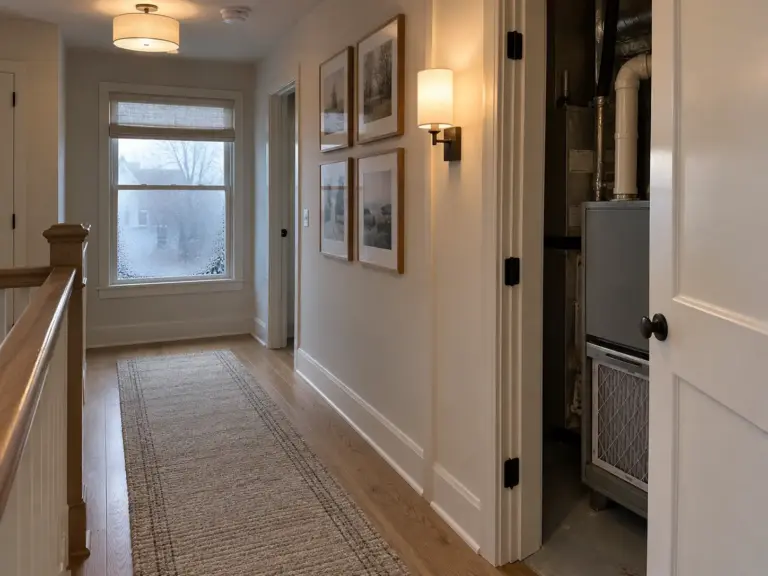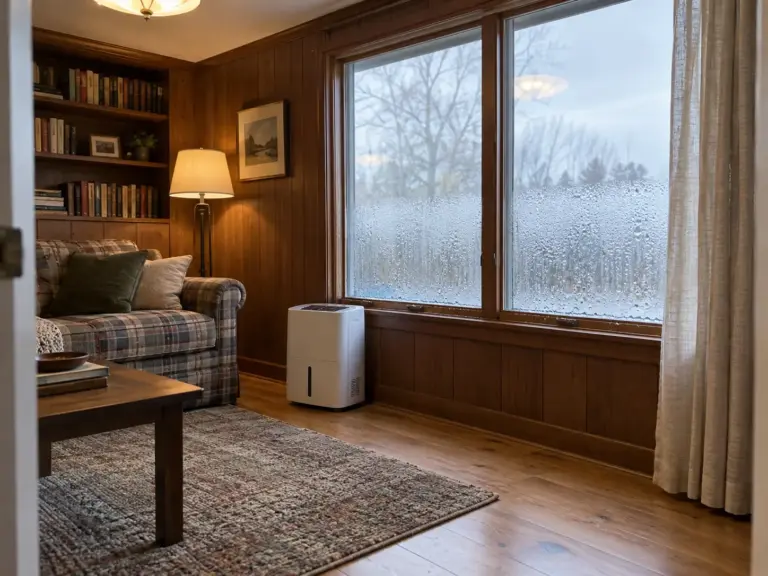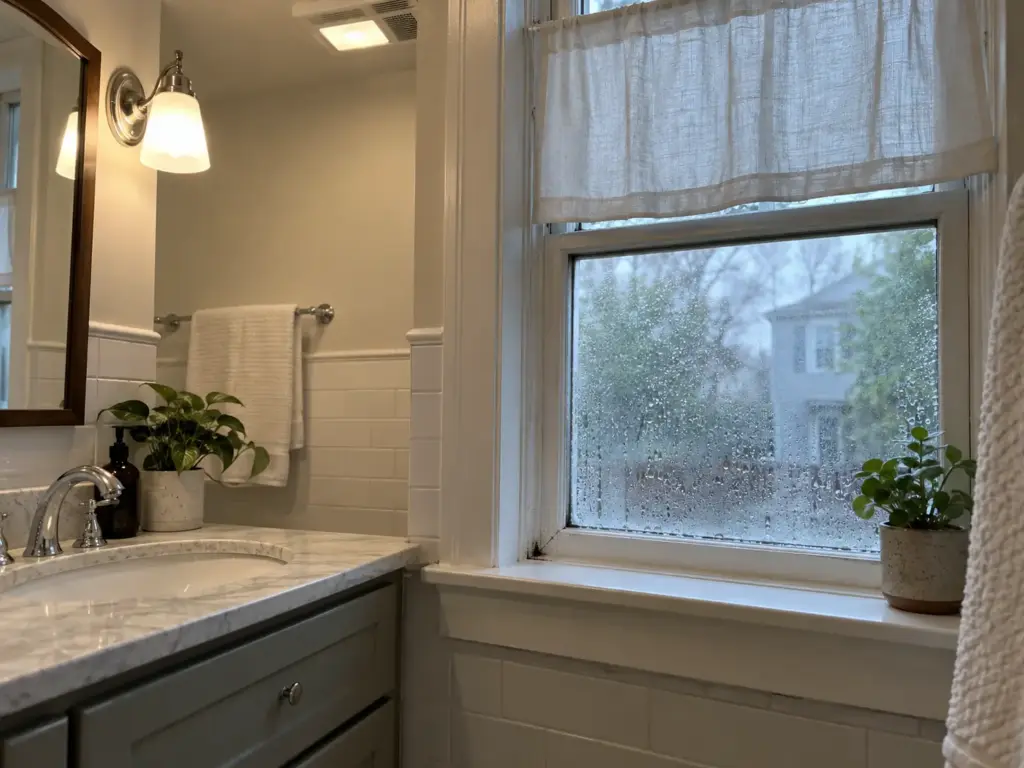
You wipe a dark line off the sill on Monday, and by the following weekend it is sitting in the same corner again, with the glass beside it beaded from the morning’s shower.
So does condensation on windows mean mold? Not by itself. The glass gets wet, but mold needs something to feed on that stays damp, and that is the frame, the caulk, the paint and the sill.
This guide sorts the dark spots on window frames and sills, gives the number that decides between cleaning one and calling someone, and names the three first moves that keep it coming back. If your real question is what mold does to a person, that belongs to a doctor, and the house side of the health question has its own page.
Quick Answer
Wet glass is condensation, not mold by itself. The mold sign is a dark or fuzzy spot on the frame, sill, caulk or paint that stays after you wipe it or comes back within days. The EPA’s line of about 10 square feet then decides whether you clean it yourself or call a professional.
Wet Glass Is Condensation, and Mold Needs a Surface That Stays Wet
The glass is where the water shows up, and it is the least likely place for mold to take hold. The worry is about the wood, the paint and the caulk touching that glass, so that is where this section looks.
Why Water on the Glass Is Not the Warning
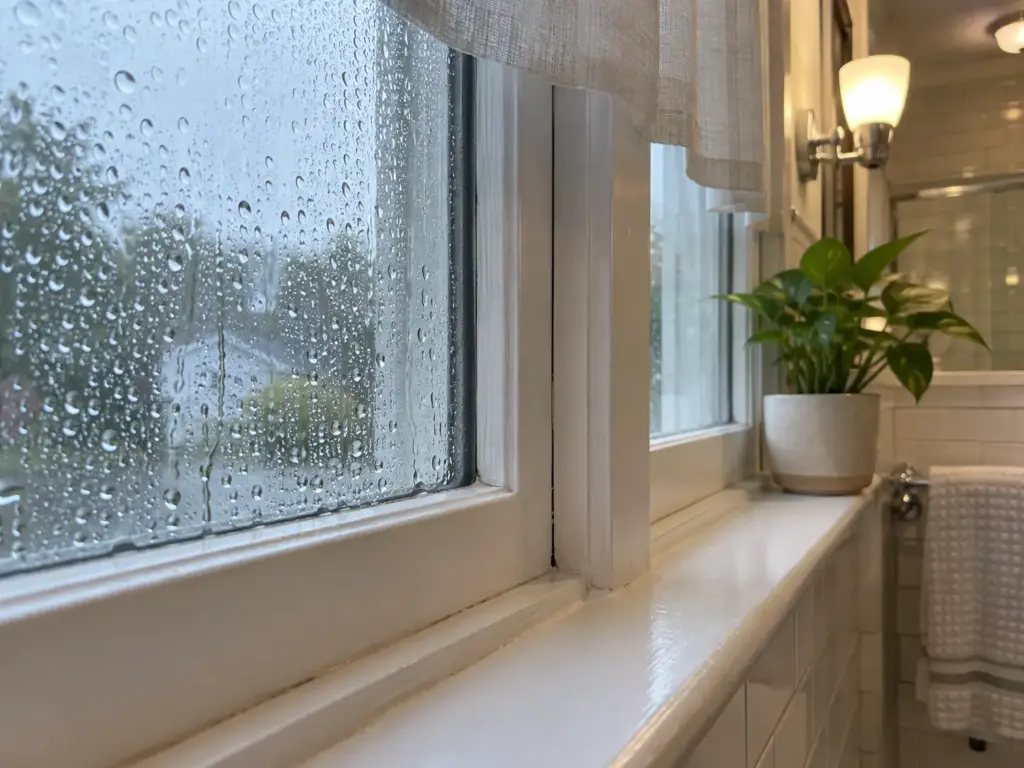
Condensation is room air touching a surface colder than the air can hold its moisture against, and a window pane is usually the coldest surface in the room, so it collects the water first. Why a window sweats overnight covers that mechanism in full.
The EPA treats it as a cue, not a verdict. Its guidance says that when condensation collects on windows, walls or pipes, you dry the wet surface quickly and cut the moisture source, and it lists condensation as a possible sign of high indoor humidity. Whether the fog on your glass is ordinary room side condensation is a separate question, and when condensation on the room side is normal answers it. This page starts after that one stops: the glass was wet, you dried it, and now there is a spot you do not like.
The Four Places Mold Starts at a Window
Mold needs moisture that stays on something it can eat, and a window frame offers plenty: paint, caulk, bare wood and the dust that settles on all three. That is why mold on window frame corners and mold on window sill edges sit in four places, and the glass is not one of them.
- The lower corners of the frame, where beads run down the glass and sit against the wood
- The sill, which catches whatever the corners cannot hold
- The edge of the glass where it meets the sash
- The caulk line between the frame and the wall or trim
The lower corners are the first to go, because the water has nowhere to leave except into the frame.
What Time Has to Do With It
The word that matters is stays. A pane that fogs after a shower and clears by mid-morning is one event; a wet window sill the next afternoon is another, and only the second gives mold a place to settle. The sill does not read a clock. Dry or damp is what you can see.
This goes wrong even in a room that is already doing the right things. The dehumidifier runs all day and gets emptied twice a day, the bathroom window opens during and after showers, and the fan runs while cooking and for 15 minutes after.
The glass still fogs and a dark spot still appears on the frame. That is the reader this article is written for: the free fixes are done, and the question left is mold or condensation: whether the spot is growth or only a mark the water left. The building-side causes, the ones a fan cannot reach, live in the full window condensation guide.
When you wipe the glass, run the same cloth along the lower rail and into the two bottom corners of the frame. The pane dries by itself once the room warms up; the wood and the caulk at its foot do not, and they are the surfaces that decide whether anything grows.
Four Look-Alikes That Fool the Eye, and the Wipe Test That Sorts Them
A dark mark on a frame is not always mold, and the checks that sort it cost a damp cloth, a week and, if the wood is in doubt, a meter. These are this blog’s own checks, written as checks, not a published standard.
The Four Things That Look Like Mold and Are Not
Four marks get mistaken for mold at a window, and each one is still a moisture sign, only a different one.
A dust film, on the glass edge as much as on the sill, is gray, soft and sits mostly along the back edge of the sill where it meets the glass, and it lifts in a single pass. A water line is a dark band with a hard edge on the sill or paint where a wet pane pooled; it is flat, with no fuzz and no spots beyond its edge.
Lifted or blistered paint is a raised bubble or a curling edge, often darker underneath, which means water got behind the coat. Paint lifting near a window is a moisture sign even when no mold is in it. A condensation track is a streak on the glass or the frame that follows the path the beads ran, and it points downhill the way water does.
Mold is the one with a fuzzy or speckled edge, a spot that spreads in a pattern rather than a line, and sometimes a musty smell near the corner. Even then, looking is not enough to be sure, which is why the next check exists.
The Wipe Test, Then the Week
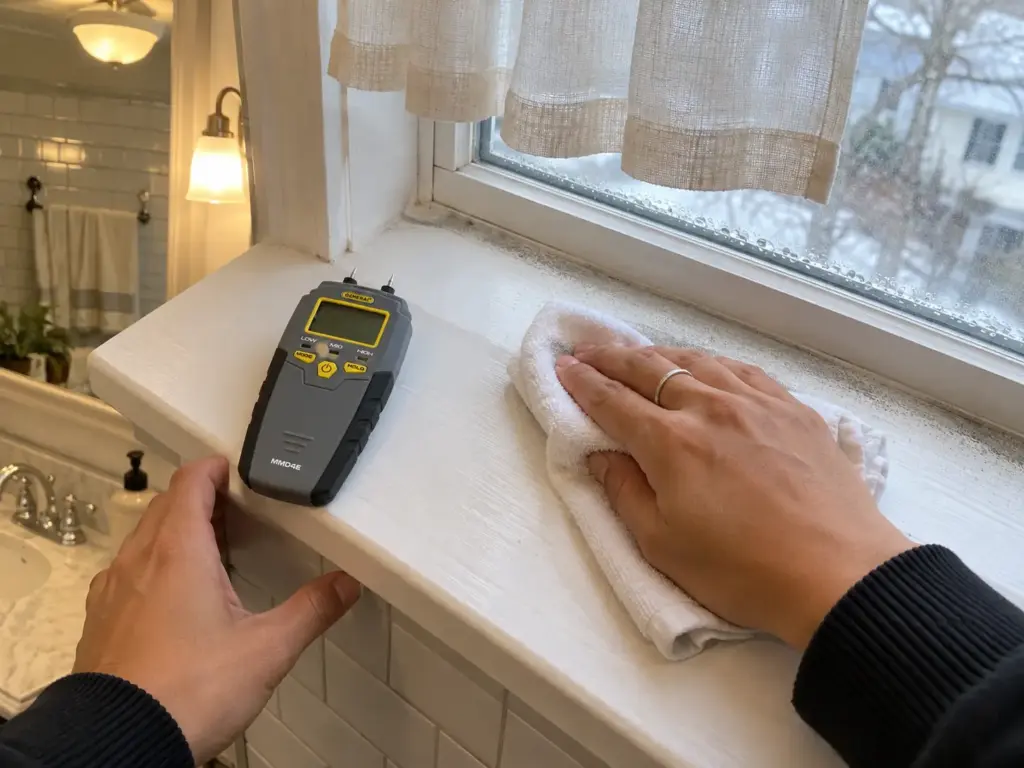
Take a damp cloth and make one pass over the spot. If it wipes off and stays off, it was not the problem you feared, although the moisture that put it there still needs answering. If it stays, smears into a fuzzy edge, or is back on the cloth’s next pass, that is the sign.
Then give it a week: wipe it once, look at the same spot the same way seven days later, and note whether it came back. That is the whole of the mold-or-condensation question, answered by the return after cleaning rather than by how the spot looks on day one.
The return is the number that matters most here, and the only count in the sources is one renter’s. A wipe that comes back within days is a familiar loop: the wipe removes what you can see and leaves the water that fed it. One report is not a trend, but it describes a familiar loop: the wipe removes what you can see and leaves the water that fed it. Dark areas in a wall that do not wipe away are the cue to look under the paint rather than scrub harder.
Reaching for a gadget first does not help either; a mold monitor can’t see a spot on a frame, because it reads the air, not the wood.
Start the wipe at the back edge of the sill, against the glass, where dust gathers. If that strip comes clean but the mark in the lower frame corner does not move, you have sorted two causes in one pass, and only the second is a moisture problem.
When the Wood Under the Spot Is the Question
The wipe and the week are free, so they come first. If a stain survives both and you want to know whether the wood beneath is wet or dry, a pin-type meter answers that.
The General Tools MMD4E presses two metal pins into bare wood at the spot, and the useful reading is a comparison: the spot against a dry stretch of the same sill. That is all it can say. The EPA gives no moisture figure for wood, so no number on the display means mold or no mold, only wetter or drier. One reviewer’s note says the pins that come on the unit are weaker than replacement pins, which are sold separately, and two small holes in a painted sill are worth knowing about before you press them into a rental.
What the Room Reads Behind the Pane
The sort says what the spot is; the room’s number says whether it will keep coming back. A spot that returns is almost always a room sitting above the line.
Reading the Band
The reference is the EPA’s: keep indoor humidity below 60 percent, ideally 30 to 50 percent relative humidity, as laid out in the EPA’s guide to mold, moisture and your home. Other sources give other numbers for this question, so the band here comes from the agency. If you want the rest of the range, what indoor humidity should read has it.
You need a reading to compare against it.
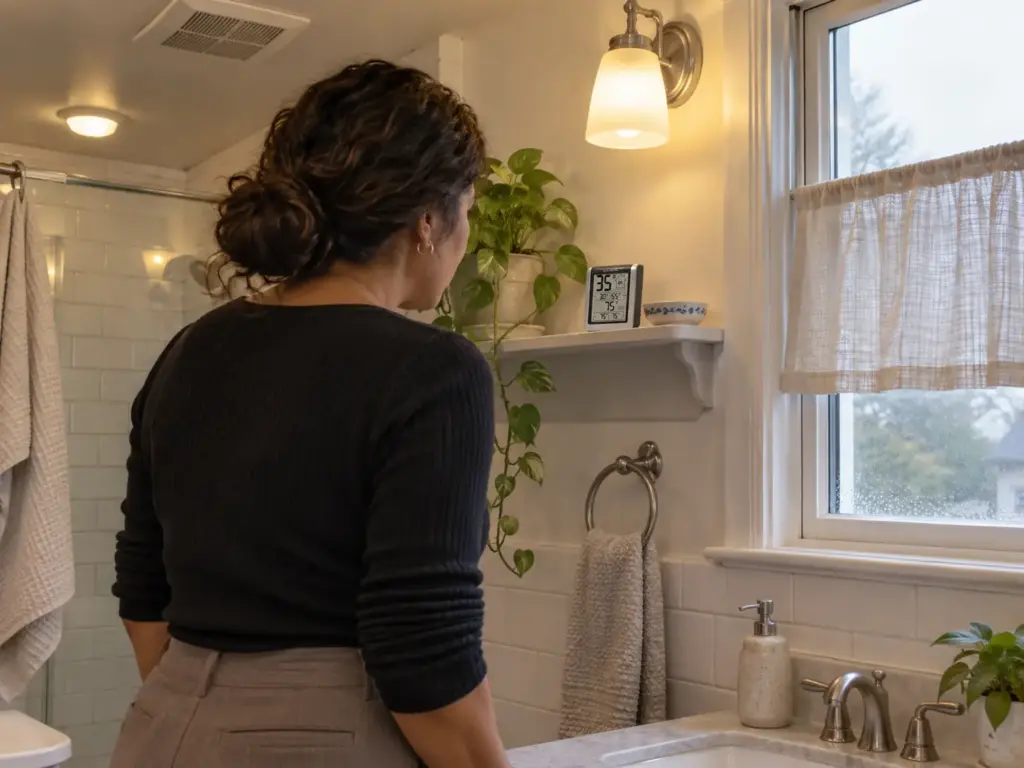
The AcuRite 00613 is a plain indoor thermometer and hygrometer with a 3-inch display, and it does the one job this step needs: it tells you the percent. Its limit is the limit of the whole class. A cheap hygrometer reads the spot where it sits and can be a few points off, so it shows a direction, not a lab figure. If you would rather see the day as a curve, the Govee H5075 keeps a log in an app, and it shares the same few-points caveat.
Where you put the meter matters as much as which one. Away from the shower door and away from the window, at sitting height. And read it twice a day, looking at the lowest and the highest of the day, because a single glance at breakfast misses what the room does the rest of the time. A hygrometer that stores a minimum and a maximum is handy for exactly this reason.
Which Way It Is Off, and the One Change That Follows
Start with the direction. A reading above 60 percent says the room is on the damp side, and the window shows it first because the glass is the coldest surface. A reading inside the band with a wet pane at the same time says the problem is the cold surface rather than the room, and that is a window question for our main guide.
When the room is on the damp side, the changes come in order, free and likeliest first, with a reading between each:
- Run the bathroom exhaust fan longer after a shower, and the range hood while you cook. The next morning’s reading should drift lower than yesterday’s, and if a winter room slides under 30 percent, the change has gone too far.
- Check the dryer vent: if the dryer is not vented outside, vent it outside. The EPA names dryers, stoves and kerosene heaters as moisture sources to vent out.
- If a humidifier runs, turn its humidifier setting down a notch. The glass should clear sooner within a day or two.
- Crack the bathroom window during and after showers, as the EPA’s bathroom tips suggest, then wipe down and dry the sill so the water does not sit on it.
Change one thing, read, and only then move to the next. Three changes at once leave you unable to say which of them worked. The same ordered list, with more detail, lives in free ways to bring the number down.
A reading taken right after a shower is a reading of the shower. Take the daily number at the same hour each day, away from the bathroom, and compare it with the lowest value the meter stored overnight. That pair tells you far more than any single glance.
Read It Again Before You Change a Second Thing
The reading that looks fine at noon can be over the band at six a.m., which is why the stored minimum and maximum earn their place. Change one thing, give the room a day or two, then read the pair again. If the high has dropped, the change is working; if it has not moved, the next item on the list is the next move.
A rental has limits: the window and the fan cannot be swapped, and the landlord’s view may be that ventilation is the issue. Even after every change a renter can make, the problem can remain.
That situation is the reason the reading at the end matters. If the number is inside the band and the spot returns, the room is not the cause, and that points at the building: a failed seal between the panes, or a damp wall behind the window that is wet from outside. No humidity fix reaches either of those.
The 10-Square-Foot Line Between Cleaning It and Calling Someone
Once the spot is sorted as mold, the question becomes who does the work, and the EPA draws the line at a patch of about 10 square feet, roughly 3 by 3 feet.
Under About 10 Square Feet
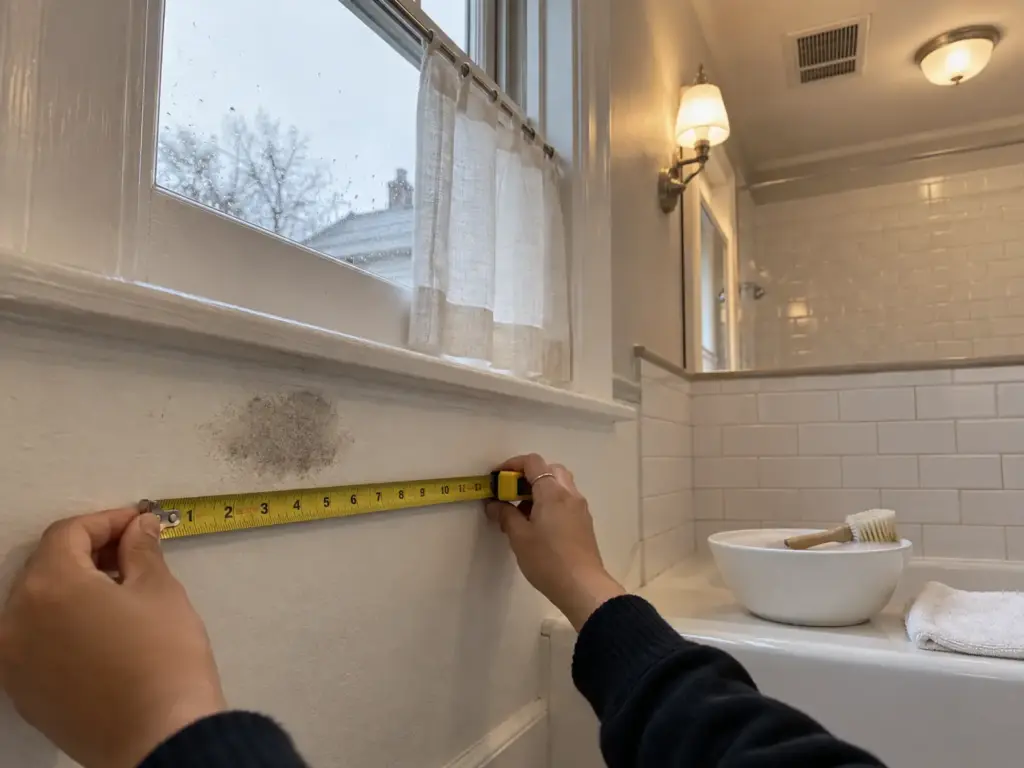
According to the EPA’s mold cleanup guidance, if the moldy area is “less than about 10 square feet (less than roughly a 3 ft. by 3 ft. patch),” in most cases you can handle the job yourself. A spot on a frame, a strip of caulk or a corner of a sill is well inside that.
On a hard surface, the EPA’s method is to scrub with detergent and water and then dry completely. The drying is not a finishing touch, because the damp surface is the one mold started on. Fix the source of the water first or the patch is back. For a patch on the wall under the sill, how to remove mold from a bedroom wall is the next step.
Porous material needs more caution. The EPA says absorbent materials such as ceiling tiles and carpet may have to be thrown away, because mold fills the empty spaces in them and can be impossible to remove completely. It does not name a wood sill, so no rule is stated here.
The principle carries over with care: a stain that stays after you have scrubbed and dried a surface may sit below the paint on window trim, and the EPA also notes that mold can leave staining and cosmetic damage even once it is gone. A stain on its own is not regrowth. A stain that returns or turns fuzzy is.
Hold a tape measure against the patch and take a photo of it before you wet the cloth. The tape settles which side of the 10 square feet line you are on, and the photo is the baseline that shows, a month later, whether it came back.
Over It, or With a Damp Wall Behind
Above 10 square feet, or where there has been a lot of water damage, the EPA sends the reader to its professional remediation guide instead. That is the plain rule. On the ground, the signs that a window problem is really a wall problem are a patch that keeps growing after you clean it, a wall that feels damp or soft under the sill, and a stain that keeps coming through the paint. Any of those moves the job off the window and onto the building, and why mold grows on bedroom walls and ceilings explains that side.
When It Is the Window and Not the Mold
Haze or beads between the two panes of glass are not a cleaning job at all. They mean the sealed unit has failed, and that is a window question; when the seal between the panes has failed is the page for it. No amount of wiping reaches that side of the glass.
Three First Moves That Keep the Spot Coming Back
The three things people reach for first are the three the EPA’s text cautions against. Each has a good-sounding reason, and each leaves the moisture where it was.
Bleach as the Weekly Wipe
Some advice says to find a detergent with bleach to remove the mold, and a Sunday routine built on that is the result. The EPA says the use of a chemical or biocide such as chlorine bleach is not recommended as a routine practice during mold cleanup, and it adds that professional judgment may call for it in some cases. Both halves matter. Bleach is not banned and not the default.
The obvious pick stops being obvious once you see what the weekly wipe does: it removes the surface you can see and leaves the damp surface under it, so the spot comes back. The replacement is plainer. Scrub with detergent and water, dry the area completely, and then go after the source of the water.
Painting Over the Spot
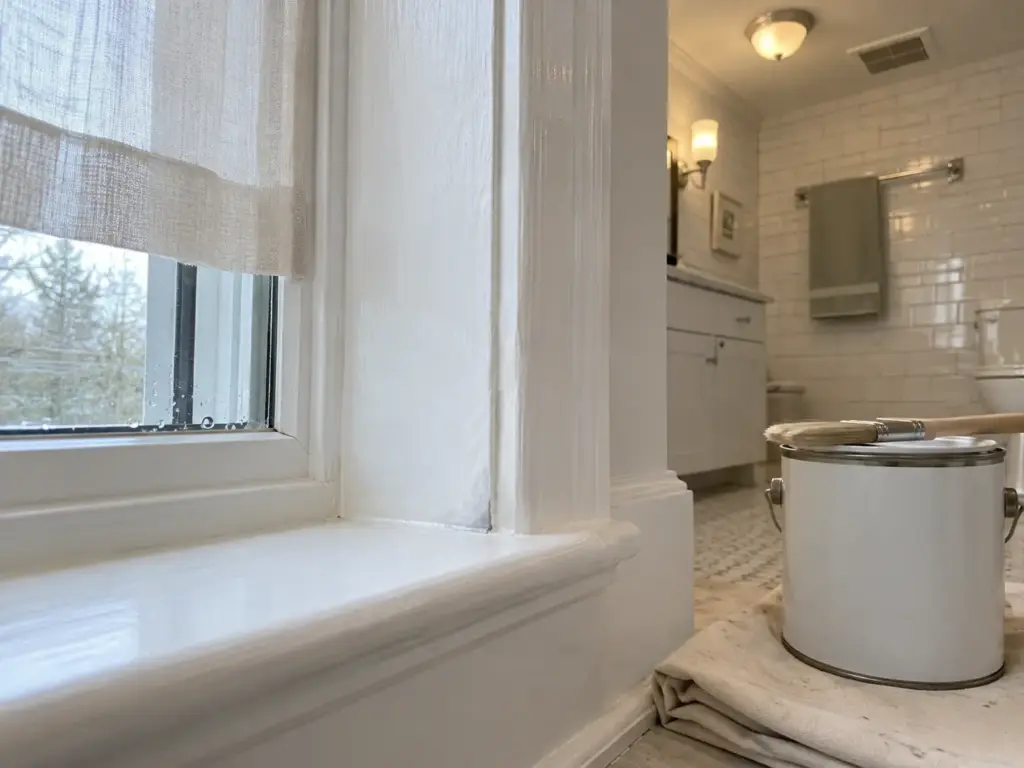
To paint over the spot looks right for a while, and that is the trouble. The EPA says not to paint or caulk moldy surfaces; clean up the mold and dry the surface before painting, since paint applied over mold is likely to peel. A stain-blocking primer is sometimes suggested as a better answer than bleach, but primer is paint, and the EPA’s line points the other way. A wall that grows back right after being painted over is the same problem: the paint covered the surface and the water stayed.
The surface tells you when the moisture is still there. A paint bubble or a gray shadow at the same corner a few weeks after the coat means the wood is still taking in water. Whether to remove the mold first is the question whether to remove mold before painting takes in full; paint only after the surface is clean and dry.
Testing a Spot You Can Already See
A lab test feels like the careful move. The EPA says that in most cases, if visible mold growth is present, sampling is unnecessary, and there are no federal limits for mold or spores, so a result has no federal standard to be compared with. With a spot you can already see, a sample answers a question you have settled. The wipe test and the meter do the sorting at no cost, and the moisture reading tells you whether the room is the cause.
A Month From Now, and the One Change for Tonight
Three things carry over from all of this. Wet glass alone is condensation, and a spot that survives a wipe and returns is the sign. The room is read against the EPA band, and the free fixes go in order with a reading after each. About 10 square feet is the line for cleaning it yourself; past it, or with a damp wall behind, the job belongs to a professional.
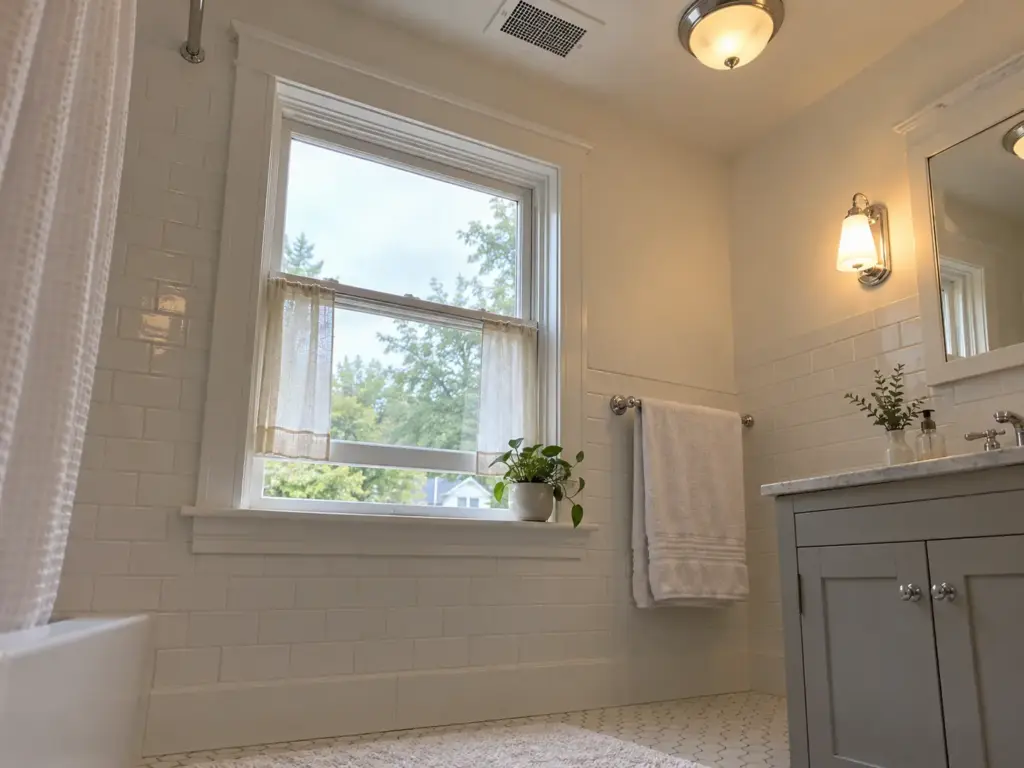
At the end of a month, wipe the same corner and look at the same spot. Whether it came back, and what the meter’s stored maximum says, will tell you more than any single day did.
For tonight, make the one change your reading points to, most likely a longer fan run after the shower, and read the meter tomorrow before you touch anything else. If the number stays over the band after the free fixes, the next question is a dehumidifier that fits the room.
Frequently Asked Questions
01Does condensation on windows mean the house is too cold?
Not exactly, because condensation forms when room air meets a surface colder than its dew point, so it points at humidity as much as at cold. The reading in the room says which one is off.
02What are the first signs of mold on a window?
A dark or fuzzy spot on the frame, sill, caulk or paint that stays after a damp cloth passes over it, or comes back after you wipe it. Wet glass on its own is not the sign.
03Should I be worried about condensation on windows?
Wet glass that clears by midday is a cue to read the room’s humidity, not an emergency. Concern starts when the frame or sill stays damp for days or a spot keeps returning.
04Will mold go away if you stop the moisture?
Stopping the moisture stops it growing, but a patch that is already there still needs scrubbing with detergent and water and drying completely. Under about 10 square feet, you can do that yourself.
05Can mold grow on a window with condensation on it?
Mold needs a surface that stays wet and something to feed on, so it grows on the frame, caulk, paint and sill beside the glass far more often than on the glass itself.