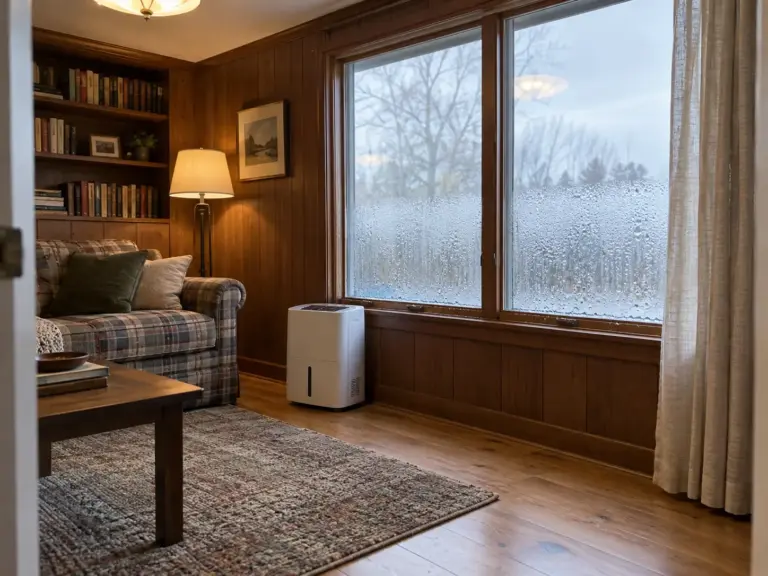
The lower panes are wet again on a cold morning, you have wiped them twice this week, and a replacement quote is already taking shape in your head, along with the question under it: does condensation on windows mean they need to be replaced? Water on the room side of a pane is the room’s moisture meeting glass colder than the room’s dew point, and a new pane is just as cold on that face. Only fog trapped between two panes says the window itself has failed.
The sections below sort out which side of the glass the water is on, the one reading to take first, the sign that really points at the window, and the repairs that cost less than a glazier’s visit. The room-side half has its own guide on preventing condensation on windows, so this one stays with the replacement call.
Quick Answer
No, not by itself. Water on the room side of the glass is the room’s moisture meeting a cold pane, and a new window would collect it too. Fog trapped between the two panes that stays is the sign the sealed unit has failed. Read the room’s humidity first.
Which Side of the Glass the Water Is On
The useful question is where the water is, not whether it is there. One pane can wet on three different faces, and only one of them says anything about the window’s build. A dry cloth and a minute at the glass sort out most of it.
On the Room Side of the Glass
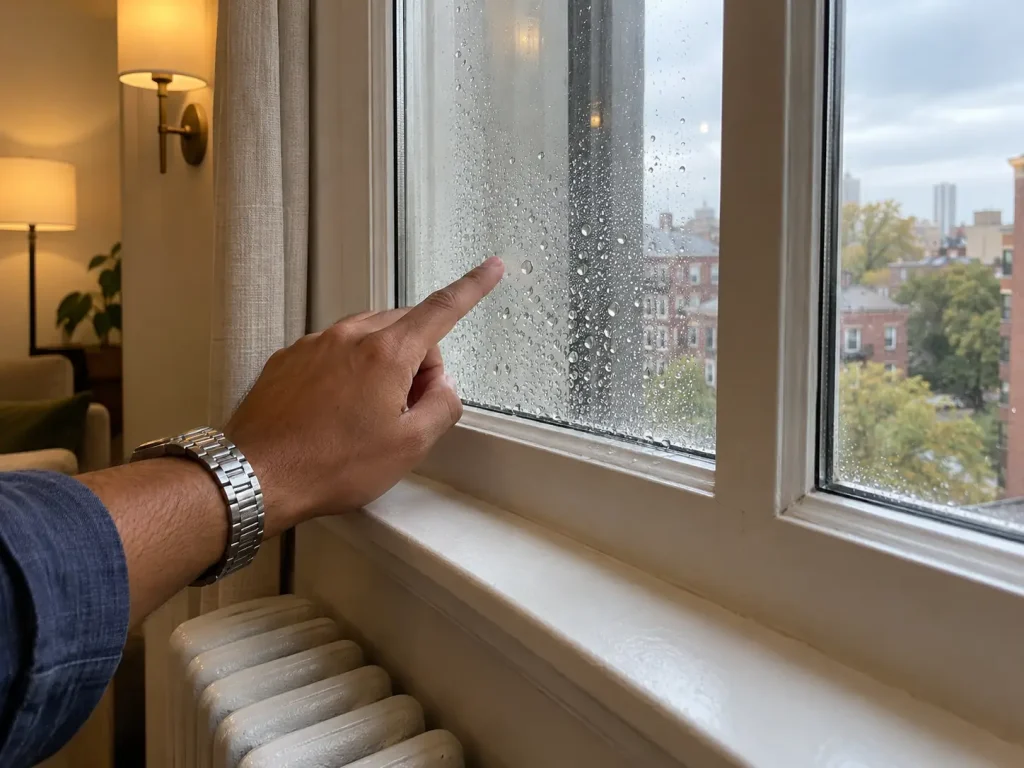
This is the common one. Warm room air carries water vapor, and when it touches a pane colder than the room’s dew point, some of that vapor drops out as droplets. The lower corners go wet first and clear last, because that cold spot is where the glass is coldest. Wipe the room side and the water comes away on the cloth; if the pane clears as the day warms and beads again the next cold morning, it is the room’s moisture, and the wipe test for room-side condensation walks through it in full.
Between the Two Panes
No cloth reaches this face, and that alone makes it the only one that speaks to the window’s build. A double-pane window is two sheets of glass with a sealed gap between them, and water or haze showing up inside that gap means moisture has gotten past the seal, which is what people mean by a broken seal. Section three takes it apart. For now, just note whether your water is on this face.
On the Outside of the Glass
Water on the outdoor face is the weather. The pane is colder than the dew point of the outside air, which happens on a clear summer morning when the air conditioner has been running inside. Condensation alone is not the test for replacing windows. If yours shows up only with the AC on, the cause is the air conditioning and the cold glass, and the section on why condensation shows up when the AC is on covers it. No window is at fault. If yours shows up only with the AC on, why condensation shows up when the AC is on covers it, and no window is at fault.
The Room’s Reading Comes Before Any Verdict on the Window
A window cannot be judged until the room it faces has been read, because a room over its limit will sweat any window you install in it. The reading costs a few minutes and one small meter, and it comes before any quote.
The Number That Comes First
The reference is the EPA. According to the EPA’s guide to mold and moisture in the home, “Keep indoor humidity low. If possible, keep indoor humidity below 60 percent (ideally between 30 and 50 percent) relative humidity.”
The same page says to act quickly when water collects on windows: dry the wet surface and cut the moisture source. Notice that the two numbers do different jobs.
Thirty to 50 percent is the target, 60 percent is the limit, and why the line sits at 60 percent has its own page. A room at 55 percent is over the target and under the limit, so the glass is the second thing to look at, not the first.
A reading above 60 percent explains the water without blaming the window. A reading inside the band with the room-side glass still wet is the case that points back at the glass or the frame.
One Meter or Two, and What Each Misses
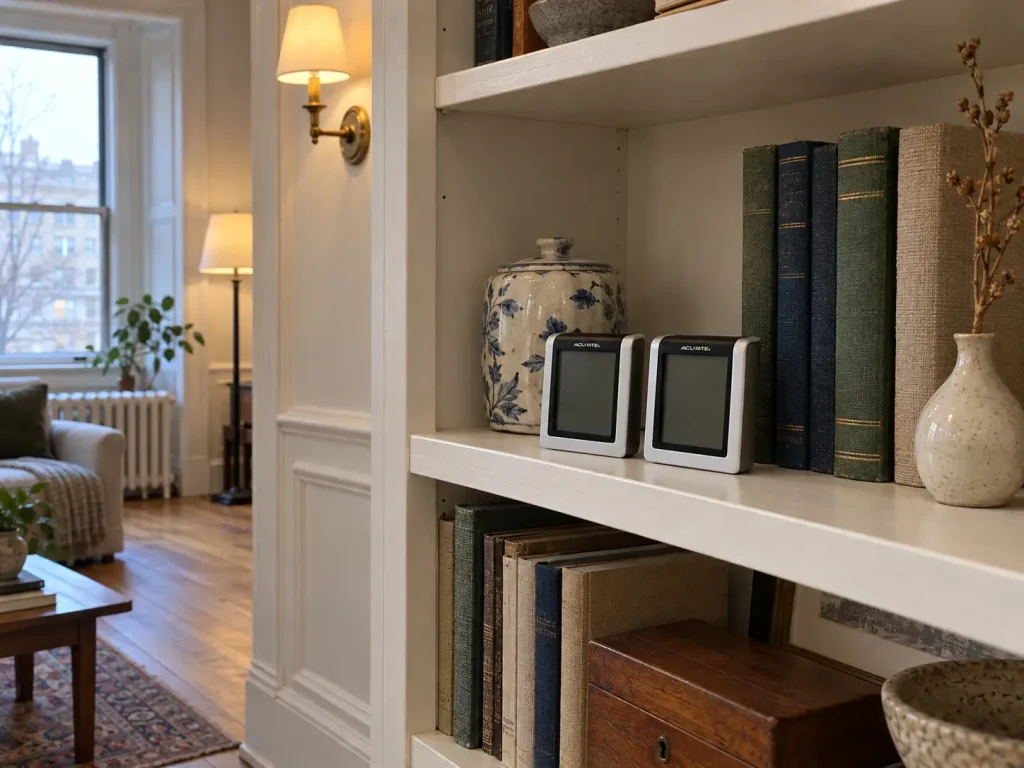
A plain display does this job. The AcuRite 00613 Indoor Thermometer Hygrometer reads humidity from 16 to 98 percent RH on a 3-inch screen, runs on one AA battery and has no app or radio to fail, which is exactly what you want from a meter that settles a purchase. The AcuRite 00613 on Amazon has two catches: the listing does not print a humidity accuracy figure, and its title ends in “Pack 5”, so confirm on the page whether you are buying one unit or five.
Cheap sensors can be off by a few points, and a few points matter when the line is 60. Set two meters side by side for a few hours before trusting either, and if they disagree by more than that, neither one is a verdict. How to measure indoor humidity covers the side-by-side check.
Hang the meter on an inside wall at chest height, not on the sash or the sill. The pane chills the air beside it, so a meter next to the glass reports the pane’s air instead of the room’s. Write the number down before you touch the bath fan.
For what the glass went through overnight, a meter with a record is the better tool. The Govee H5075 Bluetooth Hygrometer Thermometer lists humidity accuracy of plus or minus 3 percent RH and temperature accuracy of plus or minus 0.54 °F (0.3 °C), both the maker’s figures, with a Bluetooth range of 164 feet and a max and min record, so the number at dawn is waiting for you.
Amazon’s review summary for the Govee H5075 says multiple customers reported it stopped working within six months, with mixed reports on the Bluetooth, so check its record against the plain meter instead of trusting it alone. The record is the reason to own it; the plain display is the reason to keep the other one.
What the Reading Tells You About the Glass
Three outcomes cover it. Above 60 percent, the room explains the water and the work is on the room. Inside the band with the room-side glass still wet, the glass or the frame is cold at the edges, and the repairs in section four come before any quote. Fog between the panes at any reading is section three’s job.
There is also a simple way to separate the two kinds of water. Bring the reading into the band and give it a week. Room-side water stops when the room does; haze between the panes does not care what the room reads. And a better pane would change less than people expect: it warms its own face, it does not lower the room’s dew point, so the same air still meets the same cold surface, just a little warmer.
Fog Between the Panes Is the One Sign That Points at the Window
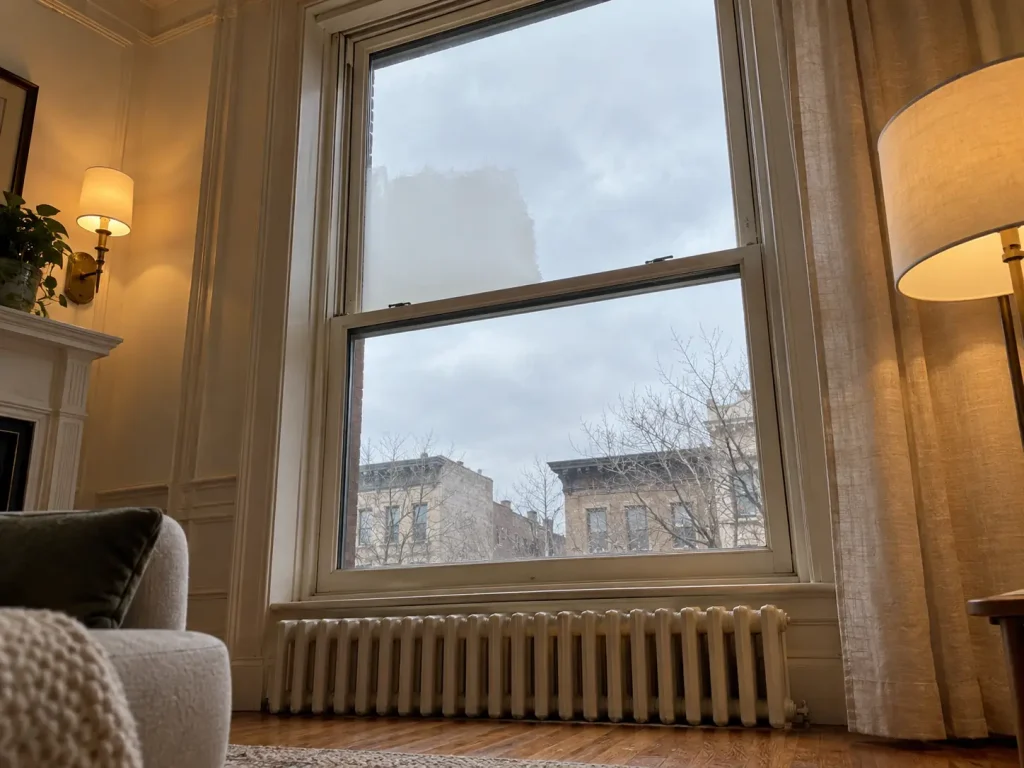
Once the room reads fine, or the water sits somewhere no cloth reaches, the glass itself becomes the suspect, and the test changes from the wipe to the clock. The glass industry has a definition of failure for the insulating glass unit, and it is narrower than most people expect.
Permanent Fog Versus Fog That Comes and Goes
Michael J. Louis, PE, wrote in Construction Specifier in September 2018, in “When is insulating glass fogging not considered failure?”, that the industry bulletin IGMA TB 1205-89 defines a failed unit as one that “exhibits permanent material obstruction of vision.” The word doing the work is permanent.
By the same article, a breach in the seal fogs the unit fast, in days to about a week, and that fog is permanent and irreversible. A slow diffusion of moisture works over years and fogs the glass only on the coldest days, so it comes and goes.
That gives you two tests with a clock in them. Fog that appeared within a week or so of a change and stays is a failed seal. Haze that shows only on the coldest mornings and retreats is the slow kind, and the room’s moisture still matters to it.
Some owners keep windows with a failed seal rather than replace them, because of the payback. Fogged glass is a loss of clarity and some insulating performance, which is a reason to ask questions, not to sign today.
Why a Clear Afternoon Does Not Clear the Seal
Inside the spacer around the edge of the unit sits a desiccant, a moisture-absorbing gel or bead. When the temperature outside rises above the unit’s internal dew point, the desiccant takes the moisture back and the fog disappears for a while. So haze you see at seven in the morning and not at noon is not proof the seal is fine. It is the desiccant working.
A clear afternoon feels like a reprieve. It is not one: the same engineer writes that a rising internal dew point is a sign of imminent failure, and that predicting when it arrives is neither reliable nor practical. Outside moisture is getting in, and water sitting at the edges of the unit breaks down the sealant around the perimeter. That is why a frame that holds water belongs in the repair question, and why the fog tends to sit in the same patch each cold morning, usually near an edge, with a cloth doing nothing to it.
Stick a small piece of painter’s tape on the room-side glass at the edge of the haze, and check it after each cold night. A patch that creeps past the tape within days points at a breach. A patch that shows only on the coldest mornings and pulls back is the slow kind.
Drafts, a Lock That Will Not Seat and a Warped Frame
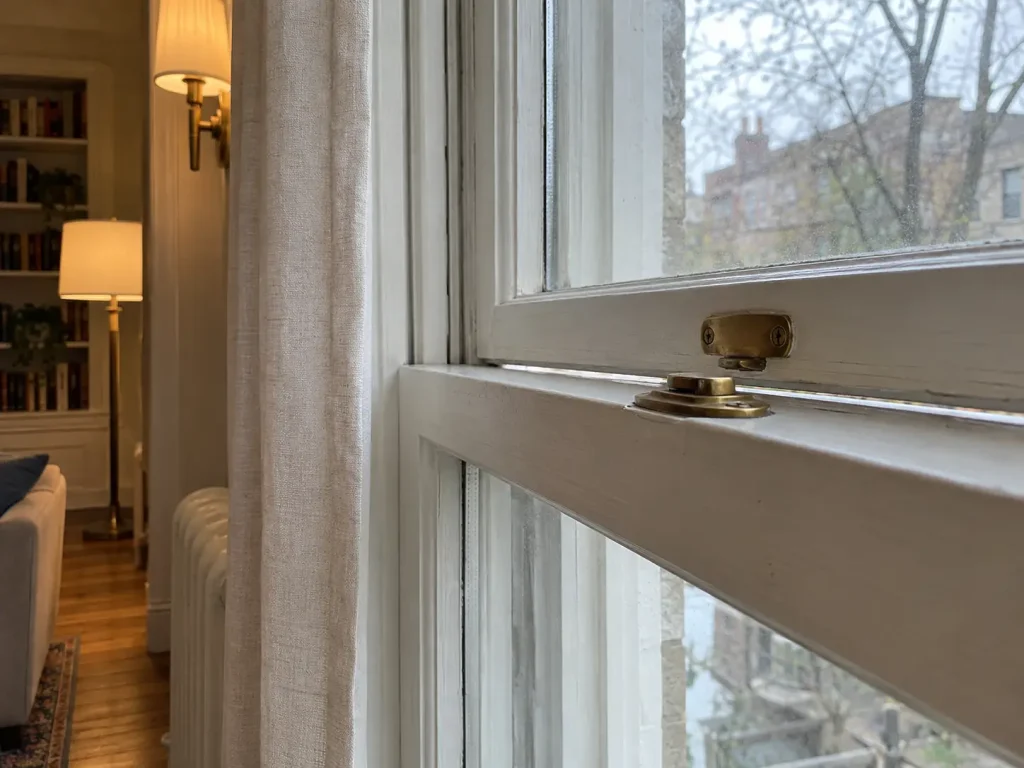
Fog is not the only sign a window is wearing out. A drafty window that sends the heating bill up, a draft at the sash, a lock that does not engage, a sash that does not close flush, a warped frame and paint that peels near the frame are the others, and each one is a repair question before it is a replacement one.
Builder-grade windows can seem in decent shape while a few do not lock tightly, and an old sash that does not run smooth is another common complaint. Another described an old brick building with broken window lining and a sash that does not run smooth. A lock that will not seat is often an adjustment or a part (the sash may need to sit square first), while a warped frame is a different conversation. And paint that peels near a frame that is wet has moved past the glass question; when condensation means mold instead picks up there.
Fixes That Cost Less Than a Window, in Order
Take the moisture out of the room first, because it costs nothing and the meter shows whether it worked. Then stop the leaks. Only after both is it worth talking about glass, and each step below gets a reading before the next one starts, so you know which change did the work.
Cut the Source, Then Read the Room Again
The order is weatherstripping, a window that closes correctly, foam around the frame, and removing sources of humidity before going to full window replacement. The list is sound. Work through it one step at a time: Humidity goes first here only because it is free and the number tells you the result by morning. Work through it one step at a time:
- Run the bathroom exhaust fan through every shower and the range hood through every meal, then read the meter the next cold morning. The number should slide toward the 30 to 50 percent band and the lower panes should dry.
- If the glass still wets, lower the humidifier setting one notch, if you run one, and read again. A room that drops under 30 percent means you went a notch too far.
- Move indoor laundry drying out of that room, and remember what a closed room collects on its own: people breathing in it, a fish tank. Read again.
- Pull the curtain back off the glass at night and open the blinds, because curtains or blinds that trap cold air against the window keep the pane colder than the room.
If the number fell and the glass dried, you answered the question without a visit from anyone. Free ways to lower indoor humidity holds the longer list.
Seal the Gaps You Can Reach
Next is the air path. Replace worn weatherstripping, make the sash close square and the lock seat, and pull the trim to check that foam sits around the frame (this order fits a weekend).
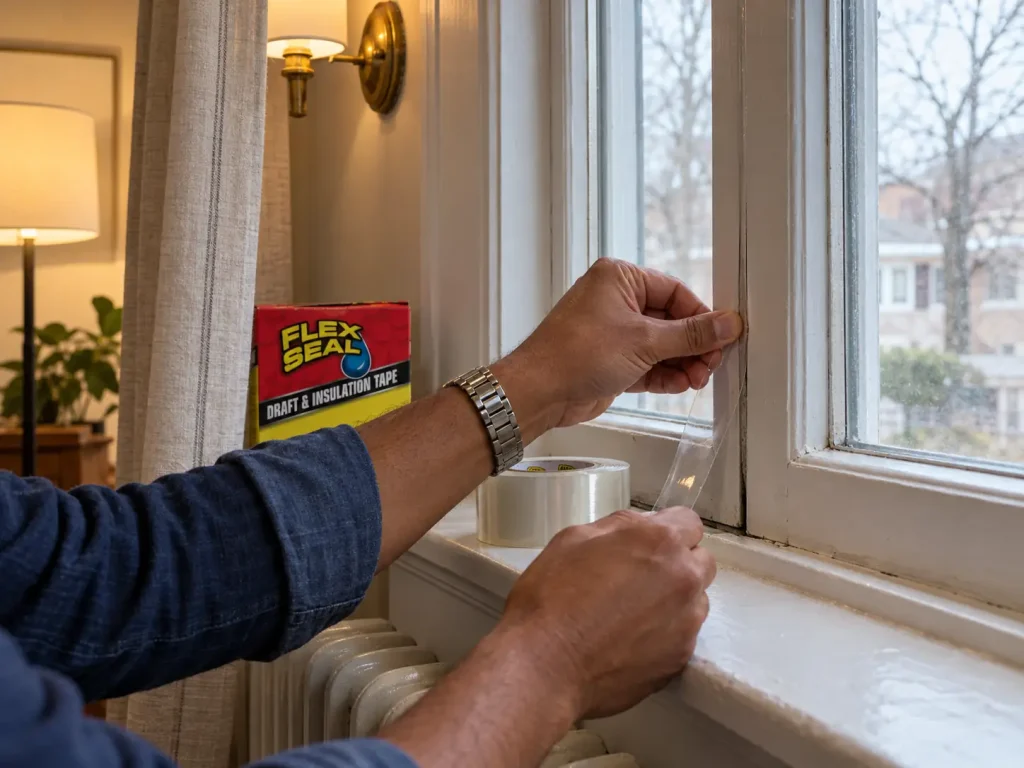
At the sash itself, a clear self-adhesive draft strip can close a gap. The Flex Seal Draft and Insulation Tape is one, clear, 2 inch wide on a 16 foot roll and removable according to its listing. The Flex Seal tape on Amazon sits at 3.8 of 5 stars, a middling grade for a roll of tape, and it does one job: it seals air at the sash. It does nothing for a fogged sealed unit, and nothing for a room that is too humid.
An adhesive strip that lifts at a cold corner after the first deep freeze means the surface was not dry when it went on. Wipe the sash, let it dry fully, and press the strip on from the middle outward on a day when the room is warm.
When the Glass Is the Only Part Left
If the fog is between the panes and stays, nothing above reaches it, and the question becomes what a glazier can do. Ask a glazier whether your sealed unit can be replaced alone, without buying a whole replacement window.
Replacing just the sashes or glass when the seals are broken is sometimes suggested. That is a suggestion, not a promise, and whether it fits your frame is the glazier’s answer. Also ask whether a warranty still covers the unit, since the engineer’s article says the line between permanent fog and fog that comes and goes matters most when a warranty claim is being weighed.
What a New Window Does Not Change
A replacement fixes the window’s build, not the air in the room. The quote’s best case and its worst case deserve the same plain language, and this section gives the worst case equal space.
A Warmer Pane Is Not Drier Air
A better pane warms its own face of the glass. It does not lower the room’s dew point, so a room above the EPA’s 60 percent line still sweats on new glass, only on a colder morning than before. Even the best windows will condense moisture if it is too cold out or too humid inside. The glass is the second variable and the room’s moisture is the first, which is why the reading in section two came before this one.
A new window that looks dry in its first winter proves the room was drier that winter, not that the glass fixed anything. Keep reading the meter the first season, and judge the window by how the room’s number behaved on the coldest mornings.
The NFRC Condensation Resistance Rating
One number on a new window’s label does compare windows on this. The NFRC, the nonprofit that certifies window ratings, lists Condensation Resistance beside U-factor and the other label ratings, and says that the higher the number, the better a product resists condensation. Ask each seller for that number on the label of the exact window being quoted, and compare the two quotes on it.
Two limits apply. The rating compares windows and says nothing about your room, and a high number on the label does not help a room sitting at 65 percent.
Payback, Triple Pane and a Cold-Weather Install
The drawbacks of replacing are mostly a matter of opinion, and none of them needs a dollar figure to land. Windows are often said to have little payback, so the plan has to include how long you stay in the house. Whole new windows are often called expensive, and triple pane is sometimes called not worth it. None of that is a measurement. None of that is a measurement.
All of it is what people who went through the quotes said afterward, and it fits the window’s real job: a better pane, not a drier room.
The install has its own catch. Caulk and adhesive flashing may not cure properly in low temperatures, and some materials need temperatures of about 50 degrees or more to cure. The product’s data sheet is the place to check. So does this article. So does this article. If the quote lands in the dead of winter, ask the installer what the sealant’s data sheet says about the temperature range and how the job will be timed around it.
When the Window Belongs to a Landlord
Many readers cannot replace anything, because the window is the building’s. The useful move then is a clear message with the right evidence, and the evidence is the same three things this article has been collecting.
The Evidence a Landlord Can Act On
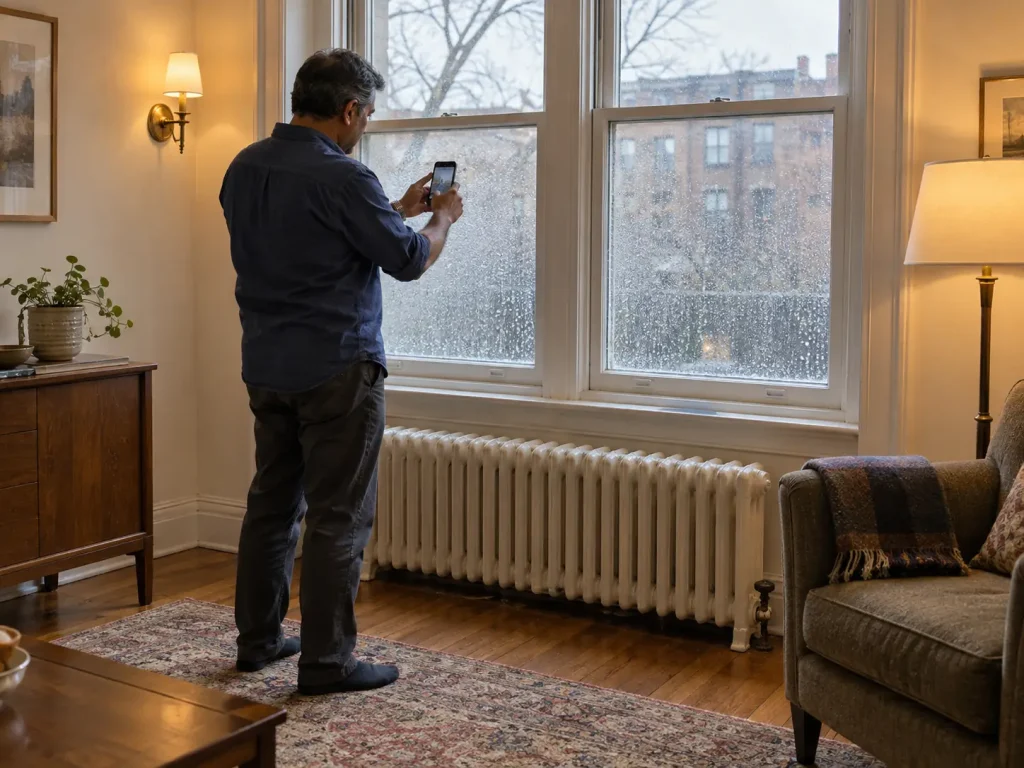
Bring three items: the meter’s reading from a spot away from the window, the fog in the same patch at two different hours, and which face of the glass is wet. A dated photo of the same pane at the same hour, a week apart, says more than any description. Knowing when the glass is coldest helps you pick the hours, and what the overnight hours do to the glass explains it. Who pays for what is a question for the lease, so read it and ask in writing, with the photos attached, so the request has a date on it.
Builder-Grade Windows in an Ordinary House
The same order fits an owner with the windows the house came with. Builder-grade windows from the mid-2000s can seem fine while a few do not lock tightly. That is a repair first. That is a repair first. In both cases the reading separates a wet room from a leaky window, and the two call for different next steps: a repair request for one, a dryer room that can start tonight for the other.
The Next Decision: Drying the Room
If the reading is the problem, the next purchase is not a window. It is a way to pull water out of the air, after the free fixes above have had their turn, and the dehumidifier that fits a window-condensation room picks up from here.
Meter First, Then the Quote
Water on the room side of the glass is the room’s moisture. Fog that stays between the panes is the window. Everything in between is cheaper than a quote and comes in order, one change at a time, with the meter read between them.
A month from now, look at the same pane at the same hour and read the meter in the same spot. If the number came down and the glass dried, the question answered itself. If the haze between the panes is wider than it was, that answer points the other way, and if your two readings still disagree, a humidity meter you can trust is the next read.
Tomorrow, hang the meter on an inside wall, write the number down, run the bath fan through the next shower, and read it again the following morning.
Frequently Asked Questions
01Will replacing my windows stop condensation?
Only on the glass face a better pane warms, not in the air itself, so a room above the EPA’s 60 percent humidity line still collects water on new glass. Read the room first.
02Does condensation on windows mean the house is too cold?
Not usually, because it means the glass is colder than the dew point of the room’s air, which makes the room’s humidity the first number to read. Wet glass inside the 30 to 50 percent band points at the frame next.
03Is it bad if my house windows have condensation?
It is a signal, not a verdict: the EPA treats water collecting on windows as a cue to dry the surface and cut the moisture source. If it stays on the frame or sill, that is a different question, and the mold guide above covers it.
04How do I know if my windows need replacing?
Fog between the two panes that stays and does not wipe off is the clearest sign that the sealed unit has failed. Drafts, a lock that will not seat and a warped frame are repair questions first.