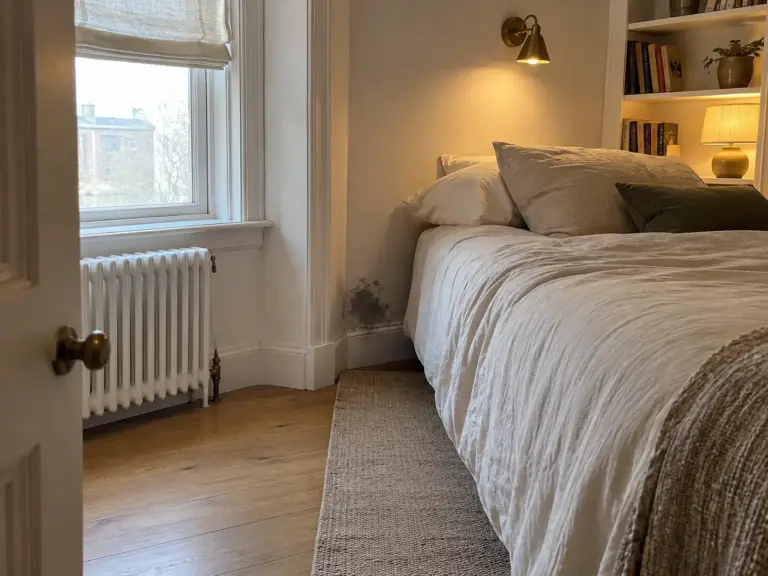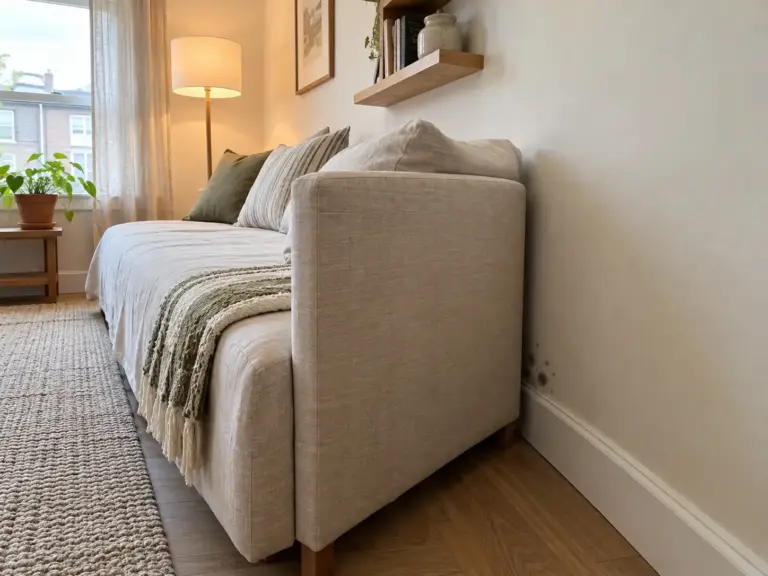
You are standing at the shelf with a spray bottle in your hand, because the patch low on the outside wall behind the bed has come back, and every label claims to be the best mold remover for bedroom walls. The bottle will clean what sits on the paint. It will not tell you why that wall is the one place in the room where moisture settles: the outside wall is usually the coldest surface in a bedroom, and a bed or a dresser pushed against it keeps the room’s air from reaching it.
So the answer is smaller than any shelf of mold remover for walls suggests. Read the wall first, start with detergent and water the way the EPA does, treat any bottle as a second step with a flaw of its own, and fix the water that no bottle reaches.
There is no single best remover for a painted bedroom wall. The EPA starts with detergent and water and a wall that dries completely, a disinfectant comes second, and bleach never meets an ammonia cleaner. The table puts the five usual choices side by side.
| Cleaner | On a painted wall | The wrong choice when | The flaw |
|---|---|---|---|
| Detergent and water | The EPA’s first step for hard surfaces: scrub, then dry completely | The wall is still wet behind the paint | Removes the surface growth only, and needs full drying time |
| White vinegar | Community pick for porous surfaces; check a hidden patch first | You expect it to fix a wet wall | Not an EPA step; what it does to the paint is unmeasured |
| Hydrogen peroxide | Community pick for porous surfaces; check a hidden patch first | You have not tried it on a hidden patch first | Not an EPA step; what it does to the paint is unmeasured |
| Chlorine bleach | Community pick for nonporous surfaces; the EPA does not call it routine | Any ammonia cleaner is anywhere near it | Painted drywall is not a clean nonporous surface |
| A commercial spray | Works on the surface; check a hidden patch first | The moisture source has not been found | Anti-mold sprays are a temporary fix |
Read the Wall Before You Buy the Bottle
The table ranks bottles, but every row assumes the wall is dry enough for any of them to hold. Whether it is comes from a reading that costs less than a bottle, and the reading points in a direction: bedroom wall mold means the surface is too damp, not too dirty.
What the EPA’s Humidity Band Says
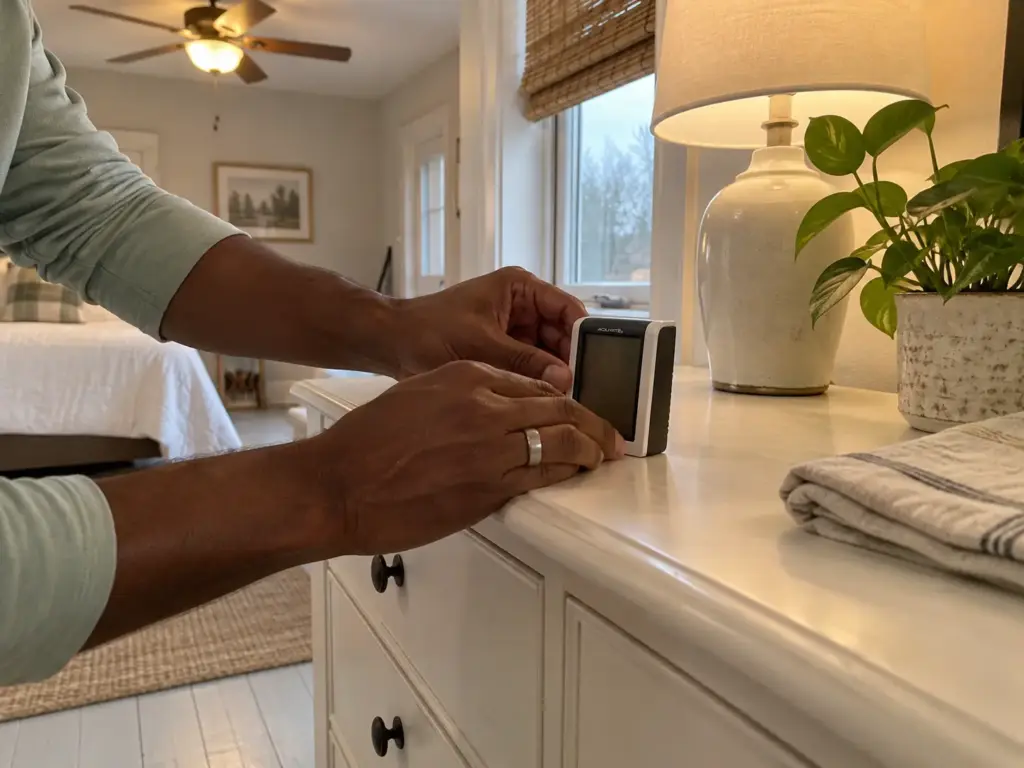
The EPA’s guidance on indoor humidity sets the ceiling at 60 percent relative humidity, with 30 to 50 percent as the ideal, and says to read it with a small, inexpensive instrument sold at hardware stores. That number describes the room’s air, which is why what humidity a bedroom should sit at is worth settling before you pick a cleaner. A bedroom that sits above 60 percent with the bedroom door closed at night tells you the wall will get damp again whatever goes on it. A room inside the band moves the question to the wall itself: a cold surface or a leak.
The Cold Outside Wall Behind the Bed
Air that touches a cold surface gives up some of its moisture there, and in a bedroom the coldest surface is usually the outside wall. Furniture against an exterior wall, a bed or a dresser, stops the room’s air moving over that stretch, so the moisture stays put and the growth starts low and behind the furniture, where nobody looks until it shows at an edge. That is the short version of why mold grows on a bedroom wall, and it explains why a patch there says more about airflow and temperature than about housekeeping.
A common worry after cleaning is that the mold returns from the cracks where it sat, even when the surface looks clean. The patch had been treated twice. Nothing about the wall’s cold or its damp had changed, and neither had the furniture against that exterior wall.
The Free Change Before Any Purchase
One change, then read again. Pull the furniture a hand’s width off the cold wall so the room’s air can touch it, and leave everything else alone for a few days. If the wall was the problem, the reading near it should drift toward the room’s number instead of staying above it.
If it stays high, change the second free thing: run the bathroom fan longer after a shower, or open the window for ten minutes. Do not do both on the same day, or you will not know which one worked.
A small hygrometer is the instrument for the reading. The AcuRite 00613 Indoor Thermometer & Hygrometer is the budget version of what the EPA describes, a gauge you can set on the dresser. Its limit is mechanical: it reads the air where it sits, not the surface of the wall, and a cheap unit can be a few points off, so one reading is a hint and three are a pattern. For how to take them, how to measure indoor humidity lays out three readings with one meter.
The Govee H5075 Bluetooth Hygrometer Thermometer logs the numbers to your phone, so the morning, midday and night readings need no notebook. It has the same blind spot as the AcuRite, because it also reads air and not wall, and the log only reaches the phone when the phone is within Bluetooth range.
Take the reading at the same hour on three mornings before you trust the number. A single reading right after the window has been open mostly reports on the window, and the wall’s true level only shows when the room has sat closed for a while.
What Detergent and Water Does on Painted Drywall
The table put detergent and water first, and it earns a section of its own because the roundups skip it: it is the EPA’s method for hard surfaces, it costs next to nothing, and every other step in this article is built on top of it.
Why the EPA Starts With the Plain Method
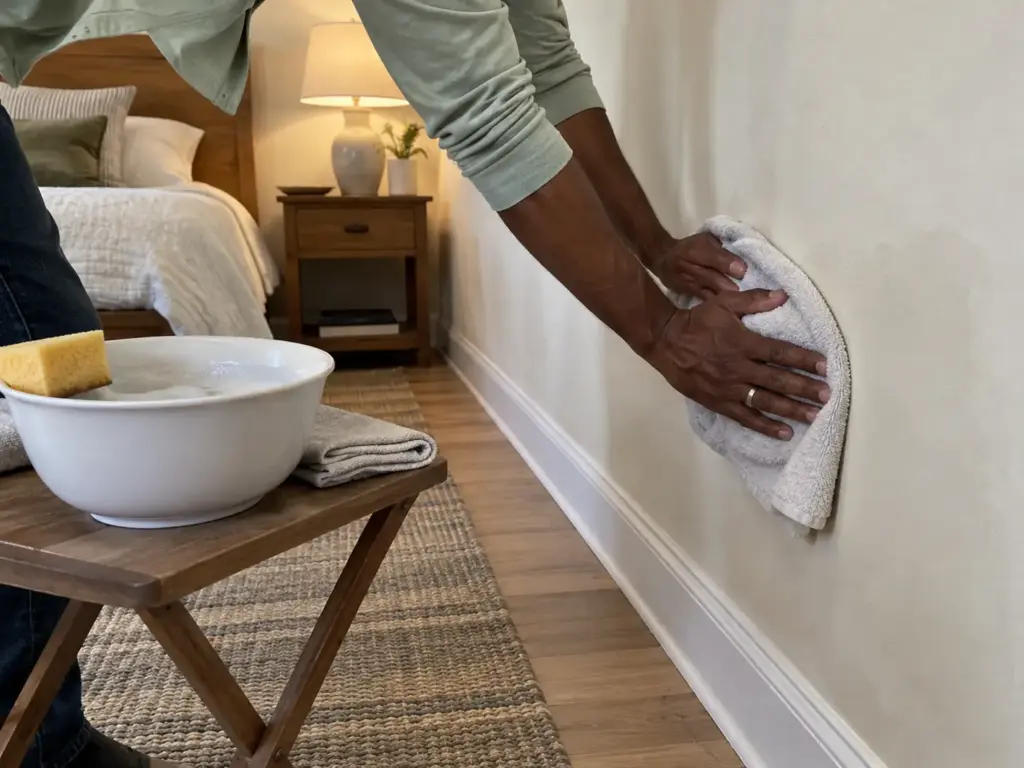
The instruction in the EPA’s brief guide to mold and moisture is short: “Scrub mold off hard surfaces with detergent and water, and dry completely.” Nothing in it needs a product aisle. On a hard surface the growth sits on top, so the plain method goes after the growth without adding a chemical. The same guide says to dry water-damaged areas within 24 to 48 hours, and that clock is the one the labels on the bottles never mention.
The Hidden Patch Before the Whole Wall
Painted drywall is a paper face under a coat of latex paint, and drywall paper takes water. Wring the cloth out until it is damp, not dripping, and try the method first on a spot nobody sees, behind the dresser or low near the baseboard.
Then let that spot dry for the rest of the day and look at it beside the untouched paint. A scrubbed painted wall can lose some of its sheen, and you want to find that out on a square the size of a coin, not across the whole wall. This is a check, not a finding: no source this article draws on measured what each cleaner does to a latex coat, so the hidden patch is the only honest test.
Drying Is Part of the Cleaning
A wall can look dry on the surface the same afternoon and read differently by evening, because the paper under the paint holds water longer than the paint does.
Mold comes back unless the surface stays dry. So the cleaning is not done when the cloth is put away. It is done when the wall has dried completely, with the furniture still off it and the door open for a while in the morning.
Do not paint or caulk over the patch to finish the job. The EPA’s cleanup guidance says not to paint or caulk moldy surfaces, and the wall has to be clean and dry before the paint question even comes up, which is covered in whether to paint over it once it is clean. The steps for a patch of this size live in the step-by-step for a patch under 10 square feet, so this article stays on the choice of cleaner.
Test every cleaner on the same hidden spot, one at a time, and let each one dry fully before you try the next. Two products on one square leave you unable to say which one changed the paint.
Vinegar, Peroxide and Bleach as a Second Step
If detergent and water leave a stain, or the patch is stubborn, the next question is which bottle from the cabinet under the sink. The answer the community gives is a split by surface, not a winner.
Where the Community Splits on Bleach
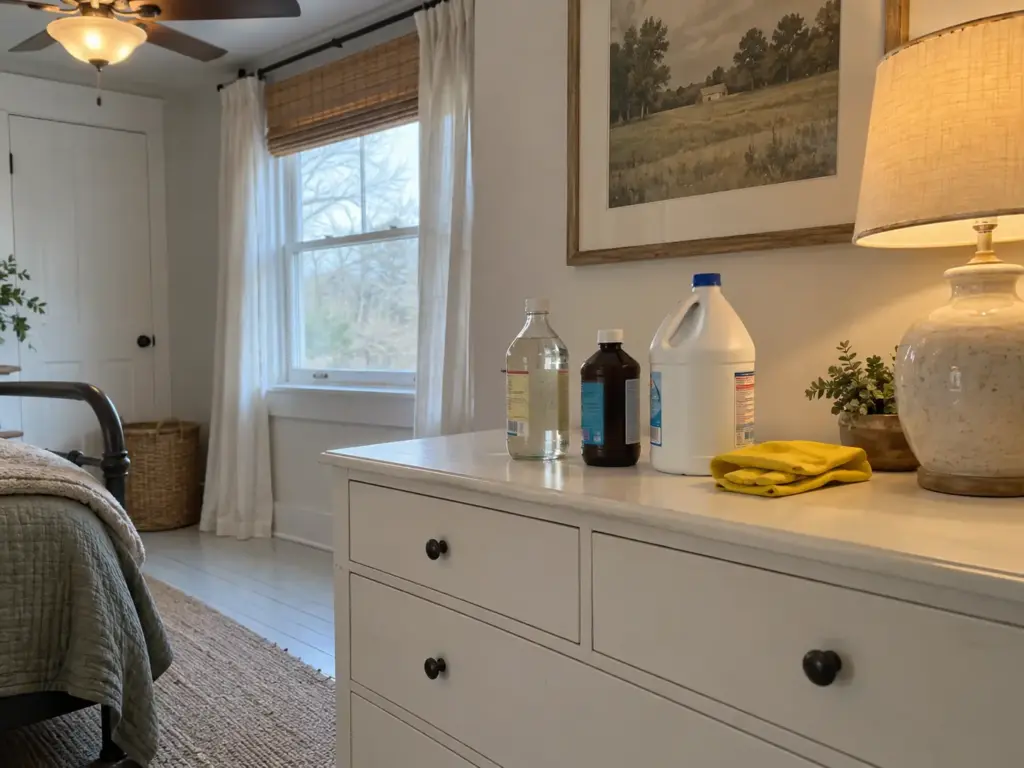
The EPA does not treat bleach as a routine step. A biocide such as chlorine bleach is not recommended as a routine practice during mold cleanup, so a disinfectant on a bedroom wall is an add-on for a stubborn patch and never the opening move.
People do reach for it anyway. Bleach works on nonporous surfaces such as tile or glass. Porous materials such as drywall often need to be removed rather than wiped. Hydrogen peroxide or vinegar on porous surfaces.” The catch is that painted drywall is neither a clean non-porous surface nor a plain porous one, which is the reason the hidden patch comes before the wall.
Vinegar and Hydrogen Peroxide on a Porous Surface
Vinegar and hydrogen peroxide are the options people choose when they want to avoid bleach on a porous surface, and both are household liquids you may already own. Neither is an EPA step, and no source this article draws on measured what either one does to a painted wall, so they get the same treatment as everything else: a hidden patch first, a full dry afterward. Whether peroxide lightens a painted surface is the kind of thing to look for on that patch, not to assume. And one more thing a bleach wipe in particular can do is make the dark patch look gone while the wall underneath stays damp, which is the reading that matters and the one the cloth cannot change.
The Rule That Is Never Broken
Never mix chlorine bleach with an ammonia cleaner. The EPA’s wording is blunt: “Never mix chlorine bleach solution with other cleaning solutions or detergents that contain ammonia because toxic fumes could be produced.”
Read the label of whatever bottle is already under the sink before a bleach spray goes on the wall, and keep one cleaner per wipe. Ventilation matters here: open the window while you work and keep a pair of gloves on. The full routine for a small patch, including what to wear, sits in the full routine for a small patch, and this article does not repeat it.
What a Mold Spray Label Can and Cannot Promise
The aisle of mold remover for painted walls, sprays and gels alike, sells one promise in forty ways, and the fair comparison is between the front of the bottle and what the cleanup guidance actually says.
What a Spray Adds and What It Cannot
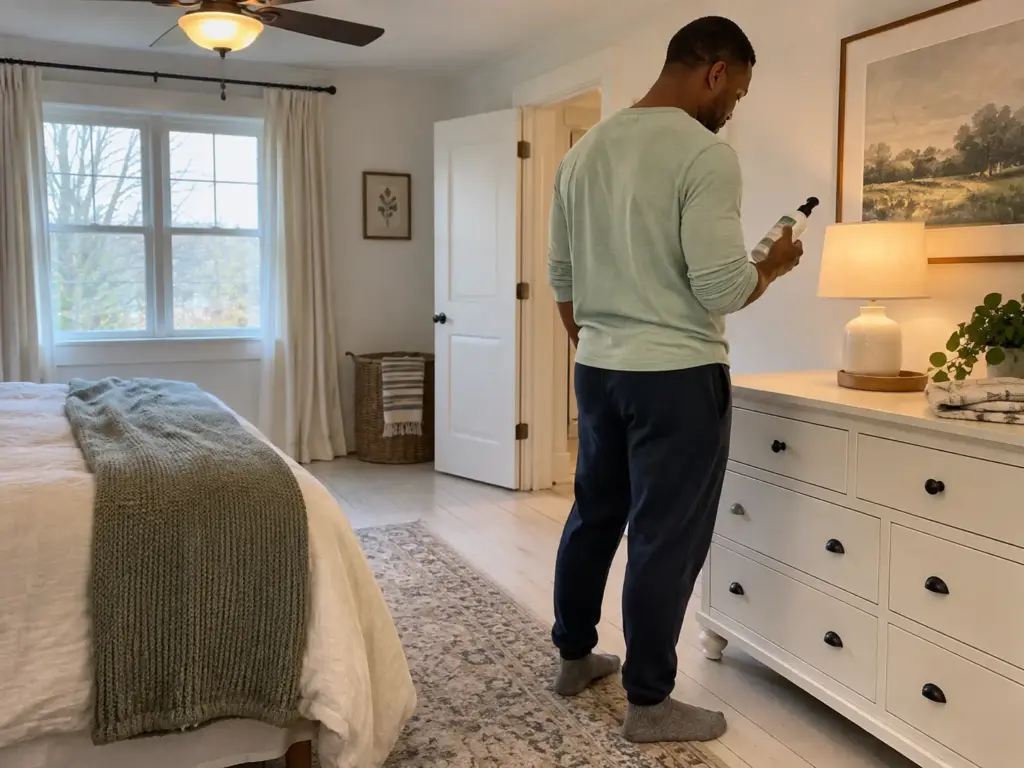
A ready-made spray adds convenience; it does not add a way to reach water inside a wall. A bleach-based remover can be sprayed around the patch, left for a short time, and wiped off with a wet sponge. That is a surface job, the same as the plain method.
Concrobium Mold Control is one name you will meet in this aisle, and what its label says about painted surfaces is for the label to settle. Whatever the formula, a spray works on the surface and not on the water behind it, and the residue it leaves wears off.
The Claim on the Front of the Bottle
Take the front label apart. A claim of permanent protection is a product claim, and it needs a source to be anything more.
One retailer listing sold a wall heater under a “permanently mold-free” claim with nothing behind it. The EPA’s own statement points the other way: “If you clean up the mold, but don’t fix the water problem, then, most likely, the mold problem will come back.” A product cannot promise a lasting result on a wall whose humidity nobody has read.
Why This Page Names No Winner
There is no winner here because the pieces that decide the outcome are not in a bottle. Detergent and water do the same first job as the spray, for far less, and the spray earns its place only on a stubborn patch after the plain method and a dry wall.
The EPA’s advice is to fix the water first, since a spray does not address the moisture. A “treated” wall some weeks later usually shows whether the room’s humidity was ever read. The one thing a table of bottles cannot show is whether the wall behind the paint is still wet.
When the Cleaner Was Never the Problem
Everything above treats the patch. This section is about the three places the water usually comes from, none of which a bottle reaches.
Water Running Down the Outside Wall
Sometimes the answer is not a product at all. Often mold comes from water running down the outside walls because the gutters are blocked. The lesson is plain: look outside before you look at the shelf. Clearing a gutter costs nothing, and a wall that is being soaked from the outside will return the same patch no matter what was sprayed on it.
A leak is a common hidden source: a roof leak or a pipe above the ceiling can feed the same wall, so check what is above the room. Hidden mold is the harder case, because you only see where it shows. Rooms with single-glazed windows, where the glass is cold, can see mold return again and again if condensation is not controlled.
A Cold Wall Behind the Furniture
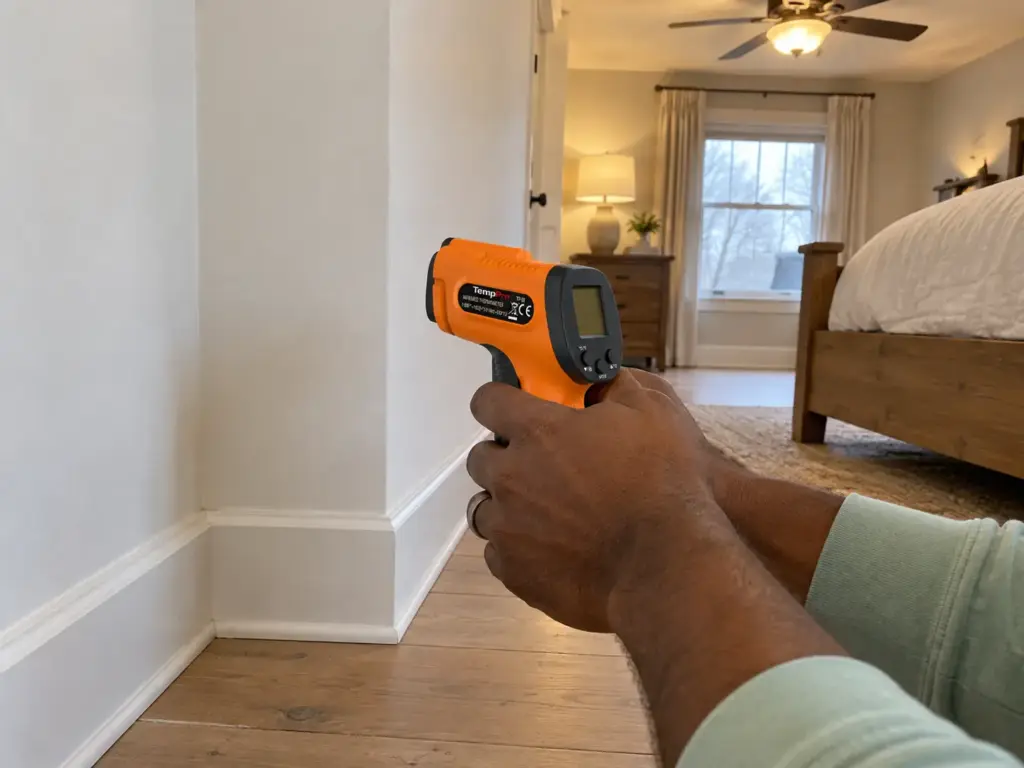
Before any instrument, put your palm flat on the wall behind the bed and then on an interior wall in the same room. The outside wall will usually feel noticeably colder, and the difference is the mechanism: a surface colder than the room’s air collects moisture. The TempPro TempScan TP30 Infrared Thermometer Gun turns that feel into numbers, since you can point it at the wall and then at an interior wall and compare. Its limit is that it reads the surface it is aimed at and nothing inside the wall, and the listing pitches it for pizza ovens, griddles and HVAC work, so no range or distance is claimed here.
The same cold-surface mechanism is why when condensation on a window means mold is a close cousin of this problem: glass and wall are both cold faces of the room.
Feel the outside wall with your palm before you read any instrument, then feel it again after the furniture has been off it for a few days. If the cold stretch has shrunk, that is a sign the wall was starved of room air.
The 10 Square Foot Line
The EPA draws the size line at about 10 square feet, roughly a 3 by 3 foot patch: under that, a homeowner can usually handle it, and over that, or with water damage, the EPA points to a professional. The size line and the steps are in the removal article. Porous materials such as ceiling tiles and carpet may have to be thrown away if they become moldy, according to the EPA, which does not say that about drywall, so a surface patch on painted drywall is not a reason to tear anything out. What decides it is whether the wall is still wet.
The General Tools MMD4E Moisture Meter for Wood, Walls and Water Leak Detect is the instrument that reads the wall and not the room. Its limit is that it gives a surface reading that depends on the material, and the listing does not state the probe type or scale, so treat it as a way to compare a suspect spot with a dry one on the same wall. When the open question is whether the wall itself is a problem for the building, that article owns it.
Month Two: Reading the Wall Again
A cleaned wall looks fine on the first day. The real test comes later, after a few weeks of normal use. This section is what to read after the cleaning and what a return means.

Counting the Weeks, Not the Hours
No published source counts the weeks a patch takes to come back, so this article gives no number. What the community does say is conditional: it returns when the surface is not dry, and in one single-glazed room it came back every two to three months. If you want the timing question handled on its own, how fast mold grows on a bedroom wall takes it.
For this wall, the useful habit is to read the same number at the same hour for a week. If the reading stays above the EPA’s 60 percent ceiling, the wall has not left the zone where mold regrows, and the next change is the room’s humidity, not a stronger bottle. A dehumidifier is a decision for after the free changes, not before them.
What a Returning Patch Tells You
Mold on bedroom walls that comes back in the same place the cleaner reached points at the water, not at the bottle you chose. The corner that dries last tends to be the one to watch, and the one reading that often shifts is the one next to the wall after the bed has been moved off it. Surface mold on paint is the visible part; the damp is the cause.
Do not paint over live mold to hide a return; the EPA says paint applied over a moldy surface is likely to peel. When the humidity number stays high even with the furniture moved, free ways to lower the humidity puts the free fixes in order. And remember the log shows the room, not the wall.
The Next Decision
The next question after a clean, dry wall is how to keep it that way, and how to keep mold off a bedroom wall takes the room from here. No device is the decision at this stage. The reading, the furniture and the gutter are.
Move the Furniture, Then Read the Wall
Three things to carry out of this. Read the wall’s humidity before you buy a bottle, because the cleaner removes growth and the reading says whether it will return. Start with detergent and water, which is where the EPA starts, and treat vinegar, peroxide, bleach or a spray as a second step with a hidden-patch check and a flaw you can name. And remember that no bottle fixes the water: the gutter, the leak and the cold wall behind the bed are what decide whether the patch stays gone.
For later, look at two things: the same-hour humidity reading you took in the first week, and the corner that dried last, since that is where a return shows first.
Tomorrow, pull the bed a hand’s width off the outside wall and leave it there. After a few days, take the reading again at the same hour and see whether the number near the wall has moved toward the room’s. That one change, and the reading after it, will tell you more than the shelf will.
Frequently Asked Questions
01What removes mold from bedroom walls?
On a hard painted surface, detergent and water remove it first, and the wall then has to dry completely. A disinfectant is only a second step, and the water source still has to be fixed.
02What gets rid of mold on walls for good?
Nothing removes it for good unless the moisture is fixed, because the EPA says the mold will most likely come back if the water problem stays. The cleaner removes growth, and the humidity reading shows whether it returns. See how to keep mold off a bedroom wall.
03Is vinegar or bleach better for mold on a wall?
Neither is the EPA’s first step, and the community splits by surface: bleach on nonporous, vinegar or peroxide on porous. Never mix bleach with an ammonia cleaner, and test a hidden patch of the painted wall first.
04What do professional mold removers use?
No list of professional products is backed here, so none is given. What the EPA does say is that areas over about 10 square feet, or with water damage, are a job for a professional.