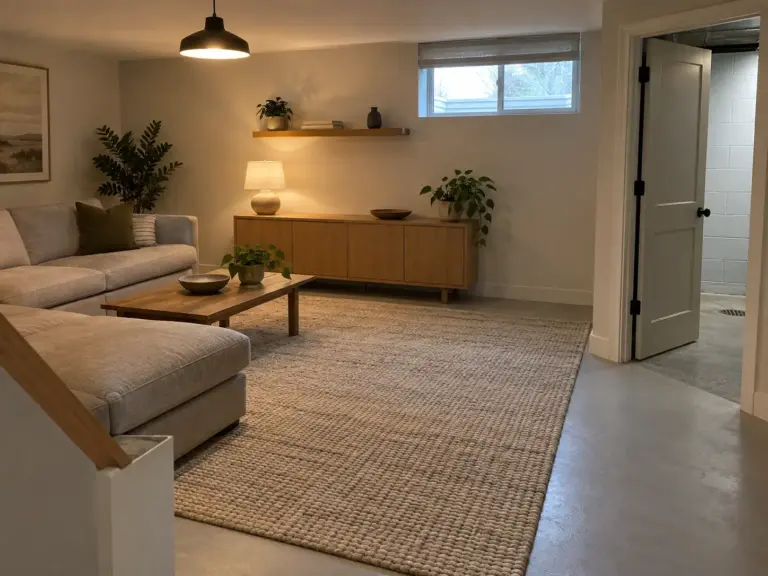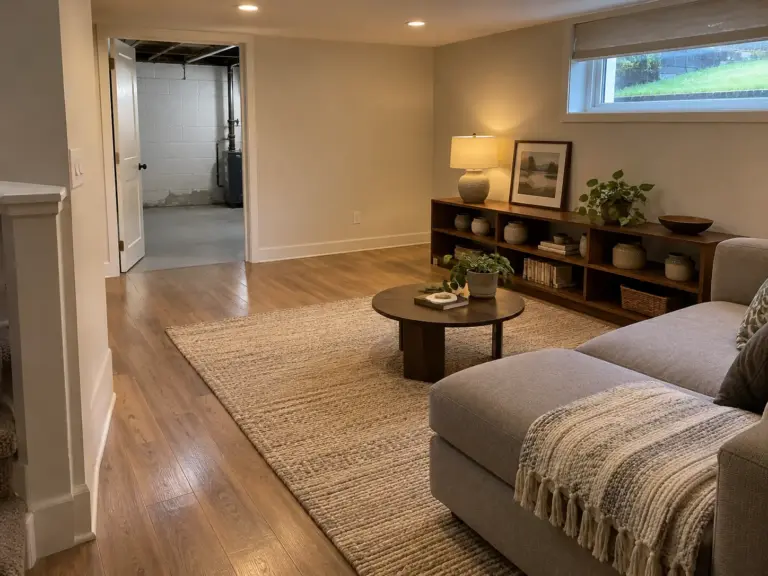
It is a cold morning, the bedroom floor feels clammy through your socks, and the meter by the basement stairs reads above 60 percent. So, does basement humidity affect the rest of the house? It does, because the basement is tied to every floor above it by an air path, not divided from them by a wall: warm air leaving the upper floors is replaced by air drawn in from below, and the stairwell is the easiest way in.
This guide follows that air up the house, then gives you the pair of readings that shows whether your basement is the cause or an innocent bystander, and puts the fixes in order, the free one before any device. If you are still working out what makes a basement damp in the first place, that guide comes first.
Quick Answer
Yes. Basement air climbs through the stairwell, any ducts or returns, and the gaps between floors, and it pulls hardest in cold weather. The first floor takes the most and each floor up takes less, so the upstairs reading, not the basement unit, shows whether the basement is the cause.
How Basement Air Gets to the Floors Above
A basement has no lid. It is the bottom of one tall column of air that runs up through every floor, so before any fix, work out which way that column is moving in your house and when it moves hardest.
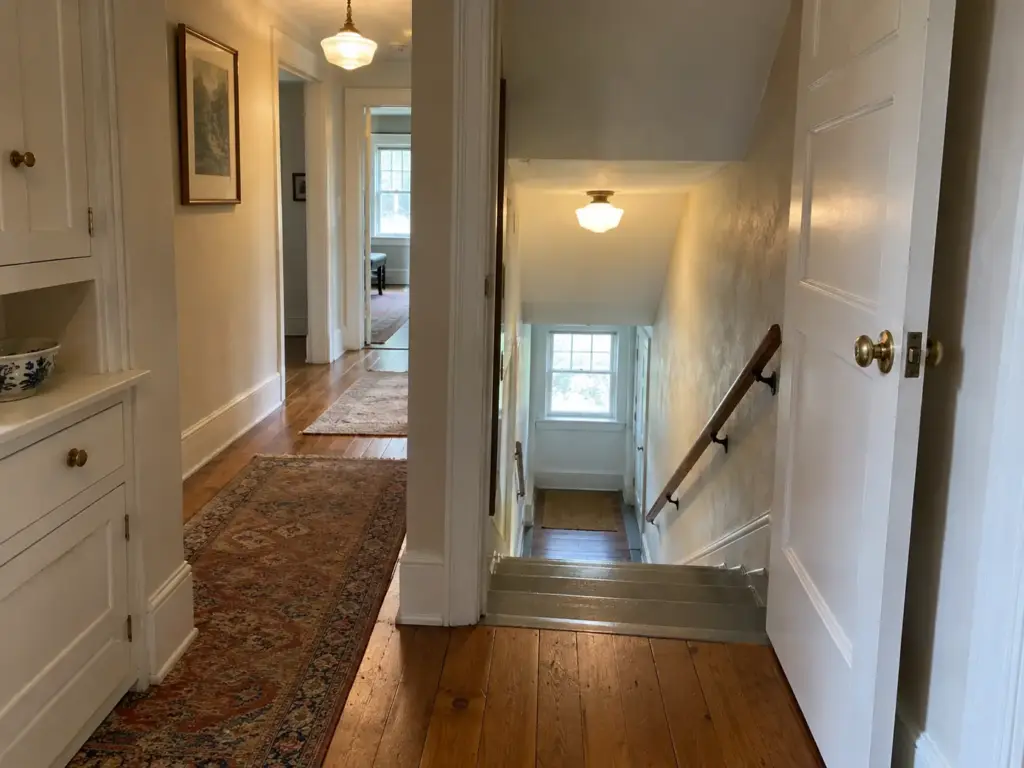
The stairwell is the path
According to Green Building Advisor’s explainer on the stack effect, “Hot air is less dense than cool air, so it rises.” That is the whole engine. As warm air drifts to the upper floors and leaks out through the ceiling and the attic, the house replaces it with air pulled in from below, and the lowest, most open route from the basement to the floors above is the staircase. Gaps at the rim joist, around pipes and along wiring runs add to it, but the stairwell is the one you can stand in.
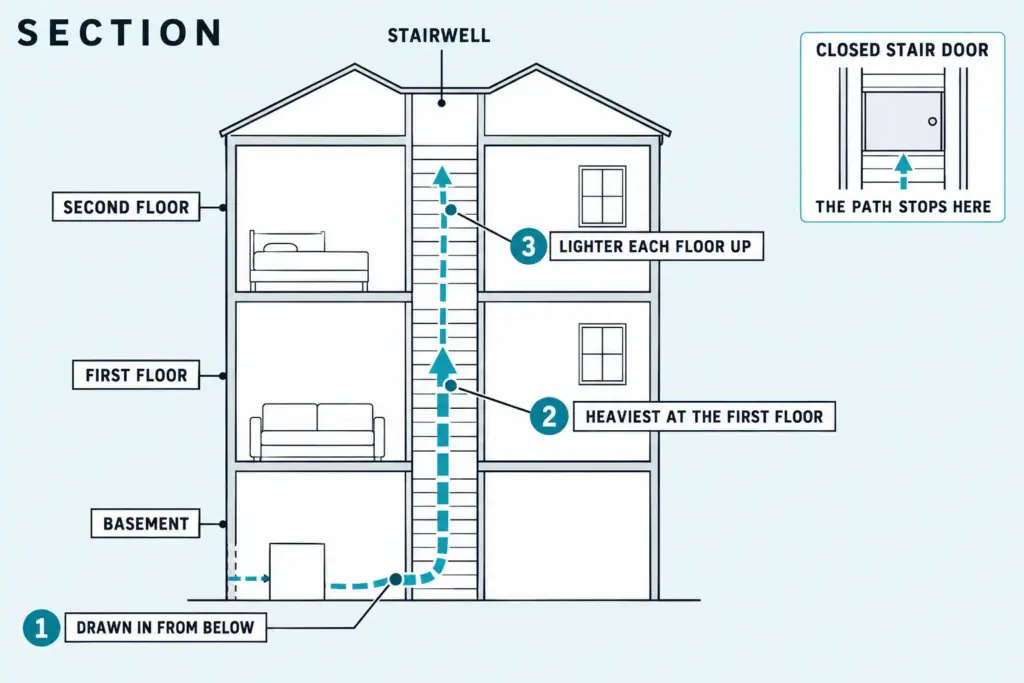
The place where this shows first is the stair landing, which tends to feel cooler and clammier than the hall beside it on a cold morning. That is the path announcing itself.
Why a cold day pulls harder than a warm one
Green Building Advisor puts the pressure behind that pull at about 4 pascals per story of height when it is cold outside, against about 1.5 pascals per story when it is hot. Treat the figures as that publication’s, not a standard, but the ratio is the useful part: the pull on a January morning is close to three times the pull on a July afternoon. A reading taken on a mild day therefore understates what the house does in its worst week, and that worst week is when people notice the damp feeling upstairs. If you want to see how the season moves the basement itself, which season the basement runs wettest has the wall-side answer.
Take your upstairs reading on one of the coldest mornings of the stretch, not on a mild afternoon. The pull is roughly three times stronger in the cold, so a calm day can make a path that matters look like a path that does not.
Each floor up gets less
The first floor sits closest to the path and takes the most basement air; each floor above it takes less, because the air has been mixed, diluted and used up on the way. This is air-path logic, not a measured figure.
It also explains a common complaint: a basement dehumidifier runs for weeks and the upstairs stays exactly where it was, because the first floor keeps feeding the basement more moisture than the unit can remove. There is a second reason the basement reads wetter than the floors above it. A cold wall of concrete can chill the air against it to its dew point, so condensation forms on the wall itself before the air ever reaches the stairs.
What Opens the Path Between Floors, and What Shuts It
Knowing that air can climb is half the answer. The other half is which openings in this particular house are doing the carrying, because the free fix is always aimed at one of them.
The openings that carry air up
Start with the obvious ones. An open stairway with no door at the top is a chimney with steps in it. In a house with central air, supply vents and return vents in the basement connect the cellar air to the whole system.
Then come the quieter routes: gaps at the rim joist and around pipes and wiring that Green Building Advisor lists, air leakage through an unsealed basement ceiling, and simply having several floors, since the taller the column the stronger the pull. Cold weather multiplies all of them.
What cuts the path
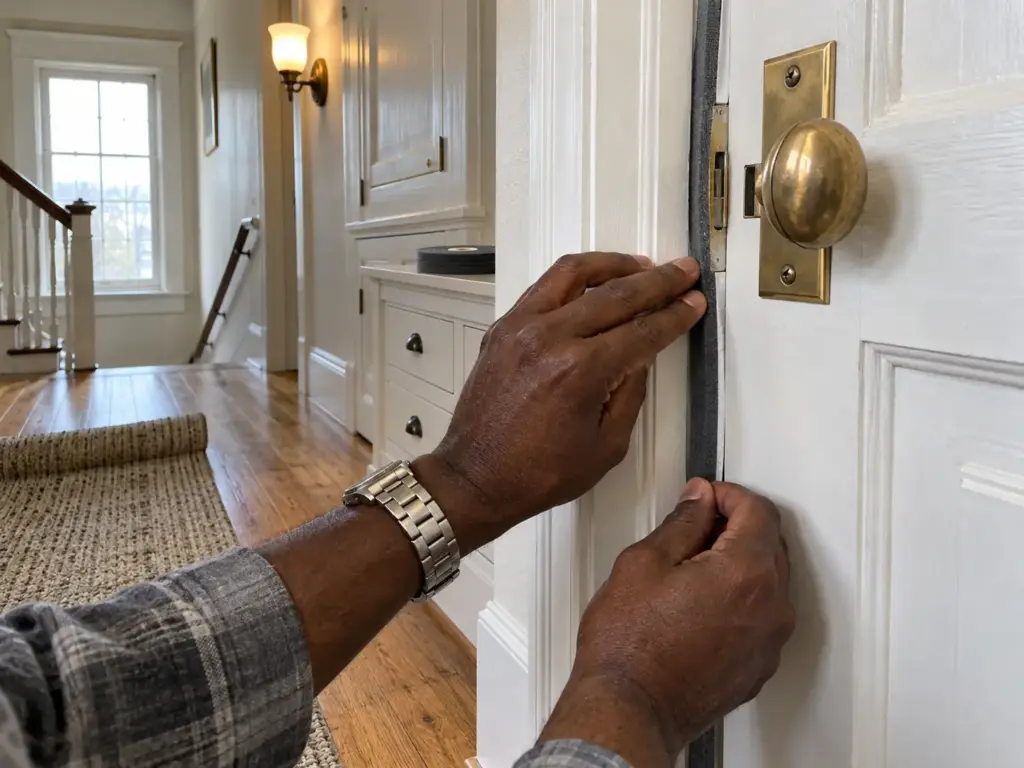
A closed door at the top of the stairs is the biggest single closer, and it costs nothing. Beyond the door, the list is short: no vents in the basement (the usual situation with ductless or window units), a sealed ceiling, and weatherstripping around the door itself. A door is not a seal, though. Keeping the basement door shut is not the same as sealing it: the air sealing between the basement and the first floor still needs work, and a door with a gap under it behaves like a door left ajar on a cold day.
Why a forced-air house differs from one with no ducts
With ducts and basement returns, the furnace fan can pull basement air through the whole system, so the path is the stairwell and the ductwork together, and it runs whenever the blower does. A ductless house has no such shortcut. There the stairwell and the exhaust fans do all the carrying, which sounds like a smaller problem and often is not, as the three-floor house in the ductless section below shows.
The Two-Floor Reading That Settles It
Everything above describes the path. What tells you whether the path matters in your house is a pair of numbers taken the same morning, one on each floor, and the rule for reading them.

Two meters, one morning
Put one hygrometer in the basement and one upstairs, away from outside walls, vents and the dehumidifier if you already own one, and read both at the same hour for several days. One meter carried from floor to floor cannot do this job, because the question is not how wet each floor is but which one moves first.
How to take a clean reading covers placement and timing for each meter.
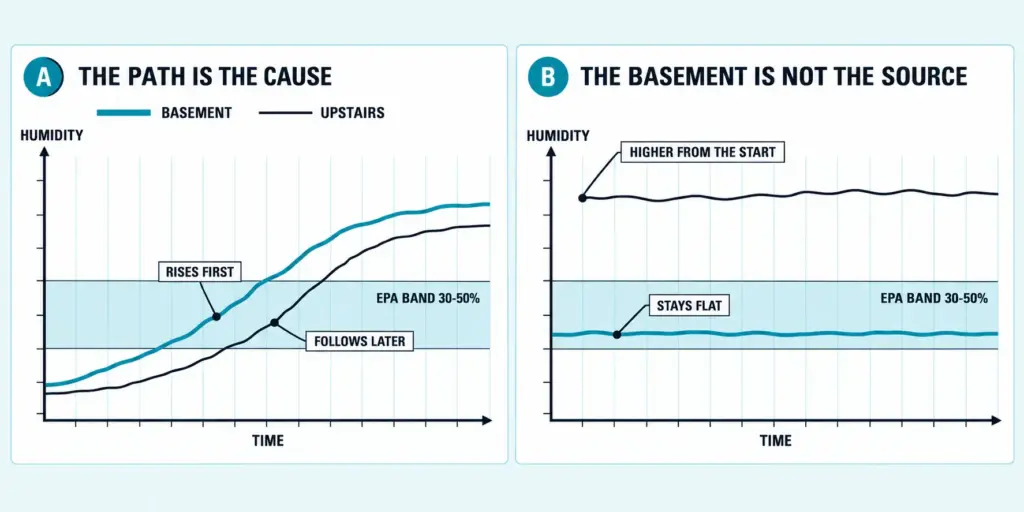
The rule is simple. If the upstairs reading follows the basement with a lag, rising a day or two after the basement does, the path is the cause and closing it is the first move. If the upstairs is the wetter floor from the start and the basement barely moves, the basement is not the source, and the cure lives somewhere in the building above.
The Govee H5075 is the cheap meter that makes this test possible, and the number it gives matters more than the plastic it comes in. It is Bluetooth only, with no remote monitoring through the app, so you read it on your phone while standing near it, and its temperature readings can wander by a degree or two against other devices. Battery life is the practical catch: a review summary of this model says “Battery life is poor in cold environments,” which makes a basement corner the worst place to put it and a seasonal battery check the habit to build. Put the Govee H5075 on a shelf rather than against the concrete, and if you want a humidity sensor built to log through a cold season, a sensor built for a cold concrete wall is its own guide.
Write the two readings on one line each morning, basement first, upstairs second. After four or five days the order in which the numbers rise tells you more than any single value.
Read the lead: which floor moves first
Look at the shape, not the totals. A basement that climbs on Monday and an upstairs that climbs on Wednesday is a path. An upstairs that sits higher than the basement on day one, and keeps sitting there, is a different house with a different problem.
One common shape is a basement that runs above 60 percent and an upstairs that reads somewhat high once the cooling comes on. Nothing in that picture suggests the upstairs started wet; it suggests it was handed the basement’s air.
What the EPA band says about both numbers
Use the same yardstick for both floors. According to the EPA’s own mold course, “Indoor relative humidity (RH) should be kept below 60 percent — ideally between 30 percent and 50 percent, if possible.” A 70 percent basement is well over that line; a 55 percent upstairs is inside it, even if the room feels close.
The two readings can both be “wrong” in different ways, and the band is what keeps you from blaming the wrong floor.
When the Upstairs Is Wetter, the Basement Is Not the Source
The same pair of meters can come back the other way, and when it does, a basement dehumidifier is the wrong purchase. It ends at a vent, a roof or a contractor rather than at a product.
The split-level that read higher upstairs
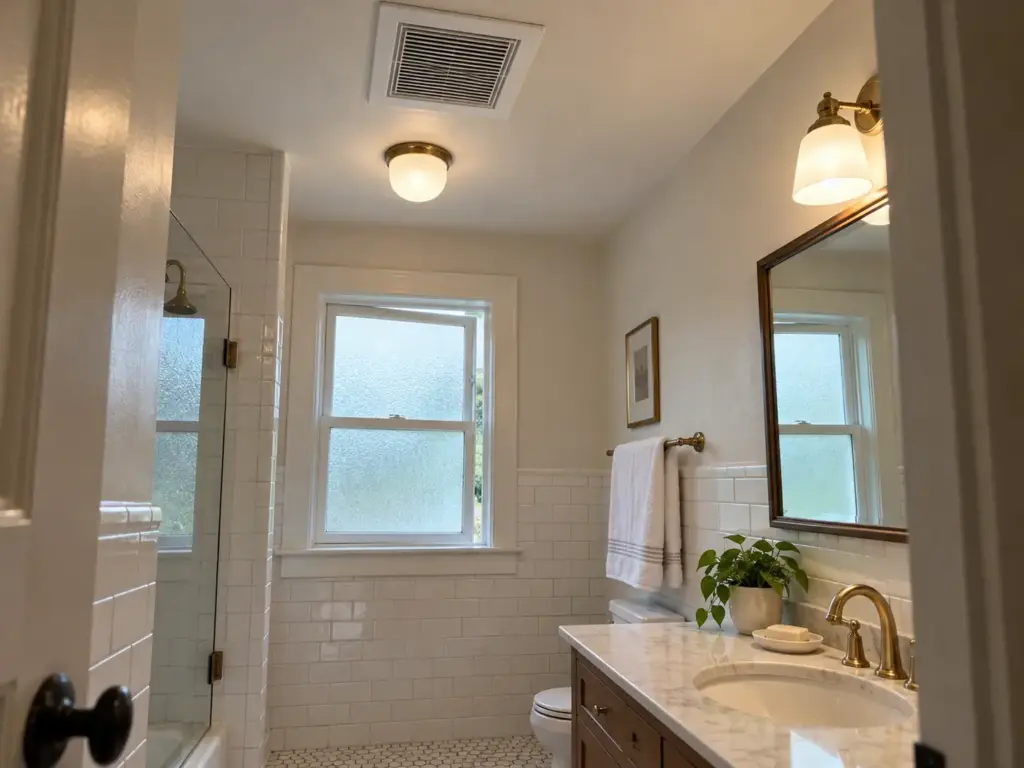
In one split-level house, the upstairs read wetter than the basement, with no visible leak, and mold had appeared in corners where air did not move. There was no visible leak, and mold had appeared in corners where air did not move. The usual advice points away from the cellar: a plumbing vent, the attic, or an air exchanger such as an HRV.
The details are thin, but the reading pattern is the point. When the basement is the drier floor and the upstairs is the wet one, running a basement unit lowers a number that was never the problem and leaves the upstairs exactly where it started.
The common advice here, to dry the basement first, fails the moment the reading says the moisture starts above. A dry basement and a damp upstairs is not a contradiction; it is a clue.
The other places moisture comes from
Upstairs moisture has its own sources: showers and cooking, a plumbing vent that ends in the wrong place, the attic, an exhaust fan that vents into a cavity instead of outdoors, or a slow leak. The list is long enough to deserve its own guide, so the full list of what makes a house read high is where to go.
One check separates air from building. A wall that stays wet or a visible leak is the house talking, not the air, and it sends you to the source of the water and, when that is not obvious, to a professional for the building. It does not send you to a bigger dehumidifier.
The summer case, with the air conditioning on
The effect can also run backward. Green Building Advisor describes the reversal: with the air conditioning on, hot outdoor air can push cooled indoor air down and out through cracks in the basement, and at least in theory that can lead to moisture problems on the top floor. The pressure is weaker in summer, so this is a smaller force than the winter pull, but it explains the owner whose upstairs is the damp floor in August while the basement reads fine. In that house the upstairs is the one sending moisture down.
The loop that traps a basement unit is simple: the first floor keeps supplying moisture, and the basement unit keeps removing it. Fixing the supply first is the only way that loop closes, and an upstairs corner that reads wetter than the basement is the sign the basement is innocent.
The Ductless House With No Vents to Blame
Many houses have no ducts and no basement vents, and the air still gets upstairs.
A three-floor house with mini splits and no ducts
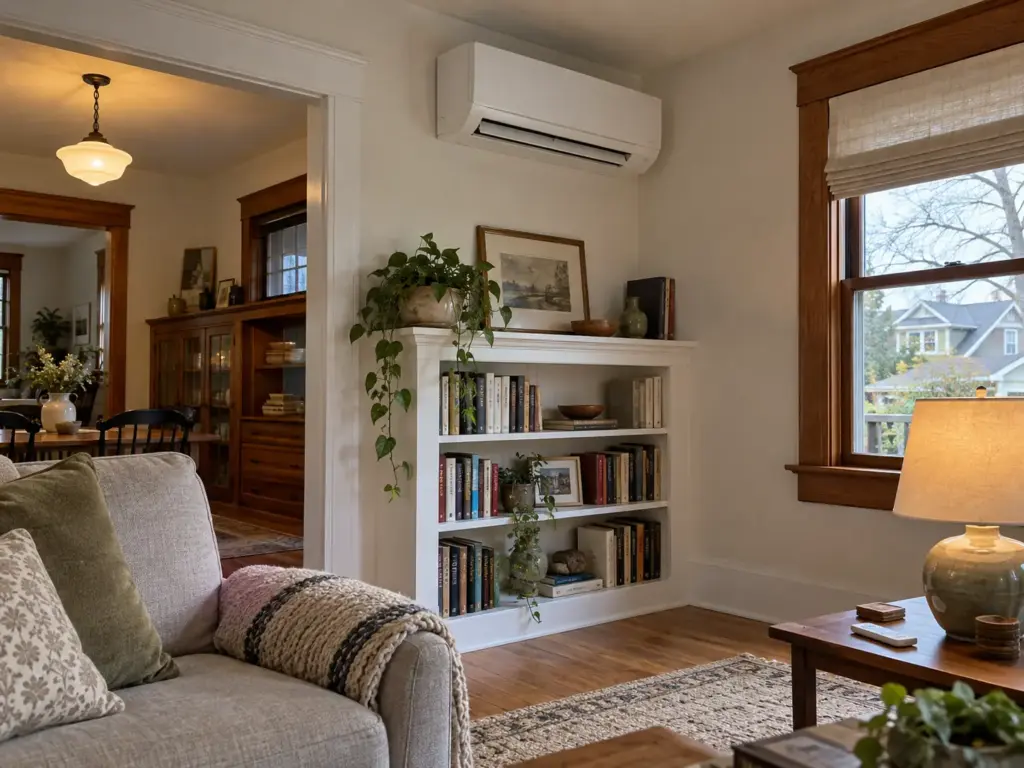
The clearest example is a three-floor house with a basement, ductless mini splits, and no ducts or vents besides exhaust fans for the kitchen and bathroom. The basement can go above 60 percent and up to 70, and the rest of the house runs somewhat high with the cooling on. There is no duct to blame and no basement vent to close. The path is the stairwell and the exhaust fans, and nothing else.
A ductless house can look safer than it is. The staircase connects the floors whether or not a duct does.
Cooling mode against dehumidify mode
A mini split in cooling mode dehumidifies less well than a dedicated unit. Checking for a dehumidify mode is a useful step: it cools less but removes more moisture. Set the fan to the lowest speed the unit offers.
They also say humidity up into the 70s points to significant air infiltration, which fits the idea that the house is being fed from somewhere below. The same holds for a window air conditioner: it cools the room, and the stairwell still connects the floors. The indoor unit’s fan speed changes how the room feels more than the thermostat number does, and a fan running fast leaves the air less time against the coil.
One reader’s floorboards tell the same story. Moisture from one floor can raise humidity in the rest of the house, and curled floorboards show it.
The exhaust fans and the stairwell
Every exhaust fan that runs removes air from the house, and the house replaces that air through its lowest and leakiest openings. In a house with a basement, those are often the stairwell and whatever gaps the basement offers. So the bathroom fan that runs after a shower is not only clearing steam; it is also adding to the pull on the cellar. That is one more reason to keep the stair door closed while the fans run.
Stair Door Open or Shut? Let the Reading Decide
The simplest change in the whole article is also the one people argue about, and both sides are right on a different day.
The case for leaving it open
One respondent in a Green Building Advisor Q&A says, “Opening the basement door allows for more airflow because of stack effect.” Another, whose upstairs is air conditioned, says that “If the upstairs is air conditioned leaving the door open will lower the basement’s humidity level somewhat” because the drier upstairs air can mix into the basement. That is a real effect, and it is why leaving the door open is the first reflex of anyone who wants the cellar dry.
The case for shutting it
The opposing view is to leave the door closed and condition the main floor with something of its own. The door does not decide which of the two is right. The reading does.
The one change, then read again
Decide after the two-floor reading. If the basement is wetter and the upstairs follows it, shut the door and treat the basement. If the upstairs is drier and conditioned, some mixing helps the basement, and the door can stay open. Then make that one change and nothing else, and read both floors again before touching anything.
After you shut the door, give it several days before you judge it. The upstairs reading lags the change, so one morning will not show it, and moving the door back and forth in the first week only blurs both meters.
Remember that a door is not a seal. A closed door with a gap beneath it still carries air, so seal the gap before concluding the door “did nothing.” The routine that keeps the basement itself low is the next stop once the path is under control.
Close the Path First, Then Size the Basement Unit
With the reading in hand there are only two moves left, and they go in order: shut the path, then dry the floor that is actually wet.
Free first: door, gaps and the fan setting
Close the stair door, seal the gaps at the pipes and wiring runs, fit weatherstripping around the door, and in a ductless house move the indoor unit to its dehumidify mode or lowest fan speed. Then read both floors again. If the basement still reads above the band and still leads the upstairs, a basement unit is justified. Doing both in one step makes it impossible to tell which one worked.
The basement unit, once the basement is the wet floor
Before choosing a unit, how big a unit the basement needs walks through the sizing. A pint rating is a capacity under a stated condition, not a guarantee for the floors above: 50 pints per day is a figure for the basement air, and the first floor may keep feeding it.
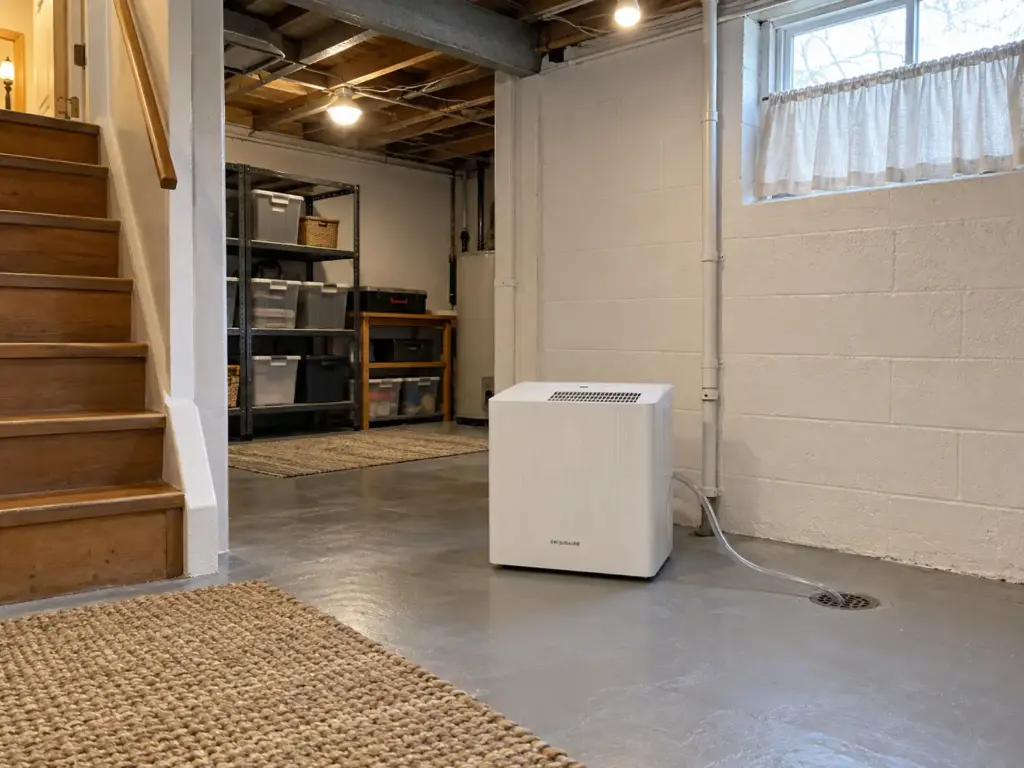
The Frigidaire 50 Pint dehumidifier with a built-in pump is a portable dehumidifier that pulls up to 50 pints per day and has a 35 to 85 percent humidity setting. The built-in pump is the feature that matters for a basement, because it sends the water through a drain hose to a floor drain without a hand-emptied bucket, and a basement unit that no one has to empty is one that actually runs through a week when the house is empty.
The trade-off is in the reviews: there are reports of the compressor failing earlier than expected, the noise runs around 70 to 74 dB on the higher settings, and the pump sometimes malfunctions. Those complaints trace to the same product line rather than to this exact listing, so read them as a warning about the family. Run it only after the reading says the basement is the wet floor; if the upstairs leads, this is the wrong purchase.
The part that gets forgotten at month two is the drain: a hand-emptied bucket that fills overnight shuts the unit off, and a hose that kinks lets it back up. Check the drain path each time you swap the Govee battery, once a season.
The budget version, and what each one gives up
The Midea Cube 50 is a 50-pint dehumidifier for a basement, rated for 4,500 square feet on the listing and Energy Star certified, and the variant here has no pump. That puts it in the same pint class as the Frigidaire as the budget option, with the drain done by a hose or a bucket you empty yourself. That is its catch: without a pump, the water needs a downhill path or a regular visit.
There is also no long-run record to point to for this model the way there is for the Frigidaire, so treat its behavior over a few seasons as unknown until you have run it yourself. ## Two Meters Tomorrow, One Change After, Then Read Again
Three things carry the whole article. Yes, the air carries basement humidity up the stairs and through every opening, strongest on the cold days and weaker on each floor up. Two meters read the same morning tell you which floor is the cause, because the one that leads is the source. And you close the path first, then dry the floor that is wet, never both in the same step.
Plan one check for later. After the first cold stretch, read both floors again and swap the basement meter’s battery, since the cold drains it faster than a shelf upstairs does. If the upstairs still leads, look at the roof, the plumbing vent and the exhaust fans, not at a second dehumidifier.
The change to make tomorrow is to put the two meters in place, one in the basement and one upstairs, and read them at the same hour. What the numbers do over the next four or five days tells you whether to shut a door, seal a gap, or look somewhere above the cellar entirely.
Frequently Asked Questions
01Will a dehumidifier in the basement dry the whole house?
It dries the basement and slows the moisture climbing the stairs, but it will not dry a floor that is wetter on its own. If the upstairs reads higher from the start, a basement unit treats the wrong floor.
02Should I leave the basement door open or closed?
Read both floors first: shut the door if the basement is wetter and the upstairs follows it, and leave it open only if a drier, conditioned upstairs can share its air. A closed door still passes air through any gap beneath it, so seal that gap before judging the result.
03Can the upstairs be damp when the basement is dry?
Yes, an upstairs floor can read damp while the basement stays dry, because showers, cooking, a plumbing vent, the attic or a leak can supply the moisture directly. In summer, air conditioning can even push the flow downward. Start with the full list of what makes a house read high.
04Does a ductless mini split help with the upstairs humidity?
Partly: a mini split’s dehumidify mode removes more moisture than its cooling mode, especially at its lowest fan speed, but it does nothing to close the stairwell path. That advice is a first thing to try, not a guarantee.
05How do I tell which floor is the wettest?
Put one meter on each floor, read both at the same hour for several days, and watch which one moves first; the floor that leads is the source. Keep them away from outside walls, vents and the dehumidifier.