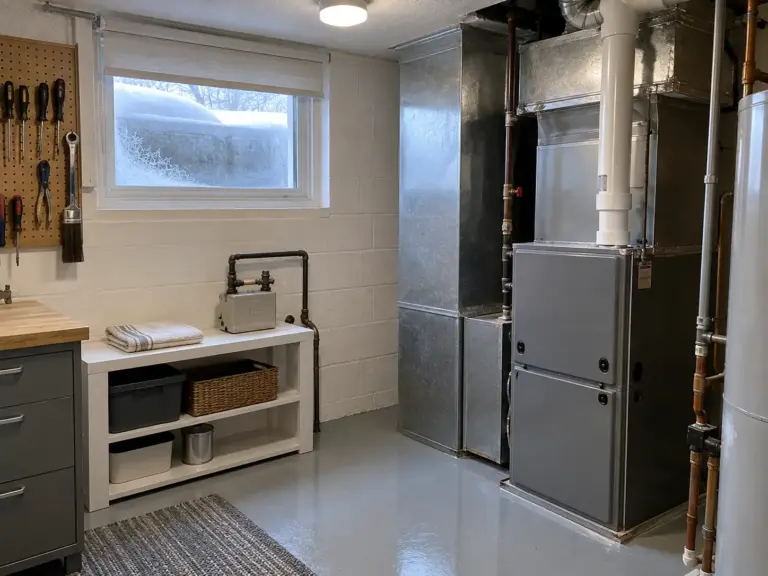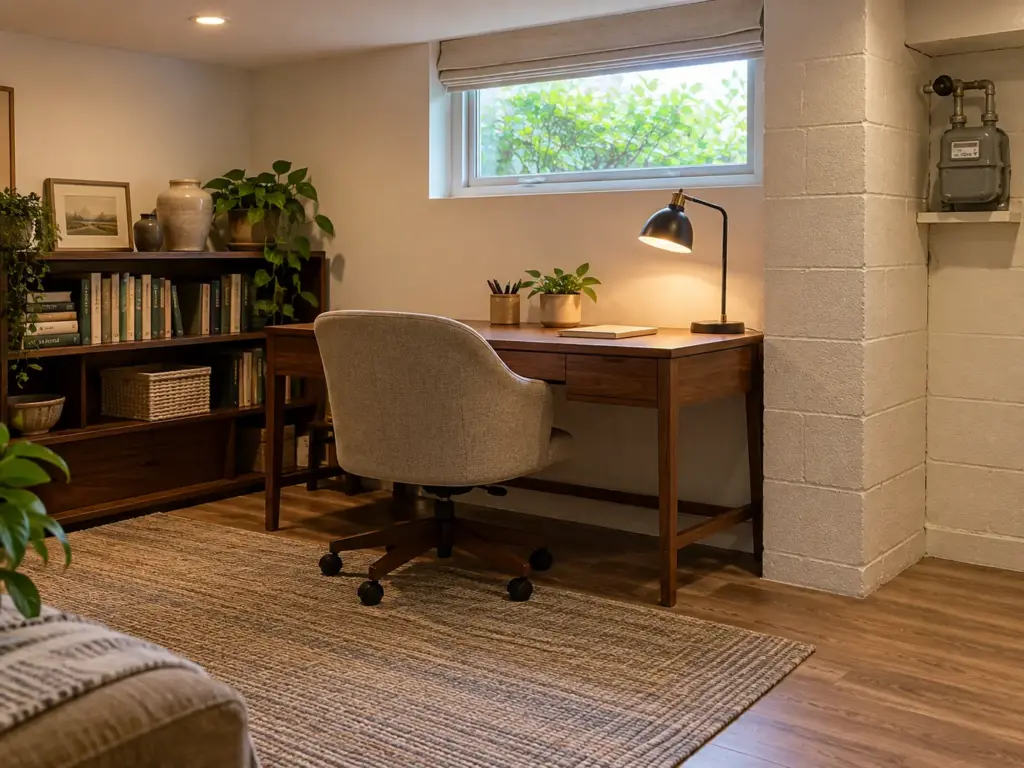
On the first warm, sticky stretch of the year, the basement door opens onto a musty, closed-in smell. In the cold months the same room has a small window near the ceiling gone cloudy, or even frosted, at one corner. Is basement humidity worse in summer or winter?
Air in a damp basement is not wet on its own: what counts is the temperature of the wall it touches, because water lands on any surface colder than the air’s dew point. Most basements read worst in the warm months, that flips when the house adds water of its own, and a two-reading test settles which one you have and what to run when.
Quick Answer
Usually summer, because warm, humid air meets a basement wall that stays cool. Winter reads wetter only when the house adds water, such as a humidifier set high, or a cold wall beads water. Read the room and the wall at the same hour in your season; the wall decides.
Why Summer Is the Usual Answer, and Why It Is Not Always
Most basements read worst in the warm months, and the reason is the wall, not the heat. That is the usual answer, and it holds until the house starts adding water of its own, which is the next section. Three things decide how wet a summer basement gets: the wall itself, the air conditioner, and the window someone opens to help.
Where the Water Lands in July
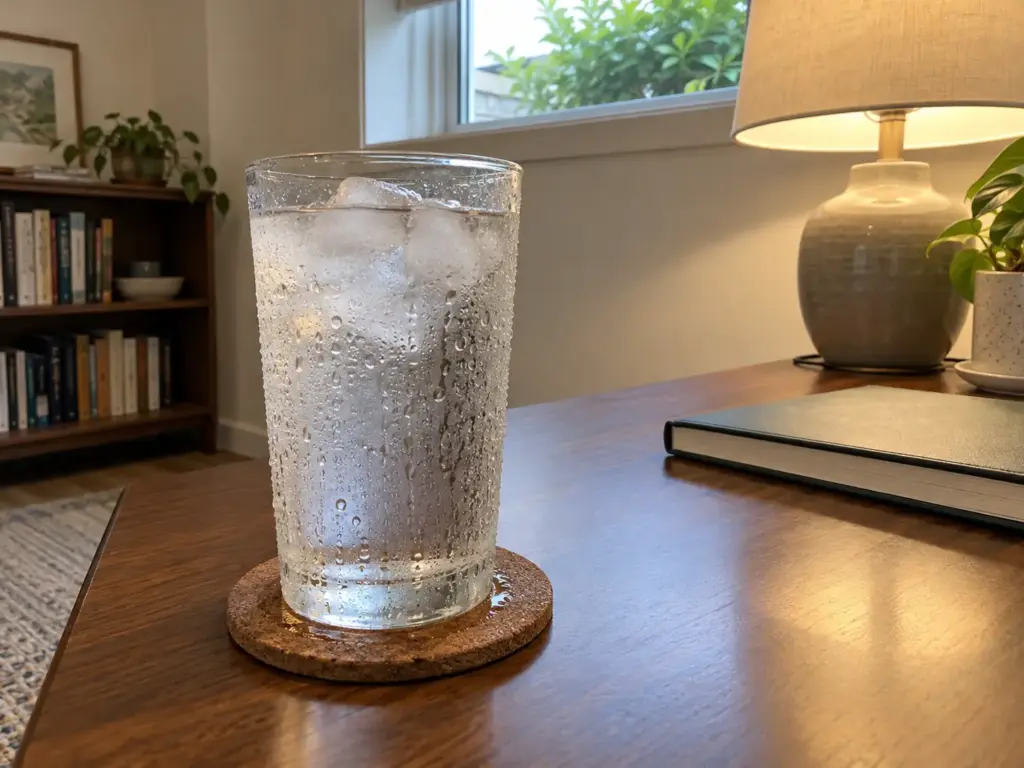
Carry a cold glass to a desk in a warm room and the outside of it goes wet, though nothing leaked. A basement wall is that glass left out all summer. The ground around a foundation keeps the wall cool while the air drifting down the stairs is warm and loaded with water, and the moment that air touches a surface colder than its dew point (the temperature at which it can no longer hold all of its water) the water comes out on the surface. That is the mechanism in short; the long version, including the vapor that works through concrete, lives in what causes basement humidity.
Press your palm flat to the wall on a sticky day. If it feels cool and faintly clammy while the gauge in the middle of the room reads acceptable, the wall is where the season shows up first, and the room is the last to admit it. The same 50% on the room’s gauge can mean a dry wall in one season and a sweating one in another, because the gauge does not know how cold the wall is.
The wall also changes slowly. It takes a stretch of warm weather to warm through, and the wet days arrive ahead of it, which is why the first humid stretch of the year is the one to watch.
Why the Air Conditioner Can Make the Wall the Wet Surface
You would expect the air conditioner to help, and it does pull some water out of the air. But a University of Minnesota publication on basement moisture lists air conditioning among the things that aggravate basement moisture problems, to a lesser degree than weatherization (which the publication defines as weather-stripping, caulking and similar actions that cut the air exchange with the outside and lower the interior temperature), because it can lower wall and floor temperatures below the dew point of the surrounding soil. Moisture then condenses on those cooler surfaces, the publication says, unless an adequate insulated vapor barrier is in place. It is an older document, and the physics in it has not changed.
Glass shows the same thing in a place you can see it: condensation on windows when the AC is on is the window version of this wall. It is also how a basement can feel dry to stand in, with the air conditioner running, and still show water on the wall.
Why Opening the Basement Window on a Humid Day Backfires
Opening a window is the reflex, and on a humid day it works against the wall. An older National Bureau of Standards circular on basement moisture allows that airing out can dry a basement under some conditions, when little of it touches the ground or the surrounding ground is dry. Then it adds that such ventilation “may increase the amount of moisture condensed on the walls and floors, especially during warm and humid weather.”
The reasoning is the glass again: basement walls and floors do not warm quickly from ventilation, so the warm, wet air arrives at surfaces that are still cold. The circular even tests the habit of opening windows on hot, sunny days and shutting them at night, and calls it good practice for houses but not necessarily for basements, for the same reason.
The EPA’s guidance on mold makes the same call from the other side, and opens windows only when it isn’t humid outside. So the decision is a comparison, the outside dew point against the wall, made before the window moves. Your weather app lists the dew point next to the temperature, and indoor humidity by outdoor temperature shows how the air outside sets the numbers inside.
Tape a plain thermometer to the wall at hand height and read it next to the outside dew point. If the dew point is below the wall’s temperature, the open window cannot put water on that wall; if it is above, the window is delivering water to a surface cold enough to collect it.
When Winter Reads Wetter: The Water the House Adds
A basement can read wetter in January than at the height of summer, and when it does, the cause is usually inside the house rather than outside it. Two things do it: a humidifier running upstairs, and a cold wall that beads water while the room looks fine. Neither one is the cold itself.
The Humidifier Upstairs Sets the Floor
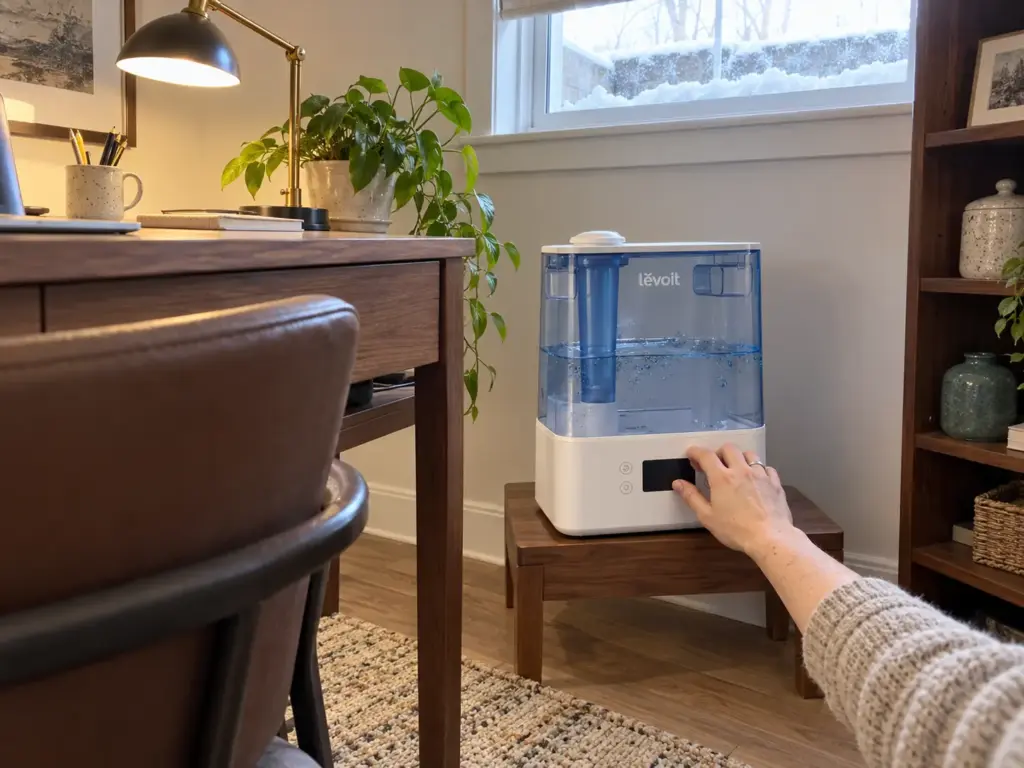
You turned the humidifier up in December because the bedroom felt dry, and that water does not stay in the bedroom. Moisture moves through a house, and the basement is part of it. So before blaming the cold, read the humidifier’s setting: lowering it a step is a free change, it takes a minute, and it tells you whether the house is the source. The ceiling for the heating season is lower than the year-round 60%, and what basement humidity should be in winter carries that number.
If the unit upstairs is a top-fill ultrasonic such as the Levoit Classic 300S, with a 6-liter tank, a maker’s rating of 505 square feet and up to 60 hours a run, the setting is on the app. It has two flaws worth knowing, both from Amazon’s review summary: some customers report it breaking after a month of use, and others say it doesn’t raise humidity at all. The second complaint cuts the other way for this problem. A unit that isn’t humidifying cannot be feeding the basement, so if lowering its setting changes nothing, the source is somewhere else.
The trap also runs in the other direction, and whether basement humidity reaches the rest of the house follows it. The University of Minnesota publication notes the reverse as well: excessive basement moisture may contribute to excessively high interior winter humidity.
A Cold Wall Can Bead Water Even When the Room Reads Fine
The wall has cold spots, and the air touching one can drop below its dew point while the gauge across the room sits inside the band. Look at the small window: the corner that clouds, or frosts, first is the cold spot, and the same corner tends to go first in every cold snap. The wall is the same surface it was in summer. What changed is which air is touching it, and how indoor humidity shifts with the cold covers the whole-house version of that swing.
Lower the Setting First, Then Read Again
One change, then a reading. Lower the upstairs humidifier a step, leave everything else alone, and read the basement again over the next few days. If the house was the source, the number should drift down toward the EPA’s 30 to 50% target.
The overshoot is the upstairs reading falling under that 30% floor, and that is the signal to move the setting back half a step. Two steps would move the number faster, but one step tells you more.
Write the humidifier setting and the basement reading on the same line of the same notebook, with the date. When the basement number moves, the line beside it names the change that did it, which a memory of the week never does.
The Two-Reading Test That Settles It in Your Basement
The calendar will not settle this; two readings will. One goes in the middle of the room and one goes against the wall, both at the same hour, once in a humid week and once in a cold week. This is a test of your own basement, not a published finding, and the table at the end says what each pair of readings means.
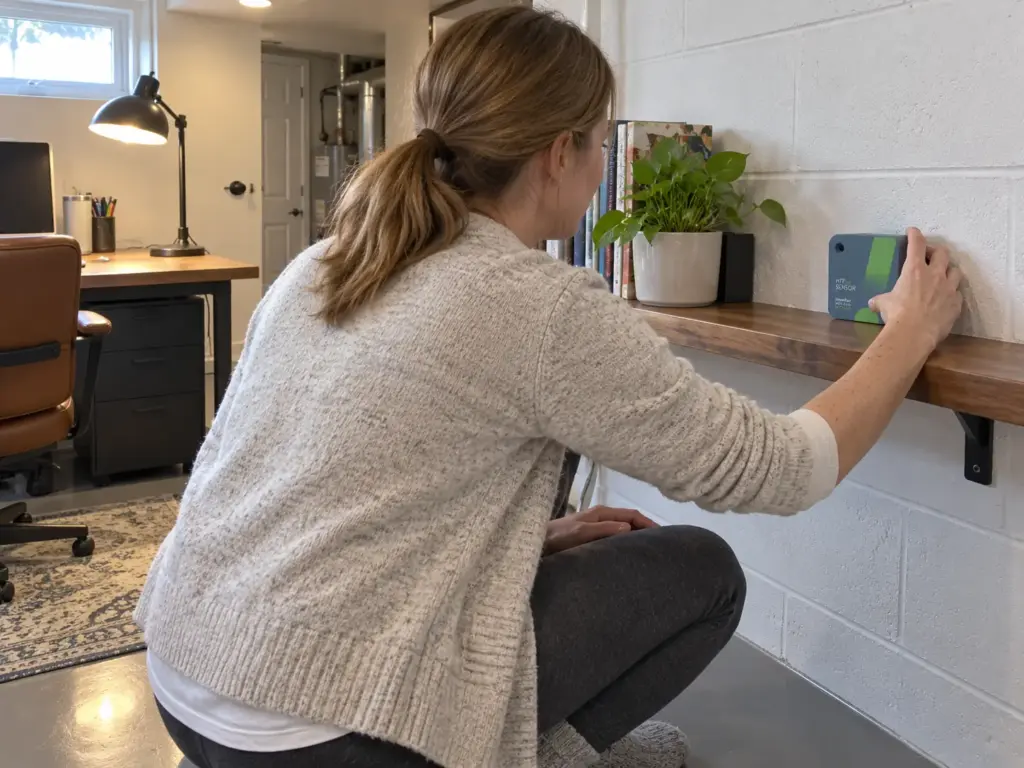
Reading One: The Middle of the Room
Set a hygrometer in the middle of the basement at hand height, so it matches the wall reading, away from the wall and out of the draft of the stairs, and note the humidity and the dew point. According to the EPA’s mold guidance, “To help prevent mold growth, try to keep the indoor humidity below 60%, ideally between 30 and 50%.” That is one band for the whole year, which is exactly why it cannot say which season is worse here: the test reads which side of it the basement lands on in each season.
And the room alone can mislead. It can sit at 52% while the wall sweats, because the wall only has to be colder than the room’s dew point. For the summer side of the same question across the whole house, see summer indoor humidity.
Take the reading at the same hour each time. A basement with a small window tends to see the room and wall numbers drift apart as the day warms, so a morning reading against an afternoon one measures the clock, not the season.
Reading Two: The Wall, at Hand Height
For the second reading, hold the sensor flat against an exterior wall (one that touches the ground outside), at hand height. Give it a few minutes to settle before you write the number down, because it starts at room temperature and has to cool to the wall’s. Its temperature is, near enough, the temperature of the wall, and its humidity is the humidity of the thin layer of air the wall is cooling.
The rule that follows: if the temperature at the wall is at or below the dew point of the room, water is landing on that wall, whatever the room’s gauge says. As arithmetic only: air at 68 °F (20 °C) and 55% humidity has a dew point near 51 °F (11 °C), so any spot on the wall at 51 °F or colder gets wet while the room’s gauge sits comfortably inside the band.
With a plain hygrometer the signal is the wall-side humidity climbing toward 100%, which is the same fact seen from the other end. A sensor that handles cold concrete walls covers where to mount one for this.
The SensorPush HTP.xw is the logger built for the job: it records temperature, relative humidity and dew point, keeps 30 days of data on board, and so lets you read a whole humid week instead of one afternoon. Its listing prints no accuracy figure, so use it for the gap between the two places and not for an exact number. The reviews’ complaint is the connection. Bluetooth works well for some customers and gives others poor reception, and battery life and value are mixed, so check the signal from where you will stand before you fix it to a basement wall.
The budget route is the AcuRite 00613, a thermometer and hygrometer with a humidity gauge. Two readings are all the test needs, and it can give them. But a gauge shows the moment in front of you, so the log is a notebook you keep, and inexpensive hygrometers can sit a few points apart from each other, which matters when the answer is a gap.
Before the first test, put both sensors side by side in the middle of the room for ten minutes and note the difference. Subtract it from the wall reading. Without that step, two cheap sensors that disagree by a few points hand you a gap that is only their own offset.
What the Pairs Say
Read the two numbers as a pair, once in a humid week and once in a cold week. Here, “high” means above the EPA’s 60% ceiling, and “wet” at the wall means the temperature there is at or below the room’s dew point. The table is the logic of the test, not a seasonal finding from any study.
| The pair of readings | What it says | The first change |
|---|---|---|
| Room high, wall wet | The air itself carries too much water, and the wall is where it lands first | Humid week: keep the windows shut and run the dehumidifier. Cold week: lower the upstairs humidifier a step |
| Room in the band, wall wet | The wall is colder than the room’s dew point: a surface problem, not an air problem | Hold off on a dehumidifier; repeat the wall reading over a few weeks and trace where the water comes from |
| Room and wall both in the band | This season is not your bad one; the other season is | Change nothing, and take the same pair in the other season |
| Wall wet only in the cold week | A cold spot is meeting the moisture the house adds, even though the room’s number looks fine | Lower the upstairs humidifier a step, then read the wall again |
The week with the worse pair is your season. If neither week shows a bad pair, the basement is inside the band in both, and the shoulder months below are the ones to watch. After you change one thing, repeat the same pair in the same kind of week; the change worked if the pair moved.
Running the Dehumidifier by Season
The dehumidifier is a summer tool and a winter question mark, and the readings from the last section say which of the two you are in. The free moves come first, in a set order, because three changes at once leave you unable to say which one worked.
Free First: Dew Point Before Windows, a Lower Humidifier Setting, the Fan Route
First, the window: on a humid day leave it shut until the outside dew point is under the wall’s temperature (the Pro Tip above), and expect the wall-side number to hold steady instead of climbing. Second, the humidifier, one step down as before, with the upstairs reading as the guard against overshoot. Third, only for a reader who will not buy yet, the fan route. The order follows free fixes first, the whole-house version of this problem.
An 8-inch duct fan can draw drier air from the upstairs across the basement and out, and it works best with the inlet and the outlet at opposite ends of the room. Such a fan draws about as much as a 40-watt bulb, roughly one kilowatt-hour a day around the clock (40 watts times 24 hours), and it most likely would not replace a dehumidifier. This is an idea, not a measurement, and it only helps when the upstairs air really is the drier air.
Picture a fan in the basement window, pulling air out, with a dehumidifier working in the corner: the air that leaves has to be replaced from somewhere, and in a humid week that can be the warm, wet air from outdoors the circular warned about. Ventilating is the reflex; moving air only from the drier side is the version that works.
The Summer Dehumidifier: Bucket or Drain, and Which Unit Does Which Job
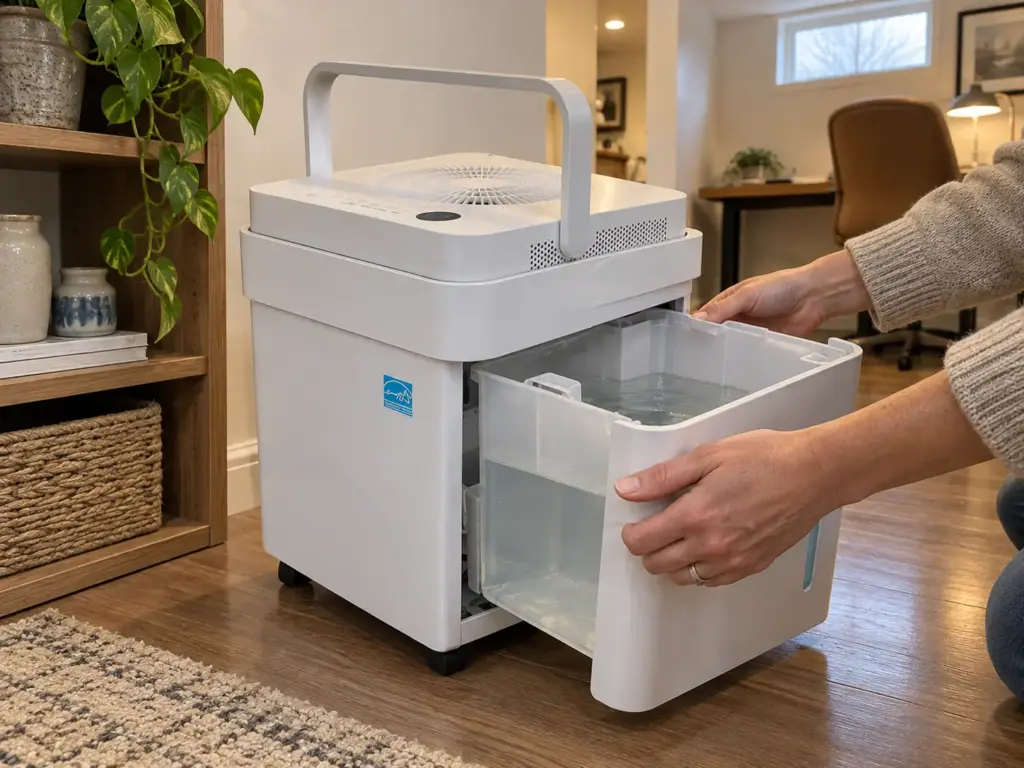
In a humid week the dehumidifier is the right tool. The Midea Cube 50 Pint (the no-pump version) is rated by its maker for 50 pints a day over 4,500 square feet, with ENERGY STAR on its listing, and it offers both choices: a removable 4.2-gallon (15.9 L) bucket, or the included drain hose that runs to a sink or over a floor drain. That hose runs downhill, so it suits a basement with a drain below the unit.
The dial runs from 35% to 85%, so the target is yours to set, and one left near the top would let the room sit well above the EPA’s 60% ceiling before the unit ever ran (what humidity to set a dehumidifier to covers the dial). What to watch on it is the display: Amazon’s review summary reports negative feedback on the humidity sensor, with customers describing inaccurate readings, and mixed quality control. Trust your separate hygrometer over the unit’s own number. If you are weighing a second machine instead, dehumidifier versus air conditioner for a basement is the comparison.
The Frigidaire 50 Pint with built-in pump answers a different problem: the drain sits higher than the unit. The pump lifts the water out through a hose, which the no-pump Midea does not do, and its tank is smaller (1.9 gallons on the listing). Reviews of its value for money are mixed, and the summary names no specific failure. When this was checked the listing showed one unit left in stock, so it may be gone.
Watch the bucket: full every time you check in the humid week and nearly empty in the cold one is the season showing up in the machine. How long to run a basement dehumidifier is the next question once a unit is chosen.
Winter: Why the Same Unit Works Less and What to Check in the Manual
The dehumidifier that filled its bucket in the humid week may barely run in the cold one, because cold air gives up less water. This article gives no cold limit for any unit: the Midea listing prints no minimum room temperature, so the line to read is in the manual of the unit you own, before you leave it running through a cold week. Whether to run a dehumidifier in winter covers the device half.
And the readings can talk you out of buying one. If the room reads inside the band and only the wall beads water, a dehumidifier is not the first move, because it treats the air and the problem is a surface. Lower the humidifier a step; read the wall again.
The Shoulder Months, and What to Check a Month From Now
The trouble rarely arrives on the calendar’s schedule. It arrives the week the outside air and the wall disagree, and the shoulder season, the in-between months, is where that happens unannounced. No standard or publication cited here puts numbers on those weeks, so what follows is your own check, not a measured result.
The First Cool, Humid Week in Fall
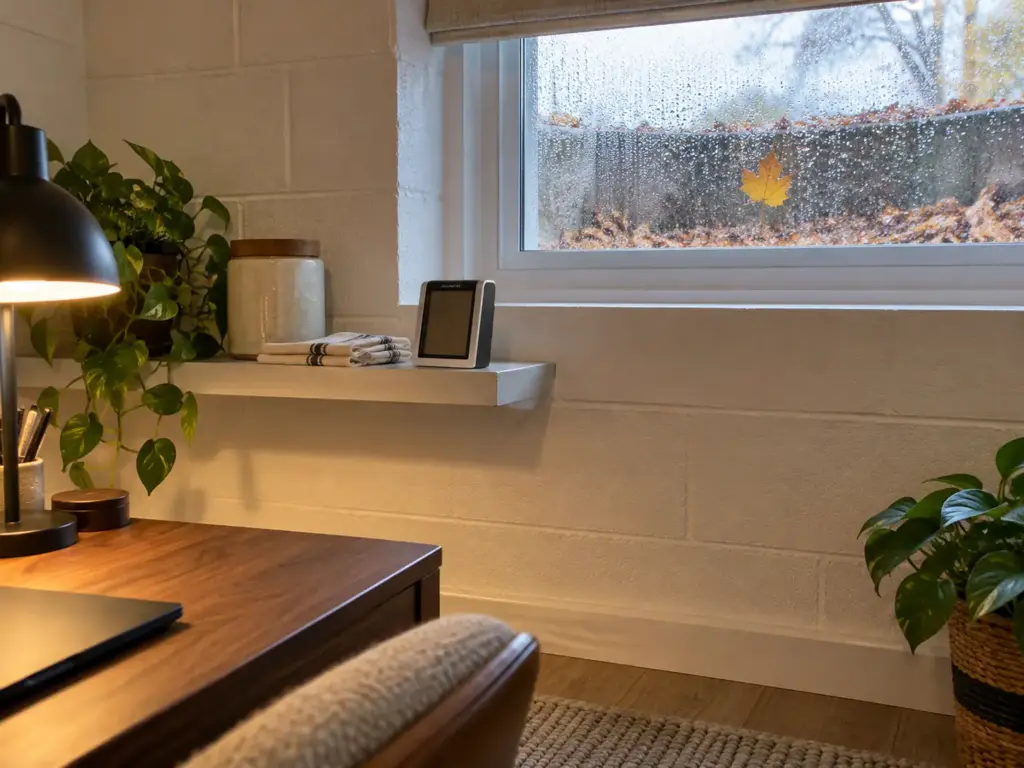
The wall follows the ground and the air follows the weather, and the two do not turn at the same time. In the first cool week that is still humid, the outside air can carry plenty of water while the wall sits at whatever temperature the summer left it. Take the same two readings that week even if you tested earlier in the season. If the pair is worse than in the cold week, fall is the season this basement dreads, and the window rule from the first section is the one to keep.
Spring Thaw and a High Water Table
Snowmelt and a high water table can send water at the wall regardless of the air, and that is a building question rather than a season question. The tell is a wall that reads wet in every reading and every season while the room stays inside the band: the water is coming from outside, through grading that slopes toward the house, a gutter or downspout that empties at the foundation, or a crack. A dehumidifier treats the air and does nothing for a wall that is being fed, so that is the moment to call someone who works on foundations, not to buy a second unit. The causes of basement humidity lays out where the water comes from.
What to Look at a Month On
Open the log, or the notebook, and read the gap between the wall and the room before anything else. A gap that narrows says the change you made is working; one that widens says the source is still feeding the wall, and a single afternoon never shows either. Then check the bucket’s level, whether the sensor still connects (the Bluetooth remark in the reviews is the reason to look), and where the humidifier is set. The routine that keeps the number low all year is its own subject, how to keep basement humidity low, and the readings you now hold are what it gets built on.
Two Readings Tomorrow, One Change After
Summer is the usual answer because of the wall, not the air: warm, wet air lands on a surface that stays cold. Winter flips it when the house supplies the water, through a humidifier set high or a cold spot on the wall that beads. Two readings, the room and the wall at the same hour, tell you which of those is your basement.
A month from now, compare the wall and room numbers in your log and the bucket’s level; the direction of the gap is the verdict on whatever you changed.
Tomorrow, take both readings at the same hour and write them down. If the room reads high on a cold week, lower the upstairs humidifier a step, wait, and read the same two places again.
Frequently Asked Questions
01Is basement humidity higher in summer or winter?
Usually summer, because warm, humid air meets a basement wall that stays cool and leaves its water on the wall’s surface. Winter can read higher when a humidifier is set high or a cold spot beads water. Read the room and the wall at the same hour in each season.
02Should I run a dehumidifier in my basement in winter?
Only if the winter readings run high, because a dehumidifier takes less water out of cold air; read the manual for the lowest room temperature the unit accepts. Lower the upstairs humidifier first. Whether to run a dehumidifier in winter covers the device side.
03Why is my basement more humid than the rest of the house in winter?
A humidifier set high upstairs feeds the whole house, and a cold basement wall can bead water even when the room reads fine. Lower the humidifier a step, then read the wall again. See whether basement humidity reaches the rest of the house.
04Can I open the basement windows in summer to dry it out?
Not on a humid day: an older NIST circular warns that humid outdoor air can add condensation on basement walls and floors. Compare the outside dew point with the wall first, and keep the window shut if the wall is colder.
05What humidity should a basement be in summer?
The EPA’s mold guidance says to keep indoor humidity below 60%, ideally between 30 and 50%. In summer, hold the basement under that ceiling and use the wall reading to catch the days it still beads. More in summer indoor humidity.