A top rated whole house humidifier is only top rated for a house that can run it. A bypass unit hangs on the furnace and does nothing in a house with no ducts, and a console that suits one open level leaves a closed-off second floor with the same dry air it started with. The coverage figure on the box assumes a tight house, so a drafty one gets less than the label promises.
The free move comes first: a meter in the driest room, which is where raising indoor humidity starts. What follows sorts the kinds of unit, the picks for a house with a furnace, the picks for a house without ducts, what each one asks after the first season, and the building faults that make a good pick the wrong one.
The ducts and the floors of the house settle the kind of unit before a brand comes into it, and this table matches each house to the picks below.
| The house | The kind of unit | The picks in this guide |
|---|---|---|
| A furnace with ducts, reasonably sealed | A bypass unit on the furnace | AprilAire 600 and Honeywell TrueEASE |
| One level, no ducts | A console | Levoit Superior 6000S, Aircare Space-Saver and Aircare Digital |
| More than one floor, closed-off rooms, no ducts | One console on each floor | The same three consoles, one for every level |
| An older or drafty house | The same kinds, with the largest tank | Either bypass unit, or the 6-gallon consoles (Levoit Superior 6000S and Aircare Space-Saver) |
Bypass, Steam or Console? Start With the Ducts
The introduction left one question open: which kind of unit the house can hold. Three kinds of whole-house unit exist, and each asks something different of the building, so this section settles that before a single model is named.
What a bypass unit borrows from the furnace
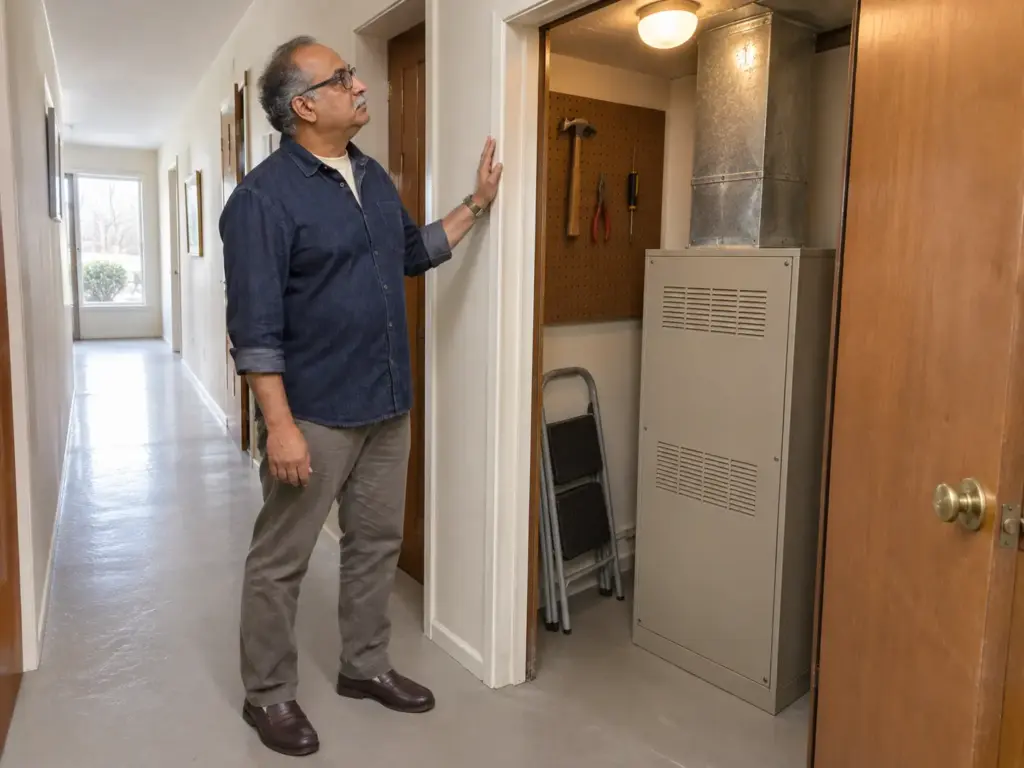
Picture the neighbor’s house, where a gray box sits on the furnace plenum, and yours, where the only sign of heating is a thermostat in the hall. The gray box is a bypass unit: it taps the furnace’s warm air, passes it over a wet water panel, and lets the blower carry the moistened air through all the ductwork the furnace already feeds. It is the HVAC-compatible kind of unit. One unit serves each room the ducts reach, and there is no tank to refill because the unit is plumbed to the house’s water line.
The borrowing has a cost in schedule and in upkeep. A duct unit works while the furnace blower runs, so when the furnace is off, the humidifier is off too; a console is the one that works on its own timetable. And the panel is the part a house pays for every year: change it on schedule or the unit stops humidifying well.
Put a small humidity meter in the room that runs driest before choosing any unit, and read it at the same hour for three days. Three readings show whether the whole house is dry or only that room, and one dry room calls for a different purchase than a dry house.
Where steam and console units fit
Steam units boil water in a steam canister and give steady coverage in a large house, but they use more energy and typically need a professional to install them, according to The Spruce. A fan-powered unit, the third kind, blows moisture on its own without furnace air and is built for hot, arid climates. The picks below are bypass and console units; steam is a separate decision about energy use and a contractor’s visit.
A console humidifier is a freestanding evaporative unit with a tank: a fan pulls room air across a wet wick and sends it back carrying moisture. It covers one level, it needs refills, and it needs neither ducts nor a contractor. A house with several floors and closed-off rooms does better with a duct unit, or with one console on each floor. A unit on the ground floor does nothing for an upstairs bedroom with the door shut.
When the house has no ducts at all
No ducts means the bypass picks are out and the list gets short: a console placed in the room that runs driest, and a meter to check it. The decision between a room humidifier and a whole-house unit, and the reading that comes before either, sit in the guide on whether a room unit or a whole-house unit fits the house.
Top Rated Whole House Humidifiers for a House With a Furnace
A house with ducts and a furnace has the most capable units available, so the choice narrows to two bypass models and what each one demands of the house. Both borrow the furnace’s air. They split on how the house’s water and the house’s envelope treat them.
AprilAire 600, for a sealed house with a long duct run
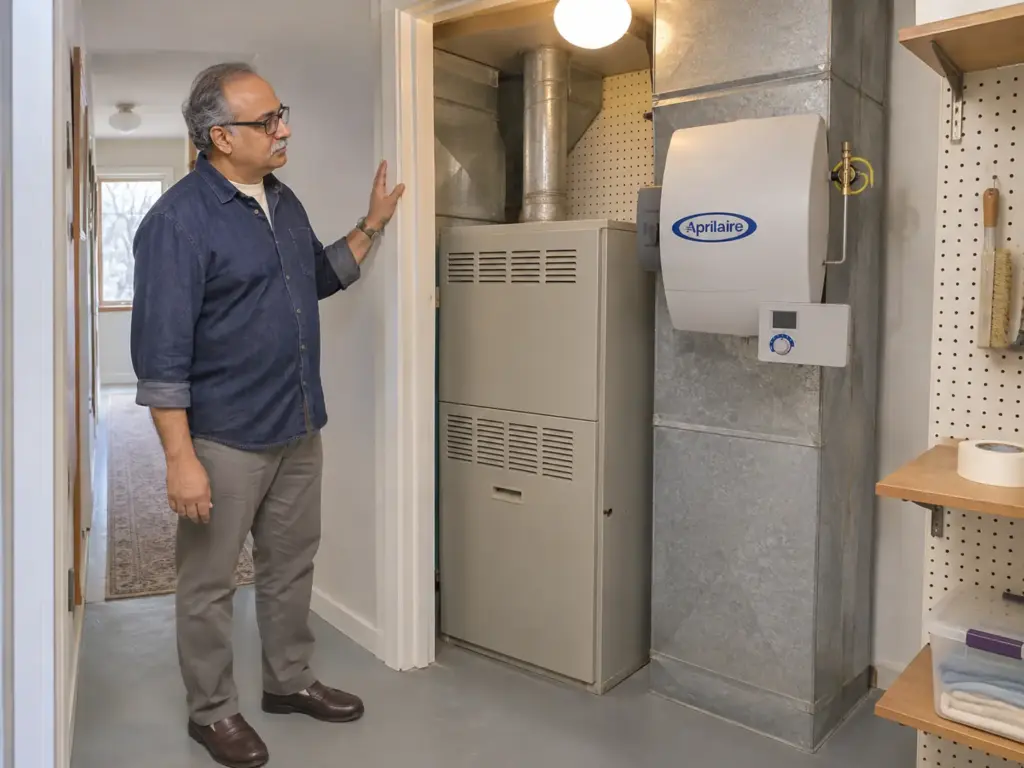
Say the furnace has run all winter and dry air still fills the hall at the first setting. That is the house a duct unit was made for, and the AprilAire 600 has the most reach of the two. It is a bypass unit sold for up to 5,000 square feet in a well-sealed house, it moves up to 17 gallons of water a day (about 64 liters per day), and its controller reads an indoor humidity sensor and an outdoor temperature sensor, so it can ease off when the weather turns cold. In a house with a long duct run, that reach is the whole case for it.
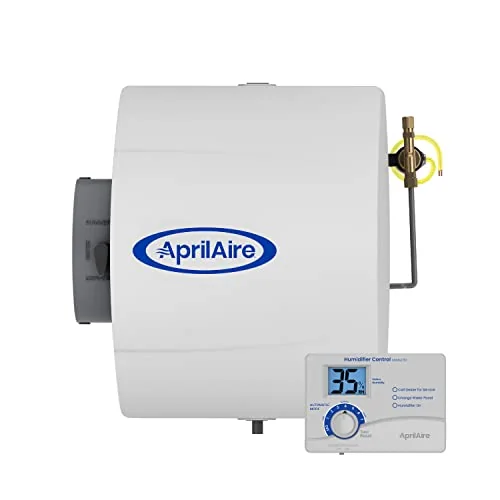
The soft spot is the control. The 600 steers toward a level you choose, and picking one specific humidity is awkward, so a meter beside it will show the room settling at a number other than the one the dial suggests.
The Spruce lists its controller as able to read up to three percent off, the better of the two duct controllers in this guide. The water panel is the other cost, an annual replacement that the section on upkeep returns to. And 5,000 square feet is the maker’s figure for a tight house (the section on the box’s rating below explains what it leaves out).
Raise the dial two or three points, read the meter in the far bedroom the next morning, and step again only if the glass is dry and the reading still sits under the band. The first beading on a window is the signal to stop and back off one step.
Honeywell TrueEASE, for hard water without a softener
The AprilAire is the pick most ducted houses reach for, and in most of them it is the right one. In a house with hard water and no softener it stops being the obvious choice.
The Honeywell TrueEASE is a flow-through bypass unit: water passes over the pad instead of sitting in a pan, the design that holds up better against mineral scale, which is why The Spruce names it the hard-water pick. An indicator light tells when service is due, so the pad change stops being a guess. It is the other duct unit for the same job.
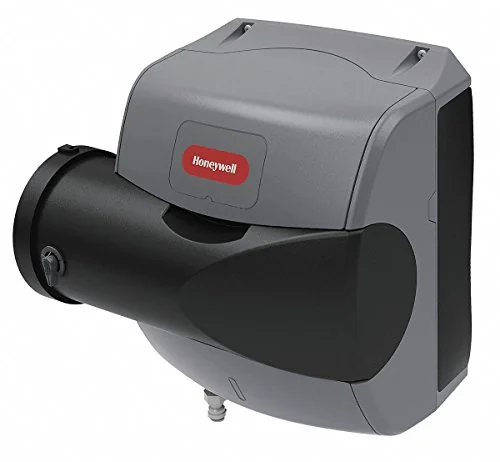
Its humidistat accuracy is where it gives ground. The Spruce puts the TrueEASE’s reading up to five percent off, against three on the AprilAire, and that spread matters in winter: a dial set to 35 percent could sit anywhere up to 40 percent, which matters on a cold pane (the arithmetic is in the last section). A controller with that much play cannot hold a tight band, which is the reason for a meter beside the unit that reads the room independently. The pad can ask for attention up to twice as often as the AprilAire’s panel, every six months to a year, and a house with hard water is the house that loads it fastest.
Place the meter two rooms away from the furnace, not beside the humidifier. A reading beside the unit says what the unit can do; a reading two rooms down the duct says what the far rooms actually get.
By the end of the first heating season the scale on the water panel is the first thing that shows, and a unit that has run past its panel loses output. Both duct units share one check that costs nothing: replace the furnace filter if it is overdue before blaming either unit for weak output, because a loaded filter starves a duct unit of airflow (the last section of this guide covers how).
What the Square-Foot Rating on the Box Assumes
The coverage number printed on a unit is the maker’s figure for a tight house, and the picks in this guide only make sense once the reader knows what that figure leaves out. The EPA gives the house a band, the maker gives the unit a size, and the building decides how the two meet.
A number from the maker, a band from the EPA
The humidity a house should hold is not the maker’s to set. According to the EPA’s brief guide on mold and moisture in the home, “If possible, keep indoor humidity below 60 percent (ideally between 30 and 50 percent) relative humidity.” That is a band and a ceiling for the house, not a sizing rule: the guide gives nothing that turns 30 to 50 percent into a unit size, so the square-foot figure on the box is the maker’s, and it is the only size number on the shelf.
Read the figures as the best case. The AprilAire 600 is sold for 5,000 square feet in a well-sealed home; the three consoles print 3,000, 2,700 and 2,400. Each coverage area assumes walls that hold the moisture in.
The humidity target also slides with the weather, and why indoor humidity shifts with the winter cold explains why a setting that worked in November overshoots in January. The EPA band runs 30 to 50 percent with a 60 percent ceiling above it, and for a single-pane window in a cold snap the working target sits lower than either. The AprilAire 600 carries an outdoor sensor to make that adjustment itself; where a unit does not, the set point against the outdoor temperature is the table to work from by hand.
Why an older or drafty house gets less than the box says
A leaky house trades its indoor air for outdoor air all day, and winter outdoor air is dry, so the moisture a unit adds leaves through the gaps about as fast as it arrives. Run time shrinks in poorly sealed or poorly insulated older homes, and The Spruce advises the larger tank for a house built more than twenty years ago or with poorly sealed doors and windows.
The tank arithmetic shows why. The Levoit Superior 6000S holds 23 liters and is rated at 1,500 mL an hour, so on its top output the tank lasts about fifteen hours; on the lowest setting the maker claims up to 72 hours. A drafty house pushes a console toward the top of that range, and the chore of refilling grows with it. A duct unit has no tank to run dry, but it has its own limit in 17 gallons a day, which a leaky house can spend without the far rooms noticing.
A unit that is sized right on the box still shows its limit in the far room by the second cold week. The reading to take: the same meter, the same hour, one week at a steady setting. If the far room has not climbed toward 30 percent, the house is taking more than the unit gives, and the move is a larger tank or a duct unit instead of a second small console.
What a second floor with closed doors changes
A bedroom with the door shut is its own pocket of air. A console on the ground floor sends its moisture through the doorways it can reach, and the upstairs room behind a closed door gets little of it. A duct unit moves moist air through any room with a vent, and that is why a house with several floors and closed-off rooms does better with one, or with one console on each floor.
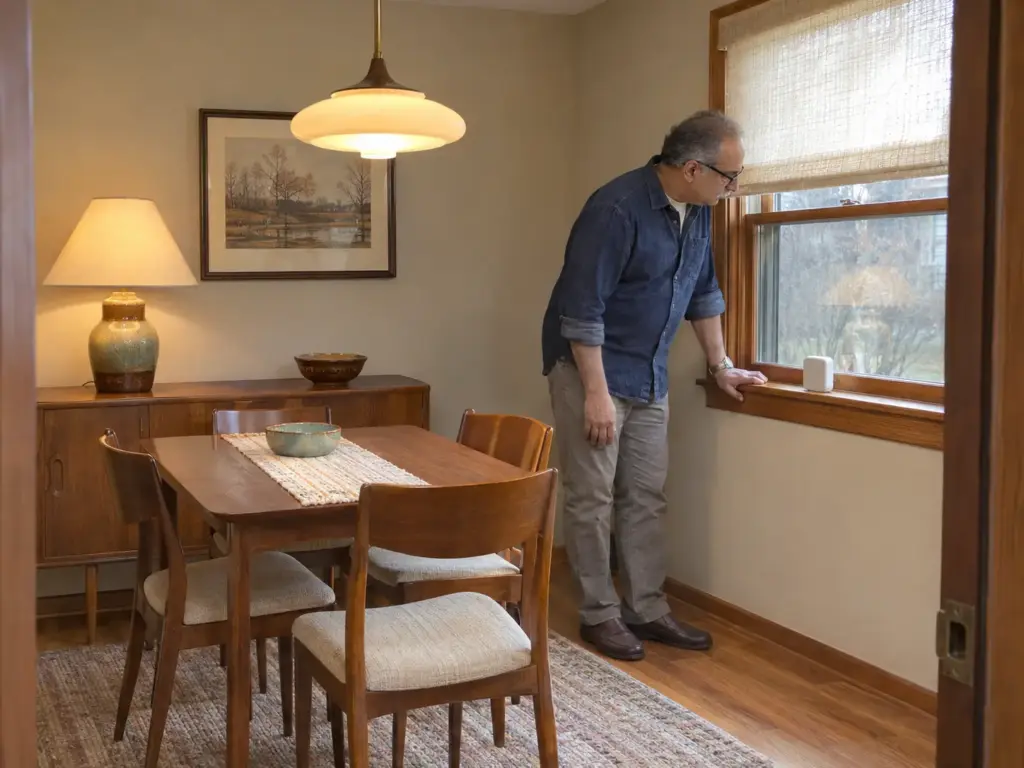
Check what each room is actually getting with a cheap humidity checker you can trust in the far bedroom. This also catches a controller that drifts, and the Honeywell’s five-point spread is the reason to own one.
Read the meter in the far bedroom and in the hall at the same hour. The gap between the two numbers is the unit’s real coverage, and a gap over ten points means the far room is not part of the whole house yet.
Top Rated Whole House Humidifiers When There Are No Ducts
When the house has no ducts, a console is the whole-house-sized answer that needs no contractor, and the three picks differ in tank, coverage and the chore each one leaves behind. All three are evaporative, so their output depends on how dry the room air is when it meets the wick. Ultrasonic units, the usual room size, leave a white mineral dust unless they run on distilled water, which is one more reason the whole-house picks are evaporative.
Levoit Superior 6000S, the smart console with the big tank
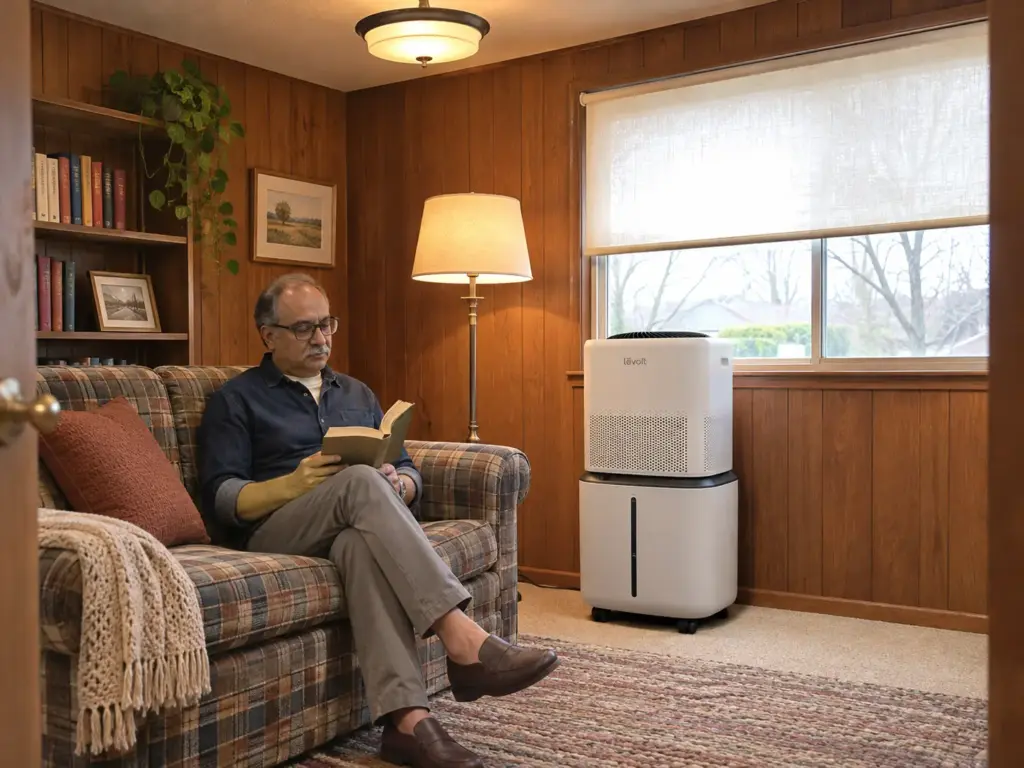
Take a single-level house with the thermostat in the hall and no ducts anywhere. A console in that house gets rolled to whichever room runs driest, and it earns its place by what it asks of you each week. The Levoit Superior 6000S asks for the fewest refills of the three: it is rated up to 3,000 square feet, holds a 6-gallon (23 L) tank, and has smart control with a humidity sensor rated within five percent. The Spruce ran it for three months and refilled it about every four days, one outlet’s own run rather than a lab figure, though it lands between the fifteen hours of top output and the 72 hours the maker claims at low.
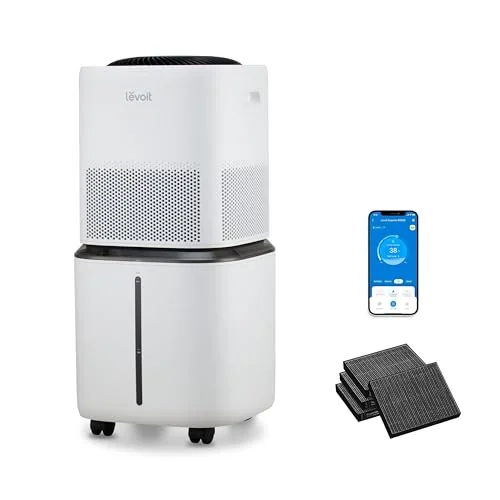
Build quality is where it slips: some units quit within days, and the reservoir can crack after a few weeks, which puts six gallons of water on the floor. It gives no low-water or dirty-filter alert, so the first sign of an empty tank is a reading that stops climbing. And it is heavy. Six gallons of water weigh about 50 pounds (23 kg) before the housing is counted, so a full tank wants a plan for the floor and for the route to the sink.
Aircare Space-Saver, the largest tank at the lowest cost
The Aircare Space-Saver carries the same 6-gallon tank as the Levoit in a 14-pound housing, and it costs the least of the three consoles. It is rated for 2,700 square feet, has digital controls with an automatic humidistat, and shuts itself off at the set humidity or when the tank runs dry. For one level or two bedrooms of open floor, it is the budget console of this guide.
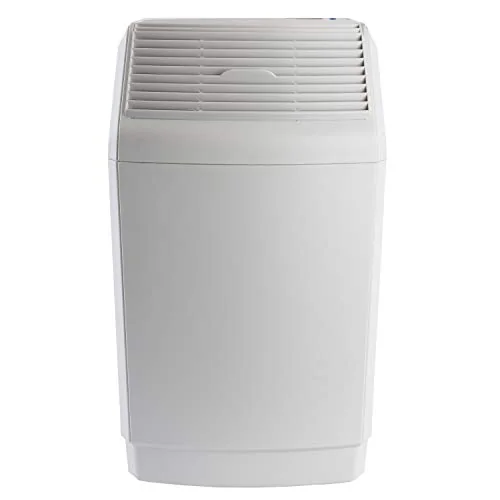
The fan gets loud on the higher settings, and a drafty house pushes any console toward those settings. The fixed tank is the other trade: every refill becomes a decision between rolling the unit to a sink and pouring through the front grate with a pitcher. Durability is mixed, and a console that weighs about 64 pounds with a full tank (14 of housing and about 50 of water) is not one to wrestle every few days.
Aircare Digital, the pedestal for one level
The Aircare Digital is the pedestal console: 2,400 square feet, a 3.5-gallon tank, nine fan speeds, a digital display, a refill indicator, and a top that works as a side table. Nine speeds give finer control in a smaller space, and the indicator turns “is the tank empty” into a signal instead of a guess.
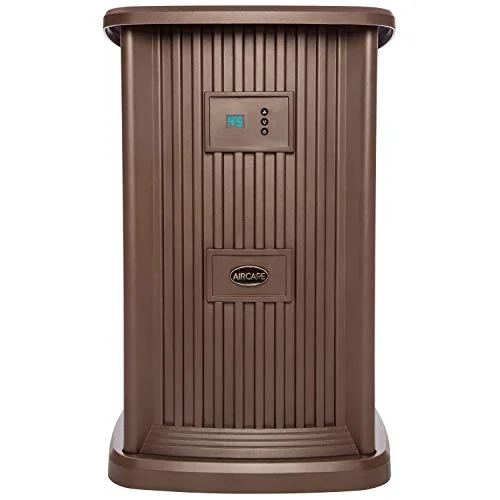
Where it falls short is size. The Spruce says it may not do the job in a large multi-story house, and the smaller tank sets a faster chore: 3.5 gallons is roughly 13 liters and 29 pounds of water, so it asks for a refill more often than either 6-gallon unit. Some units are done in about two years.
Tank capacity sets the chore. A 6-gallon console on its lowest setting asks for a refill every few days, and the 3.5-gallon one asks sooner. A house that is heading toward two or three consoles to cover its floors is a house to look at again for a duct unit, back in the section on the furnace.
Put the console where air moves, such as an open doorway or a hall, and away from the cold side of an exterior wall. In a corner behind a chair the moisture pools around the unit and the meter across the room never moves; in a doorway it spreads. Lower the setting and read the room before adding a second unit.
What Each Pick Asks of You After the First Season
The cards say what each unit does in week one. The table below sets the five against each other, and the upkeep that shows up by the end of the first season is the column that sorts them.

The five picks side by side
The coverage and the tank are the maker’s figures, and the flaw column repeats what the sections above explained.
| The pick | The house it fits | Kind and coverage printed | Upkeep to expect | Flaw |
|---|---|---|---|---|
| AprilAire 600 | Ducted, well-sealed house with a long duct run | Bypass, up to 5,000 sq ft, 17 gallons a day | Water panel every year | Steers to a level on the dial |
| Honeywell TrueEASE | Ducted house with hard water and no softener | Flow-through bypass | Pad every 6 to 12 months, with an indicator light | Controller can read up to 5 percent off |
| Levoit Superior 6000S | One large open level, no ducts | Console, up to 3,000 sq ft, 6-gallon tank | Refill every few days, longer at low | Heavy when full, no low-water alert, build failures |
| Aircare Space-Saver | One level or two open bedrooms, no ducts | Console, up to 2,700 sq ft, 6-gallon tank | Refill by sink or front grate | Loud on high, tank does not come out |
| Aircare Digital | One level with good airflow, no ducts | Pedestal console, up to 2,400 sq ft, 3.5-gallon tank | Refill when the indicator lights | May not cover a large multi-story house |
The part that wears out in each one
On the AprilAire 600 it is the water panel. AprilAire’s own maintenance schedule says “Replace the water panel annually (Models 300, 500, 600, 700, and 720) or twice per heating season (Model 400).” A unit that runs past its panel loses output and grows mineral buildup, and that looks like a weak unit when it is only a late one. By the second winter, a thin white film on the panel is the first sign.
On the Honeywell TrueEASE it is the pad, every six months to a year, and the indicator light turns the date into a signal. The consoles trade the yearly panel for tank refills and a wick: the wick plays the part the panel plays in a duct unit, its interval is in the maker’s manual, and scale on it is the thing to look at when output drops. The Aircare Digital’s refill indicator does for a console what the Honeywell’s light does for a pad, and the Levoit’s removable pump is the part that makes cleaning possible. The Levoit and the Space-Saver give no help of that kind, so the date for those two has to be written down.
Cleaning the scale off is a separate job from knowing when it shows up; this section only says when to expect it.
Write the changeover date on the inside of the furnace-closet door, so it survives the next winter. A date on the door survives a house move in the fall far better than one in a memory.
When a Sweating Window Says the Pick Was Wrong
A unit can be the top rated one and still be wrong for a house, and the signs show on the windows and in the furnace before they show in the unit. Three building faults account for most of it, and the fixes come in order, with a reading between each.
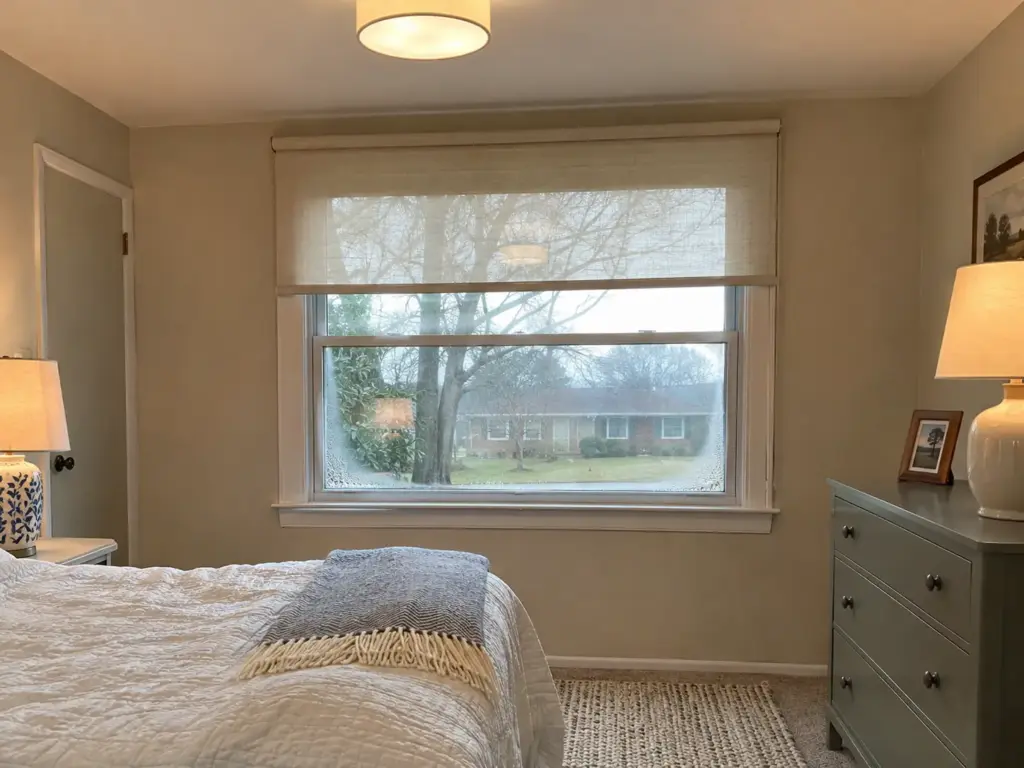
Windows that sweat at the first setting
The lower corner of the glass beads every morning after the first week of running the unit, and that is over-humidifying showing: the humidity in the room rising above what the coldest surface in the room can hold. The arithmetic: air at 70°F (21°C) and 40 percent relative humidity has a dew point near 45°F (7°C), so any pane colder than that beads. A single-pane window in January is well below it, and a double-pane window can be too in a hard freeze.
The first move is a lower setting and a reading; a different unit comes last. Drop the dial two points, read the meter the next morning, and look at the glass at the same hour; the same unit at a lower setting stays dry on glass where it fogged before. How to prevent condensation on the windows covers what the pane is telling you.
A furnace filter that starves a duct unit
A duct unit moves moisture only as fast as the blower moves air, and a loaded furnace filter slows the blower. The result looks like a weak humidifier: low output, and window fog where the moisture lands. Check the filter and the pan first, because a dirty furnace filter and condensation on the glass share a cause more often than they share a fix. If the filter is overdue, replace it, run the furnace for a day, and read the far room again.
A tight house that holds more moisture than the box expected
A sealed house keeps what the unit adds, while a drafty one lets it out; the setting that works in the old house fogs the glass in the new one. Why a house can hold more moisture than the air outside is the same physics from the other side.
Here a cold exterior wall in the room the moisture reaches is where it shows first, as a damp patch or a spot of dark growth on the coldest corner. That is a building problem, a wall that is colder than the room’s dew point, and it is a job for the house, with no new unit in it. A patch that comes back after the setting is lowered is the moment to call a professional.
The order is the setting, then the filter, then the sealing, with a reading between each. Nothing here needs a new purchase; the pick is wrong only if all three have been tried and the glass still sweats.
Match the Unit to the Ducts, Then Read the Far Room
A house with ducts takes a bypass unit, and a house without ducts takes a console, one on each floor. The box’s coverage assumes a tight house, and every pick here carries a flaw and an upkeep date that belong on the calendar the day it is plugged in.
Come back to two things after the first cold weeks: the glass and the meter in the far room. Come back again when the season turns, to the scale on the water panel or the tank. If the glass beads, the setting is high; if the far room has not moved, the unit or the filter is the suspect, in that order. Whether to install a unit yourself and what setting to run in a cold snap are the questions that come after the pick.
Tomorrow, read the meter in the driest room and in the far room at the same hour. Write down both numbers. The difference between them is the first fact about the house that any of these units has to close.
Frequently Asked Questions
01What is the top rated whole house humidifier for a house with a furnace?
For a ducted house with a furnace and a reasonably sealed envelope, the AprilAire 600 is the bypass pick, rated for up to 5,000 square feet. The Honeywell TrueEASE is the other duct unit, built for hard water without a softener.
02Can a whole house humidifier work without ducts?
A bypass unit cannot, because it runs on the furnace’s air, but a console can cover one level of a house with no ducts. A multi-floor house needs one console on each floor: the Levoit Superior 6000S, Aircare Space-Saver or Aircare Digital.
03How often does the water panel need to be replaced?
AprilAire’s own schedule calls for a new water panel every year on the 600 model, and a unit that runs past it loses output and grows scale. The Honeywell TrueEASE pad runs six months to a year.
04Does the square-foot rating on the box fit an older house?
The rating assumes a well-sealed house, so an older or drafty house gets less run time than the box says and does better with the largest tank. A meter in the far room shows what the unit actually delivers there.
05Why do my windows fog after I turn the humidifier on?
The setting is higher than the cold glass can hold, so the moisture in the room air condenses on the pane before it shows anywhere else. Lower the setting, read the room, then check the furnace filter on a duct unit.