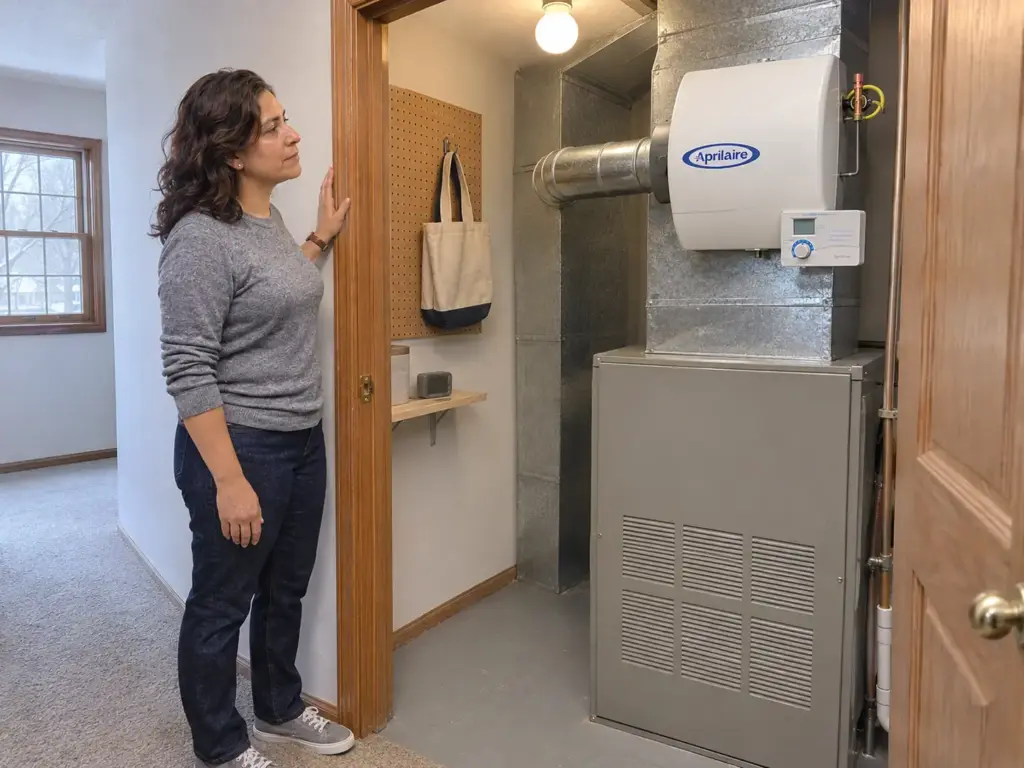
The quote is on the counter with one number at the bottom, the furnace closet has been opened for the first time in years, and the question you typed was how much does a whole house humidifier cost installed. That number is a sum, and its parts behave differently: a bypass unit humidifies only while the furnace blower is turning, a steam unit makes its own steam and waits for nothing, and the same dry winter house can need either one or neither. Below, the quote comes apart into lines, the house gets its share, the second year goes on the table, running cost becomes watts times hours, and the cases where no unit is the cheapest answer close the guide. If you are still weighing one room against the whole house, start with whether a whole-house unit is the right call at all.
Quick Answer
The unit type sets the band, and your house sets where the quote lands inside it. Read the quote as three lines: the unit, what the house adds (access, water, power), and the second-year panel or canister. Ask for each separately.
A Quote Is Three Lines: the Unit, the House and the Second Year
The number at the bottom of a quote hides three separate lines, and the type of unit decides only the first. The second belongs to the house, and the third shows up a year later, when nobody is holding a quote anymore. Splitting them before the installer arrives costs nothing.
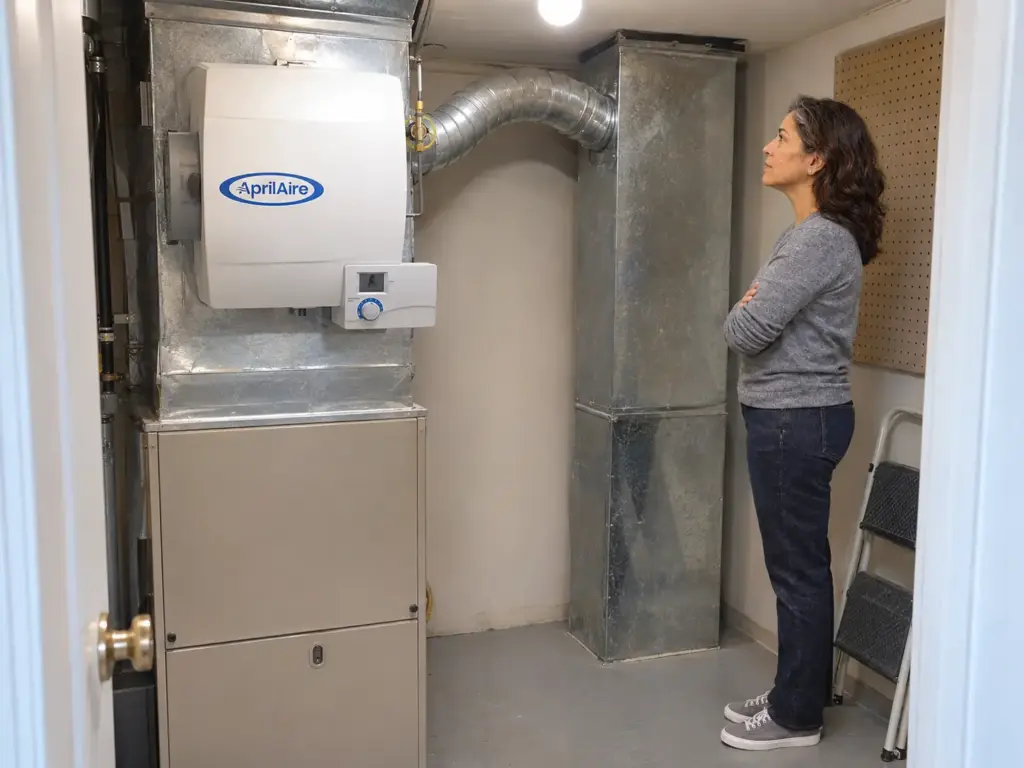
Bypass, fan-powered and steam: what each one asks of the house
A bypass unit is the plainest of the three. It taps warm air off the furnace plenum, runs water over a pad, and sends the humidified air back through the ductwork, which means it works only while the blower is turning.
The AprilAire 600 is the example of the class: its spec sheet says it operates in conjunction with the heating and cooling blower, and that it should be plumbed to hot water for efficiency. It is rated at 17 gallons per day, listed for homes up to 5,000 square feet in tight construction, and its control reads two sensors, indoor humidity and outdoor temperature. Where it draws mixed notes is the automatic control and how complete the kit in the box is, so check the contents against the manual’s parts list before the installer shows up.
A fan-powered unit adds a fan of its own, so it does not wait for the furnace; the AprilAire 700M belongs to that class and is claimed at 18 gallons per day by its maker. A steam unit goes further and carries a heater, which lets it run when the furnace is off and gives it an electrical line that looks nothing like the other two. The arithmetic for that is a few sections down.
Why the type sets the band and the house sets the place inside it
The type decides when the unit runs, and so it decides the shape of the cost: a bypass follows the furnace blower, a fan-powered unit follows its fan, a steam unit follows its heater. The house decides the rest, through the length of the water run, the room around the duct and the wiring. A band is what you get when only one of those is fixed.
Capacity is a claim made under conditions. The 600’s 17 gallons per day assumes the blower is active 100 percent of the time, the plenum air is at 120 °F (49 °C) and the water is cold. A blower that cycles delivers less than the label, and that gap never appears on a quote. Steam is where the order of the work moves the number most, because the price drops when the install shares a visit with the furnace work, and the return trip is the line that surprises.
The line the reader can change before the installer arrives
Three things are yours before anyone cuts into a duct. Ask for the unit and the visit as two items, since a quote that lists them together invites you to add them in your head and compare the sum with a different quote’s sum. Pick the type from the house you have: a ducted furnace points to the first two types, and a house without ducts points away from both. And read the manual’s installation page before the quote arrives, because it names who may install the unit and what the installer owes you.
Put the unit and the visit on two lines of the quote, then ask the installer which of the two moves if the furnace closet turns out tighter than expected. A quote that cannot answer has not been priced against your house yet.
What the House Adds Before Anyone Picks Up a Tool
The unit is the same in every house, and the line that moves is the one the house writes: access to the duct, the length of a water run, a source of power and the size of the rooms. All four are visible from the furnace closet before any quote exists.
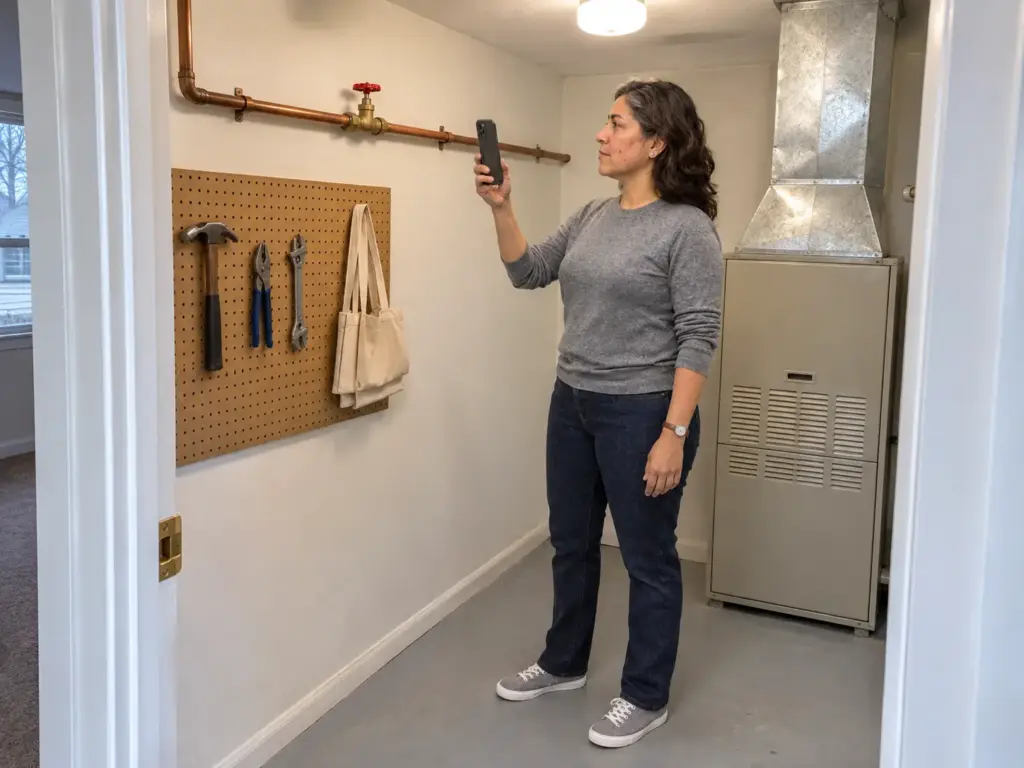
Access to the duct and where the water line has to reach
A bypass unit needs a rectangular opening in the plenum (on the 600 it is 10 inches wide by 12¾ inches high), a 6-inch round bypass connection, and a water supply. The opening is a fixed job. The water is the variable one, because the labor grows with the distance from the plenum to the nearest pipe, and in the hallway closet where the furnace sits that pipe is often two walls away.
The water side has a variation worth knowing. A water-saver bypass draws water only as the pad evaporates it, which is the design’s answer to a drain run, and the AprilAire 400 is that variation in the same class and the same 17 gallons per day. Its weak spots are the ones a drain implies: installation, drainage and the control draw mixed notes, so the water-saver label is a reason to ask the installer how the drain will be handled, and not a reason to skip the question.
Power: when 24 volts is enough and when a steam unit asks for more
A bypass unit hangs on a low-voltage circuit at the furnace, and the 600’s sheet prints 24 VAC at 0.5 amp for it. A steam unit asks for more: its own power circuit, and the new power wire plus the canisters are the costs that arrive after the quote. When an electrical item gets a separate line on a quote, that is where the type shows.
Sizing by gallons per day, not by square feet alone
Floor area misleads here. The 600’s sheet prints a sizing table (AHRI Guideline F) in gallons per day, by how tight the building is. At 2,000 square feet it asks for 6.7 gallons a day in a tight house, 13.4 in an average one and 20.0 in a loose one. At 3,000 square feet the figures are 10.0, 20.0 and 30.1.
Tightness moves the need as much as the floor area does, which is why two neighbors with the same plan can need units a size apart.
The household adds its own load on top: the sheet puts a family of four at about 2 gallons a day from cooking, bathing and washing. Read against the label, a 17-gallon unit meets the table’s need for an average 2,500-square-foot house (16.7 gallons a day), while a loose 3,000-square-foot house asks for 30.1, close to twice what the label can print. And the habit of sizing up for safety fails the other way: a unit larger than the table calls for is a bigger line on the quote and a house pushed past the humidity band. Once the gallons are known, the question that follows is which unit fits which house.
A furnace visit against a separate trip
Timing is a house line too. When the furnace is due for service anyway, the humidifier shares the access and the trip is paid for once; installed alone, the same hour of work arrives with a second arrival attached. A unit sized for a loose house and then installed after the windows were sealed last year is the quiet version of the same mistake, so read the table against the house as it will be, and not as it was.
The Second-Year Line: Panels, Canisters and Cold-Night Settings
Nothing in a quote mentions year two, and year two is where an evaporative unit and a steam unit part ways. It also holds the one dial that decides whether the windows stay clear.
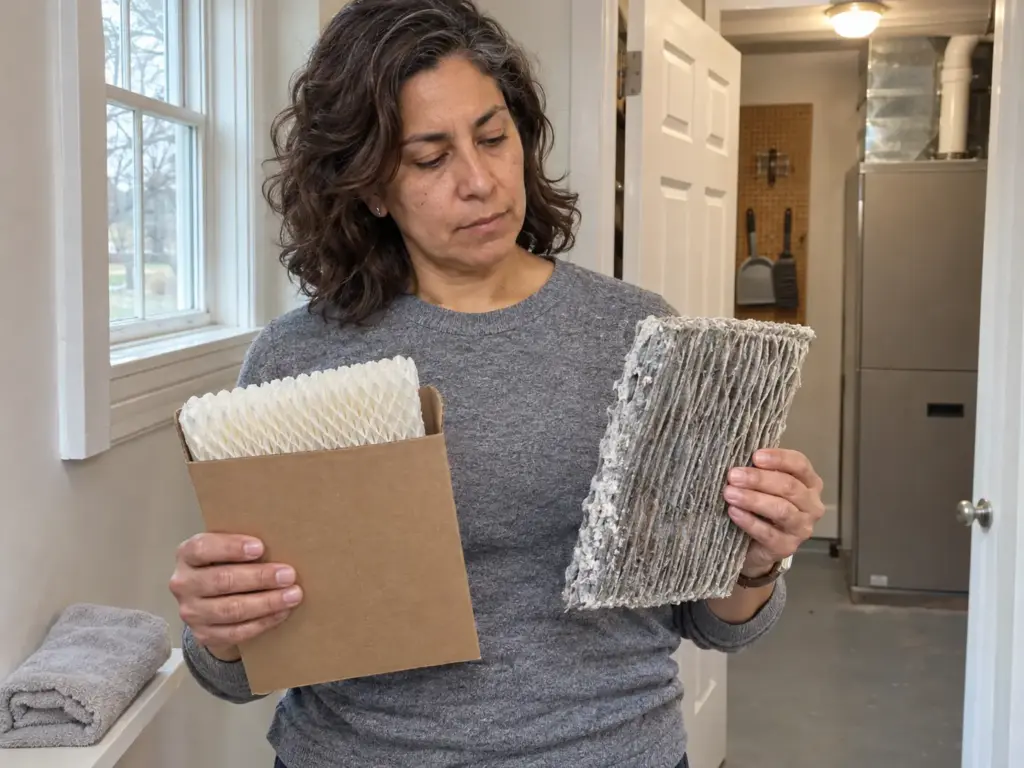
The water panel, once a season
On the 600 the maintenance line is short: once per season, remove the cover, replace the water panel (the Model 35) and clean the housing. Carrier and Bryant say once a year or at the start of each heating season, sooner where the water is hard. The panel is cheap; the habit is the line, and nobody writes it into the quote. A fan-powered unit whose panel is changed on schedule can go years with nothing else asked of it, and hard water shortens the interval.
The steam canister
A steam unit swaps the pad for a canister, and canisters wear out. The interval depends on the unit and on the water going into it, and the manual prints it. What belongs on the page now is that the item exists and recurs, so a steam quote that never mentions it has left the biggest year-two item out.
The setting that fogs the windows on a cold night
The dial is the other year-two line, and it moves with the weather. A humidifier set in October for mild nights puts more moisture into the air than a cold windowpane will hold in January, and the first sign is a film in the lower corner of the glass. The 600’s humidistat carries a humidity guide for exactly this, a pre-adjustment by expected outdoor temperature, and its range tops out at 45 percent relative humidity.
Two settings cover most of the year: one for the coldest nights, one for the milder ones. A fan-powered unit left on its warm-weather setting is the classic fogger. Glass that clouds at the lower corner is the reading, and what the glass tells you before the wall does has the rest of it.
Stick a note on the furnace with two numbers: the setting for the coldest nights and the setting for mild ones. A dial that still says what it said in October is the usual reason the glass fogs in January.
Running Cost Is Arithmetic You Can Run Today
A quote has no running line, and a dollar figure printed here would be wrong by the time you read it. Watts times hours never goes stale, and both ends of the range come straight from the makers’ ratings.
The formula: watts, hours and the rate on your bill
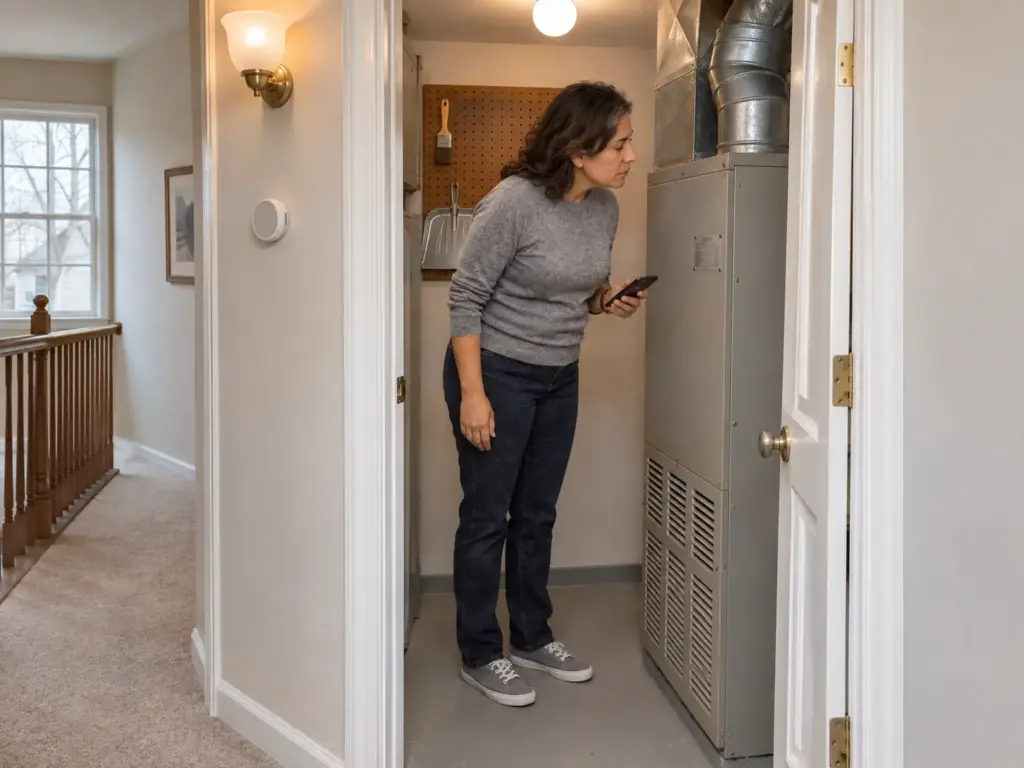
Energy in kilowatt-hours is watts multiplied by hours, divided by 1,000. Multiply the result by the rate on your bill and you have the cost; the last multiplication is yours, since the rate is yours. Every figure below is an example of the method with its assumption stated, so swap in your own hours.
Bypass: the control draws almost nothing and the blower does the work
The 600’s automatic control draws 0.08 amp at 24 VAC, about 2 volt-amperes. Left on around the clock through a 120-day heating season (2,880 hours), that comes to roughly 5.5 kWh for the whole season. The 0.5 amp printed on the 600’s sheet rates the circuit; the draw is the 0.08.
The running cost of a bypass lives somewhere else, in the blower. The unit humidifies only while the blower turns, and the control’s blower-activation mode can extend run time to get more humidity out, so every call for humidity adds blower hours.
The blower’s watts are on the furnace nameplate and never on the humidifier’s sheet. Read the nameplate, estimate the added hours, multiply. If the thermostat keeps a run-time history, those added hours show up there, and the humidifier itself shows up nowhere.
Steam: a heater in the kilowatt range
A common steam unit is rated 11.5 amps at 120 volts, about 1,380 watts or 1.38 kW. Run it three hours a day over the same 120 days and it is 1.38 × 3 × 120, about 497 kWh. The three hours are an example (swap in yours).
At any moment the steam heater draws on the order of seven hundred times what the bypass control does, and even on a short daily run the season ends roughly ninety times higher. The bypass figure leaves out the blower, so the honest gap is narrower, but it takes the furnace nameplate to say by how much.
If the thermostat logs blower hours, jot down a typical cold week before the install and the same week a month after it. The difference times the nameplate watts is the real running cost of a bypass unit, at your own rate.
DIY, Timing and the Warranty Fine Print
Three jobs hide in one install: the duct opening, the water tap and the wiring. They do not carry the same risk, so they should not be handed out the same way.
Which part of the job a homeowner can take on
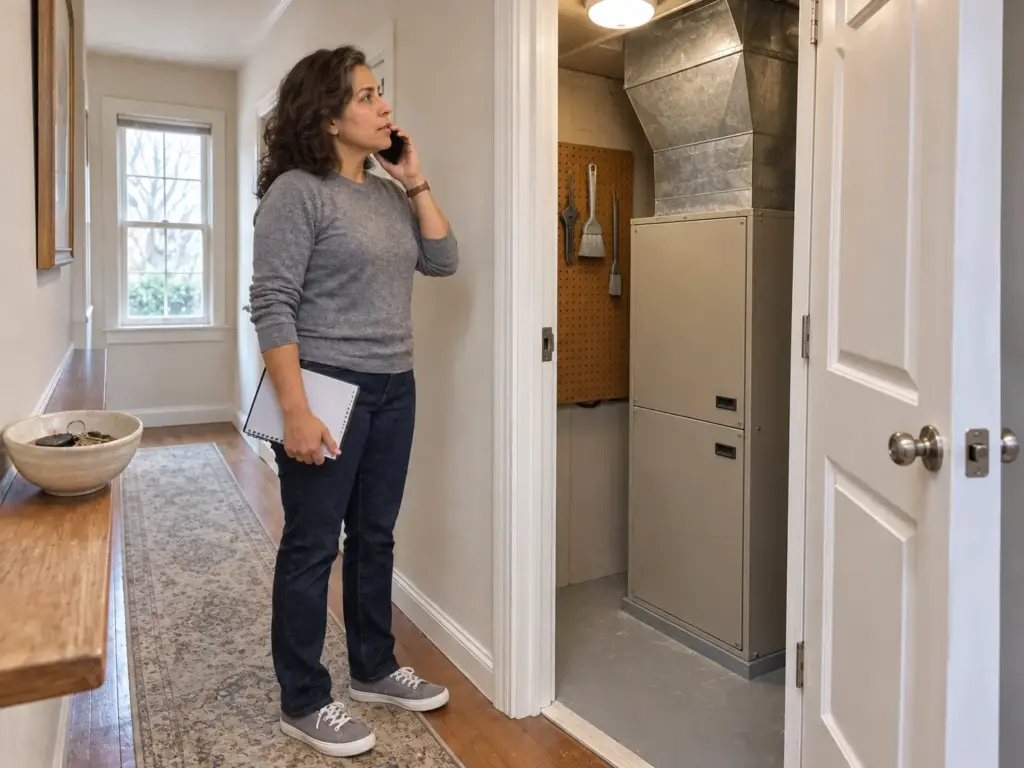
How much of a DIY install is realistic depends on the manual and on local rules, and this guide gives no steps for any of the three jobs. As a judgment: the water and the power are where an error is expensive, a leak inside a wall or a wire on the wrong circuit, and those are the two to leave to a licensed installer. The duct opening is the one most people discuss, and it is the cheapest of the three to get wrong.
Booking it with the furnace visit and in the off season
An installer’s calendar has gaps in summer, when nobody is asking for humidity, and a humidifier added on the same visit as furnace work shares one trip and one access. Steam shows the effect most: the price drops when the job rides with the furnace and climbs when it comes back as a separate return. Off-season installation is a bet that the free week is on your side.
What to ask the installer and the maker before cutting the duct
Three questions are worth asking, and none of them assumes the answer is yes:
- Does the maker’s warranty say who may install the unit?
- Does the manual list what the installer is responsible for?
- Does the utility offer a rebate?
Add a fourth for the water: which line will the installer tap? The 600’s sheet recommends hot water for efficiency, and the answer tells you whether that advice made it onto the job. Bring the manual’s installation page to the conversation, since the questions change once you have read it.
When a Whole-House Unit Is Not the Cheapest Move
The cheapest unit is the one the house never needed. Some houses already read in the band, some leak the moisture they are given, and some have no ducts to hang a unit on.
A reading already in the band
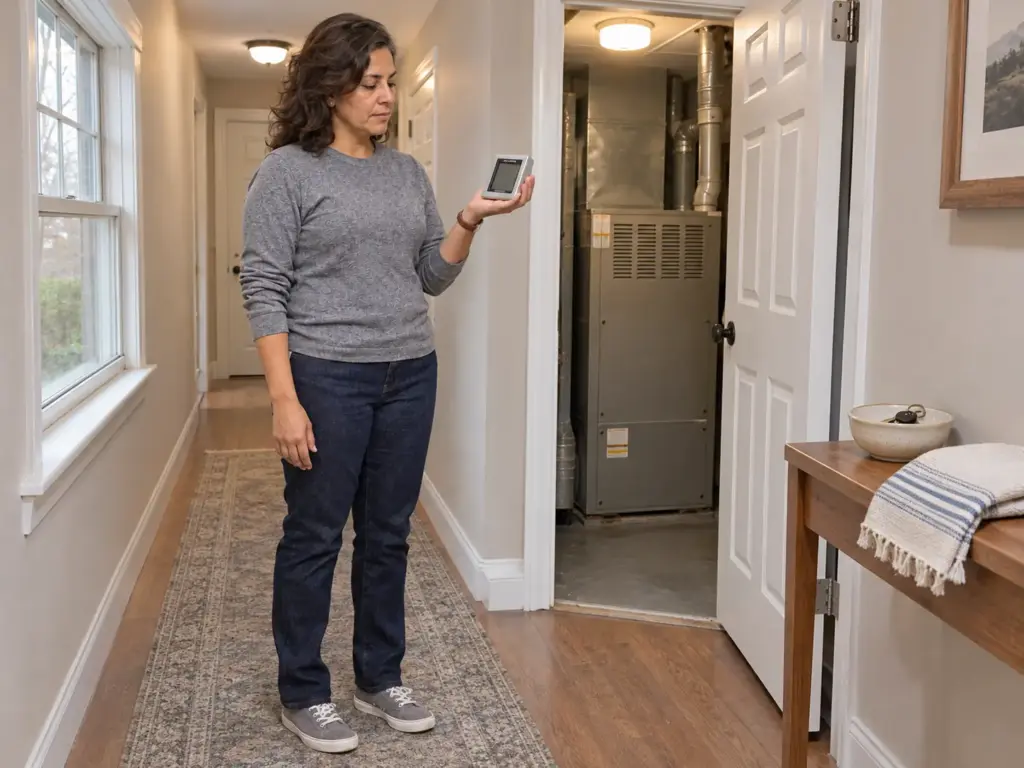
Before the quote means anything, put a hygrometer in the driest room. The AcuRite 00613 shows temperature and humidity with the day’s high and low, so one night of watching shows how far the room swings. Any cheap meter can be a few points off, and two meters in two rooms either agree or they do not; both outcomes tell you something. Three readings, one meter covers how to take the reading.
The reference is the EPA. According to the EPA’s Care for Your Air guide, “Keep indoor humidity between 30 and 50 percent.” The same page notes that high humidity keeps the air moist and increases the likelihood of mold, so a unit pushed past the band creates the opposite problem.
Static on the doorknob and gaps opening in a hardwood floor are signs of a low reading, and the meter confirms or overturns them. A driest room that already reads between 30 and 50 percent closes the question.
A house that leaks what the unit adds
Air leakage in a loose envelope sends the added moisture outdoors as fast as the unit makes it, and the sheet’s table reflects that by asking for three times as many gallons for a loose 2,000-square-foot house as for a tight one. A leaky house can buy a bigger unit and still read low. And a bypass does nothing whenever the furnace is off, so in mild weather, with the blower idle, it adds no moisture at all. The free moves come before a purchase, and raising the humidity without a unit lists them in order.
One dry room, or no ducts at all
When only one room reads low, the reading of that room decides, and a whole-house unit is a poor answer to a single-room question. A second meter on another wall tells you whether the rest of the house agrees. A house without ducts has nowhere to hang a bypass or fan-powered unit, which makes it a console humidifier or room-unit case, and a ducted quote does not apply to it.
Set the second meter on the wall farthest from the first and read both at the same hour for a few days. A couple of points apart is the meters’ habit; a wide spread is the house telling you where the dry air lives.
Split the Quote, Read the Meter, Then Set the Dial
A quote is three lines and each one has an owner. The type owns the unit, the house owns what gets added before anyone picks up a tool, and the second year owns a panel or a canister and a dial. Running cost is watts times hours, and the multiplication by your rate is the part left for you. The cheapest answer, more often than the quote suggests, starts with a reading and not a purchase.
Look at the glass after the first cold snap, and at the water panel when the heating season ends: a film in the lower corner means the dial is high for the weather, and a loaded pad means the habit slipped. Tomorrow, put a meter in the driest room, read it at the same time for a few days, and take that number to the installer along with the quote.
Frequently Asked Questions
01Is it worth getting a whole-house humidifier?
It depends on the reading in your driest room: if it already sits between 30 and 50 percent, no. If every room reads low through the heating season and the house has ducts, one furnace unit does the job for all of it. A meter settles it before a quote does.
02How much should it cost to install a whole-house humidifier?
Ask for it as three lines: the unit the type sets, what the house adds in access, water, power and labor, and the second-year panel or canister. Each line can be checked against the others, and the total hides the one you can change.
03What size humidifier do I need for a 2,000 square foot house?
It depends on tightness: the AprilAire 600 sheet’s AHRI table shows 6.7 gallons per day for a tight house, 13.4 for an average one and 20.0 for a loose one. A family of four adds about 2 gallons a day by itself.
04Can you add a humidifier to an existing HVAC system?
Yes, on a ducted forced-air system, as long as there is access to the duct and a water line within reach of it. A bypass unit also needs the furnace blower running to work. A house without ducts needs a different kind of unit.
05How often do you change the water panel?
Once a season on the AprilAire 600 sheet, and once a year or at the start of each heating season in Carrier and Bryant guidance. Hard water calls for sooner.