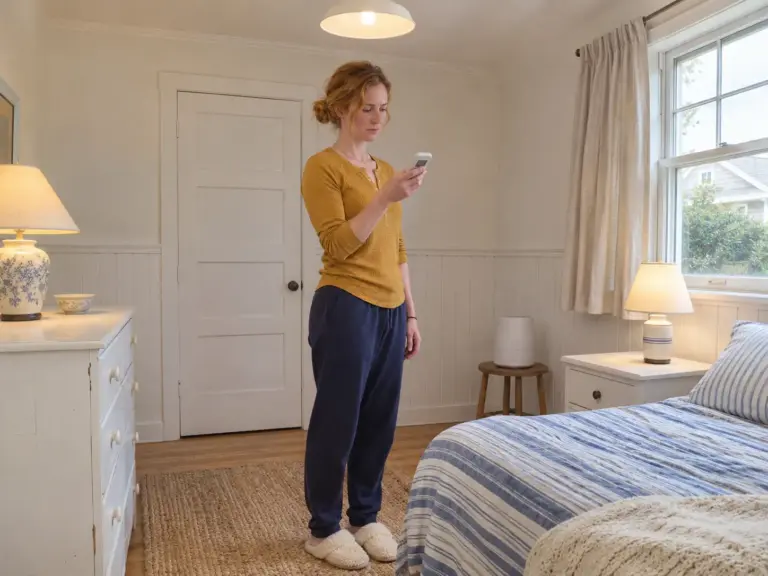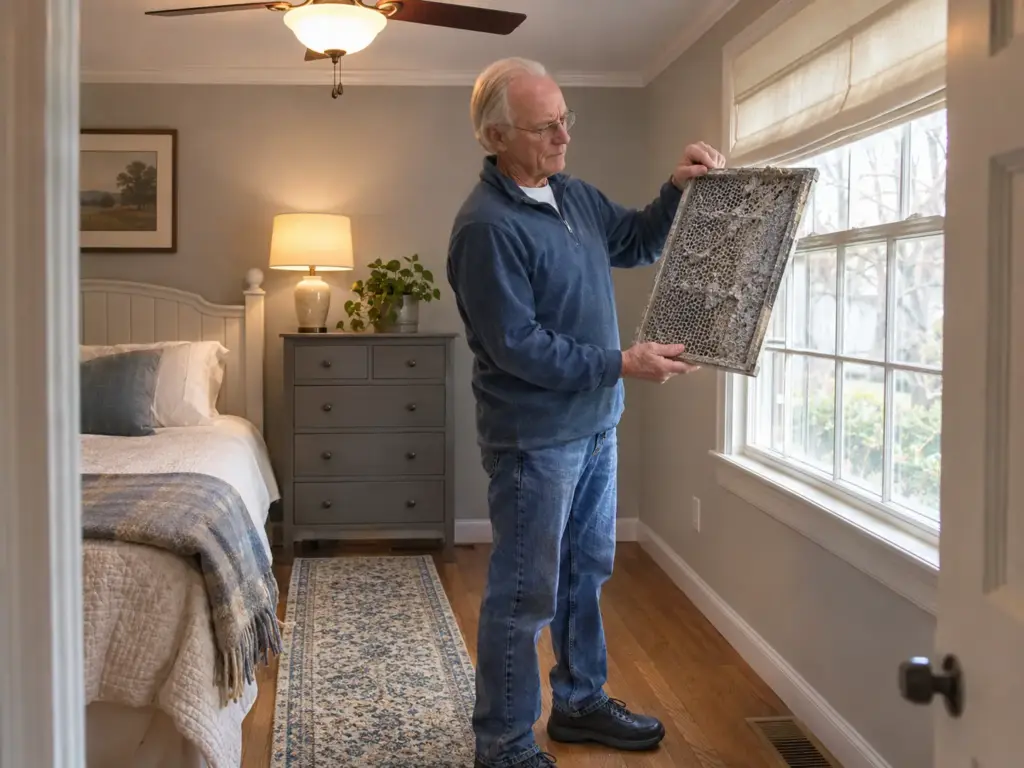
It is a cold morning in the middle of the heating season. The humidistat on the wall is calling for moisture, the furnace is running, water is audibly running down the drain, and the little meter on the shelf has read the same number since the year turned. You are asking how often to change a whole house humidifier filter, and the answers you find run from every 30 days to once a year.
They describe real parts, just not the same one: the “filter” in a furnace humidifier’s cabinet is a water panel that wets by evaporation, and minerals and hours of operation set its date while the wall calendar has little say. The box below gives the answer, and after it come the three parts that share the word, what moves the date, how to read a spent panel, which panel fits your model, and what to check when a fresh one changes nothing.
Quick Answer
Change the water panel once per heating season. Put the new one in before the furnace starts, because the count starts with the furnace’s first heating run. AprilAire lists its 45 panel twice per season. Look at the panel’s edge every month in the cold, and swap early if hard water or long run hours have loaded it.
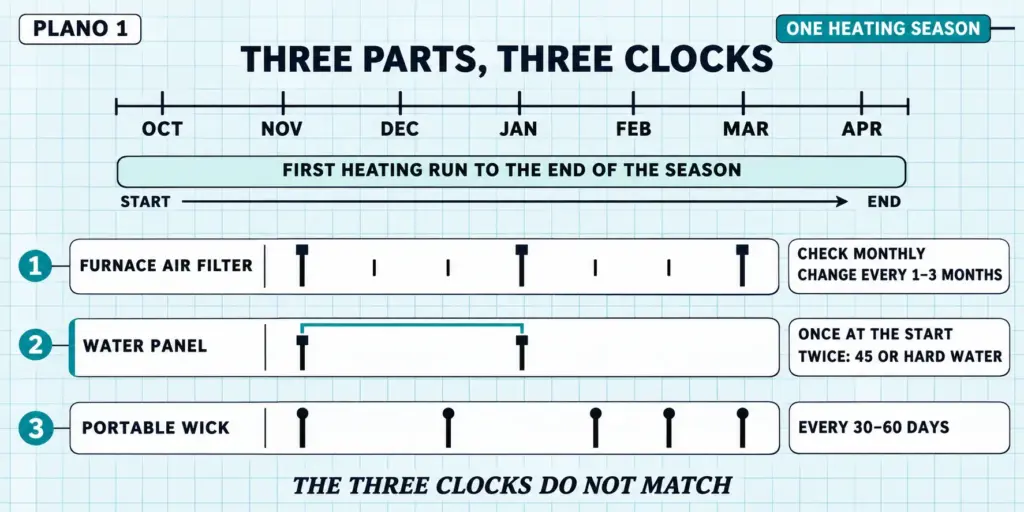
The Word Filter Hides Three Parts on Three Clocks
Open the furnace cabinet and more than one part answers to the word filter. Tell a neighbor you changed the filter in October and they will nod, though the two of you may have changed different parts. Which part is in your hand depends first on whether you own a room unit or the one on the furnace, and then on which of three candidates you mean.

The furnace air filter is the monthly one
The furnace air filter is pleated paper in a cardboard frame, with a MERV number and an airflow arrow printed on the edge, and it slides into a slot beside the blower or in the return duct. Its job is to catch dust before the blower moves the air, and it has nothing to do with water.
ENERGY STAR’s own furnace-filter advice is to check it every month, with extra attention in heavy-use months, and its minimum is blunt: “At a minimum, change the filter every 3 months.” That makes it a one-to-three-month part. If you wonder whether a choked one reaches the windows too, what a clogged furnace filter does to the window glass takes that up.
The water panel belongs to the heating season
The water panel (it also goes by evaporator pad, humidifier pad, wicking filter and, on the box, humidifier filter) sits inside the humidifier housing on the duct. Warm air from the furnace passes through it while water runs down its face, and the air leaves carrying moisture. A good one is stiff, and by the end of the season its edge has turned mineral-gray. It is a seasonal part: AprilAire lists its 10, 12 and 35 panels once per heating season, and the 45 panel and the model 400 humidifier twice.
If you moved in last spring, the cover may never have been off, because the inspection report never mentioned the part and the previous owner may not have known it was there either.
The portable wick is the 30-to-60-day part
A portable cool-mist humidifier, the console or tabletop kind that lives in a bedroom, keeps a wick in its base. Honeywell’s own guidance for portables is to replace it every 30 to 60 days, and a wick feels soft and fibrous where a furnace panel feels stiff. Carrying that 30-day clock over to the furnace panel is the most common wrong answer to this question, and the reverse mistake exists too, a wick left in place for a year. The three parts look alike on the counter (gray with use, pleated or meshed) and mean three different intervals, so identify the part in your hand before you trust any number.
The nouns around the word filter tell you which part you are dealing with. A console, a tabletop unit or a tank means a wick. The furnace, the duct, a saddle valve or a drain line means the water panel. MERV or the return means the air filter.
Each part has an interval that is correct for it, and the trouble starts when a number belonging to one gets carried over to another.
The Count Starts at the First Heating Run, Not on January 1
Once a year is the default, and it is easy to start that year on the wrong day. The year that matters begins when the furnace first calls for heat, which is October in one house and December in another. The default also splits in two depending on which panel you own.
Once per heating season is the floor
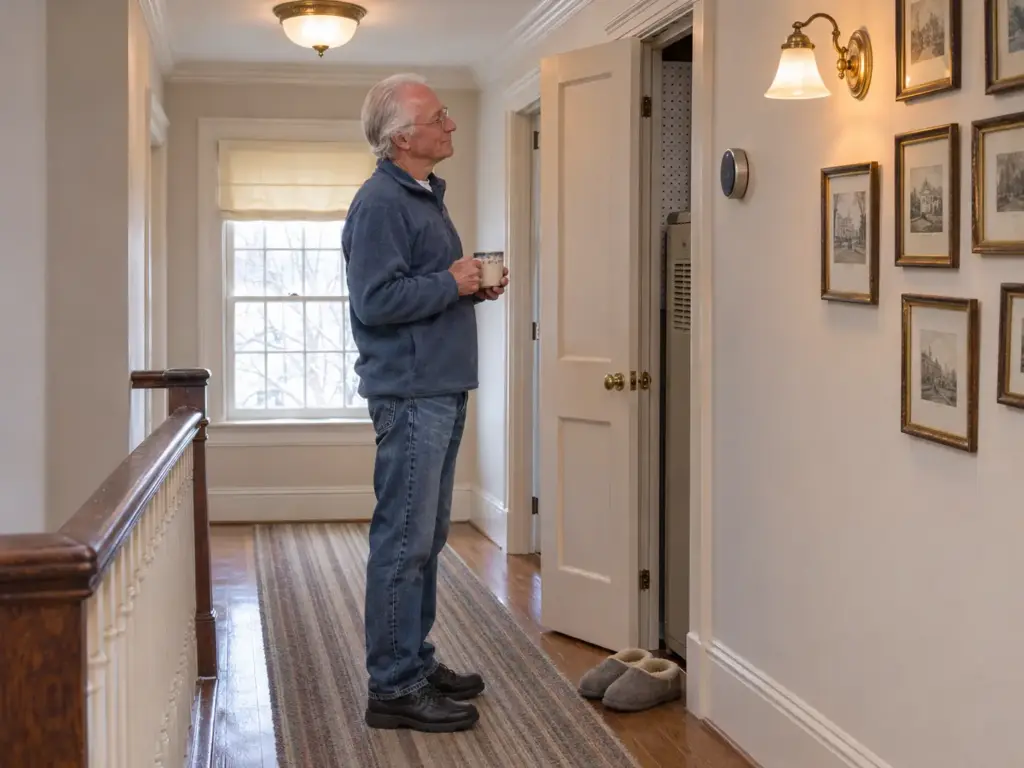
Honeywell recommends replacing the pad annually, at the start of the heating season, and adds that hard water can call for a second change in the middle of it. AprilAire gives the same floor for most of its line. Put the new panel in before the furnace starts, or rather before its first heating run, since that date moves with the weather. The old panel carries a full season of minerals, and the first cold week is when the humidistat starts calling hard.
Finding that date is easy. The first heating run is the first day the furnace cycles on its own, and you hear the click from the hall. Write the day on the calendar, and fit the new panel in the week before.
The hours matter as much as the date. A house with a mild fall and a house with a hard January do not run the humidifier the same number of hours, and why the setting that works in October is too high by January explains how the target falls as the cold deepens, with the run time following it.
The maker’s own line splits the interval by panel number
One year is not one rule, and the maker’s wording shows it. AprilAire lists panels 10, 12 and 35 once per heating season and the 45 twice, and its maintenance page does the same by model: annually for the 300, 500, 600, 700 and 720, twice per season for the 400. That split is the argument against a single date, because the interval belongs to the panel and the water.
Honeywell supplies the sharper proof. Its support page says to replace the pad annually, at the start of the heating season, while the listing for its HC26P pad says twice a year. The two lines settle once the second change stops being a default and becomes the answer to hard water and heavy run time.
A house with soft water and a light heating load gets one panel. A house with hard water gets two, and the common advice of once a year fails it.
The change-panel light counts run hours, not months
AprilAire’s control has a change-panel light, and it is a run-time counter. The installer presets it from the humidifier model and the water hardness, and the yellow light flashes after that set amount of humidifier operation. Two houses that fire up the furnace the same week can light it three weeks apart, because one runs the humidifier longer each day. If the water changed after the install (a softener added, a new supply), the preset is stale and the light is counting for water you no longer have.
A monthly inspection through the cold months catches the early loader that the light has not flagged yet.
Skip the teardown for the mid-season look. With the water and the power off, take the cover off for half a minute and shine a flashlight along the side of the panel, because the edge loads first. Stiff and light gray is a panel still working; a dark edge, or one that flakes when you touch it, is the early swap.
Hard Water and Run Time Halve the Interval
The baseline moves for two reasons, and only one of them is in your hands. Water hardness you can measure at the kitchen tap this afternoon, and run time depends on the winter and on how the unit is wired. Between them they decide whether you need one panel this season or two.
Read the water before buying a second panel
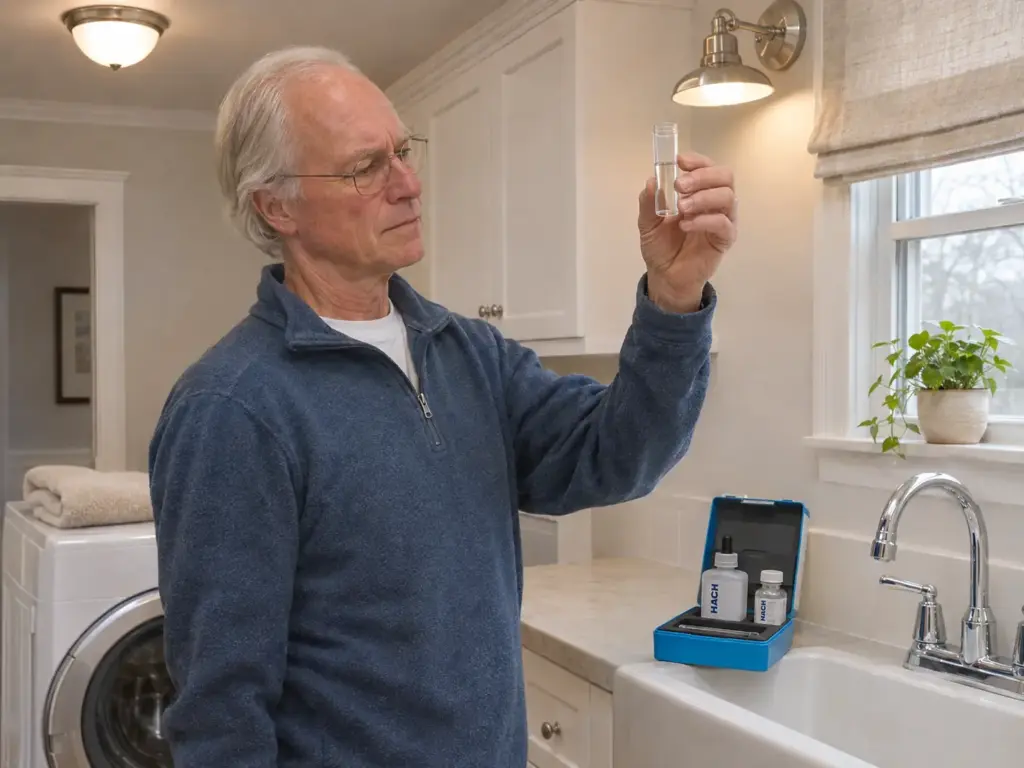
The reflex is to order a second panel in November; test the water first. The USGS hardness classes are written as calcium carbonate: soft water is 0 to 60 mg/L, moderately hard is 61 to 120, hard is 121 to 180, and very hard is over 180. A softener is set in grains per gallon, and one grain per gallon is 17.1 mg/L, so hard water starts just above 7 gpg (7 times 17.1 is about 120) and very hard begins near 10.5. Water at 22 gpg works out to roughly 376 mg/L, more than twice the very-hard line, and on water like that a new panel can go in during December and come out in March too soft to lift without breaking apart.
A drop-count test answers the one question that decides between one panel and two, which is how hard the water is at this tap. The Hach Total Hardness Test Kit, Model 5-B reads 1 to 30 gpg across about 100 tests, and it reports in grains per gallon, the unit a softener is set by. The instructions are the weak spot: the steps have to be followed to the letter, and in some kits the color change never shows at all, so test the same glass of tap water twice before you trust the number.
Test the cold tap that feeds the humidifier and compare it with the number your softener is set to remove. If the softener is set for 5 gpg and the kit reads 15 at the kitchen tap, the softener is the problem, and a second panel only hides it.
A softener changes the crust, not the date
A softener changes what a failed panel looks like. AprilAire’s owner’s manual describes hard-water residue as hard, scaly and dense, softened-water residue as soft, fluffy and bulkier, and it puts the service life of the panel at the same length either way. What moves the date is how much water evaporates across the panel and how much mineral rides in with it.
Picture a house with soft hot water and a humidifier that runs only on a heat call: the panel lasts most of the season and ends with a light tan crust. Now picture a house feeding cold hard water with the blower running often, where the panel goes nasty in weeks.
If a panel loads fast anyway, check three free things in order and look at the panel’s edge after each, so you know which one mattered.
First, confirm the humidifier is plumbed after the softener, because a feed taken ahead of it carries hard water to the panel no matter what the softener is set to. Second, open the saddle valve all the way, since a half-open valve builds minerals faster. The saddle valve taps the cold-water line, and the water line and the saddle valve are the install pieces that can fail while the panel is fine. Third, fit a small in-line strainer on the quarter-inch feed line ahead of the solenoid, so grit stops there instead of in the panel. And if the white dust on the furniture near the registers keeps coming, that mineral buildup is getting past a panel that no longer catches it.
Hours of operation: a long cold season and a hard-working blower
The other half of the arithmetic is hours. A long, cold season means the humidistat calls more often, and a blower that keeps running between heat calls holds the panel wet around the clock. Run the humidifier only on a heat call, with blower activation off, and the panel dries between cycles instead of staying wet all day. White dust on the furniture near the registers is the early sign that minerals are getting past the panel and into the room, and it shows up before the panel looks bad.
How to Read a Spent Panel Before Reaching for the Vinegar
The interval is a plan, and the panel in the housing is the evidence. Discoloration alone is not the signal, since a working panel turns gray by midseason; loading is the signal, and loading shows up in specific ways. A panel can look ugly and still pass water, or look fine and have stopped doing its job.
Less moisture for the same setting
The first sign is in the house, before you touch the panel. The humidistat sits where it sat in October, the unit runs, and the room reads lower than it did. The sound of the drain gives it away: a humidifier that has run for hours with a loaded panel sends water down the drain without lifting the humidity at the room.
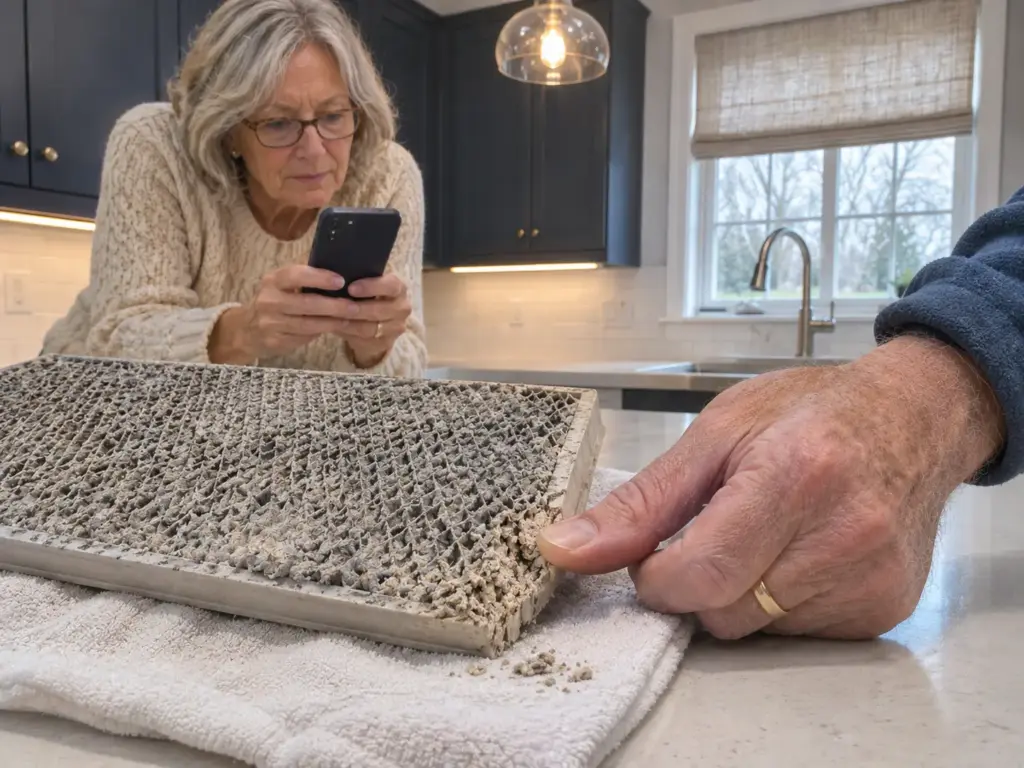
On the panel itself, look for a crust that will not rinse off, a musty smell, a pad that sags or collapses, and an edge that crumbles when you lift it. Black means spent; gray alone means used.
A panel that breaks apart in your hands is finished even when the humidistat still calls for humidity. That is the March tell, and a panel pulled that late was probably spent weeks earlier.
The proof is a before and after. Note the meter reading and the humidistat setting, swap the panel, and read the meter again after a few days of normal running. A reading that climbs toward the band means the panel was the part that failed. A reading that stays flat sends you to the water line, the damper and the unit, which are covered further down.
The crust that does not rinse off
A crust that stays after a rinse is mineral, and it is what shortens a panel’s life. It fills the open pores that let air and water meet, and a hose will not reopen them. A white ceramic coating on an aluminum-mesh panel is a different thing, since that coating belongs to the panel, and the white film on an AprilAire 35 is the part of it most often mistaken for mold. Color settles nothing, and loading does: a panel that is stiff, heavy and shedding powder is loaded, and one that is only discolored may still have months of work in it.
Clean or replace: what the sources disagree on
The sources disagree in public. One service page says a vinegar soak can revive a calcified pad.
AprilAire’s instruction is to replace the panel, not clean it. Honeywell says a wick should never be cleaned with vinegar, soap or chemicals, because that strips the coating. The call that holds up is filter replacement for the panel and descaling for what can be descaled: the distribution tray and the scale-control insert both come clean, but the panel cannot be restored.
Waiting has a price in the drain. Pieces of a disintegrating pad wash into the drain line and can block it, so a late swap can leave a clog behind. A panel left for years rots into its frame, and once it stops holding water the supply runs straight through to the drain, with water in the basement as the first sign. When the verdict is replace, the step-by-step for the swap itself covers taking the old panel out and seating the new one.
Match the Panel to the Model Before You Order
Knowing it is time is half of it. The other half is that the panel is model-specific, and a wrong size does not seat. Water panel, evaporator pad, wicking filter and humidifier filter are four names for the same idea, so a search for the part turns up all of them, and the match starts with a number and ends with a tape measure.

Read the number off the cover, not the box in the garage
The model number is on the humidifier’s cover or data label, and AprilAire’s panel number follows the model. The spare box in the garage may belong to the previous owner’s unit, so read the cover first and then the number on the old panel’s frame. Aftermarket panels cost less per panel, and fit is the thing to check on any off-brand pad; Honeywell warns that an off-brand pad may not wick or seat the same.
Photograph the cover’s model label and the number on the old panel’s frame in the same picture, then keep the old panel until the new one is seated beside it. Holding the two together for ten seconds shows a short cut before the old one goes in the trash.
The AprilAire numbers: 10, 35 and 45
The AprilAire 35 Water Panel (10 by 13 by 1.75 inches, sold as a pack of 2) fits the 300, 350, 360, 560, 600 and 700 series, which makes it the panel a 600-series reader is most likely to need. It also proves the annual default, since AprilAire lists it once per heating season and the pair covers two. The white ceramic coating on it can pass for mold on a quick look, and that coating is the panel working as designed.
The clock changes with the number. The AprilAire 45 Water Panel (9.875 by 12.875 by 1.75 inches, also a pack of 2) is the one panel in the line changed twice per heating season, so the pair is one season’s supply and fits the 400, 400A and 400M. Durability is where it slips, because the panel can flake as the season wears on. Count two-packs by season and a quote reads differently: a pack of 35s lasts two seasons, a pack of 45s lasts one, and the second-year panel line on an installer’s quote is worth checking against that count.
The AprilAire 10 Water Panel (9.5 by 9.75 by 1.75 inches, a single panel) serves the 110, 220, 500 and 550 series, and it is the one to name when a reader says AprilAire but the cover says 500. Its size is the sticking point: a panel cut a hair short fits loosely, so check the dimensions against the old panel before the old one goes.
The Honeywell HC26P side of the match
The Honeywell side is the Honeywell Home HC26P pad (HC26P1002), 10 by 13 by 1.5 inches, a single pad for the HE200 through HE365 humidifiers. Honeywell’s own listing says to change it twice a year while its support page says annually, and by now the reason is familiar: the second change belongs to hard water and long run hours, so the water test from earlier decides which line is yours. The plastic base can crack with no impact at all, so look it over when you unpack it, before the pad ever gets wet.
A right-size panel seats flush in its frame with no gap at the sides. An off-size pad leaves a slot of dry air beside it, and the unit seems to work while part of the air passes the panel dry. If a panel keeps loading in weeks even with the water sorted, the unit is the question, and which whole-house unit suits the house is where to compare sizes.
When a Fresh Panel Changes Nothing: Read the Meter Before Buying
The most expensive mistake in this article is buying a part to fix a problem the part did not cause. A spent panel is the likeliest culprit, so rule it in or out first, and then let the humidistat, the water line and a meter in the room tell their versions of the story.
The humidistat calls, the water runs, the meter does not move
The tell that the panel failed has three legs: the humidistat is calling for humidity, water is running to the drain, and a reading in the room has not moved.
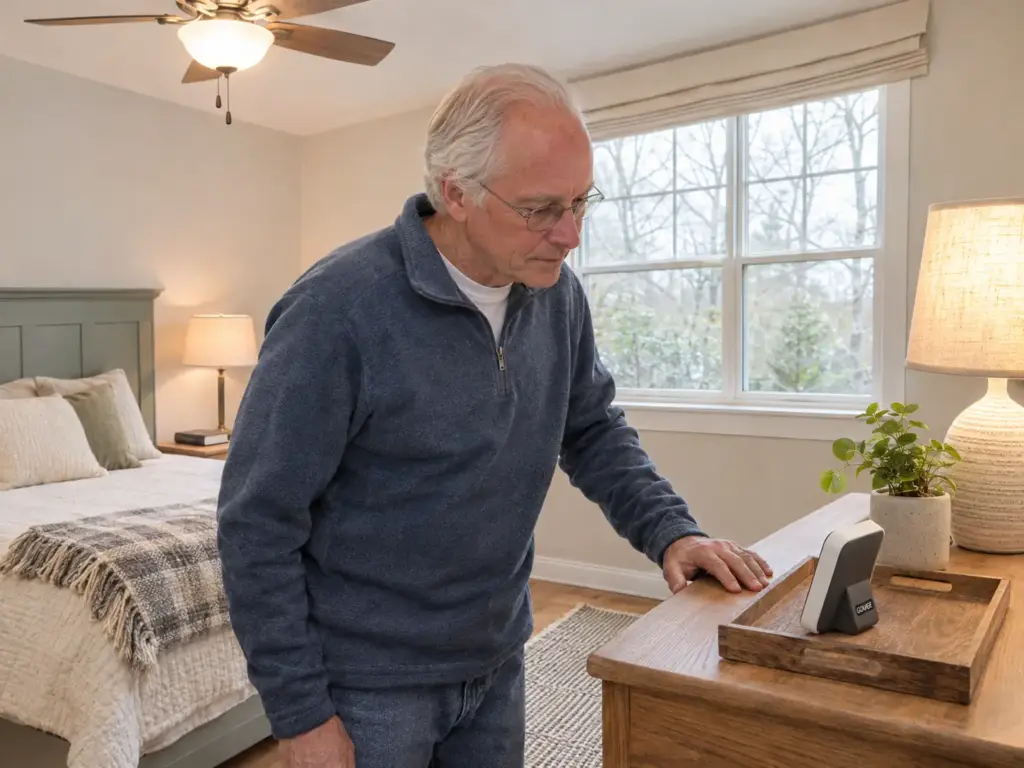
For the reading, use a separate meter, since the unit’s own dial is the thing under suspicion. The Govee Indoor Hygrometer Thermometer H5075 states its humidity accuracy at plus or minus 3 percent RH and keeps max and min records, so the overnight trend shows whether the room climbed at all. Its Bluetooth connection is the weak point, since a unit can stop working within months, so take a second reading from another meter if the numbers look flat.
Three readings with one meter shows how to take them.
The target the panel is supposed to hold is set by the EPA’s 30 to 50 percent band, and its line reads “If possible, keep indoor humidity below 60 percent (ideally between 30 and 50 percent) relative humidity.” The CDC’s 50 percent ceiling is stricter, asking for no more than 50 percent all day long. AprilAire prints a 40 to 60 percent range, which reaches past the EPA’s ideal, so this guide holds the EPA band with the 60 percent ceiling as the stop line.
A unit that reads fine on the dial it ships with and flat on the shelf meter points at the humidistat instead of the panel. If the meter sits under 30 percent, what a low reading means before you buy a part is the place to start.
Water not running at all: the valve, the strainer, the damper
If no water is running, the panel is not the suspect. Check these in order, and read the meter after each:
- The saddle valve and the water valve behind it: open all the way, and not clogged.
- The in-line strainer at the solenoid: grit from the feed line stops here, and it can block the flow.
- The bypass damper: on a bypass unit, a damper left in its summer position in winter shuts the airflow off, and the panel can be perfect while the output is nothing.
- The blower: a humidifier that depends on fan-powered airflow does nothing when the blower does not run.
What a new panel will not fix
A fresh panel will not fix hard water that loads it again by February, a unit oversized for the house, or a leaking saddle valve. It cannot fix a reading that is already too high, either. Condensation at the lower corners of a window is the sign of too much moisture, not too little, and the same meter reading tells you which way the air is off. If the meter reads above 50 percent and the glass is sweating, the humidistat is set too high, and a new panel only adds to it.
What an Overdue Panel Costs, and the Five-Minute Swap That Resets It
Waiting is not free, though the bill comes in water, damp metal and a slow drain. Once you know which part failed, what remains is what lateness costs and the small habit that stops it.
Output drops, water still runs
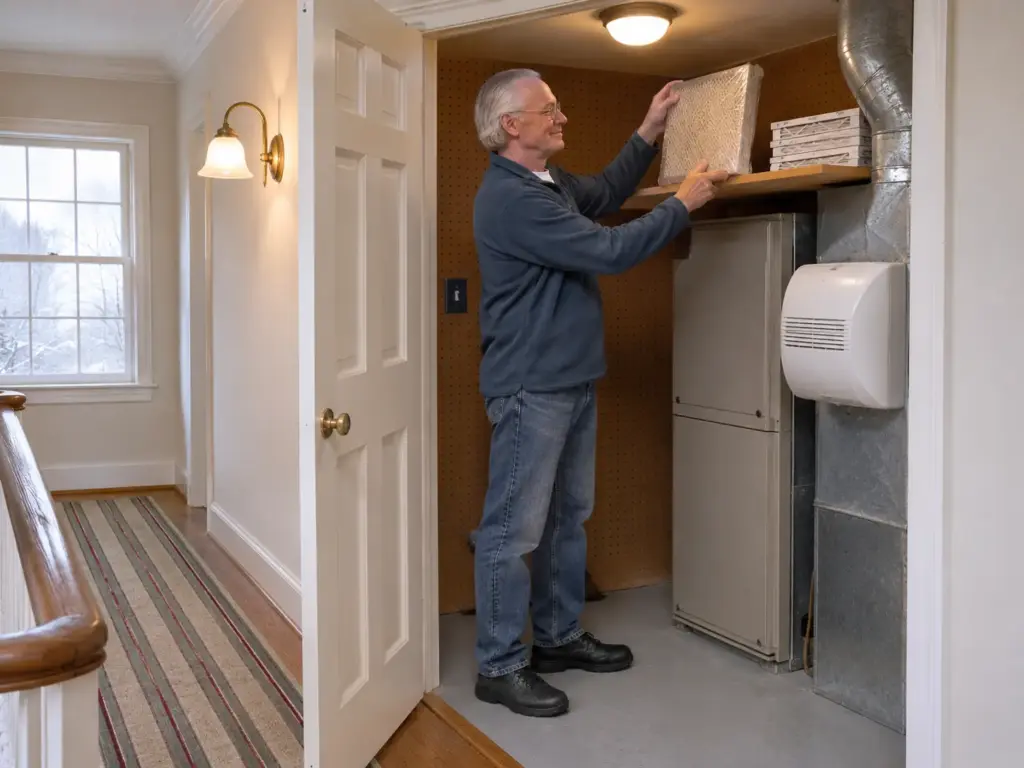
A panel that no longer holds water moves less moisture into the air for the water it uses, so the output drops while the water keeps running, and the difference goes down the drain. The furnace keeps heating dry air, and the room sits under the band while the unit looks busy. The water going in is the same and the humidity arriving at the room is lower, which is the whole cost.
Damp duct and a clogged drain
An idle, loaded panel leaves a damp cabinet, and moisture left in a cabinet is a short step from damp ductwork. Whether the duct stays damp is a separate matter, and the question of whether the duct itself stays damp has its own page. The drain is the nearer problem. Pieces of a crumbling pad wash into the drain line and block it, and the swap you finally make leaves the drain clog behind. A stale odor from the cabinet is the other warning that the panel has stayed wet too long.
Date the new panel and reset the light
The swap itself takes about five minutes. The habit that keeps the next one from slipping is the part worth writing down. Write the date on the new panel’s frame with a marker before it goes in, reset the warning light on the control, and put the next date somewhere you will see it, such as the furnace door or the calendar for the first cold week. At the end of the heating season, shut the water supply and let the panel dry, because a panel left wet all summer is a bad start for the next one.
A new panel is lighter and stiffer than it looks, and it takes on weight over the season as water and minerals settle into it. Lift it in the last week of February and you will feel the difference in your hand before you see it on the edge.
Put the Panel In Before the Furnace Starts, Then Read the Edge in February
The water panel of a whole-house humidifier is a seasonal part, and the water and the hours move its date more than the calendar does. Before you order anything, read the model number off the cover and the panel number off the old frame, then test the tap water. Trust the panel’s edge and a meter in the room over any single interval, since both belong to your house. A fresh panel will not fix water that loads it again by February.
For later, lift the panel in the last weeks of the cold season and look at its edge again, and take a reading in the room a week after the swap. If the panel is loaded by then, the water test explains why.
Tomorrow, the first move is to read the number off the cover and run the water test; the reading to take after it is the meter in the room, a week after the swap. If the room still reads low once the panel is right, the order to raise a reading, with the furnace unit checked before a new device lists what to try and in which order.
Frequently Asked Questions
01When to replace a whole home humidifier filter?
Replace the water panel before the furnace starts for the season, then count the interval from the first heating run. The 45 panel and hard water add a mid-season swap, and a monthly look at the panel’s edge tells you when.
02How often should I replace my AprilAire humidifier filter?
AprilAire lists its 10, 12 and 35 water panels once per heating season and the 45 panel twice per heating season. Read the number on the old frame first, since the change-panel light counts run hours and can flash earlier or later than the calendar.
03What happens if I don’t change my humidifier filter?
Moisture output drops while water keeps running down the drain, the cabinet stays damp, and pieces of a crumbling panel can block the drain line. If a dry room is the real complaint, whether a humidifier stops static shocks at the 30 percent floor covers the number to aim for.
04How long can water sit in a humidifier before it goes bad?
Water that sits in a tank or pan leaves a mineral film and a stale smell, so empty it, rinse it and refill it when you notice either. On a furnace unit, close the water line at the end of the season and let the panel dry.
05Can I clean a humidifier filter instead of replacing it?
A water panel cannot be restored once minerals fill it, so the maker’s instruction is to replace it and descale only the parts around it. The distribution tray and the scale-control insert come clean, and a portable wick should never get vinegar, soap or chemicals.