The wall thermostat reads 70°F (21°C), yet the bedroom feels a few degrees colder than that, the blanket crackles as you pull it up, and the question in the doorway is whether dry air is the reason and whether another notch on the dial is the answer. Does dry air feel colder in winter? Yes, a little, and not for the reason the outdoor debate gives: the set point is one of six things a room’s comfort depends on, and the water in the air changes how fast heat leaves a surface, not the temperature the thermostat reads.
Whether drier or more humid air is easier on a person is a question for a doctor and not for a meter, so this guide stays with the house: the reading, the draft, the cold glass and the unit. It runs in that order, with the humidity reading first and what a humidifier looks like by its second month last.
Quick Answer
Yes, a little. At the same thermostat setting, a room reading far below 30 percent relative humidity feels colder than one inside the 30 to 50 percent band, but the margin is small. Drafts and cold glass pull more heat off you, so read the humidity, seal the leak, then adjust the heat.
Why the Same Thermostat Setting Feels Colder in Dry Air
The familiar argument about this question is outdoors: dry cold against humid cold (the wet cold of a rainy day), a thermometer against a hiker’s memory. Indoors it is a different question, because the room is heated and the number that decides the answer moves the moment the furnace comes on. The verdict is yes, and small, and the three parts below show where the size comes from.
Why the Outdoor Argument Shrinks in the Cold
At 32°F (0°C), saturated air holds only about 4.8 grams of water per cubic meter, under half a percent of the air’s mass. Air that cold has almost nothing for humidity to change, so a “humid” cold day and a “dry” one sit close to the same thermometer reading, and the vapor adds little to either. Wind, damp clothing and the hours spent outside carry most of what gets blamed on moisture in the air.
What Heating the Same Air Does to the Percentage
Bring that air indoors and warm it to 70°F (21°C), and the water stays while the room’s capacity jumps: saturated air at 70°F holds roughly 18 grams per cubic meter, nearly four times as much. Winter air that was fully saturated outside therefore reads about 26 percent relative humidity once the heat has done its work (4.8 divided by 18, a division of the two standard values and nothing the house leaks), and a drier day outside lands in the teens.
Absolute humidity, the grams of water in a cubic meter, stays put while relative humidity falls. Where a heated house loses its water in the first place has its own page; here only the result matters. The same house reads lower each time the outdoor temperature drops, and the page on why the same house reads drier in January follows that swing through the season.
How Small the Margin Really Is in a Room
At the same set point, a room reading in the teens does feel colder than the same room inside the band, because evaporative cooling runs faster in drier air, and anything damp in the room (a wet towel, a freshly mopped floor, even wet skin after a shower) cools more as it dries. The feels-like temperature of the room drops a notch while the air temperature does not. The margin is still small.
Move a room from 40 percent to 20 percent and the thermostat reading does not budge, while a draft across the floor or a cold pane three feet away changes how the room feels far more than that. Yes, and small.
The room reports its reading before any meter does: static electricity makes the blanket crackle and the light switch bite, and the stairs and floorboards start to creak as the seams open a little with the falling humidity.
What Actually Pulls the Heat Off You
With the verdict small, the open question is where the rest of the chill comes from. Comfort is built from six things at once, and a winter room usually fails at five of them while the thermostat watches the sixth.
The Six Things Comfort Is Made Of
ASHRAE Standard 55’s list of what actually sets thermal comfort fits in one sentence: “Environmental factors (temperature, thermal radiation, humidity, and air speed) and personal factors (activity and clothing) combine in complex ways to create indoor thermal conditions.” Read that list against the wall: the thermostat controls air temperature, a humidifier moves humidity, and the other four (radiant temperature, air speed, activity and clothing layers) are left alone. That is why 70 on the display and 70 in the room can be two different evenings.
Air Speed Is Wind Chill Indoors
Wind chill is an outdoor index. What the National Weather Service means by wind chill is a rate of heat loss caused by wind and cold, and it is not a true temperature. Indoors the same physics shows up as air speed, which means a draft: moving air carries off the thin layer of warmed air around whatever it crosses, so a leaky sash or a gap under a door cools a seat without moving the thermostat at all.
The Cold Glass Takes Heat Without Touching the Air
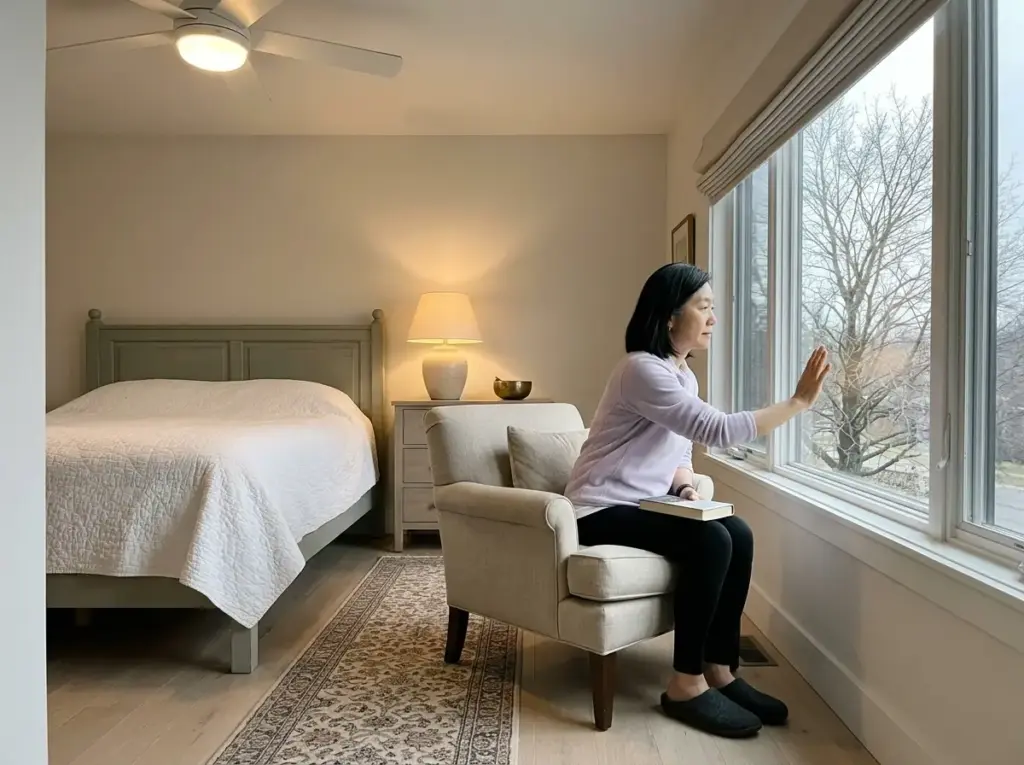
More than half of the heat a seated person gives off indoors leaves by thermal radiation, according to the share of a seated person’s heat that leaves by radiation in a paper from Cell Reports Physical Science. A cold window a few feet away is a surface the room radiates toward, and its low surface temperature drags down the mean radiant temperature you sit in, so heat leaves you at the glass while the air temperature stays put. Radiant heat loss is the half of the chill the thermostat cannot see, and the window glass is where it happens. The corner beside the window is the cold one at any set point, and it is the one the meter on the nightstand never shows.
Read the Room’s Number Before You Touch the Thermostat
Physics says the margin is small and mostly elsewhere. A feeling cannot say which, and a reading can, so the first move is a measurement, taken before any dial or device is touched.
The Band the EPA Gives, and Where a Dry Room Sits
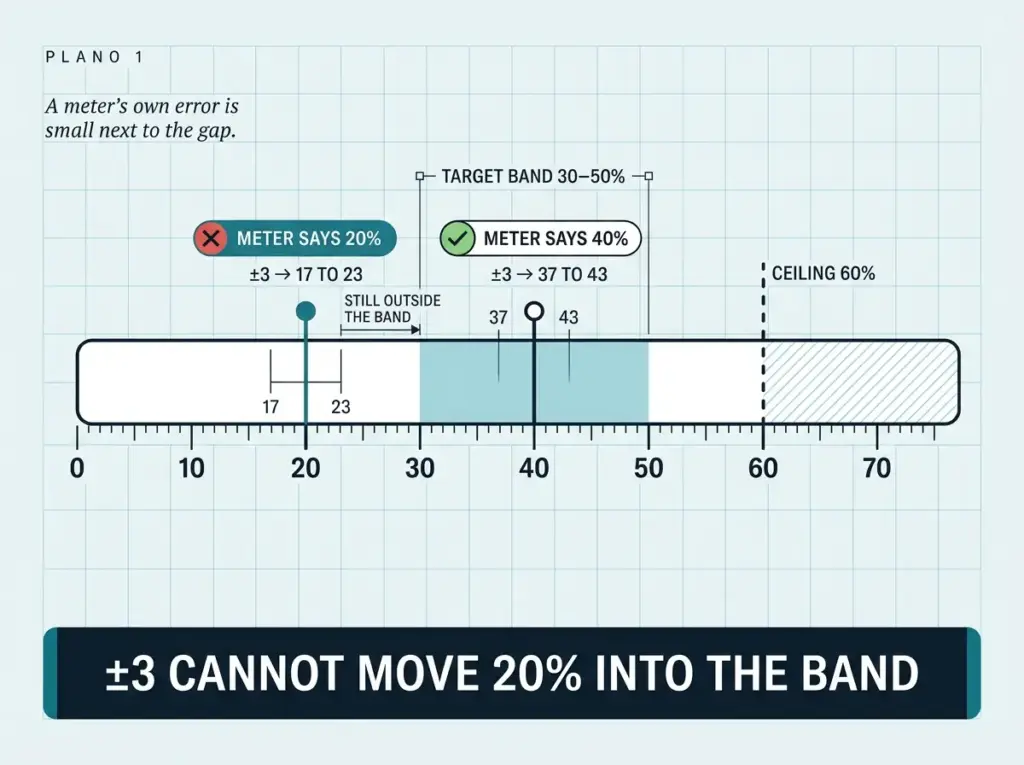
According to the EPA’s guidance on keeping indoor humidity below 60 percent, “Keep indoor humidity low. If possible, keep indoor humidity below 60 percent (ideally between 30 and 50 percent) relative humidity.” A winter bedroom in the teens sits far under that band, and what a reading that low means for the house is worth a look once the number is in hand. The target also moves with the weather: below about 15°F (−9°C) outdoors, extra humidity frosts the glass and damages trim and paint, so the ceiling drops, and the humidity level that fits each outdoor temperature tracks that drop.
Where to Put the Meter, and What Its Own Error Does to a Low Reading
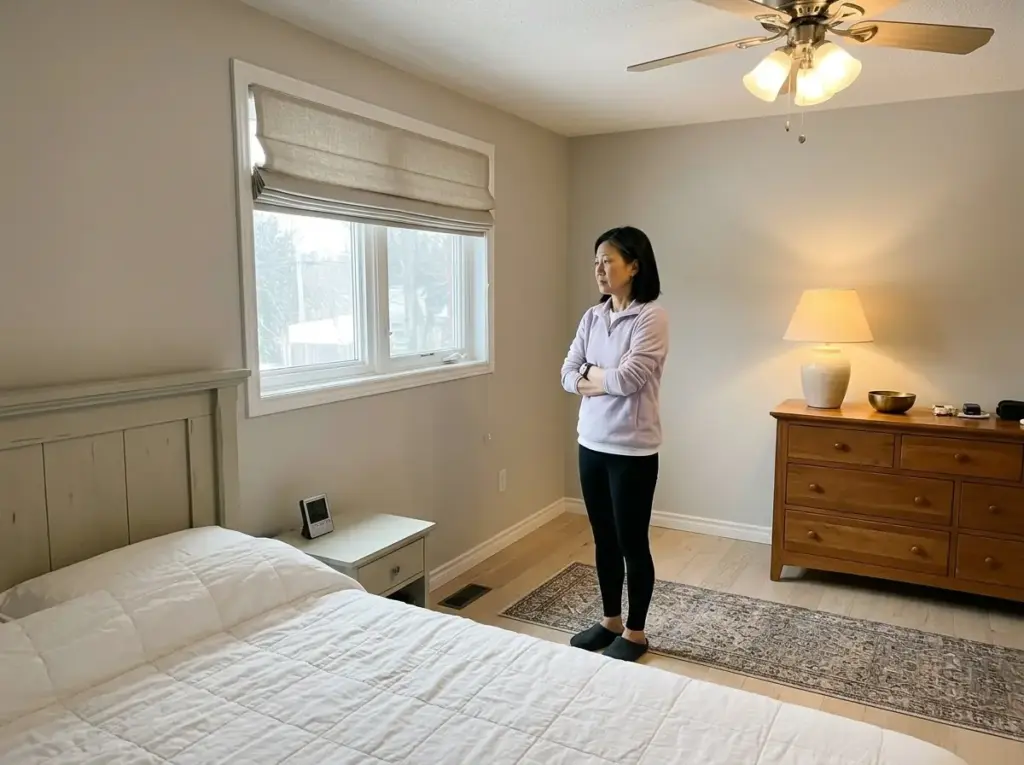
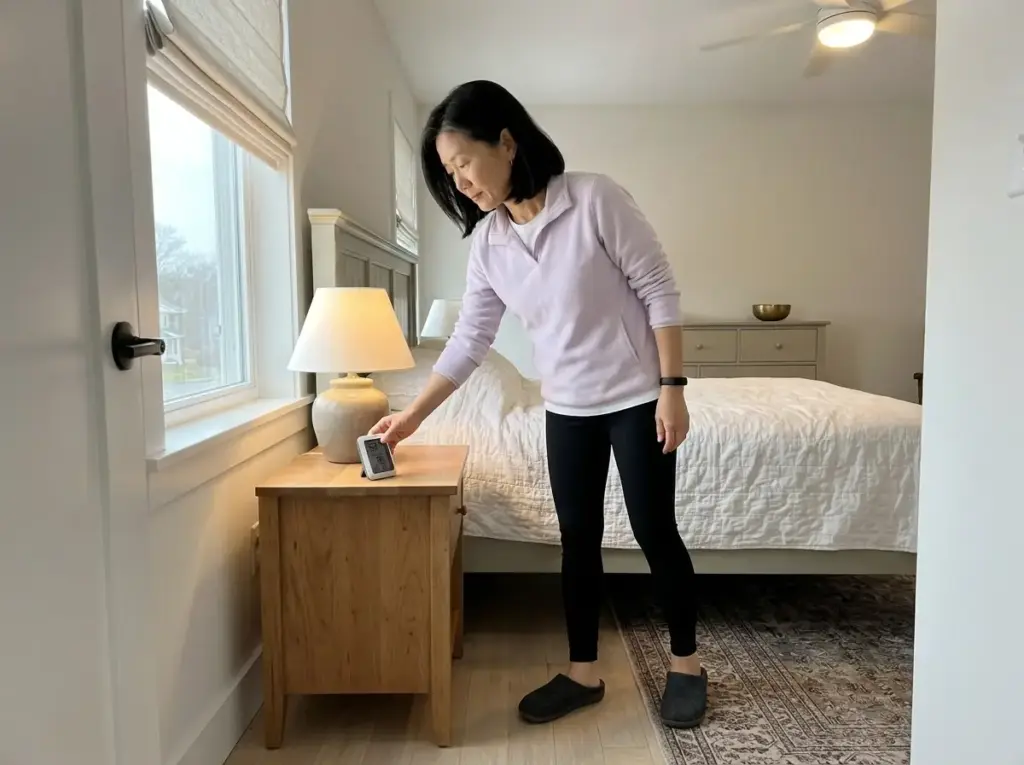
Put the meter where you sit or sleep, at sitting height, away from the windowsill, the humidifier’s outlet and the heating vent, and leave it until two readings agree; taking three readings with one meter spells out the routine. The EPA calls a humidity meter a small, inexpensive instrument, which is why a meter comes first and a unit second.
The TempPro TP50 is the hygrometer this article leans on. It shows relative humidity and temperature, refreshes every 10 seconds and keeps a 24-hour high and low, and the high and low are the useful part, because they show the bedroom swinging overnight. Reliability is its weak point: some units stop working after about a month, so a reading that looks frozen or absurd gets checked against the next day’s before anyone buys a humidifier because of it, and which cheap humidity checker is worth trusting goes deeper into that choice.
Its accuracy is ±2 to 3 percent RH and ±1°F, so a 20 percent display means somewhere between 17 and 23, and 40 percent means 37 to 43. The error is too small to lift a room from the teens into the band, which is worth knowing before anyone chases a single point on the display.
The Overnight Low Is the Number That Counts
One reading at bedtime and one at dawn say more than three in the afternoon, because the heat cycles and the room’s moisture swing through the night, and the 24-hour low is the figure the dawn glance catches. A meter checked only when the room is warm and occupied reports the best hours of the day.
Keep the meter off the windowsill, the radiator top and the humidifier’s outlet. The glass reads colder and damper than the room, the mist outlet reads wetter, and either spot hands you a number for a place nobody sleeps.
The reading also sets the order. The thermostat is the wrong lever, since the set point is one of six factors and the other five are what a winter room fails at; the reading points the direction. Seal the draft and the cold pane first, set the humidity at the bottom of the band second, and read the meter again third.
Seal the Draft and the Cold Pane Before You Add Water
The reading gave the direction, and the cheapest change in the whole article is not water: it is the moving air and the cold glass, which are the larger part of the chill. So they go first, free before kit, with the cold room that is really the building named at the end.
The Free Moves First: Close the Gap Where the Air Moves
Start with what is already in the house. A draft sock or a rolled towel along the bottom of the door, curtains drawn at night over the glass, and a hand run along the sash and the window frame to find where the air moves. None of that changes the number on the meter; all of it changes what a person feels at the window. Airing the room to fix the chill backfires in winter, as why opening a window does not help dry air in winter lays out.
On a windy night, hold a strip of tissue against the sash and the door frame. The spot where it flutters toward the room is the leak, and the leak is where the free fix goes before any kit.
Window Film for the Glass That Pulls Heat Off You
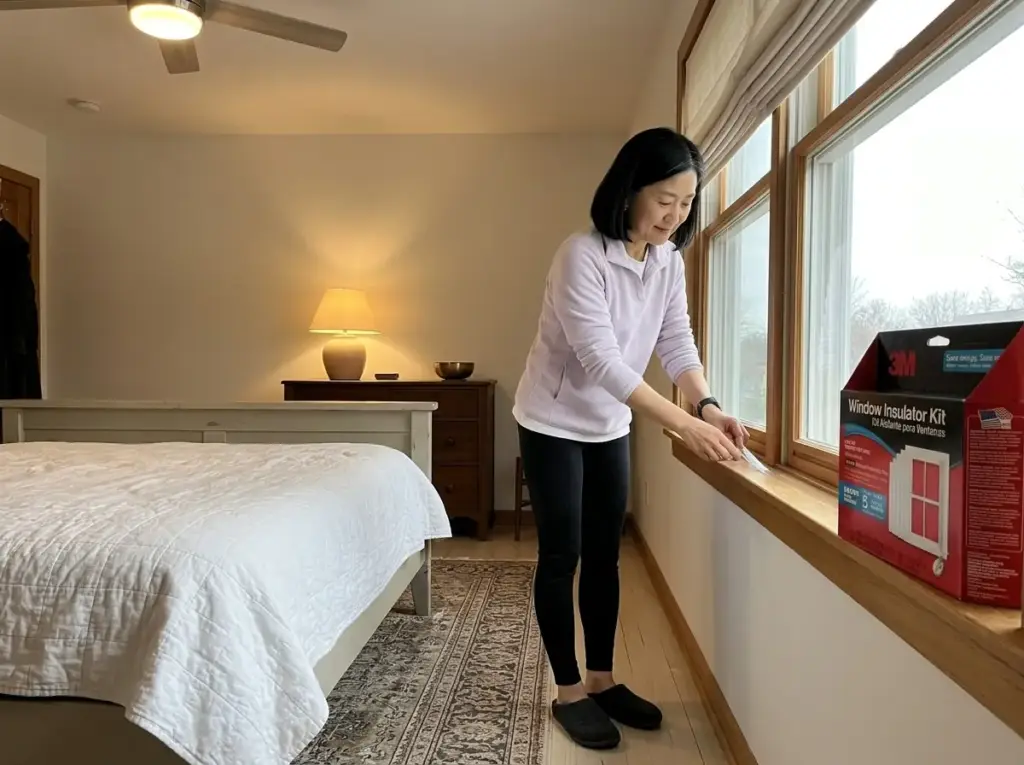
When the glass itself is the cold surface, film is the cheapest thing in this article that changes what you feel. The 3M Indoor Window Insulator Kit is 0.75 mil clear shrink film held with double-sided tape and tightened with a hair dryer, and one kit covers five indoor windows of 3 by 5 feet. It stops the air movement at the window and cuts the radiant pull of the glass; Bob Vila’s test of the same kit saw the cold air near the glass drop and the film stay put. The gain is local, felt standing at the window and never read on the thermostat.
The true edge of the folded sheet is hard to find, and a bad first cut wastes most of the sheet. The tape can rip and the paper backing can refuse to peel, so cut with spare and keep the dryer moving. The Duck Brand 10-window kit covers more windows with thinner film, and that is the trade it makes. How to prevent condensation on windows covers the fog that a cold pane collects once the film is up.
When the Cold Room Is the Building
Film closes the glass and does nothing for a sash that leaks, which is a job for weatherstripping and caulk. A cold window surface pulls radiant heat off anyone near it, and no humidifier touches a leaky sash or a missing wall. When the cold room is a poorly sealed envelope or a wall with no insulation, the answer is weatherstripping, film or a professional who looks at the house.
By the second month film gives a sign: the tape lifts at one corner on the coldest night and the glass behind it fogs, which says the seal is failing, not the room. What makes a window sweat overnight, hour by hour gives the fuller picture of that fog.
Then Raise the Humidity to the Bottom of the Band
With the draft and the pane handled, some rooms still read low, and now the unit has a job: a number to reach and a ceiling it must not pass. The reading decides how hard it works, and the glass tells it when to stop.
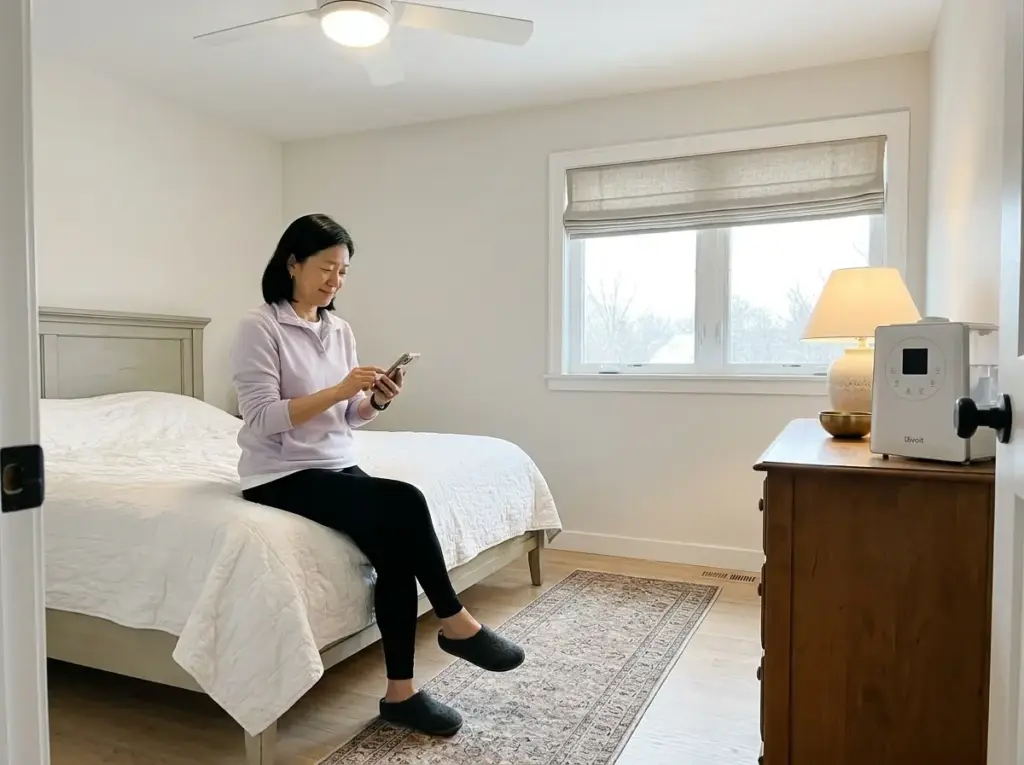
Set It at the Bottom of the Band and Read Again
Aim for the bottom of the 30 to 50 percent band, not the middle. Set the unit (or its humidistat, if it has one), leave it a day, read the meter again, and move the setting half a step if the number is still low; the overshoot shows up as fog on the glass before it shows up as a number. The winter setting that does not make the glass sweat goes through how the dial reads against the real room.
Fog on the Coldest Pane Is the Stop Sign
The EPA’s guidance is that condensation on windows, walls or pipes means drying the wet surface and cutting the moisture source, and that it can signal high humidity.
The coldest pane is therefore the ceiling on how much water a room can take: fog on the glass is the stop sign, not the target. A unit that has brought a bedroom to the bottom of the band shows its first sign as a ring of fog along the lower edge of the coldest pane, ahead of any number on a display. That condensation on the pane means the glass has dropped below the room’s dew point, and it is the cue to stop adding water. Below about 15°F (−9°C) outdoors the ceiling falls further, with frost on the glass and the trim.
Cool Mist or Evaporative, by the Water You Have
How many gallons a day a room actually needs comes before either type, because a unit sized for the wrong room never reaches the band or fogs the glass trying. Humidify the one room in use with the door shut instead of a whole floor, which is the usual answer in an apartment with no ducts to carry moisture anywhere, and let the meter decide one room or the whole house.
The Levoit LV600S is the large-room unit: a 6-liter top-fill tank that lasts most of a day, warm and cool mist, a night mode under 28 dB (quieter than a refrigerator), a claimed coverage of 753 square feet and an app that shows the humidity reading. It suits a living room more than a bedside table.
Ultrasonic mist from tap water leaves a fine mineral dust on furniture and the base is awkward to clean, as Wirecutter’s testing found; distilled water stops the dust and becomes a running cost. Some units stop raising humidity or shut off unexpectedly. A plain cool-mist tank with less capacity does the same job for less, and a pot of water on a radiator costs nothing.
The BLUEAIR InvisibleMist H35i answers hard water differently. It is evaporative, with a 3.5-liter top-fill tank and an antimicrobial wick rated for six months, so the minerals stay in the wick instead of landing on the furniture. The cost moves to a filter bought twice a year, and for about the same money as the Levoit it covers less room. A humidifier for a bedroom with the door shut is the sizing that fits it.
In a house with radiators, a shallow pan of water set on each one costs nothing and gives you a free test: if the meter climbs a few points over a day, you know how much water the room wants before you size any unit.
What the Humidifier Looks Like by the Second Month
The room has reached the band and the reading looks right in the first week. By the second month the unit has started asking for something every week, in the tank, the wick and the glass.

The Film of Mineral Dust and the Tank That Needs Descaling
An ultrasonic unit throws the minerals of the tap water into the room as mist, and they have to land somewhere. A fine white film on the furniture that returns two days after dusting is the water, and the unit is working as built. Distilled water ends it and turns into a running cost, and the tank and the base need descaling on a schedule the hardness of the water sets.
An evaporative unit keeps the minerals in the wick instead, so by month two the wick is loaded, and it is a filter replaced about every six months. Without a water treatment that wick molds fast, so the tank gets emptied and dried at the end of the day and never left standing. The static cling and the shocks that told you the room was low ease first, and whether a humidifier stops the static shocks at 30 percent has its own page.
If the white film keeps coming back, run a single tank of distilled water before blaming the unit. When the film stops, the water was the cause and the machine was fine.
What It Costs to Run, in Watts and in Attention
A warm-mist unit is the expensive one to run, since it heats water, and a cool-mist or evaporative unit is the cheap one. Multiply the unit’s watts by the hours it runs and divide by 1,000 to get kilowatt-hours, then multiply by your own rate; a unit drawing 25 watts for ten hours uses a quarter of a kilowatt-hour, and one drawing ten times the watts uses ten times that. The ratio between the types is what matters, and cool mist against warm mist, by water and watts carries the figures. The other running cost is attention: the weekly emptying and rinsing, and the filter at the six-month mark.
What a Humidifier Cannot Fix
It does nothing for a leaky sash, a cold pane or a missing wall. The reading goes up and the chill at the window does not move, because the draft and the cold glass are still there, and that is the whole reason the draft and the pane come before the unit in this article. A room can sit at 35 percent and still feel cold in the corner by the glass. What a good humidity level for a bedroom looks like is the target the reading belongs to, and the corner by the window is the part of the room no target reaches.
Read the Bedroom Twice Before You Touch the Thermostat Again
A dry room feels colder at the same set point, and the margin is small. The draft and the cold glass take more heat than the dryness does, so the order runs read the room, seal the sash and the pane, raise the humidity to the bottom of the band and stop where the glass fogs. The thermostat stays where it was, and so does the heating bill.
Some things deserve a second look later. Check the lower edge of the coldest pane on the first hard-freeze night, read the meter at dawn after a week on the same setting, and look into the tank and the wick at the second month for film, scale or mold.
Tonight, set the hygrometer where you sleep, read it at bedtime and again at dawn, and run a hand along the sash. What those numbers say settles whether the next purchase is a roll of film or a humidifier, and the sizing page waits for the second case.
Frequently Asked Questions
01Does dry air make the cold feel colder?
Yes, a little. At the same thermostat setting a drier room takes heat off surfaces faster, but drafts and a cold window take more. Read the humidity and find the draft before turning the heat up.
02Does humidity make it feel colder or warmer in winter?
Indoors, more humidity makes a room feel slightly warmer at the same temperature and a drier one slightly colder. Outdoors in deep cold the difference nearly vanishes, because air near 32°F (0°C) holds almost no water, and wind matters far more.
03Does dry air make it feel hotter?
In summer the rule runs the other way: humid air feels hotter because evaporation slows. In a heated winter room a drier reading feels slightly cooler, not hotter, at the same set point.
04What humidity level should a room be at in winter?
Between 30 and 50 percent, with 60 percent as the ceiling, according to the EPA. Below about 15°F (−9°C) outdoors, aim for the bottom of the band so the windows do not frost.
05Will turning up the heat fix a room that feels cold?
Rarely. The thermostat sets only the air temperature, and a drafty sash or a cold pane keeps pulling heat off you at any setting. Read the room first, then seal the leak before adding heat.