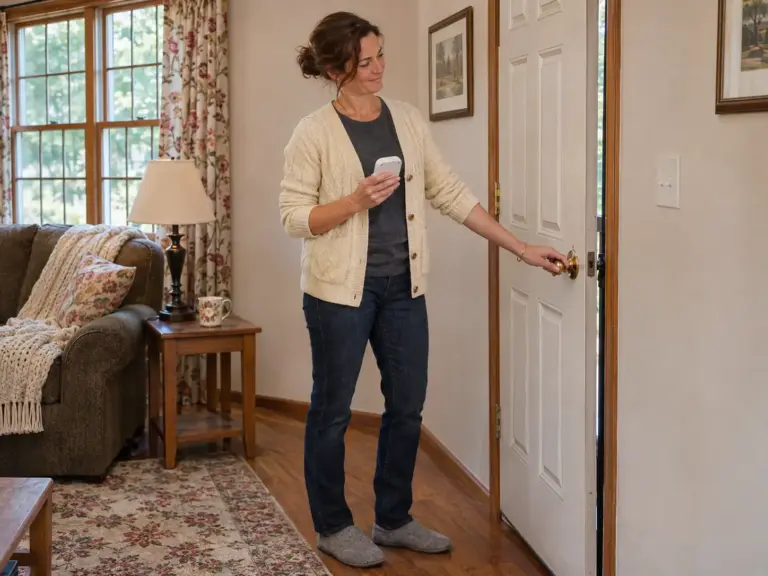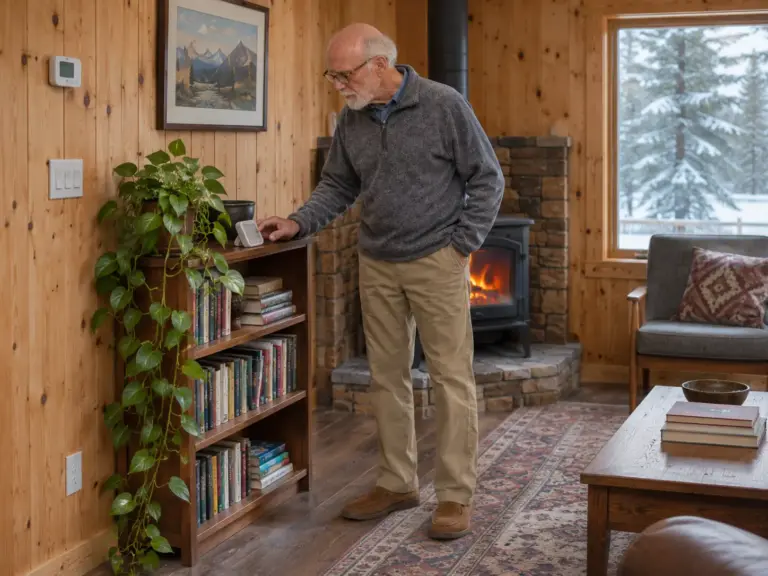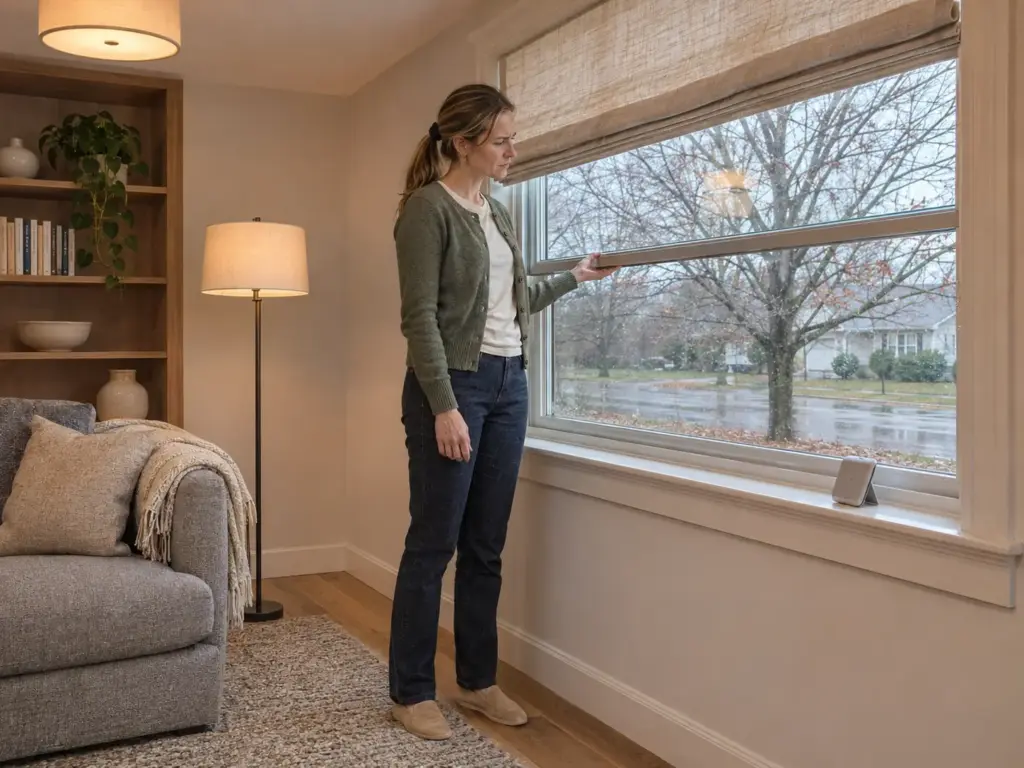
The meter on the nightstand reads 24 percent at 7 a.m., the window was cracked all night to let the radiator’s heat escape, and now you are wondering whether closing it would have helped or whether opening it wider will.
Does opening a window help with dry air in winter? No: the air that comes in from a cold street carries almost no water, and the room’s own wetter air leaves through the same gap, so the reading goes down instead of up. What dry air does to skin, a throat or sleep is a question for a doctor; this guide stays with the house, meaning the number, the window, the leaks and, last, the unit. You will read the meter first, see why the window pulls water out, meet the one mild, damp day when it does the opposite, and find out how little water a bedroom actually holds.
Quick Answer
No. In winter an open window lowers a room’s humidity, because cold outdoor air carries almost no water. It fixes stale air, not dry air. The one exception is a mild, damp day whose dew point is higher than the room’s.
Read the Number in the Bedroom Before You Touch the Window
A dry room is a feeling until a meter puts a number on it, and the reflex to crack the window starts from the feeling. Two bedrooms that feel the same can read 22 percent and 33 percent, and only one of them is under the target band. Ten minutes with a meter in the right spot tells you which room you have and what the window is able to do about it.
The Band the EPA Gives, and What Sits Below It
The EPA says to keep indoor humidity below 60 percent, ideally between 30 and 50 percent relative humidity, in the EPA’s guidance on moisture and mold at home. A bedroom humidity reading in the 20s sits under the floor of that band, and the sections below show why no window lifts it back in winter. If you want the same band applied to this exact room, what a good humidity level for a bedroom looks like lays it out. The 60 percent ceiling matters as well, because that is where mold and damp walls begin, so a fix that overshoots becomes a problem of its own.
Where to Put the Meter, and How Long to Wait
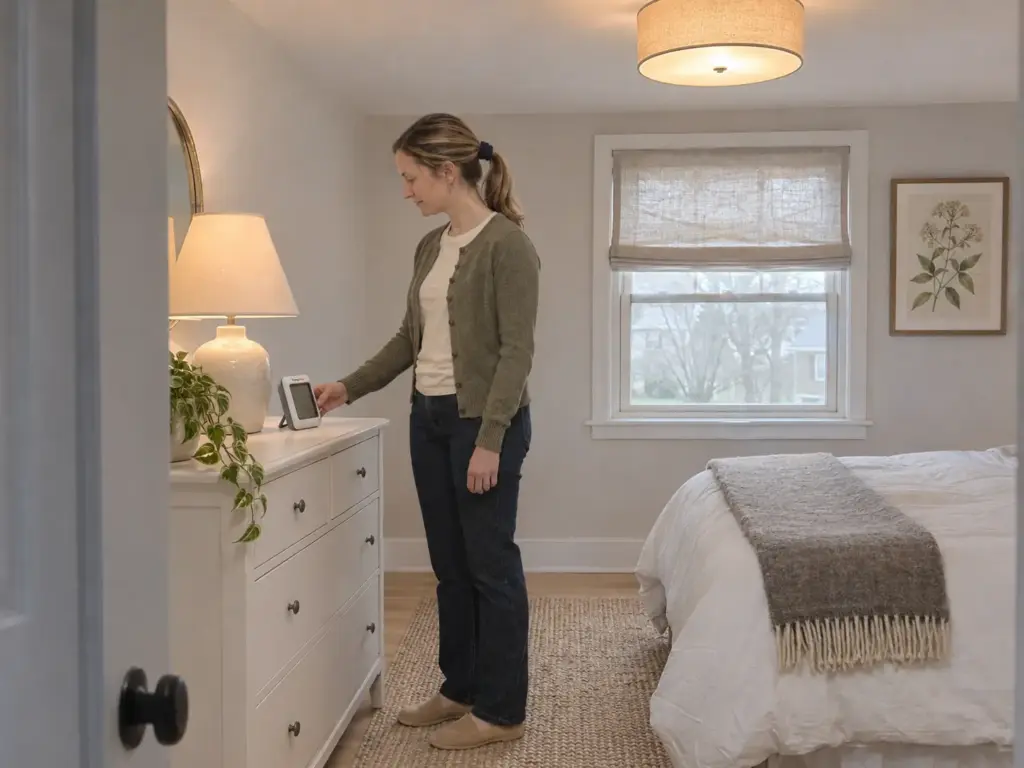
Put the meter where you sleep, at about chest height, away from the window, the radiator and the bathroom door, since each of those skews the number locally. Then wait. A meter carried in from another room needs about ten minutes to settle, so a reading taken the second it lands belongs to the previous spot. The habit of taking three readings with one meter makes the number far harder to fool.
The TempPro TP50 is the cheapest honest way to answer tonight’s question: it costs a fraction of any humidifier and prints its own error, ±2 to 3 percent RH and ±1 °F. Longevity is its mixed part, since some units quit after about a month, so a flat or frozen line on a TP50 points at the meter before it points at the room.
Take the same two readings every day for a week, once when you wake and once before bed, always with the window shut. A week of pairs shows the room’s normal range, and a single low number turns out to be one cold night more often than a trend.
A Cheap Meter That Reads Five Points Low
Every consumer meter has an error band, and budget units run to about ±5 percent. Five points is the entire distance between “under the band” and “inside it”, so the spec matters before any device does. The salt test checks it at home: seal the meter in a zip bag with a bottle cap of damp table salt for several hours, and a meter that is right reads about 75 percent. If it reads 70, every number it has shown you is five low.
When the reading has to be kept overnight, the Govee H5051 logs two years of readings and sends alerts, with a stated error of ±3 percent RH and ±0.54 °F. That makes an airing show up as a falling line within ten minutes, which is this whole article drawn as a graph. Connection and battery are its mixed parts: the Wi-Fi link drops out on some units, and the batteries on others last only about a month, so a gap in the log often means a dropped connection. A meter that reads fine in week one can drift by week eight, and repeating the salt test once a season is how you catch it.
Why an Open Window Takes Water Out of a Winter Room
The meter says low and the window is the reflex, but the water travels the other way. Two numbers make the direction plain: how much water cold air can carry, and what a heater does to the percentage on the dial.
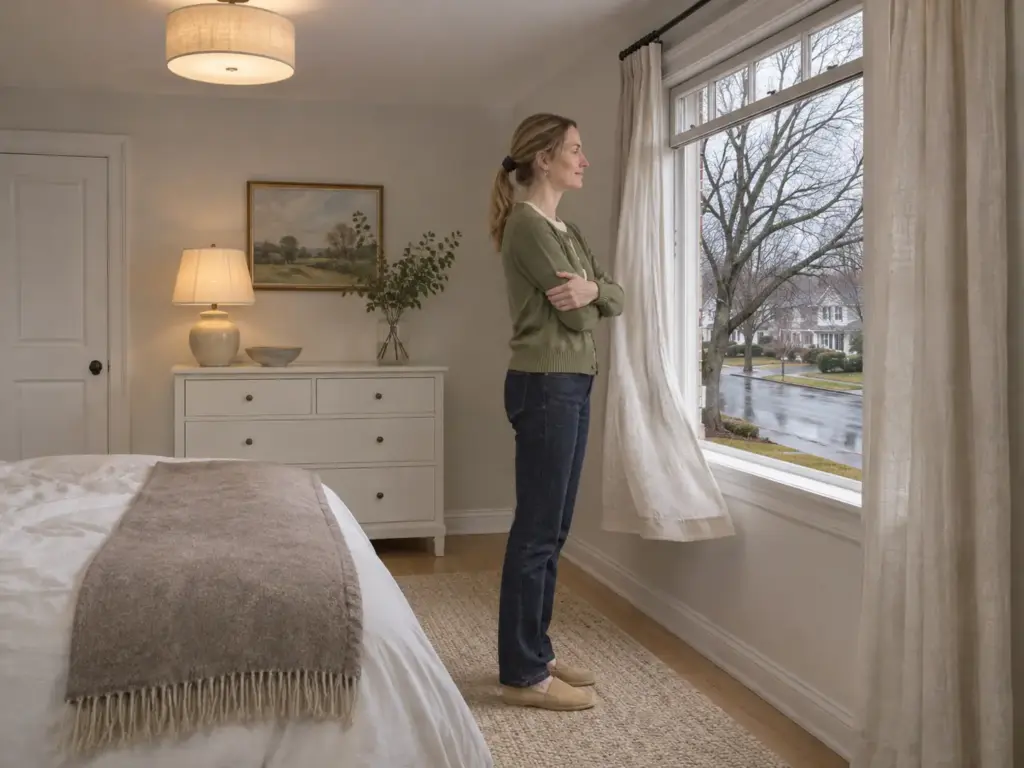
Cold Air Holds Almost No Water to Begin With
Air can hold only so much water, and the limit climbs steeply with temperature. Saturated air carries about 4.8 grams of water per cubic meter at 0 °C (32 °F) and about 17.3 g/m³ at 20 °C (68 °F), more than three and a half times as much. So outdoor air at 0 °C and 69 percent relative humidity holds only about 3.3 g/m³.
Bring that air indoors and heat it to 20 °C with nothing added, and the same 3.3 grams reads about 19 percent. Nothing was removed from that air on its way in, and the room still reads dry, because the heating did all of it. Where winter dryness comes from in the first place covers the heating side of the story.
Why the Percentage Fools You, and the Water Content Does Not
A window does two things at once. It lets in air that holds a few grams of water per cubic meter, and it lets out room air that holds more. The room ends up with less water, which is the reverse of what a gust of cold, damp-feeling air suggests.
The percentage adds to the confusion: the same 70 percent is a different amount of water at 0 °C than at 20 °C, so setting the outdoor percentage next to the indoor one proves nothing. The water content, known as absolute humidity, or the dew point in the next section, is the comparison that holds.
What the EPA Means by “If It Is Not Humid Outdoors”
According to the EPA’s own indoor air guide, “To decrease humidity, open the windows if it is not humid outdoors.” Read it in the reader’s direction: the window is the EPA’s tool for lowering humidity, and the sentence names the condition under which it works. Nobody should take it as a way to raise the number.
On a Govee log, the dip shows up within ten minutes of the window opening. The slow climb back only starts once the window is shut and the room’s own moisture, from cooking and breathing, accumulates again over the following hours.
The One Mild, Damp Winter Day When the Window Adds Water
The EPA’s sentence has an “if” in it, and a few winter days fall on the other side of it. The test for those days is simple, though it is not the one most people use at the window.
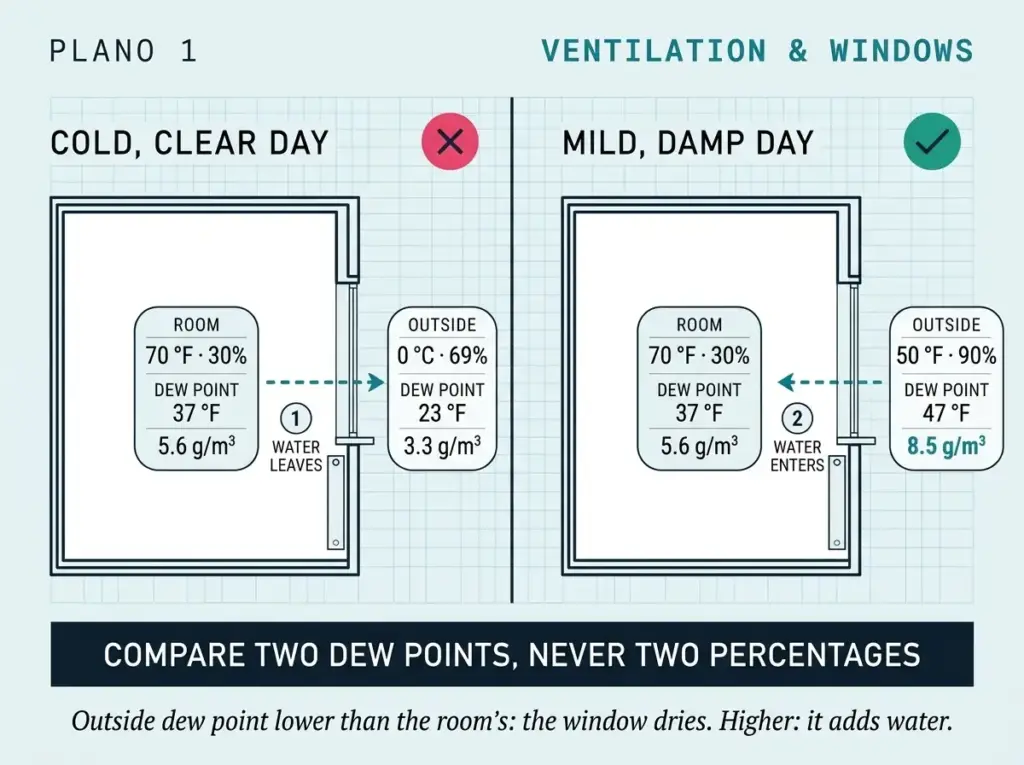
Compare Two Dew Points, Never Two Percentages
The dew point is the temperature at which the air’s water would start to condense, and it is a direct stand-in for how much water the air holds. A 70 °F (21 °C) room at 30 percent has a dew point near 37 °F (3 °C). Outdoor air at 50 °F (10 °C) and 90 percent has a dew point near 47 °F (8 °C). When the outdoor dew point is higher than the room’s, opening the window adds water; when it is lower, the window removes it.
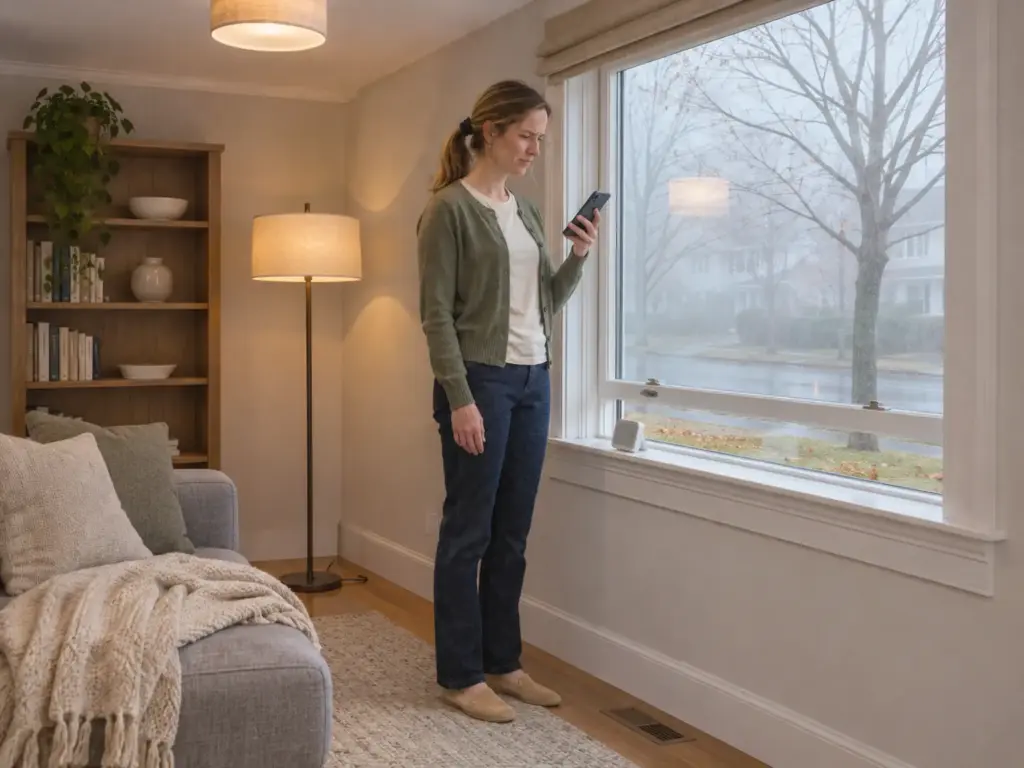
Say the day is 76 percent outside and the meter in the room drops when you open the window. It looks like a contradiction until you remember that 76 percent at 25 °F is almost no water, and the dew point is what tells you so. Why indoor humidity can read higher than the street’s runs the same test from the other side, for rooms wetter than the weather.
The 50 °F Day at 90 Percent, Worked Through
In grams, the room at 70 °F and 30 percent carries about 5.6 g/m³, and the outdoor air at 50 °F and 90 percent carries about 8.5 g/m³. On that day the window moves water into the room. The cold, clear day tells the opposite story: air at 0 °C and 69 percent carries 3.3 g/m³, against the room’s 5.6, so the same window opened at the same hour pulls the number down. The log of a hygrometer shows both, a falling line on the dry cold day and a rising one on the mild, damp day, and the outdoor percentage would never have told you which was which.
Why This Day Is Rare and Short
A cold snap and a damp mild day are different weathers. The cold, clear days that make a house dry are the ones where the outside dew point sits far below the room’s, and the damp day is the one where fog or drizzle sits on the street. On that day the window also lets in the cold the radiator has to fight, so the gain in moisture arrives with a heating cost and the next section shows how small it is.
The window does not become a humidifier on that day either. It adds a little water for a while, and when the weather turns the sign flips again. Since the safe indoor ceiling slides with the outdoor temperature, the table of indoor humidity by outdoor temperature is the reference that keeps the glass from fogging as the weather changes.
How Little Water a Bedroom Holds, and How Fast a Window Replaces It
Even on the damp day the window only adds a little. This section puts the little into a mug, then into a rate, and the two together explain why humidity can never be banked.

A 10 by 12 Bedroom Holds About a Cup of Water
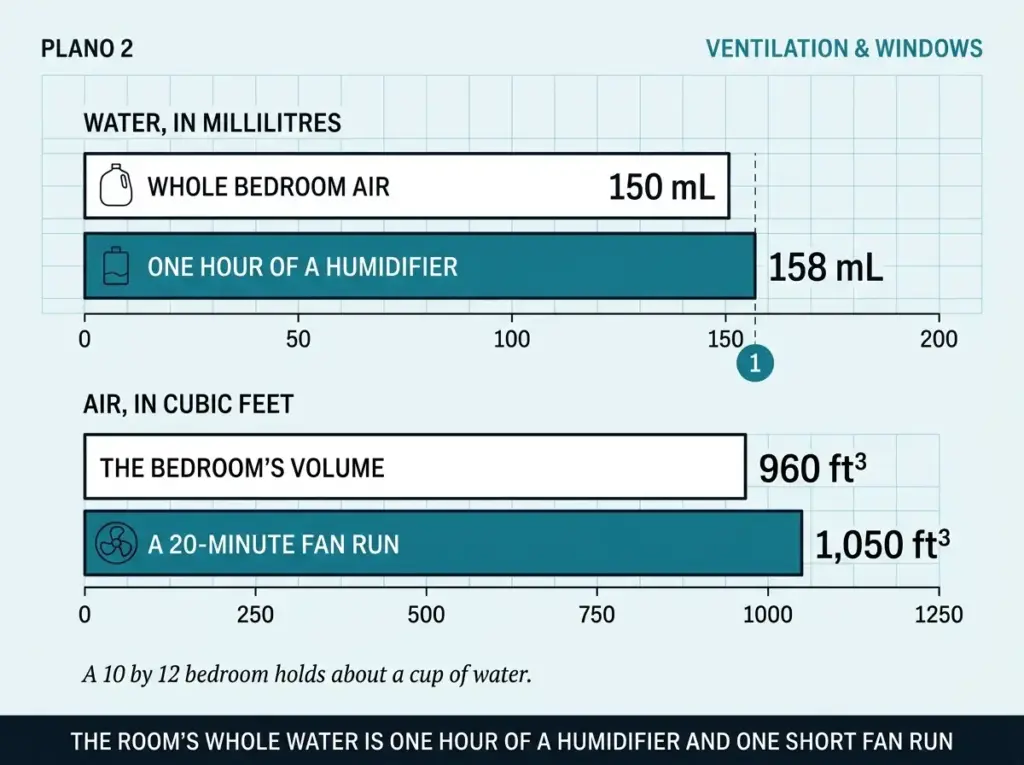
A 10 by 12 by 8 ft bedroom is about 960 ft³ (27 m³). At 70 °F and 30 percent, that air carries about 150 grams of water, roughly 0.15 L or 5 ounces, a mug that is not quite full. The whole room’s water fits in a cup. A gallon-a-day humidifier makes about 158 mL an hour, so a single hour of its output is that whole cup again.
Run the same room through the other direction and the picture holds. The reading climbs for about twenty minutes after a unit starts, then falls the moment a door opens down the hall, and the gap between those two lines is the leakage.
Watch how fast the number falls after you open a door or air the room. A reading that drops back to its old value in under an hour tells you how leaky the room is, and that tells you whether to spend on tape or on a bigger unit.
One Short Fan Run Replaces All of It
ASHRAE’s residential ventilation standard sets continuous ventilation at about 0.03 cfm per square foot of floor area plus 7.5 cfm per occupant. For 1,000 ft² and three people that comes to about 52.5 cfm, and twenty minutes at that rate moves about 1,050 ft³, which is more air than the bedroom holds. A short run of a fan at that rate replaces the room’s air once, and the water leaves with it.
The house’s fresh-air requirement at 52.5 cfm is a bath fan on low, and two windows all day cannot be the plan. What lowers carbon dioxide indoors without opening everything covers the ventilation side of this same rate.
Why Humidity Cannot Be Banked
Put the two numbers together and the logic follows. The water a unit adds in an hour is about the water a window or a leak removes in the time it takes to read a page. A window tilted all night raises the air changes per hour many times over, while a sealed room swaps its air slowly through infiltration alone.
So the leaks, the open window and the fans decide the reading more than a tank size does, and humidity added to a leaky room cannot build up into a reserve. That ordering is why sealing comes before any device.
What the Window Is Still Good For, and How to Open It
The window is the wrong tool for dryness and the right tool for something else. This section names the something else, then gives the opening that costs the least heat and the least water.
Stale Air, Carbon Dioxide and the Cooking Smell
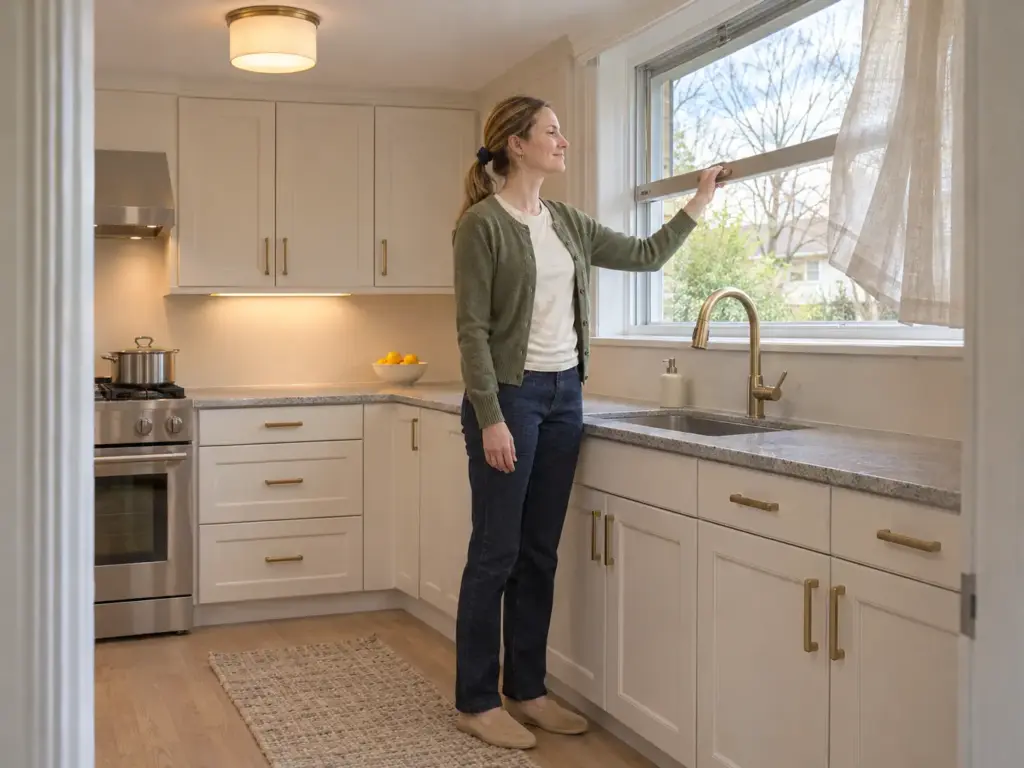
What the window buys is air that has been breathed, cooked in or showered in going out. The carbon dioxide of a shut bedroom comes down, which is the reason to open it at all, and how long carbon dioxide stays high indoors, counted in air changes per hour shows how fast a room recovers, while why carbon dioxide climbs in a shut bedroom overnight explains the mechanism. Cooking and shower moisture leave when they are made, so the bathroom window after a shower and the kitchen window during cooking pay off even at 20 °F (−7 °C) outside, when the moisture is at its most concentrated and the outdoor air is at its driest.
Five to Ten Minutes, Twice a Day, Wide
Open wide for five to ten minutes in the morning and again in the evening, the German habit of Lüften, or shock ventilation, with a second opening across the house for cross ventilation so the air passes through and does not sit. Then shut it, so the walls do not chill. According to Consumer Reports’ product testers, “opening the windows for a few minutes a day likely won’t make a major change in your heating bill.” That is the cost side of a short airing, and it is small.
After a week of the same airing at the same hour, the dip is the same size every time and the room is back to its old number within the hour. That pattern is the window’s whole effect on the number.
Why a Window Tilted All Day Costs More Than It Gives
A window tilted all day works against the heating. The cold air slips in, the wall around the frame chills, and the frame and the sill collect water, so the black spot shows up there first and not in the middle of the room. Opening a sliver instead of wide gets the same cold, because air slips through a sliver anyway, and it buys none of the swap. It buys a draft, and a thermostat near the window reading wrong.
The cheaper change comes before any of this: turn the radiator valve down a notch so the room stops overheating and the window can close. How much fresh air a house needs overall is its own question, and one sentence is all it gets here.
If the only reason the window is open is that the room runs too hot, turn the radiator valve down one notch first and leave the window shut. A room two degrees cooler holds the same water at a higher percentage, so the meter rises with nothing bought.
Seal the Leaks First, and Rule Out the Causes That Are Not the Air
A room that cannot hold a cup of water has somewhere for it to go. Before water is added, the job is to find where it leaves and what else is pulling dry air through the house.
Weatherseal the Door and the Sash Before Anything Else
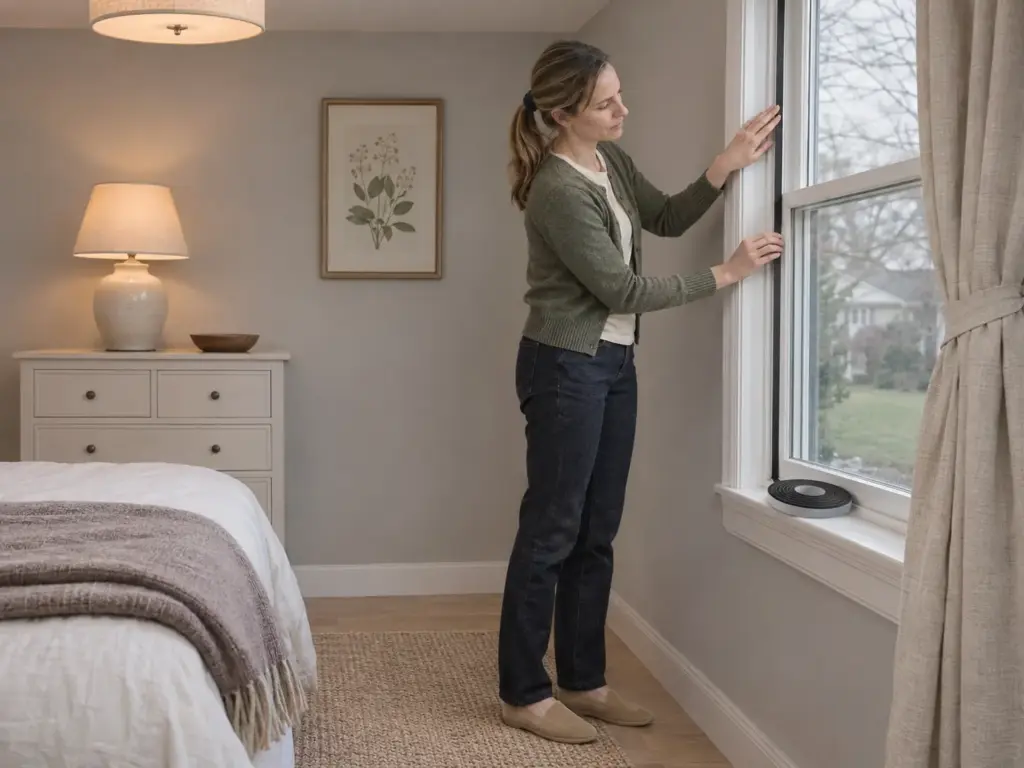
The leaks are the rate from the previous section, and weatherstripping changes the reading before any device does, since air leakage is the rate at which the room’s water escapes. The order matters: free first, which means shutting the bedroom door and closing the register of a room you do not use, and then the tape.
The Frost King R734H is ¾ in wide by 7/16 in thick by 10 ft of black sponge rubber, self-adhesive, and the compression is the point of it. Adhesion and thickness are its mixed parts. Some rolls do not stick, and the thick size can make a door impossible to shut, so for a tight gap the thinner Frost King R338H (3/8 in by 3/16 in) is the one to pick.
The foam that holds the first week can peel at the corners by the second month, and the door that now catches on its frame in the dry cold is the sign you used too thick a size. A door sweep and a thinner tape are the answer. The door sweep and the attic hatch are the other two leaks, and each one is a place to look, nothing more: no ladder, no opened electrical box, no outlet work. The manual, or a professional, is the authority for anything past the door and the sash.
The Dryer Vent, the Bath Fan and the Furnace
What to check before blaming the window when the humidity is so low starts with the house itself. A few patterns of the house look like dry air and are not the window at all.
A bath fan or a range hood left running pulls cold, dry outside air through the rest of the house. A furnace that runs long heats the same dry air again and again. A return duct leaking in an attic or a crawlspace pulls in outside air, and a wood stove or a fireplace draws room air up the flue. The duct and the furnace are a professional’s call; the bath fan and the range hood are yours to switch off.
When the Meter Is the Problem
A cheap meter that reads five points low can make a perfectly good bedroom look dry, and it can make a dry one look fine. The salt test from the first section is the check, and it takes one bottle cap and an evening. Until the meter has passed it, a reading is only as good as the meter’s error band.
The Humidifier Last: Gallons a Day, and the Glass as the Ceiling
With the leaks sealed and the window kept for stale air, the meter may still read under the band. Only now does added water earn a place, and the way to size it is the arithmetic of the last two sections.
Sized in Gallons a Day, Not Tank Size
The number that matters is output per hour converted into gallons a day, set against the room’s volume. Tank size alone is not the rate: a gallon of water on high lasts about twelve hours in the coldest week. A 960 ft³ bedroom needs a small fraction of a unit’s full output to hold the band once the leaks are sealed, and how to size a humidifier in gallons a day shows the division.
The Levoit LV600S states both numbers that matter, 753 ft² of coverage and a 6 L tank, and it adds warm mist and a sleep mode under 28 dB. Output and durability are its mixed parts. Some units do not raise the meter, some shut off by themselves, and there are leaks and failures by about the second month.
Three Units, Each With Its Month-Two Flaw
The DREO HM713S prints its output in mL an hour, 500 at maximum, which is about 3.2 gal a day at full output, and a 60-hour run on low. Durability, mist output and leaks are its mixed parts: some units break within a month, some give little mist, and several leak.
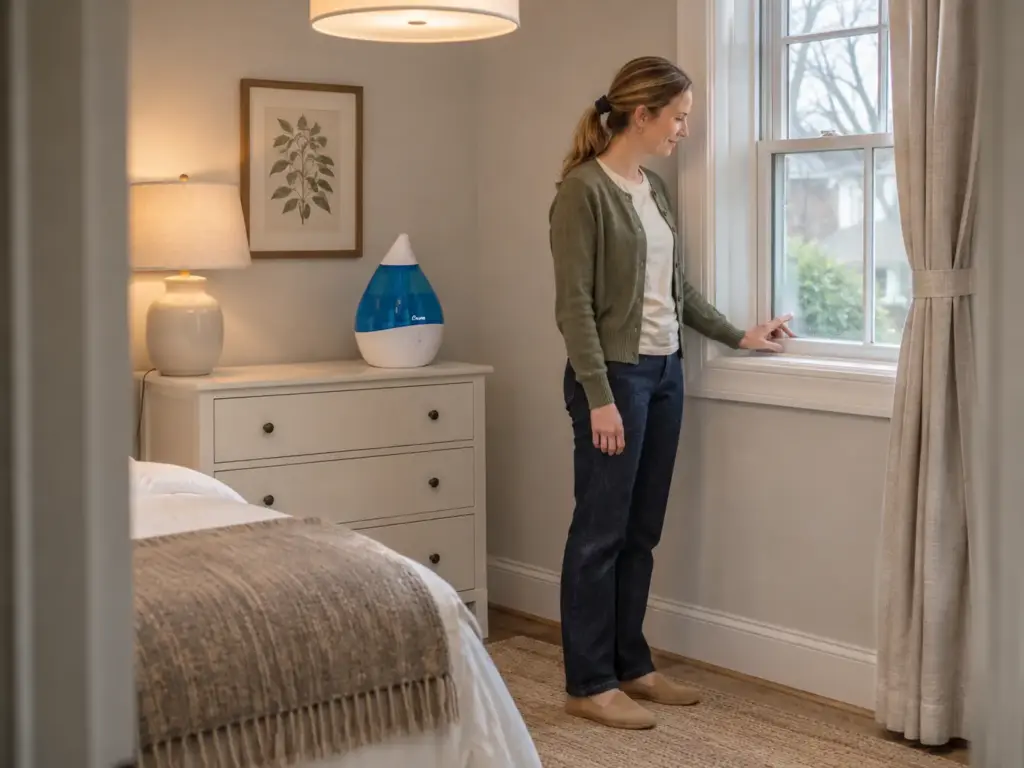
For one small bedroom, the Crane Droplet holds 0.5 gal of cool mist and fills at the sink, with an output that suits one room and not a floor. Durability and reliability are its mixed parts: some units break within a week or stop by about a month, and on some the tank is hard to remove and clean. A bedroom unit for a room with the door shut goes further into that closed-door room, and cool mist against warm mist, by water and watts says why the mist type matters in a heated one.
A unit that works the first week can lose half its output by week eight and still hum and still light up. The meter beside the bed is the only thing that says so.
Ultrasonic units on hard tap water also leave a fine white dust on every flat surface, and the harder the water, the faster it shows. Treat that as the unit’s flaw and fix it with the water.
Put distilled water in an ultrasonic unit if your tap water is hard. A unit that left white dust on every surface within a week on tap water runs without it on distilled, and an evaporative model is the other way out if you do not want to buy water.
The Glass Sets the Ceiling, Not the Dial
In the second month the window and the unit fight each other. With the window open or tilted, outside air keeps replacing what the unit adds, and the window wins. And as the outdoor temperature falls, the glass gets colder and the acceptable ceiling slides down, so a dial set last week is too high this week. The setting that holds when the glass disagrees sets the dial by the outdoor temperature instead of the printed number.
The glass, the frame and the sill are the meter that overrules the dial. The EPA treats condensation on windows as a sign of high humidity, and it answers within one cold night: water on the glass means turn the unit down. Free comes before paid, and it comes in the same order every time: the reading, the leaks, the airing and the dial, then a unit, and a unit is never a reason to leave a window open.
Read First, Air Wide and Short, Seal, Then Add Water
In winter an open window removes water from a room, and it adds some only on the mild, damp day when its dew point is higher than the room’s. A bedroom holds about a cup of water, so the leaks decide the number more than anything you pour in. Keep the window for stale air, wide and short, and let the tape and the airing come before a unit. If the reading is still under the band after that, size a humidifier in gallons a day and watch the glass.
Look at the glass along its bottom edge on the first hard cold night, because fog there means the dial is too high for the weather. Read the bedroom again after a week of the same airing to see whether the dip is always the same size. Check the tank and the unit’s output after a month, when the failures that did not show in week one start to.
Tomorrow morning, read the meter before you open anything. If the air is stale, open the window wide for five to ten minutes, shut it, and read again. Then decide on the tape. If the number is still low after that, what a reading that low means for the house is the next page.
Frequently Asked Questions
01Does opening a window get rid of dry air?
No, in winter it makes it drier: cold outdoor air carries almost no water, so the window swaps the room’s air for air that holds less. It only helps on a mild, damp day with a higher dew point outside.
02How do you get rid of dry air in the house during winter?
Read the meter first, then seal the door and window gaps, shut the doors of rooms you do not use, and add a humidifier sized in gallons a day only if the reading stays under 30 percent.
03Why do people in Germany open their windows in winter?
To swap stale air quickly. They open wide for five to ten minutes, often twice a day, then shut, so the carbon dioxide and cooking moisture leave without chilling the walls.
04How long should you keep windows open in winter?
About five to ten minutes, wide open, once or twice a day, with a second opening across the house. A window tilted all day loses heat and leaves water on the frame without airing the room.
05Can you run a humidifier with the window open?
You can, but the window wins: outside air keeps replacing the water the unit adds, so the reading barely moves. Close the window for the unit’s run, and air the room separately.